Primary keyword: pool deck paver replacement
Variants: overlay vs replacement, paver deck renovation, pool paver resurfacing, best option for old pool deck
Audience pain: Homeowners or property managers in Central Florida struggle with crumbling, stained, or outdated pool deck pavers and want safe, beautiful, long-lasting results.
Audience benefit: Clarity about which method (replacement or overlay) delivers lasting value, safety, improved looks, and fewer headaches under Florida’s sun and storms.
If you look out at your pool deck and see cracks, dips, weeds, stains, or a surface that’s lost its charm, you might wonder: Should we replace all the pavers or just overlay the deck? In our two decades serving Orlando and area pool owners, we’ve learned this decision is about more than just looks—or cost. Let’s walk through the facts, choices, and what works best for homes in Central Florida’s unique climate.
Every pool deck tells a story. Old pavers reflect sun, rain, parties, and sometimes, a bit too much wear.
This article will help you know the signs to look for, the true pros and cons of overlay vs full replacement, and how to decide what will serve your pool deck—and your peace of mind—in the years ahead.
- Understanding pool paver wear and aging in Florida
- What is an overlay and when can it succeed?
- When is full replacement your best choice?
- Cost, lifespan, and what fits Orlando’s climate
- How to inspect and evaluate your deck
- What professional contractors bring to the decision
- Warranty, drainage, and long-term care
- FAQs about replacement vs overlay
Why do pool deck pavers age?
Florida offers some of the harshest conditions for outdoor living spaces. We see it every day in our work at GCM Best Services. Paver pool decks in Orlando and Central Florida age due to a mix of sun, storms, chlorine, and the region’s shifting soils.
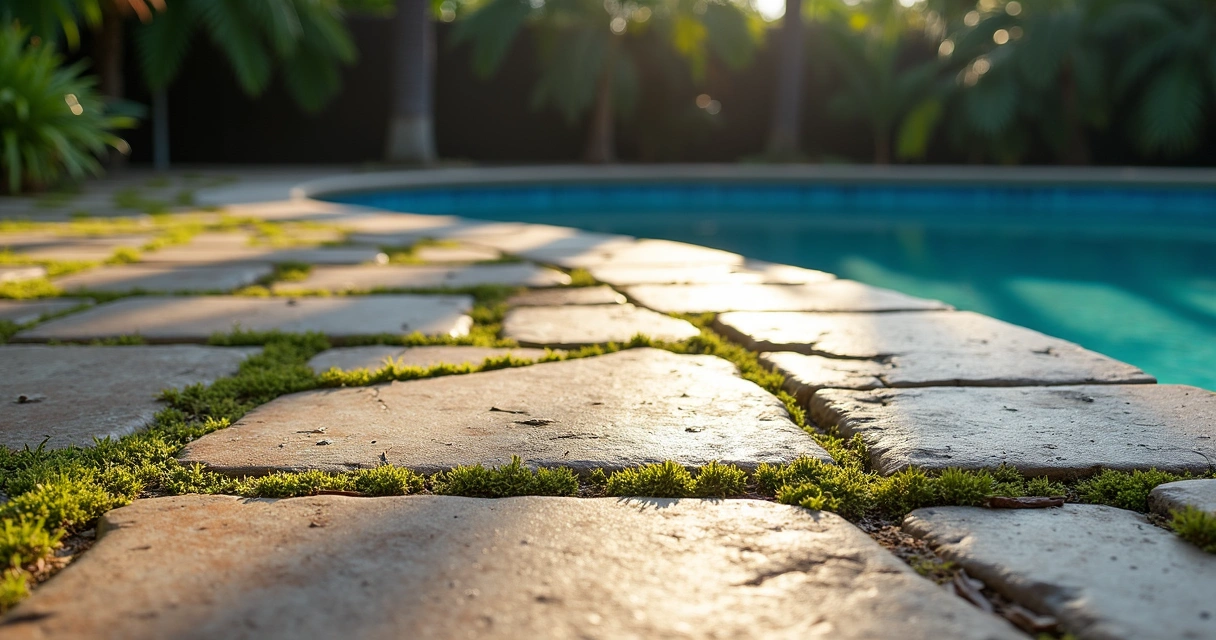
Here’s what usually goes wrong:
- Color fades under UV rays and pool chemicals
- Surface stains from algae, rust, and organic spills
- Sinking or heaving due to tree roots, broken edges, and washing out of base sand
- Crumbling joints, loose patterns, and tripping hazards
- Proliferation of weeds where polymeric sand or edge restraints have failed
- Poor drainage, sometimes leading to puddling or mildew
Not all problems mean you have to tear everything out. Sometimes, targeted repair or an overlay can make a deck look new. But some damage is a sign of bigger issues deeper than the surface.
Before any choice, ask: What kind of problems are you seeing? Is it mostly cosmetic...or is the deck shifting, crumbling, or holding water?
Overlay: what is it and when does it work?
An overlay—or resurfacing—involves placing new pavers or a thin stone/concrete cap over your existing deck. We make overlays work when the foundation and underlying pavers are stable, level, and free of serious cracks or heaving. An overlay can save time and sometimes money, with less disruption to landscaping or pool use.
Overlay deck options include:
- Thin paver tiles installed over old, level pavers
- Stamped concrete mats or coatings (sometimes appropriate for large flat areas)
- Textured coatings with embedded chips or quartz for new surface grip
The best-case scenario for overlays?
- Your existing pavers are structurally sound, not loose or rocking
- There are no puddles or sunken zones after rain
- The pool coping is still solid and water level is at the right height vs the deck
- Any drains, skimmers, or enclosures attached to the deck allow about 1 inch for new material
Overlaying can refresh your deck’s style very quickly and often leaves landscaping and pool systems untouched. But, it’s not a fix for underlying foundation or drainage failures.
Pros of overlaying an old pool deck
- Faster installation; less demolition mess
- Lower cost if the existing base is reliable
- Keeps landscaping and pool area mostly intact
- Can provide a new slip-resistant surface
- Many pattern and color options to update your look
Cons and risks of overlays
- Cannot solve deep cracks or heaving
- Raises deck height; may affect door clearance, pool coping, safety fencing
- Overlayed pavers may settle unevenly if original deck is unstable
- Potential risk of trapping moisture, leading to weeds or mildew
- May not last as long as new, full-thickness pavers
When is full replacement the right call?
Sometimes, a fresh start is the smart move for your property and peace of mind. Full deck replacement means we remove all old pavers, inspect (and fix) the base, handle drainage issues, then install new pavers with fresh sand, edge restraints, and sealing layers.
This approach is best when:
- You see major cracks, multiple sunken spots, or root damage
- Deck is repeatedly flooding, feels soft, or worsens each wet season
- Many pavers are broken, missing, or rock underfoot
- Sub-base is full of weeds or washed-out sand
- Drainage is backwards (pool water runs toward your house or garden beds)
- You want to change layout, elevation, or integrate features like lighting or artificial turf
We always inspect the old base before recommending a full replacement, because sometimes the root problem is hiding below the surface. Replacement is an investment, yes, but you get a structure basically as good as new, and warranties are often stronger.
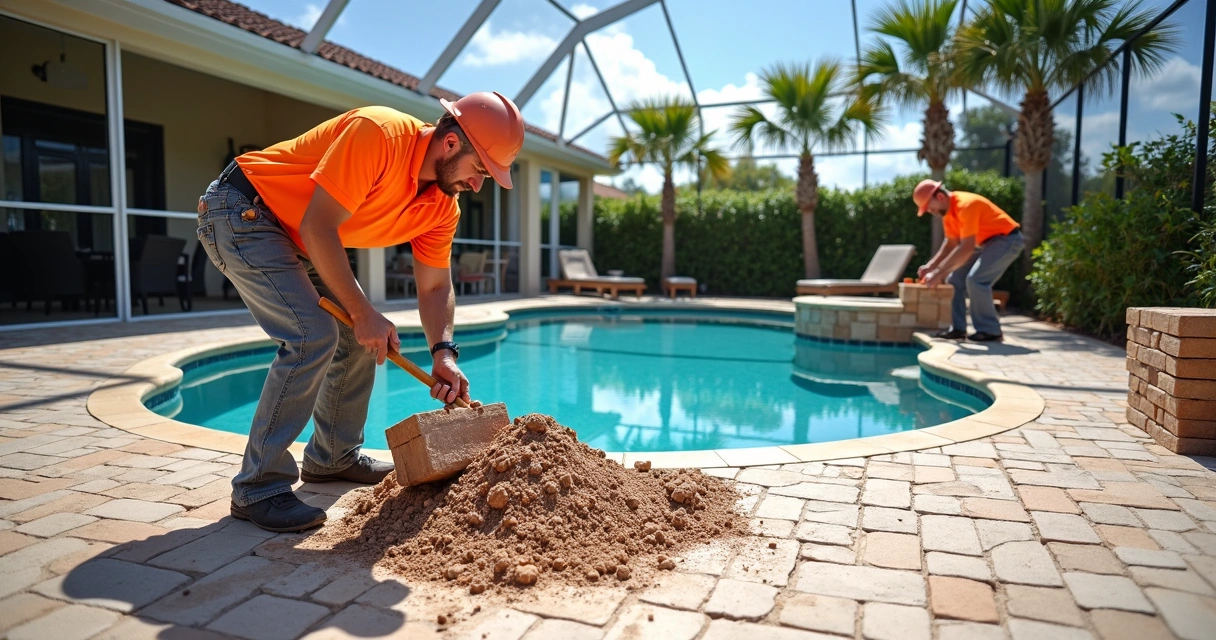
Benefits of full pool deck replacement
- Fixes flaws, rot, or erosion under the deck for lasting results
- Resets base and grade for improved drainage; can prevent weeds and puddles
- Offers full design freedom (patterns, borders, lighting, turf integrations)
- Qualifies for the longest available warranties
- Makes inspection, repair, or addition of drains or pool features easy
Challenges of a full replacement
- Higher initial cost than overlays
- Longer project time (typically 3–7 days for a residential deck)
- May require temporary removal of fencing, landscaping, or screen enclosures
- Pool may be off-limits during construction
If you wonder about the step-by-step process of quality deck work, our driveway & patio paving process page gives an overview for Central Florida properties.
Cost and value: what to expect in Central Florida
Cost matters for every property owner. Here’s what we see in the field—and what national data, such as the Federal Highway Administration’s cost surveys, suggest. According to the FHWA report on deck work costs, repairs (overlays, partial fixes) range from $21–$67 per square foot, while full deck replacement can run $39–$147 per square foot, depending on prep and materials.
Locally, in Orlando, overlays often fall in the $24–$55 per square foot range for basic work and simple patterns. Replacement, especially when drainage corrections and specialty pavers are involved, is usually $42–$120 per square foot. Flagstone, stamped concrete, or advanced finishes skew to the top of that range.
Overlay saves cost IF the deck is a candidate, but full replacement has higher long-term value when major fixes are required.
And, one hidden saving: Replacing the sub-base is often the only real way to solve chronic drainage issues. If you’ve ever watched rainwater pool on your deck or noticed pavers popping after storms, investment now avoids years of repairs. For more on handling Florida drainage, see our advice on effective drainage for brick paver installations.
What to check before making a choice
We believe in clear planning before a shovel ever hits the ground. Here’s how to evaluate a deck for overlay or replacement:
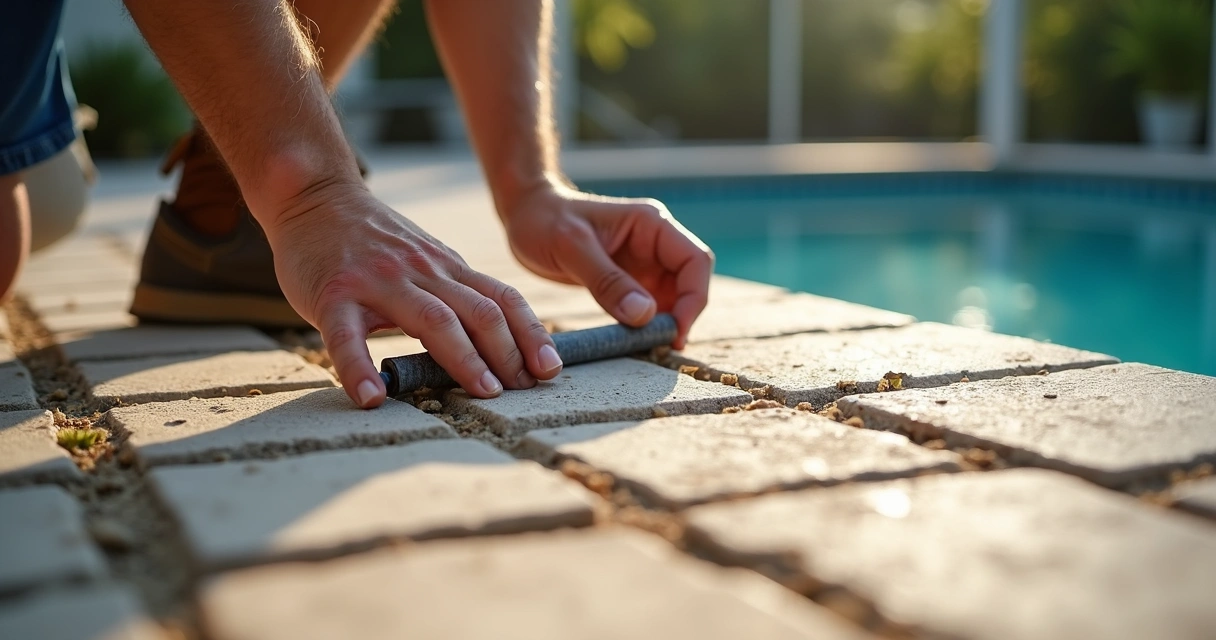
1. Surface inspection
Walk your deck after rain. Notice puddles, sunken spots, loose or rocking pavers, wide weeds, or crumbling corners. Stable, level surfaces with intact sand and no trip hazards might handle an overlay.
2. Sounding test
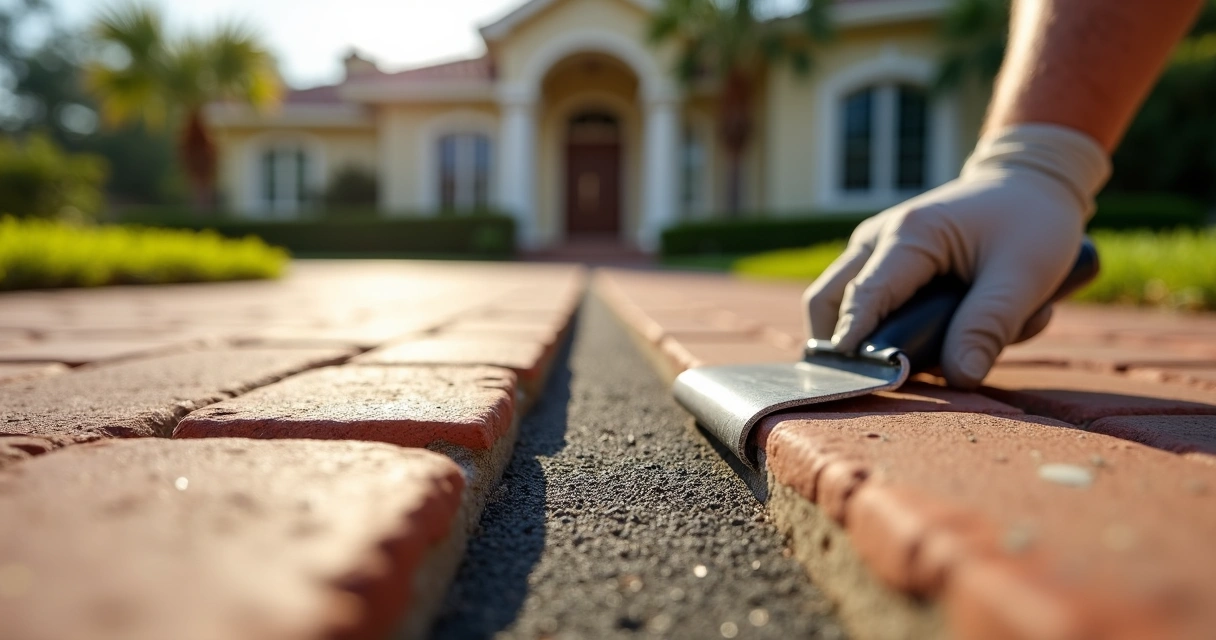
The Federal Highway Administration reports chain drag and hammer sounding as a reliable way to check for hidden voids beneath surfaces. We lightly tap pavers or use special tools to detect hollow spots. Hollow = unstable = needs deeper repair, not just an overlay.
3. Check elevations and edges
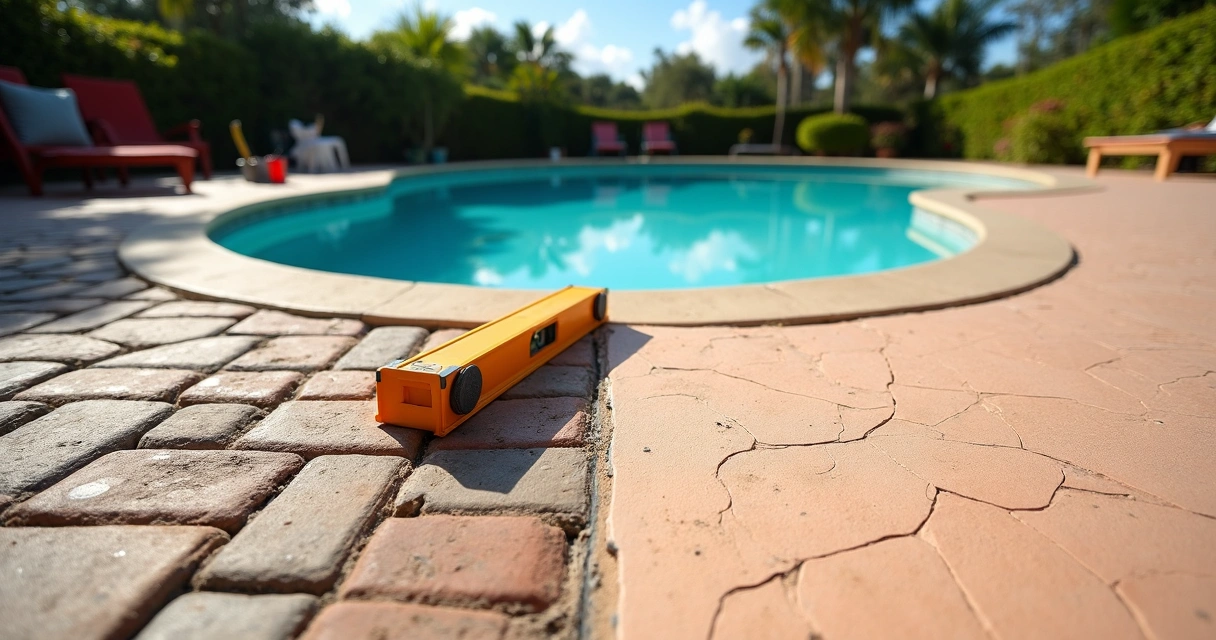
Measure transitions to pool coping, step heights, and any doors or screens connected to your deck. Adding even half an inch with an overlay can make a pool fence noncompliant or cause trip hazards.
4. Drainage and grade
Watch where water flows off the deck. If it flows toward the pool, house, or landscaping, a full replacement that re-grades the surface and reshapes slopes is often needed.
5. Base and root problems
If you pull a paver and see tree roots or soft, damp sand, these must be addressed before any cosmetic fix.
Our team at GCM Best Services always carries out this multi-step inspection before every pool deck proposal.
Overlay vs replacement: durability, maintenance, warranty
When you compare overlay and replacement, you’re choosing between a facelift and a new structure. Here’s what to know about long-term results in Central Florida:
- Overlayed decks last anywhere from 5–12 years if done well over a sound base, but flaws beneath can lead to cracking, settlement, or moisture issues much sooner.
- Full replacement with the correct sub-base, compacted sand, and edge restraints easily lasts 15–30 years with basic care.
- Many overlay materials have shorter or limited warranties. Full replacement is usually eligible for longer, written warranties—see our own GCM Best Services warranty program for an Orlando example.
Put structure first. Surface beauty means little if your base is crumbling below.
Whatever you choose, ask your contractor for steps like compacted sub-bases, proper sealing, and a maintenance guide. Ongoing maintenance matters—weed control, joint sand replacement, and gentle washing can greatly extend the life of your investment. For tips on keeping weeds at bay, see our advice about preventing weed growth between pavers in Orlando.
What professional help brings to pool deck decisions
Replacing or overlaying a pool deck isn’t just about swapping pavers. The best results come from a partner who manages permits, HOA and city code, and drainage design, while documenting every step with photos and a clear warranty. At GCM Best Services, we coordinate all inspections and guarantee every job meets—or exceeds—Florida standards, just as we do for our hardscape projects across Central Florida.
Benefits of professional service:
- On-site assessment for underlying issues and full scope planning
- Management of permits and HOA submissions as needed
- Project execution with safe, clean, OSHA-compliant jobsites
- Final walkthrough and written warranty
- Maintenance guidance and scheduled checks
Even if you don’t choose full replacement, we urge you to work with contractors who document work, use proper materials, and understand local climate risks—especially drainage and shifting soils. For guidance on avoiding concrete cracks and ponding, see our article about preventing patio and driveway cracking in Florida.
Making the decision: overlay or replace your pool deck?
In sum, both overlay and full replacement of pool deck pavers have a place in Orlando’s unique climate. But it takes a trained eye to see beneath the surface and judge what’s best for each property. Overlays can offer fast style and savings, but only when the foundation is up to the job. Full replacement offers a reset—better structure, drainage, and design flexibility—along with peace of mind for years of backyard gatherings.
The best decision balances beauty, safety, and long-term cost control. In our team’s experience, a careful assessment and clear communication with your installer are worth more than any quick fix.
If you’re ready to see whether your deck is a candidate for overlay or needs a complete makeover, or want honest, professional advice, we would be glad to walk your site and show you solutions that last. GCM Best Services is ready to help Central Florida pool owners make the smart choice for their space—and their peace of mind.
Ready for a professional quote? 📞 (407) 250-1948 • 24–48h • Orlando, Tampa & area.
Frequently asked questions
What is pool deck paver overlay?
A pool deck paver overlay is a method where thin new pavers or a resurfacing material is installed directly over an existing, stable deck surface to refresh its look without removing the underlying structure. This new layer can update color, texture, and style, but only works well when the original pavers and sub-base are smooth, level, and solid. It is a quick-fix option for decks free of deep cracks, drainage issues, or major structural damage.
How to know when to replace pavers?
If you find widespread loose pavers, repeated weed growth, tripping hazards, deep cracks, sunken areas, or drainage problems that persist after rain, it’s usually a sign that full replacement is needed. Decks where the base is eroding, weed-infested, or holding water will not improve with a topical fix. Sometimes, popping off a few pavers will reveal if the sand base or underlying soils have moved—an issue only full replacement can resolve.
Is it worth it to overlay pavers?
Overlaying pool deck pavers is often worth it when the current paver base is stable, drainage is correct, and you want a fast, aesthetic update at less cost than full replacement. However, if there are deep-set issues beneath the surface, overlays can create future headaches. For lasting results, verify there are no structural, moisture, or level problems before choosing an overlay approach.
How much does paver replacement cost?
According to Federal Highway Administration data, full pool deck paver replacement can cost anywhere from $39 to $147 per square foot depending on location, prep work, and material choices (see FHWA report). In Central Florida, most residential jobs range from $42 to $120 per square foot, with overlays running lower but only when the original deck is a good candidate.
What are the best pool deck materials?
High-quality concrete pavers, travertine, and natural stone are the most popular and durable choices for pool deck surfaces in Florida. Each offers slip resistance, a range of styles, and good heat handling. Pavers excel for their modular design—making repairs easier if needed. Natural stone delivers a luxury look, while stamped concrete and composite options are sometimes chosen for overlays.