Primary keyword: paver layouts for curb appealVariants: new paver patterns for home value; curb appeal upgrades with pavers; exterior paver design ideas
Audience & Pain Point: Homeowners in Central Florida seeking fresh, low-maintenance ways to beautify their properties while increasing home value.
Summary: The right paver layouts can completely change how your home looks from the street—and even improve its sale value by up to 7 percent, according to recent research. In our experience serving Orlando and Central Florida, we’ve seen design, durability, and proper installation come together to create eye-catching exteriors that welcome guests and future buyers alike. In this guide, we’ll share seven proven ideas for transforming your driveway, walkway, or patio with paver patterns that stand out—and stand the test of time.
Contents
- Why curb appeal with pavers matters
- How new paver layouts make a difference
- 1. Choose classic herringbone for timeless energy
- 2. Unlock elegance with basketweave and running bond
- 3. Go bold with modern geometric patterns
- 4. Mix colors and materials for added dimension
- 5. Make a grand entry with borders and inlays
- 6. Improve drainage with permeable paver designs
- 7. Enhance night curb appeal with integrated lighting
- The path to beautiful and practical curb appeal
- Frequently asked questions
Curb appeal isn’t just about looks—it’s about shaping first impressions and lasting value.
Why curb appeal with pavers matters
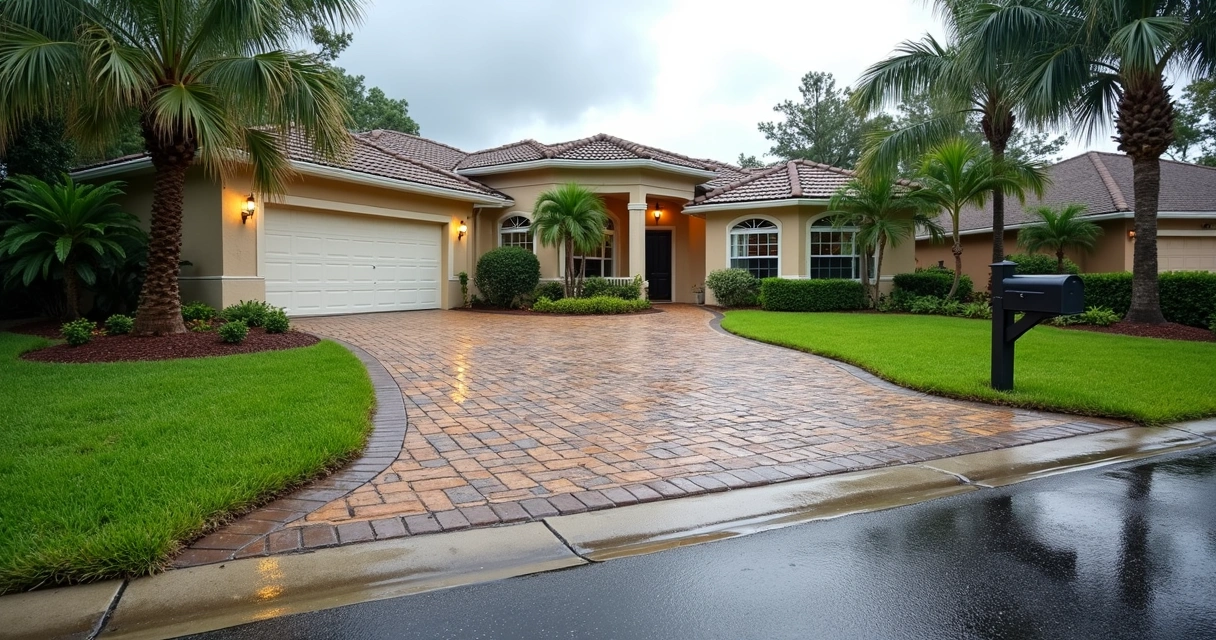
Studies from the University of Texas at Arlington reveal a striking truth: curb appeal can increase a property’s sale value by up to 7%, and even higher in slower markets. That’s a number that turns heads. Many local homeowners overlook the landscape underfoot, focusing on paint and plants, but the driveway, walkways, and front stoop are what guests (and buyers) notice first. Clean lines, crisp colors, and creative paver layouts grab attention in a way that standard concrete or aging asphalt never could.
At GCM Best Services, we see every project as an invitation to make a memorable “hello” at the curb. With Florida’s unique soils, climate, and HOA requirements, combining visual appeal and structural strength is key. Pavers do this better than most materials—especially with the right layout.
How new paver layouts make a difference
What’s special about laying pavers in distinctive patterns or with distinct borders? Thoughtful paver layouts give homes character, break up bland spaces, and highlight unique architecture. They also help solve real-world problems. The right design improves drainage, hides stains, and reduces maintenance needs. It’s about more than picking pretty stones; it’s about using pattern and structure for both style and function.
Let’s look at seven ideas we’ve seen work for Central Florida homes and businesses:
1. Choose classic herringbone for timeless energy
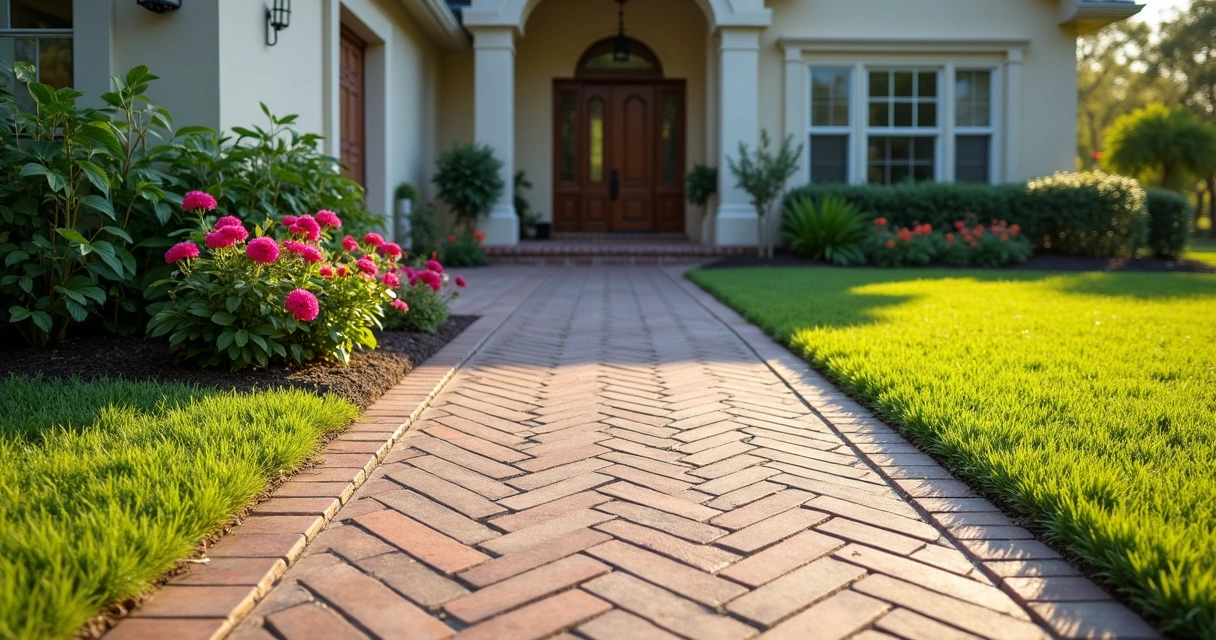
The herringbone pattern is more than a traditional favorite—it’s an alignment that signals order and visual strength, thanks to its interlocking zig-zag structure. This layout visually leads visitors toward your entryway, subtly boosting that sense of welcome. Herringbone paver patterns hold up well under car and foot traffic, distributing weight more evenly than straight lines or random designs.
- Where it works best: Driveways, main walkways, or patios where you want strength, traction, and style.
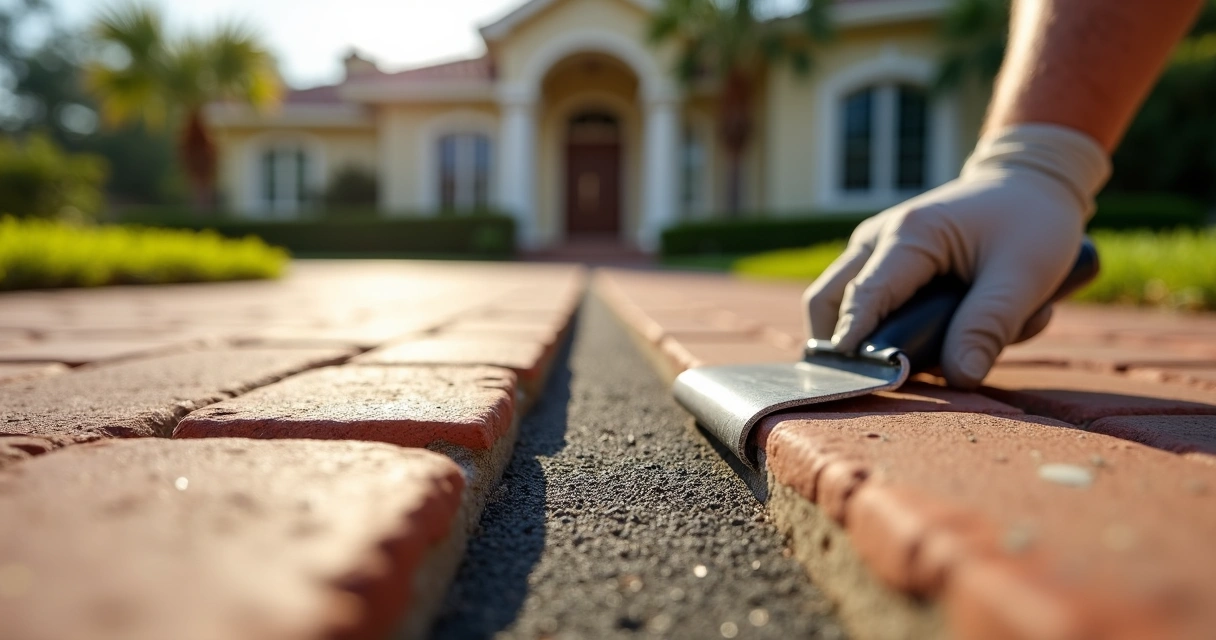
- Design note: Tight joint lines help keep weeds and grass out—if properly compacted and filled with polymeric sand. For more tips, check our article on how to prevent weeds from growing between pavers.
- Color tip: Neutral grays, sandy tones, or warm reds—pick a color that matches your home’s roof or trim for a pulled-together look.
We’ve found that homeowners often gravitate to herringbone because its V-shaped flow directs attention elegantly to the front door or garden gate. “Timeless” is the word most clients use when the work is done—and it’s never out of fashion.
2. Unlock elegance with basketweave and running bond
Some patterns quietly suggest elegance and order. The basketweave and running bond layouts deliver that with a rhythm that feels both classic and inviting. These designs use rectangular pavers placed in repeating pairs or rows, echoing old-world courtyards and garden paths.
- Basketweave: Alternates pairs of horizontal and vertical bricks, creating a woven look. Adds visual interest to small patios, entry pads, and garden nooks.
- Running bond: Straight rows offset by half a paver, a style often seen in brick walls. Clean, easy on the eye, and well-suited for modern and traditional homes alike.
Both patterns help break up long, narrow spaces and make small areas appear wider or larger. A subtle color contrast between pairs can create even greater depth, without visual clutter. Running bond, especially, is highly effective for walkways where you want a calm, purposeful sense of motion.
Wondering about maintenance? These two patterns make for easy repairs. If a paver chips, you swap one or two, not a whole section—a detail our clients appreciate.
3. Go bold with modern geometric patterns
For those ready to make a statement, modern geometric layouts—like chevron, circles, or random modular—turn curb appeal into something magnetic. These patterns use varied shapes, angles, and modules. Geometric paver designs can give a home instant personality and a sense of contemporary art.
- Chevron: Arrow-forward angles create a wider, “expanding” effect. Stunning in entryways or as driveway accents.
- Circular or fan layouts: Perfect for grand entries or to highlight a focal point, such as a fountain or specimen tree.
- Modular/random: Multiple sizes and shapes, arranged in a repeating “random” sequence, especially effective with modern architecture.
Bold patterns benefit most from expert design and precise installation, as small misalignments are more noticeable. At GCM Best Services, we use detailed sketches and digital design tools so you know exactly what you’ll get before any install starts.
Looking for other hardscape inspiration? Visit our hardscape gallery for patterns, borders, and lighting ideas.
4. Mix colors and materials for added dimension
Color and material choices go hand in hand with layout. When we suggest custom blends, it’s with an eye to distinction—subtle or bold, but always intentional. Here’s what mixing brings:
- Border inlays: Use a contrasting color or texture along the edges for definition—helps keep gravel, grass, and mulch off the walk.
- Material blends: Mix brick, natural stone, and concrete pavers for rich variety—think classic brick bands within a field of slate pavers.
- Accent stripes: Add a row or two of pavers in an accent color to tie in with house trim, door, or roof.
The right color mix can make a driveway feel like an entrance, not just a slab.
Because color can fade or wash out in Florida’s sun, we recommend premium, UV-stabilized pavers, and professionally sealed installations. Regular cleaning keeps hues crisp, as outlined in our installation estimate guide.
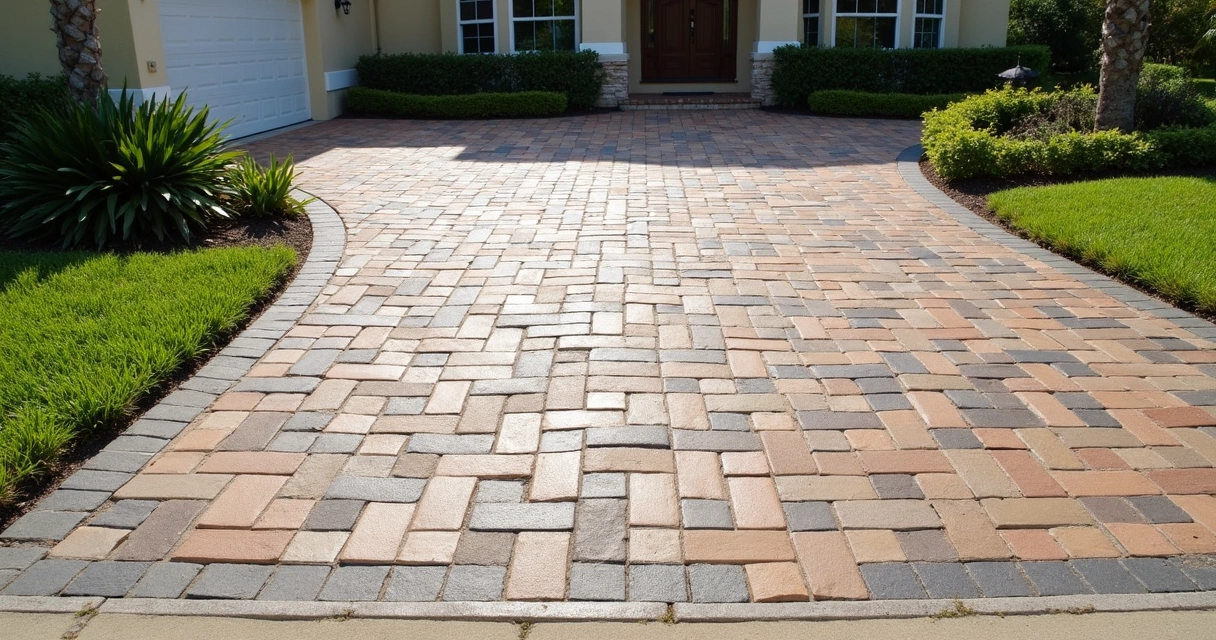
5. Make a grand entry with borders and inlays
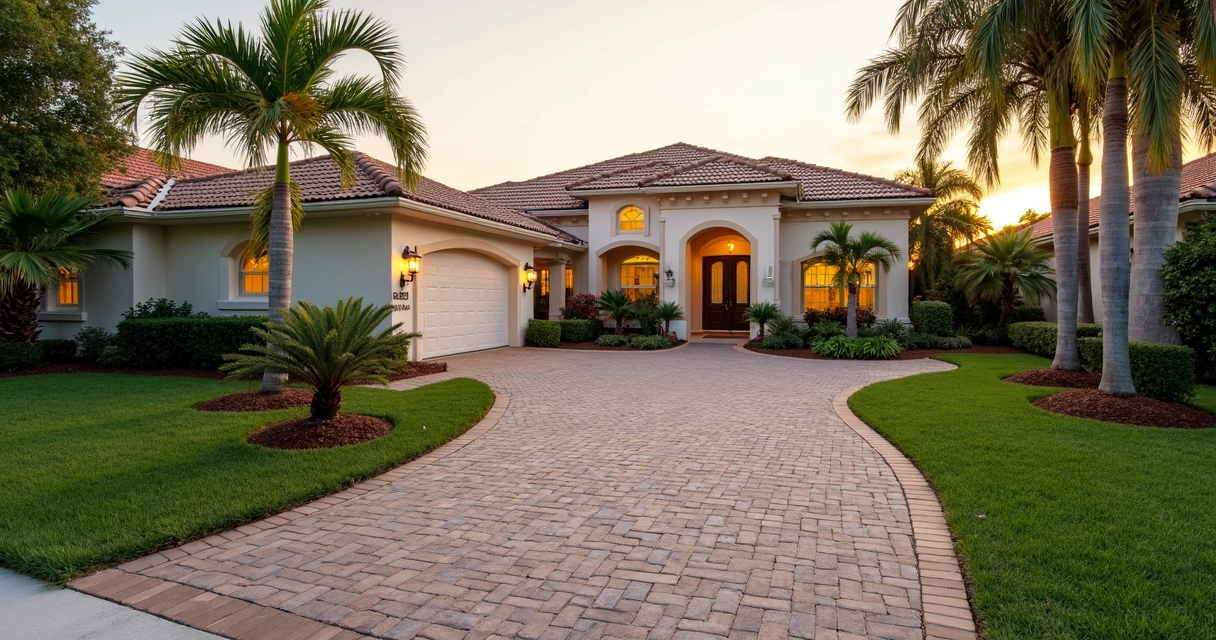
Borders and inlays aren’t just for looks—they help frame your whole composition and guide visitors right where you want them to go. Adding a paver border or geometric inlay at the top of a driveway or the center of a circular pad creates visual energy and a sense of “arrival.”
- Purpose: Define areas, highlight features, and hide edge cuts or inconsistencies.
- Design tip: Keep borders and inlays one or two shades away from your field pavers. Too much contrast can look choppy, but a soft distinction lifts the whole space.
- Paver shapes: Borders with soldier (long edge) or sailor (short edge) rows add polish; diamonds or medallions as inlays make a front entry unforgettable.
In our projects, the driveway often sets the tone for guest expectations. A circular or semicircle inlay at the visitor parking spot, for example, is a focal point that’s both practical and memorable.
Proper compaction and solid restraint are key so borders and inlays stay locked in place, year after year. Our team always uses professional edge restraints—and hidden drainage trenches when needed for Florida storms. Read about drainage solutions for pavers in our climate.
6. Improve drainage with permeable paver designs
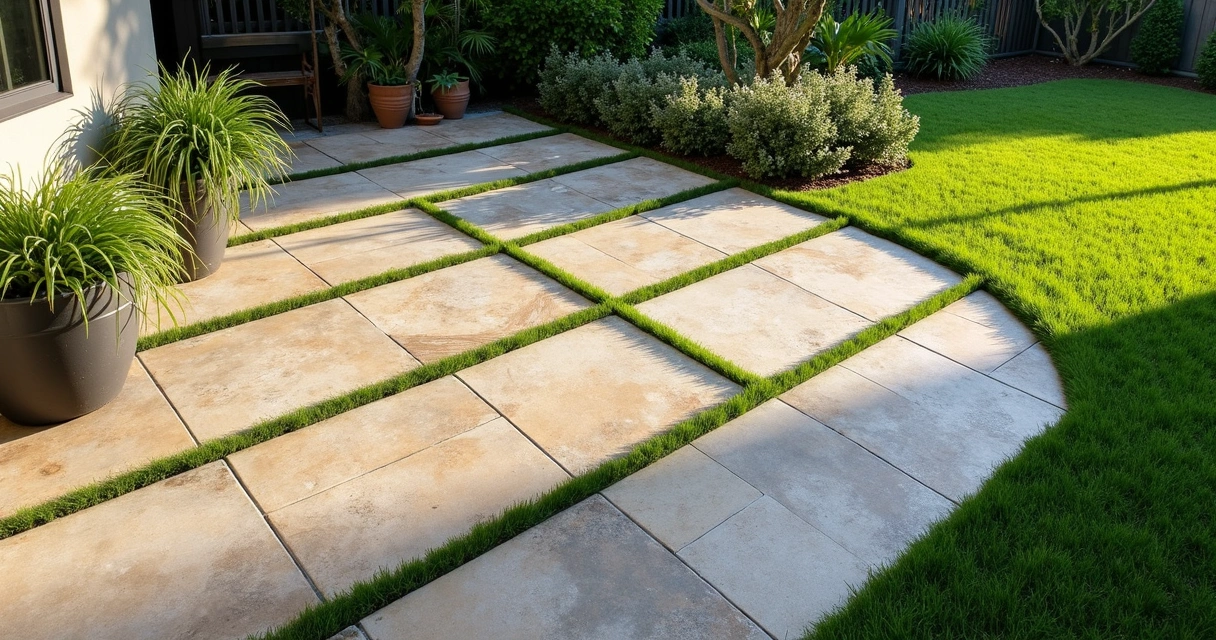
Water management isn’t glamorous, but poor drainage can ruin all that curb appeal investment. Permeable paver layouts allow rainwater to soak through gaps and a gravel base, reducing puddles, runoff, and potential flooding near your house or garden.
The District of Columbia Department of Energy & Environment highlights that these pavers help manage erosion, protect landscaping, and are available in plenty of shapes and colors to match any style. Their advice: periodic vacuuming or pressure cleaning to remove debris is all it takes to keep water flowing and pavers unclogged.
We often integrate permeable pavers in:
- Driveways where runoff is a concern
- Paths or patios that border planting beds
- Low spots that collect water after rain
With permeable pavers, curb appeal and environmental responsibility go hand in hand. For homeowners in Central Florida, this design helps keep water away from house foundations and prevents muddy messes.
7. Enhance night curb appeal with integrated lighting
Good curb appeal doesn’t disappear after sunset. Integrated lighting woven into paver layouts guides guests safely, deters tripping, and highlights curves, textures, and inlays in striking new ways.
Some practical lighting options we’ve seen work wonders:
- Low-voltage LED strips flush-set along walkways
- Small recessed spotlights at driveway inlays or steps
- Subtle up-lighting that accents borders, columns, or specimen trees
Lighting makes a dramatic impact with very little maintenance—especially with today’s durable, energy-saving LEDs made for outdoor conditions. Our crews work hand-in-hand with licensed electricians when needed, so electrical and drainage runs stay hidden beneath the paver base or between joints. That means no trip hazards, no messy wires, and a seamless look day or night.
The path to beautiful and practical curb appeal
With so many layout styles, colors, and border choices, the process might seem overwhelming at first. That’s where we come in. At GCM Best Services, we listen to your goals, sketch custom design options, and plan installations that blend beauty and resilience for Central Florida soils and weather.
Our process covers:
- No-pressure site assessment, We walk your property, measure, and recommend layouts that fit your home’s style and your budget.
- Detailed written estimates, Full breakdowns to avoid surprises, covering all materials, permits, and drainage planning.
- Permitting and HOA help, We handle the paperwork, so you stay stress-free.
- On-schedule, fully insured work, Photos of progress and warranty documentation for peace of mind.
- Tips for long-term care, How to keep your curb looking fresh year after year.
The end result? A home that turns heads and a surface that lasts—and one that increases real-world value, as our experience throughout Orlando and Tampa continually shows. For a closer look at project details, review our page on driveway and patio paving.
Need help visualizing layouts? Visit our guides on installation estimates or browse hardscape ideas for patios and walkways.
Small changes at the curb make big differences in how your home feels, and how others feel about it.
Ready for a professional quote? 📞 (407) 250-1948 • 24–48h • Orlando, Tampa & area.See how GCM Best Services can help you invest in curb appeal that’s both practical and striking, built for Central Florida’s unique needs, and backed by experience, clear warranties, and lasting value.
Frequently asked questions
What is a paver layout?
A paver layout is the pattern and arrangement in which paving stones are installed on surfaces like driveways, patios, or walkways. This includes how the pavers interlock, the direction of their lines, and the use of borders or inlays. The layout affects not just appearance, but also how well the surface handles weight, drains water, and minimizes shifting or weed growth.
How to choose the right paver pattern?
Choosing a paver pattern comes down to your home’s style, the space you want to cover, and your personal taste. Herringbone or basketweave are strong choices for classic or historic homes, while geometric patterns suit modern exteriors. Larger patios or driveways can handle complex designs, while small spaces often benefit from simple running bond or modular patterns. Always consider how the pattern will connect with existing landscaping and architecture for a cohesive effect.
Are new paver layouts worth it?
Yes, new paver layouts are widely recognized as a good investment—especially for curb appeal. As reported by university research on curb appeal and home value, the right upgrades can boost sale prices and increase buyer interest. Pavers also offer durability, lower maintenance, and the flexibility to update look or repair damage with less hassle than poured concrete.
How much do new pavers cost?
The cost of installing new pavers depends on materials, pattern complexity, site preparation, and space size. For an Orlando-area driveway or patio, projects often start around $12–$22 per square foot, including materials, labor, and base preparation. Features like patterns, borders, or inlays can influence price. For a full breakdown, you can review our detailed guide on what a complete brick paver installation estimate includes.
Where to buy quality pavers?
You can source quality pavers through licensed contractors like GCM Best Services, which ensures the pavers are Florida-rated and suitable for our soils and climate. We vet suppliers for color-fastness, strength, and warranty support. By working with professionals, you also secure proper installation, permit management, and long-term guidance for best results and warranty coverage.