When it comes to protecting outdoor concrete, driveways, patios, and high-traffic areas in Central Florida, the sun is relentless. In our experience at GCM Best Services, we have seen how regular epoxies can lose their luster, fade, or even peel if not chosen thoughtfully for UV exposure. Choosing the right UV-stable epoxy coating allows outdoor spaces to look sharp, clean, and inviting year-round, rather than succumbing quickly to Florida’s intense sun, rain, and humidity.
Sunlight tests the limits of any outdoor surface.
In this article, we will guide you through what makes an epoxy UV-stable, the science behind photodegradation, application tips that really matter, and why investing in high-quality materials and expert installation is more than worthwhile for homeowners and business owners alike. Every decision in this process affects not only how your project looks on day one, but how it holds up for years ahead.
Understanding UV-stability in epoxy coatings
To start, we should clarify what “UV-stable” really means. On the surface, it’s about the ability of an epoxy to withstand ultraviolet radiation from sunlight, without turning yellow, chalky, brittle, or losing adhesion and gloss. These problems are surprisingly visible and happen much faster than many expect here in Orlando and throughout Florida’s sunbelt.
What makes standard epoxy degrade outdoors?
Most basic epoxies are amine-cured. When exposed to UV, the chemical bonds in these products start to weaken and break. According to research by NIST, amine-cured epoxy nanocomposites show rapid breakdown under UV—losing mass, releasing embedded nanoparticles, and becoming much more prone to surface failure. This evidence pushes the importance of using coatings made for outdoor use and enhanced stability.
Epoxy coatings can last for many years indoors but may fail outdoors in a matter of months if UV-stability isn't built into the formula. In regions like Central Florida, UV degradation leads to:
Yellowing and fading
Chalking or surface powdering
Loss of strength or cracking
Delamination (the coating lifting off the concrete)
Rough, unsafe textures
How UV-stable epoxies are different
These coatings are engineered with UV-blockers, light stabilizers, or sometimes alternating polymers (such as polyaspartic or polyurethane resins) designed to resist sun damage. Manufacturers may also add nano-particles or UV-absorbers to keep the coating flexible, clear, and intact.
In our work at GCM Best Services, we have found these features in UV-stable coatings:
100% solids or high-solids content for thickness and color retention
Incorporation of light stabilizers (HALS, UV absorbers, Titanium Dioxide)
Polyaspartic or polyurethane-based finishes as topcoats for extra sun resistance
Flexible resins to resist temperature swings and prevent cracking
A long-lasting finish starts at the molecular level.
Why UV-stable epoxy is essential in Florida climates
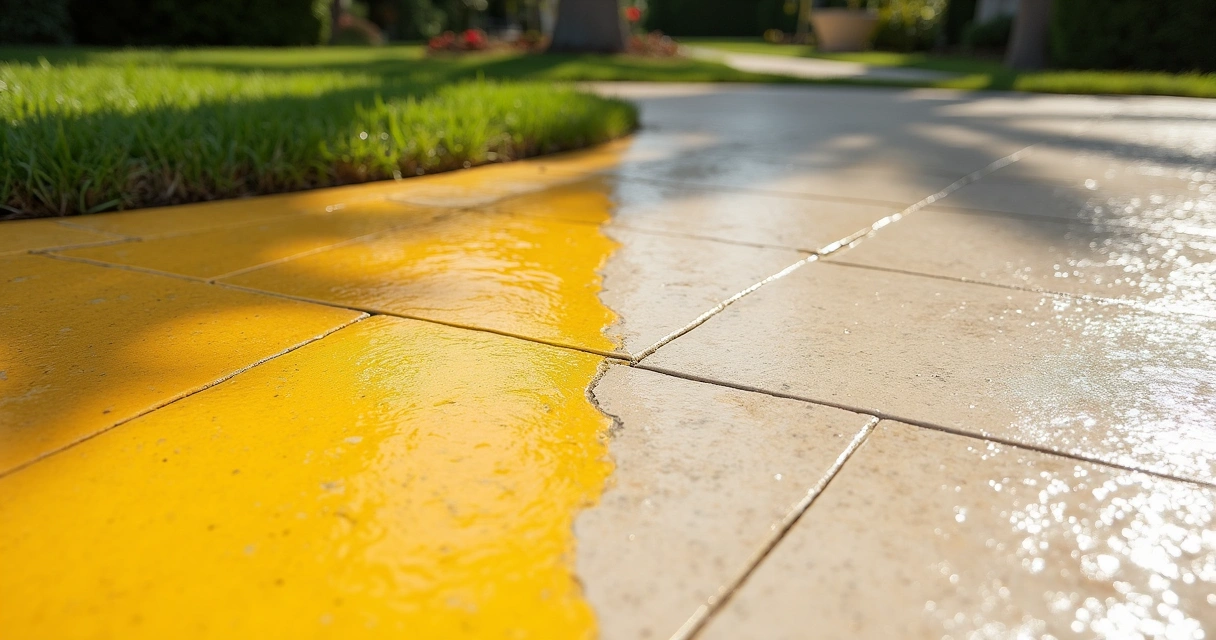
Orlando receives more than 230 days of sunshine annually. That’s a lot of UV—compounded by high temperatures, heavy rainfall, and the common occurrence of pool decks, patios, and covered or uncovered driveways.
Without UV protection, outdoor floors and coatings fail much quicker in Central Florida than in northern climates with less solar intensity. Sun-related failures are not just cosmetic. A cloudy, brittle, or peeling surface absorbs more moisture, leading to slippery spots or cracks. Those hazards mean more repairs, headaches, and costs over time.
We’ve seen projects where coatings that were called “outdoor-ready” peeled off in less than a year when installed without adequate prep or true UV stability. By contrast, when using uv-stable, 100% solids coatings with the right surface prep and drainage, we’ve witnessed finishes stay beautiful and safe even after several fierce Florida summers.
What to look for when selecting UV-stable epoxy systems
Not every epoxy on the shelf will last outdoors. We always recommend evaluating several critical factors beyond just the product label:
-
Resin chemistry: Is it true epoxy, hybrid, polyaspartic, or polyurethane? Polyaspartic and polyurethane topcoats are proven performers in UV.
-
UV inhibitors: Ask or check if the formula contains HALS (Hindered Amine Light Stabilizers), UV absorbers, or Titanium Dioxide—not just “resists yellowing.” This provides superior photostability.
-
Solids content: 100% solids epoxies cure harder and give a richer, more protective finish. Lower-solids (water-based) epoxies often wear or fade faster outdoors.
-
Slip resistance: When finishing driveways or pool decks, choose non-slip additives like quartz, flake, or texture media, as wet epoxies can be slippery in Florida’s rainy season.
-
Color stability: Some pigmented coatings fade or whiten. Look for fade-resistant tints or natural quartz for hold-fast color.
-
Supporting drainage: Outdoor coatings should work with the slope and joints of the concrete to avoid puddles and cracking.
We always walk our clients through these options during the free on-site assessment and estimate process, helping you weigh long-term durability, cost, and appearance side by side.
How UV-stable epoxies are applied for outdoor use
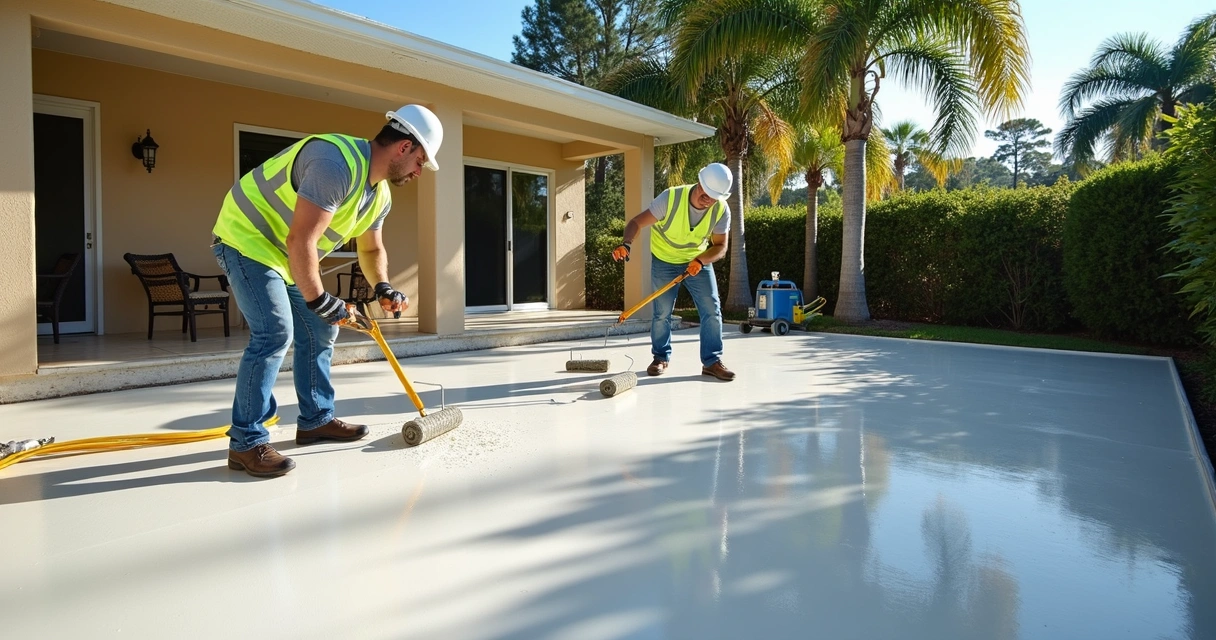
The performance of even the best UV-stable epoxies depends heavily on meticulous surface preparation and application. We want to share the steps that matter most in Central Florida:
1. Surface preparation
Old paint, sealer, or organic growth must be removed. We start with crack repair and degreasing, then use diamond grinders or shot-blasting to open up the slab and let the epoxy bite into the surface (not just sit on top).
2. Moisture and vapor testing
Florida soils often allow moisture to migrate upward, causing “blisters” or delamination if left unchecked. We perform moisture tests before installing any coating. If needed, we apply a moisture barrier primer specifically engineered for these conditions.
3. Primer and base coat
A high-quality primer ensures the base coat bonds tightly. For high-traffic spots—driveways, patios, or pool decks—we favor 100% solids epoxies for depth and chemical resistance.
4. Broadcast or texture (if specified)
To prevent slip hazards, we broadcast flake, colored quartz, or a custom non-slip media across the wet base before it cures. This is especially key outdoors.
5. UV-stable topcoat application
Finally, we install a specialized UV-stable clear topcoat. In our experience, polyaspartic or polyurethane topcoats excel at blocking yellowing, keeping finishes crisp, and allowing a fast return to service. This is truly the “armor” for your outdoor surfaces.
Surface prep and specialty topcoats make all the difference.
Comparing epoxies: why “UV-resistant” is not always “UV-stable”
Marketing language can mislead. “UV-resistant” often means only a light stabilization or short-term resistance. Proper UV-stable products (with independent lab data) are tested under direct, extended sunlight with clear standards for yellowing, chalking, and delamination.
-
UV-resistant: May resist UV for a few months, but will likely yellow or degrade within a Florida year.
-
UV-stable: Formulated and tested for exterior long-term use, with real-world warranties and local track records.
We review independent field-testing data and only use products with confirmed performance in Orlando’s sun, sometimes confirmed in sources like the NIST UV degradation study. Our approach means fewer callbacks, longer warranties, and greater peace of mind for property owners.
Project types that benefit from UV-stable epoxy
We’re often asked where UV-stable epoxy coatings make the biggest difference and why to choose them for certain projects. Here are some top use-cases we see in Orlando and Central Florida:
Driveways and walkways
These surfaces endure constant traffic—cars, bikes, bare feet, pets. Epoxy keeps stains and tire marks off, while UV stability prevents fading, yellowing, or brittle spots in the hottest sun.
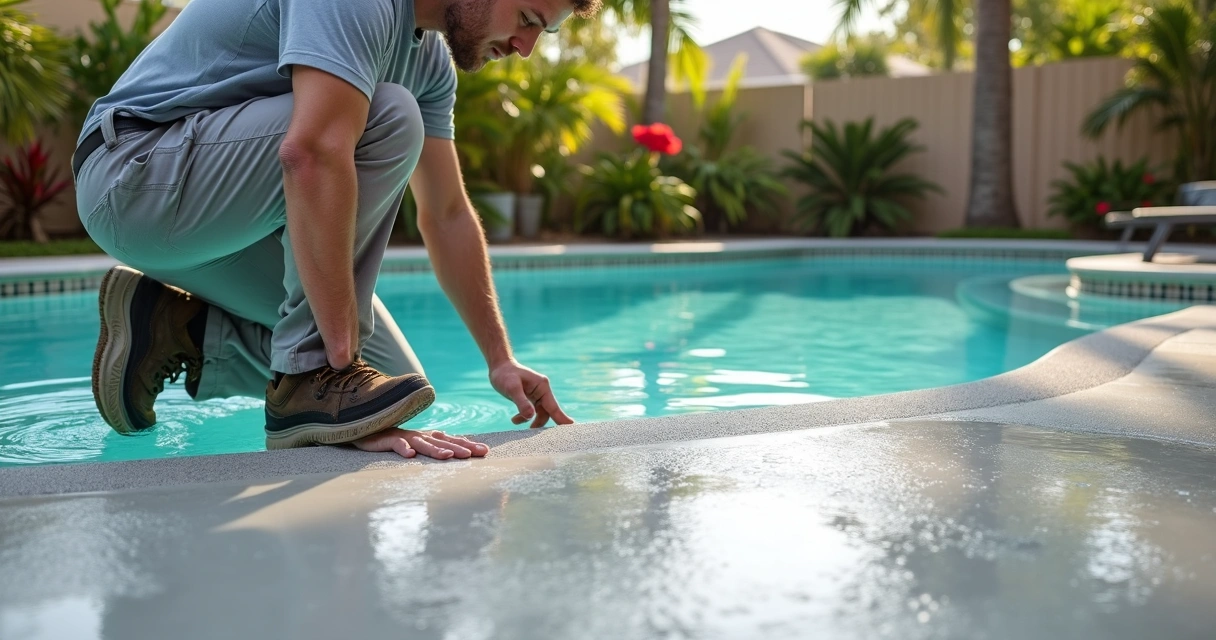
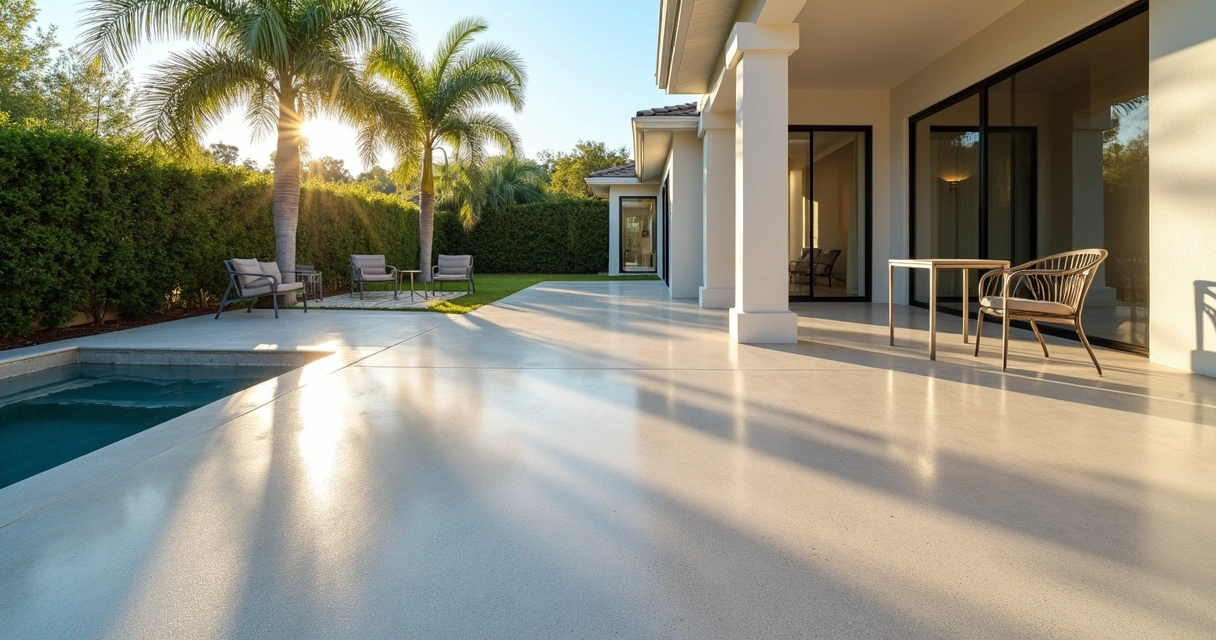
Pool decks and patios
Beside pools, UV-stable epoxies resist pool chemicals, heavy splashes, and humid microclimates. The slip-resistant textures we apply with flake or quartz make them safe and child-friendly—a must in family homes.
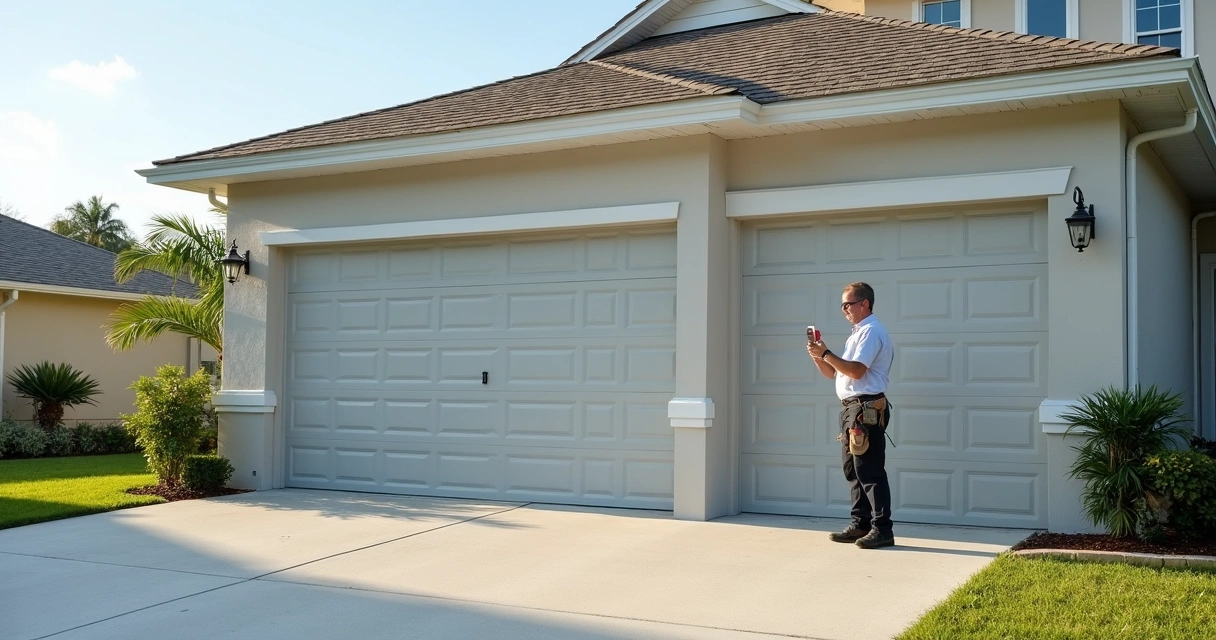
Garage fronts and commercial entries
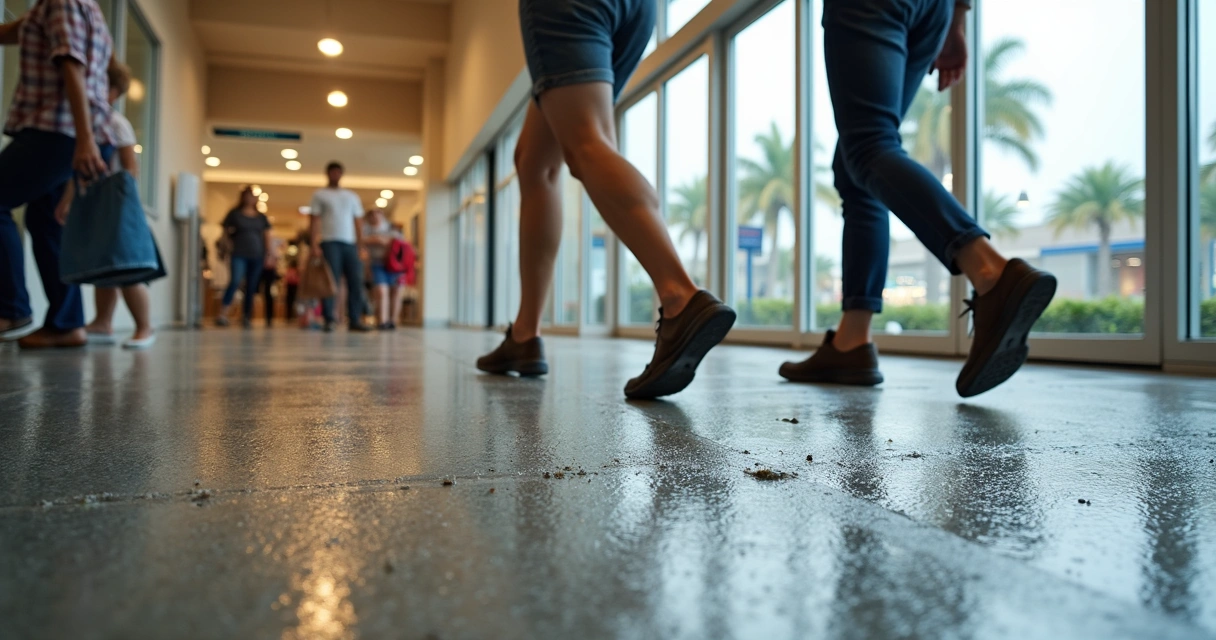
On commercial sites, a glossy, stable floor gives a crisp first impression and stands up to traffic and cleaning. Outdoor entryways and covered spaces often get partial sunlight for hours each day, which is still enough to damage basic coatings.
Retail and hospitality outdoor floors
Restaurants, shops, or clubhouses get “curb appeal” that lasts season after season, and are protected from stains, traffic, and surface bleaching.
UV-stable epoxy means beauty, safety, and lower maintenance for years.
Care, warranties, and long-term value
One of the most common myths is that epoxy coatings are “set-it-and-forget-it.” But even UV-stable formulations last longest with the right routine care.
We at GCM Best Services include a written warranty and a maintenance guide. Regular cleaning (with mild soap, not harsh chemicals or abrasive pads) and checking for early wear at edges or high-traffic zones are all it takes for most clients. Avoid power washing at high pressure or dragging heavy metal furniture across surfaces, as impacts can damage any coating.
Our written warranties range from 2–5 years depending on exposure and topcoat type, but we have seen properly installed UV-stable epoxy look gorgeous for much longer.
Should you ever see flaking or trouble, we’re here: we document every job with photos and detailed notes, so any repairs are seamless. For more insight into how concrete coatings prevent long-term cracking and ponding in Central Florida, we recommend the detailed article on concrete cracks and Florida patios in our resource library.
Regulations, drainage, and HOA approvals
In many Orlando neighborhoods and managed communities, you need HOA or city approval before making big changes to driveways, patios, or pool decks. We help clients design finishes and patterns that complement neighborhood styles and meet code.
-
HOA/permit support for all outdoor coatings
-
Assistance with drainage layout (to keep water away from buildings)
-
Upgrades for hurricane readiness and wind-loads if screen enclosures are being added nearby
Our project process, summarized in detail at our guide for licensed concrete contractors, covers every step from the initial assessment to the final walkthrough and warranty delivery.
Balancing cost and peace of mind
Whenever we counsel clients on their coating choices, we’re frank about up-front costs versus savings over the project life. UV-stable epoxies can be more expensive than basic “garage floor” kits, but for exterior use they avoid expensive repairs and rapid failures.
These points help you decide:
-
Calculate the replacement or repair cost if ordinary epoxy flakes, peels, or yellows within a year.
-
Think about property value and curb appeal—UV-stable finishes hold their gloss and color for years.
-
Factor in safety—quality non-slip epoxies prevent falls, especially by pools or in rainy months.
-
Consider warranty support and rapid return-to-service, as your outdoor space will be usable much sooner and with fewer interruptions.
For more on choosing the best installation partner in Orlando, see our quick concrete company selection overview. We truly believe that expertise in application and the right system produces savings, comfort, and better-looking spaces.
Ready for a professional quote? 📞 (407) 250-1948 • 24–48h • Orlando, Tampa & area.
Conclusion: UV-stable epoxy is the smart choice for Central Florida surfaces
In our two decades of serving the Orlando area, we’ve learned that protecting your outdoor concrete with UV-stable epoxy delivers real peace of mind. It means beautiful surfaces that don’t yellow, chip, or fail, even after years in the Florida sun. When the system is installed with care—from surface prep to drainage to topcoat—there’s no better way to enjoy lasting curb appeal, safe footing, and lower upkeep.
If you’re considering a new driveway, patio, pool deck, or any outdoor surface in Central Florida, we invite you to talk to us at GCM Best Services. Ask questions, see our photo gallery, and experience our hands-on, warranty-backed approach to outdoor coatings. Your space—and your investment—deserve nothing less.
Frequently asked questions
What is UV-stable epoxy coating?
UV-stable epoxy coating is a surfacing system designed to withstand prolonged exposure to sunlight without yellowing, chalking, or degrading. Unlike standard interior epoxy, it uses advanced UV-blockers, stabilizers, and sometimes alternative resins like polyaspartic or polyurethane to protect the finish on outdoor concrete, driveways, pool decks, and patios. The result is a long-lasting, vibrant, and safe surface.
How long does UV-stable epoxy last?
On properly prepared and maintained outdoor surfaces, UV-stable epoxy coatings can last several years, often 3–5 years or longer, depending on sun exposure and traffic. With good care and routine maintenance, appearance and performance are maintained much longer than with basic epoxies. Written warranties typically cover at least two years, but well-installed coatings often deliver even better results.
Is UV-stable epoxy worth it outdoors?
UV-stable epoxy is highly recommended for any outdoor applications in regions with strong sunlight, such as Orlando and Central Florida. It prevents yellowing, fading, surface breakdown, and costly early repairs compared to regular interior-grade epoxy. Over its lifespan, it provides better safety, appearance, and value.
Where can I buy UV-stable epoxy?
UV-stable epoxies are best purchased from reputable suppliers who specialize in outdoor coatings and formulations designed for professional use. We at GCM Best Services source and supply high-quality UV-stable systems for our projects and guide property owners through selection and application as part of our turn-key exterior services.
What are the best UV-stable epoxies?
The best UV-stable epoxies feature 100% solids content, robust UV stabilizers, and often use polyaspartic or polyurethane topcoats for added protection. Selection depends on the surface, level of sun exposure, and specific project requirements. At GCM Best Services, we use products proven to withstand Central Florida conditions and offer written warranties for every installation.
If you’re ready to see your property protected with the right outdoor epoxy solution—or want to learn more about the process—reach out to GCM Best Services for a no-obligation site visit. You’ll enjoy the difference that expertise, careful materials testing, and true UV stability deliver for your curb appeal and comfort.