Primary keyword: garage drain systems
Variants: garage trench drains, slot drains for garages, garage floor drain upgrades
Audience: Homeowners and property managers in Central Florida seeking longer-lasting, better-draining garages and improved home value.
Pain/Benefit: Current drains often clog, cause ponding, or fail during heavy rains. Upgrading prevents water damage, mold, and costly repairs.
Summary: Many garages across Orlando and Central Florida deal with standing water, cracked floors, failed coatings, and even mold from outdated or poorly installed drains. At GCM Best Services, we frequently encounter these issues and recommend the right garage drain system for both function and property value. In this article, we compare slot, trench, and point drain systems and guide you in selecting the most reliable solution for your needs.
- What garage drainage is—what goes wrong without it
- Slot, trench, and point drains: structure, how they work, ideal situations
- Performance, installation, code and maintenance
- Florida soils, garage design, and local rainfall
- When to upgrade and what to expect from professionals like GCM Best Services
- Cost considerations
- Case examples from Central Florida
- Frequently asked questions
The right drain saves floors from ruin, gear from rust, and health from hazards.
Why garage floor drainage matters in Florida
Standing water in garages is not just an annoyance—it can be the cause of mold, slab cracks, failing coatings, and even property value loss. In Central Florida, sudden downpours, sandy soils, and rising groundwater make these problems much more common. A well-designed garage drain system is our first—and sometimes only—line of defense against these risks.
At GCM Best Services, we see three main problems come up again and again:
- Ponding & leaks after heavy rain, washing vehicles, or from air conditioning condensate lines
- Spalling and cracking concrete from water that gets trapped and freezes/expands or leaches out surface minerals
- Damp, musty air and mold from inadequate drying and poor ventilation
Even the best epoxy coatings and safe, slip-resistant finishes can fail if water is not quickly and reliably removed. The right drain is the unsung hero that keeps everything else working, from your coatings to your storage and air quality.
What makes a good garage drain?
All drain systems for garages must:
- Move water away from the garage quickly
- Prevent standing water near doors, walls, and low spots
- Resist clogging from debris or silt
- Allow easy cleaning and maintenance
- Work with Florida's soils, heavy summer storms, and occasional floods
- Comply with local building codes (including ADA and HOA requirements)
Many older garages have just a single round "point" drain in the center, a shallow-scored gutter near the entrance, or a poor slope towards the driveway. If you see regular puddles, musty smells, or chipped concrete, it is usually a sign that a drain system upgrade is overdue.
Comparing the three main garage drain systems
When it comes to upgrading, the three most common garage drain systems are:
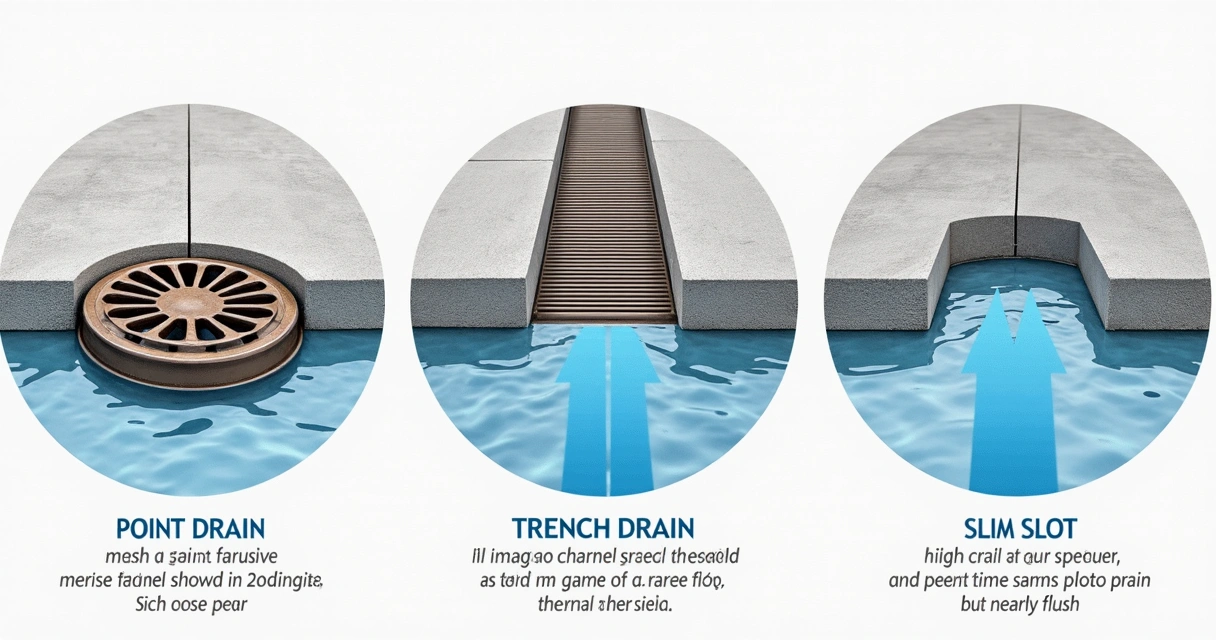
- Point drains: Single inlet points, usually round or square, in a low area of the floor.
- Trench drains (channel drains): Wide, narrow in-floor channels with removable grates spanning the garage or threshold.
- Slot drains: Slim, nearly invisible linear openings, typically at the car entrance or across the floor, without a visible grate.
Each of these systems has a place—and a set of challenges. We've laid out how they work, their benefits, and how we at GCM Best Services install and maintain them for Central Florida properties.
Slot drains: Function, advantages, and scenarios
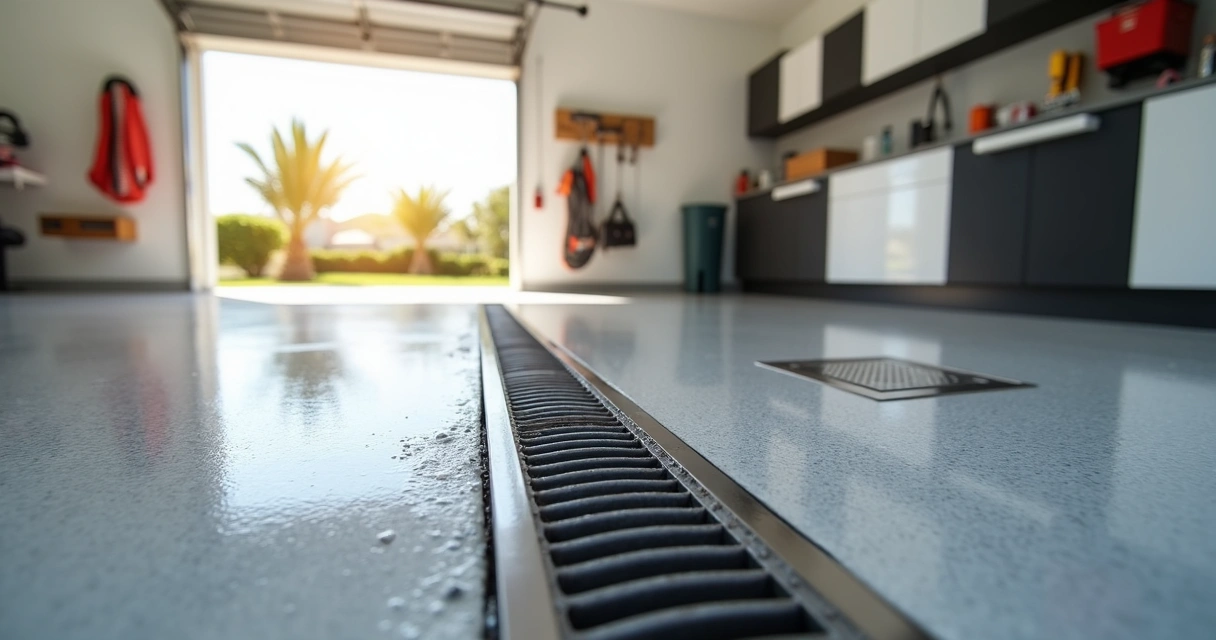
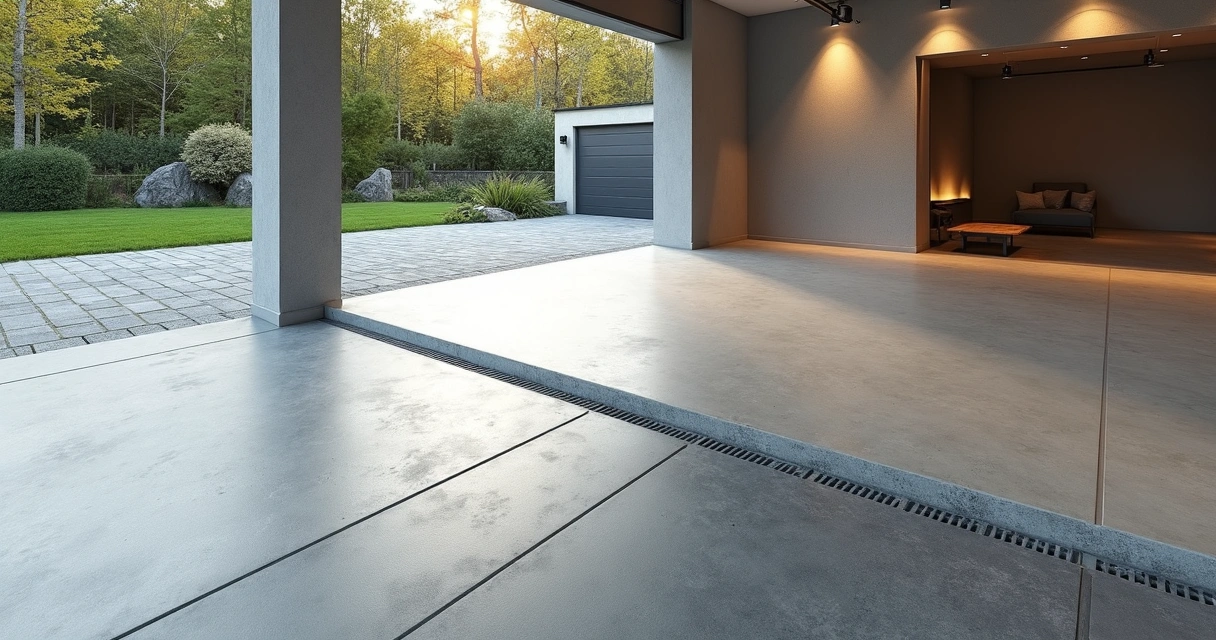
Slot drains use a long, slender slit running across the floor, often with only a 1/2 to 1 inch opening. The water is funneled through this slot and carried away in a hidden underlying trough or pipe—clean, modern, and flush with the surface. Slot drains excel where minimal visual profile or trip hazards are a concern, and are popular near garage doors to catch everything before it enters the garage envelope.
We find slot drains offer:
- Low-profile, almost invisible finish (compatible with decorative and epoxy floors)
- Minimal impact on rolling heavy items (carts, bikes, lawn equipment)
- Fast surface drainage at the threshold—no standing water under doors
- Safe for bare feet or small wheels
For garages that double as showrooms or entertainment spaces, slot drains offer the highest-end look. They resist clogging better than you might expect—there is no removable grate for leaves or dirt to block, and the straight run is often faster to hose out than a deep trench system.
However, slot drains are best for smaller to moderate flows. The Texas Department of Transportation notes that limited internal volume restrains their use for very large catchment areas, since surges could overwhelm a single narrow slot in its drainage recommendations. For long spans or oversized garages, we may recommend segmenting flow or using dual slots.
Trench drains: Strength, capacity, and practical use
Trench drains (sometimes called channel drains) are the most robust all-around solution we install for heavy-duty garages, workshops, and flood-prone properties. They feature a broad, grated channel—anywhere from 3 to 12 inches wide—embedded into the floor, usually at door thresholds or spanning work zones where water often accumulates.
Key trench drain benefits include:
- Massive water-moving capability: Excellent performance in garages with large catchment areas or near sloped ramps
- Interchangeable grates: For easy cleaning, high traffic loads, and matching decor
- Accommodates high soil movement—a big benefit for Florida’s sandy base
- Durable enough for vehicles, power tools, and rough use
The Texas Department of Transportation sets a maximum intercept rate at about 1.4 cubic feet per second per foot of trench length per side, meaning even a standard 8–10 foot section can catch serious water volumes according to official guidance.
Trench drains are most common in:
- Wider, multi-bay garages and commercial spaces
- Shops or workspaces where water and debris come from many directions
- Older properties where retrofitting existing concrete’s slope is impractical
Installation does require a bit more demolition and careful finish work than slot drains, but the result is a long-lasting, rugged system. Our team ensures correct trench sizing, embeds compacted sub-base, and precise grading—vital to avoid ponding and the headaches that come with it.

Point drains: Simple, common, but limited
Point drains remain common in older garages and small workshops throughout Central Florida. These are classic, round or square drain inlets, usually installed at the lowest point of the floor. Water must slope from every corner toward this drain, which then connects to a pipe running out to the yard, a dry well, or the storm system.
The benefits include:
- Low cost and simple installation in new builds
- Small footprint
- Quick to install when repairing cracked concrete
However, point drains rarely perform well if the floor is not perfectly pitched or if sand, debris, or leaves enter the system. In Florida, shifting soils and repeated flooding can cause settled or tilted slabs, leaving pools of water that never make it to the point drain. Cleaning often requires snaking out the runs—which is why edge drains and linear systems have overtaken point drains for all but the smallest projects.
Installation: What to expect
Whether we are retrofitting a new drain or including it in a garage slab pour, the installation process includes several key steps:
- Assessment & design. Mapping water entry points, measuring slopes, and checking for structural or drainage issues underneath (such as a high water table).
- Permitting & code review. Ensuring compliance with local Orlando and Orange/Osceola/Polk County guidelines and HOA requirements.
- Excavation. Cutting or saw-cutting existing concrete, or positioning drains for new pours. For trench or slot drains, we ensure the base is compacted, drainage lines are correctly positioned, and extra clearance is given per Illinois Drainage Guide recommendations for structural support.
- Installation. Setting drains/pipe, installing rebar or mesh, compacting sub-base, adding backfill, and pouring concrete to proper slope. For edge drains, we use a minimum 4-inch main pipe, aligning with Federal Highway Administration cleaning and maintenance guidance.
- Finishing. For slot drains, this means smoothing floor edges for invisible results. For trench drains, leveling and securing the grates. For point drains, compacting concrete for full perimeter fit.
- Testing & walkthrough. We check for full water flow, review clean-out access, and provide a written warranty on workmanship and materials.
In most cases, drainage upgrades are paired with new garage flooring—epoxy, polyaspartic, or other durable, slip-safe finishes—to ensure a worry-free result. If you’re interested in learning more about protective coatings, visit our concrete repair and coatings guide.
Garage drainage for Florida soils and weather
Florida's sandy, fast-draining soils, high humidity, and tropical storms make good drainage less about saturation—and more about fast removal and flood control. We see a pattern in homes built in the 1970s–90s: flat or mis-sloped slabs, poor pipe connections, and inadequate outflow plans. Over time, seasonal settling opens new low spots, turning a once-smooth floor into a catch basin.
Regional best practices we follow include:
- Using a 6–8 inch compacted sub-base below the drain and slab
- 3,000–4,000 psi concrete with proper joint placement to prevent slab cracks (See our advice for preventing cracks in concrete)
- Correct gravel and drainage bed beneath outlet pipes
- Sealing the system at all penetrations to avoid upward water “bleed” during heavy rain
- Directing outflow to dry wells, storm systems, or daylight, compliant with county codes
For paver driveways or entries, compatible trench or slot drains can be used without breaking the pattern, thanks to careful edging and integrated drainage solutions with brick pavers. Our multidisciplinary team at GCM Best Services brings together experience in hardscapes, pavers, turf, and screen enclosures to make sure every drainage plan fits the site—not just the concrete.
Maintenance and long-term care
A well-built drain system should require only basic seasonal care—for slot and trench drains, this means cleaning leaves, dirt, and sand away from the entrance and rinsing the channel every few months. Avoid harsh de-icers or high-pressure water jets that might chip coatings or erode joints. For point drains, check grates and trap baskets regularly. If you notice slow draining, schedule a professional cleaning before bigger problems develop—including standing water or slab heaving.
We recommend an annual garage assessment, checking drain alignment, outflow, and surface slope—sudden changes could signal settling or hidden leaks. With proper inspection, most drain systems installed by professionals like GCM Best Services can outlast the floor itself.
Upgrade timing, costs, and value
Most garage drainage upgrades in Orlando are paired with other surface improvements—replacing cracked slabs, adding decorative pavers, or installing new garage flooring. Upgrading the drain at the same time avoids double labor costs, exposes flaws before they worsen, and ensures codes are met for resale appraisal or insurance inspections.
Typical timing:
- Drain replacement for a single garage: 1–2 days (add 1–2 days for floor recoating)
- Large, multi-bay, or paver-integrated projects: 4–7 days including drying and inspections
Cost factors:
- Drain channel length and width (longer or deeper = more cost)
- Type of finish (decorative grates, epoxy floors, paver transitions)
- Amount of demo or repair needed for existing slab
- Slope corrections, outflow improvements, and site grading
- Local permits, design, and warranty services
On a per-foot basis, point drains are the lowest up-front cost, but often require the most long-term maintenance. Slot drains are slightly more expensive due to finish detail but pair well with high-end floors. Trench drains, with their robust grates and superior water-handling, offer great value in larger garages and challenging sites.
Upgrading your drain gives you more than a dry floor. It protects everything in your garage—and adds real value.
Case examples from Central Florida
Here are some situations we've seen, and the chosen solutions:
- Residential upgrade in Winter Park: Homeowner had repeated water intrusion at the garage entry, ruining epoxy finishes. We installed a 12 foot slot drain at the door threshold, tying in a new surface slope and paver apron. The result was a dry floor year-round.
- Workshop in Clermont: Large 3-bay space faced mud and sand buildup after summer storms. A commercial trench drain was installed, complete with heavy-duty grates. Now, the space stays cleaner, and equipment lasts longer.
- Historic Orlando bungalow: Small garage with settled slab and persistent odor. We replaced the old, clogged point drain with a trench system tied into a dry well. The turnaround was dramatic—the garage was usable again and the musty aroma disappeared.
If you want to see how these solutions fit with your driveway or landscape, explore our guides on concrete surfaces, weed prevention for pavers, and paver drainage solutions.
Conclusion
Upgrading your garage drainage may seem like a small project—but as we have seen across Orlando, it delivers big results. Slot, trench, and point drains each have their place. The right choice ensures a dry, usable, and lasting garage that stands up to Florida’s climate. At GCM Best Services, we assess the full site, recommend system improvements with honest estimates, and back every job with clear communication and written warranties.
If you're ready to move beyond quick fixes and enjoy a garage that actually stays dry, reach out for a professional consultation. We'll recommend the most effective drain upgrade—tailored to your floor, home, and budget. If you want peace of mind and a warranty you can rely on, it's time to upgrade with GCM Best Services.
Ready for a professional quote? 📞 (407) 250-1948 • 24–48h • Orlando, Tampa & area.
Frequently asked questions about garage drain upgrades
What is a slot drain for garages?
A slot drain is a linear drainage system consisting of a slim, elongated opening in the garage floor that leads to an underground channel or pipe. Unlike traditional trench drains, slot drains are almost flush with the surface and lack a removable grate, making them discrete and safe for rolling equipment. They are commonly placed at floor transitions or entrance thresholds to stop water before it enters the garage. Slot drains are ideal for spaces where appearance and minimal obstruction are priorities.
How does a trench drain work?
A trench drain uses a broad, grated channel embedded in the floor to intercept and carry away surface water. The trench is typically installed across the door threshold or flush with the floor, with water flowing into it through a removable grate. The drain then channels the water out of the garage through buried pipes to a dry well or storm system. Trench drains are well suited for high-flow situations, like large garages, workshops, or areas with frequent flooding, as supported by transportation department evaluations.
Which is better, slot or trench drain?
The choice between slot and trench drains depends on your garage's size, water volume, and design preferences. Slot drains are great for smaller garages with moderate flows and for achieving a seamless or decorative look. Trench drains handle larger water volumes, debris, and heavy traffic, making them suitable for commercial or high-use residential garages. We recommend slot drains for aesthetic-focused projects and trench drains when water movement and durability are the top priorities.
How much do garage drain upgrades cost?
Garage drain upgrade costs depend on the system type, length, grading needs, finishes, and regional site work. In Central Florida, most slot drain installations range from a moderate price per linear foot, while trench drains cost slightly more due to their size and heavy-duty materials. Point drains are typically lower in up-front cost but may require more maintenance or upgrades later. Each situation is unique; we provide detailed, written estimates after on-site assessments to ensure transparency and no surprises.
Is it worth it to upgrade drains?
Upgrading garage drains is a reliable investment—especially in Florida—where rain, humidity, and shifting soils can quickly damage unprotected floors and stored items. Better drainage protects concrete, improves garage usability, prevents mold and odors, and often increases home value for future resale. Most insurance adjusters and inspectors recommend timely upgrades to prevent damage claims and costly remediation. With proper installation and care, a new drain system should last decades.