Primary keywords: preventing standing water, pool deck drainage, pool deck water problems, drainage tips for pool decks
Audience: Florida homeowners frustrated with puddles or standing water near pool decks who want professional, long-lasting solutions that really work.
Pain/Benefit: Standing water around a pool ruins the experience and leads to costly repairs. Better drainage prevents slick surfaces, structural damage, and bug issues for years of outdoor fun.
Summary: Standing water near a pool is more than a nuisance—it creates slippery spots, stains, and even structural headaches if ignored. Drawing on our experience with Central Florida soils and building codes, we’ll share seven practical, expert insights to prevent puddles and keep your pool deck safe, beautiful, and worry-free. As a licensed contractor, GCM Best Services manages everything from sub-base prep to drainage design, so you avoid future trouble.
- Understanding why standing water forms
- Planning proper slopes during deck installation
- Smart drainage solutions: French drains, deck drains, and beyond
- Choosing the right deck materials for Florida’s weather
- Seam sealing and joint management
- Landscape grading and integration
- Ongoing maintenance and seasonal checks
- FAQs: causes, fixes, materials, cost, and routine checks
Ready for a professional quote? 📞 (407) 250-1948 • 24–48h • Orlando, Tampa & area.
Why standing water around pool decks is more than an eyesore
We’ve heard it again and again: "It’s just water—it’ll evaporate." But standing water near your pool deck is a warning sign, not something to dismiss. Let’s walk through what’s at risk.
Stubborn puddles do more than ruin aesthetics—they signal drainage issues that, if ignored, damage your deck, pool, and foundation.
Here are some of the most common headaches:
- Slippery surfaces that cause falls, especially for kids
- Algae and mold growth staining the deck and spreading to grout or paver joints
- Efflorescence and stain patterns on concrete, brick, or pavers
- Deck heaving or cracks as moisture seeps below and expands with heat
- Corrosion of metal fixtures or enclosures from soaking in standing water
- Mosquitoes and pests attracted to chronic damp areas
Water that won’t drain is a problem that won’t wait.
In Central Florida, heavy rainfall and sandy subsoils present special challenges. Decks built "just level enough" can quickly collect runoff, ruining materials and leading to unplanned costs. That’s why we plan, test, and double-check drainage details on every project at GCM Best Services.
Florida’s pool decks: Unique challenges with our soils and seasons
Florida is famous for sunshine—and downpours. Our pool decks take a heavy beating, with sand-rich soil, hurricanes, and sun baking the slabs. Here’s why your deck faces more stress here than most places:
- Soil types: Sandy, quick-draining blends in some neighborhoods, but clay pockets or construction debris elsewhere block water movement underneath.
- Rapid evaporation: The surface dries, but below remains saturated, leading to "phantom" puddles that reappear.
- Frequent storms: Deluges hit fast, pooling on flat or uneven decks.
- Tree roots: Roots from nearby landscaping or neighbor’s yards shift levels and open cracks in deck slabs or joints.
When we start a project, whether remodeling or repair, we always ask: “Where’s the water going?” If the answer is "nowhere," it’s time for solutions.
The 7 expert tips to prevent standing water around pool decks
1. Design the right slope from the start
Every great pool deck starts with one rule: water must flow away—never toward—the pool, house, or low spots.
When pouring concrete, laying pavers, or setting stone, we use a precise slope—commonly 1/4 inch per foot—directed away from the pool’s edge and toward drains or landscaped beds. Why does this matter?
- A flat deck, especially with pavers or stamped concrete, may appear level but traps water in invisible dips.
- Building codes and warranty standards often require specific “fall” (slope), and missed details can void coverage.
- Even resurfacing or coating over the top (like epoxy or overlays) can’t “fix” a deck without the correct underlying slope.
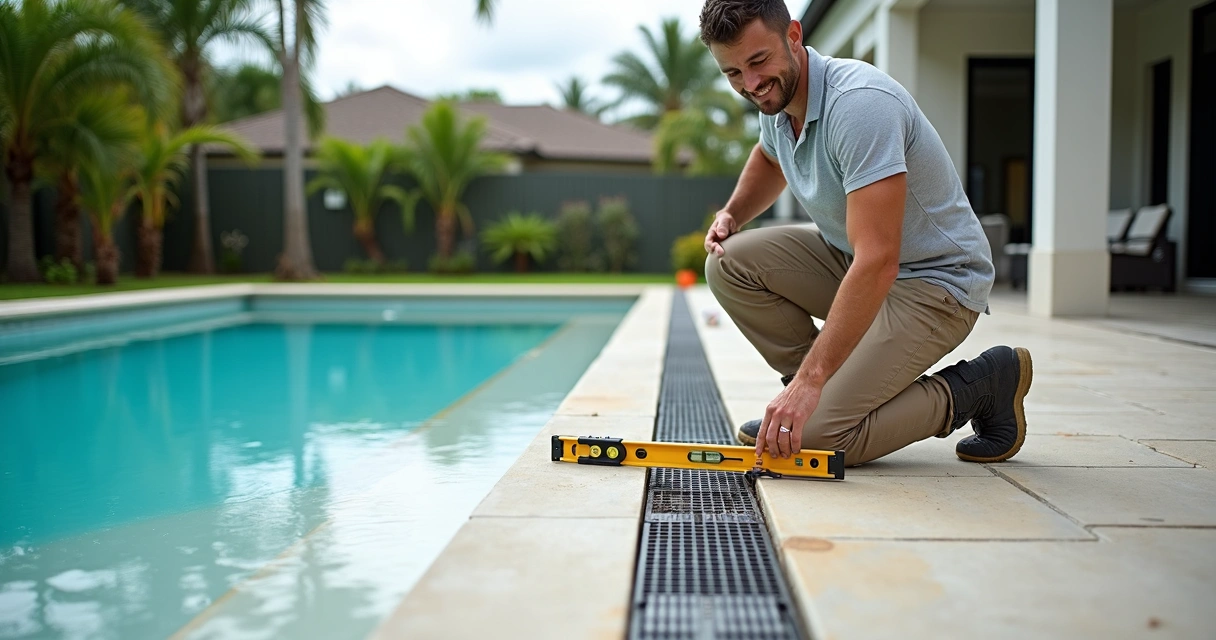
During our installations, we check not just with visual lines, but with laser levels and string lines—especially important with large-format slabs or expansive paver patios. If you want to learn more about concrete and paver installation standards for Florida homes, our paving and hardscape resources offer extra details on what works best for the climate.
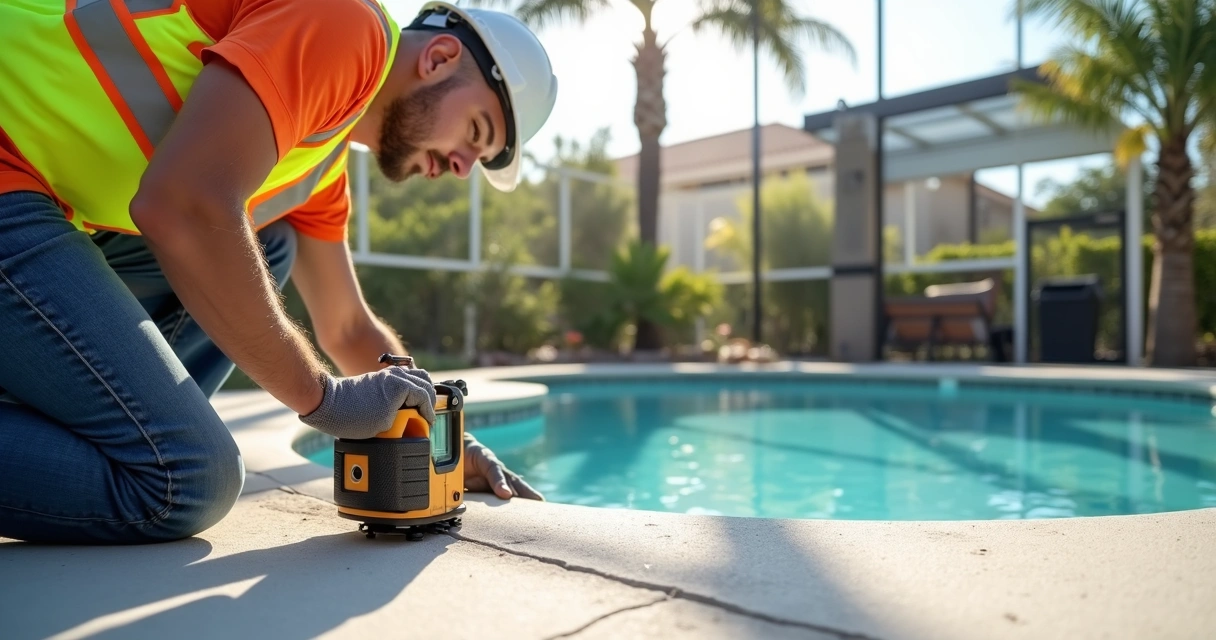
But what if your deck is already built? Sometimes, micro-leveling or targeted slab jacking can restore the right grade. For pavers, relaying is possible—but it’s always easier to get slope right the first time.
2. Choose drainage systems that match your yard
Slope is the first step, but even the most perfectly angled deck will need help if water outpaces absorption. That’s where reliable drainage systems come in. We often use three types, chosen based on soil, layout, and volume.
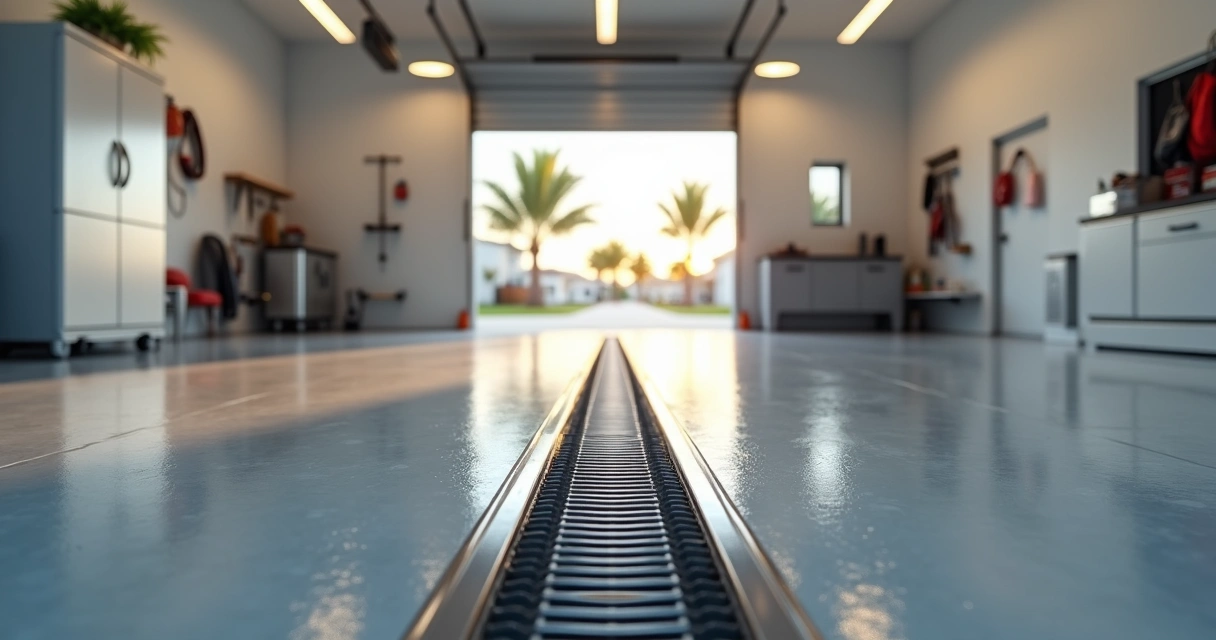
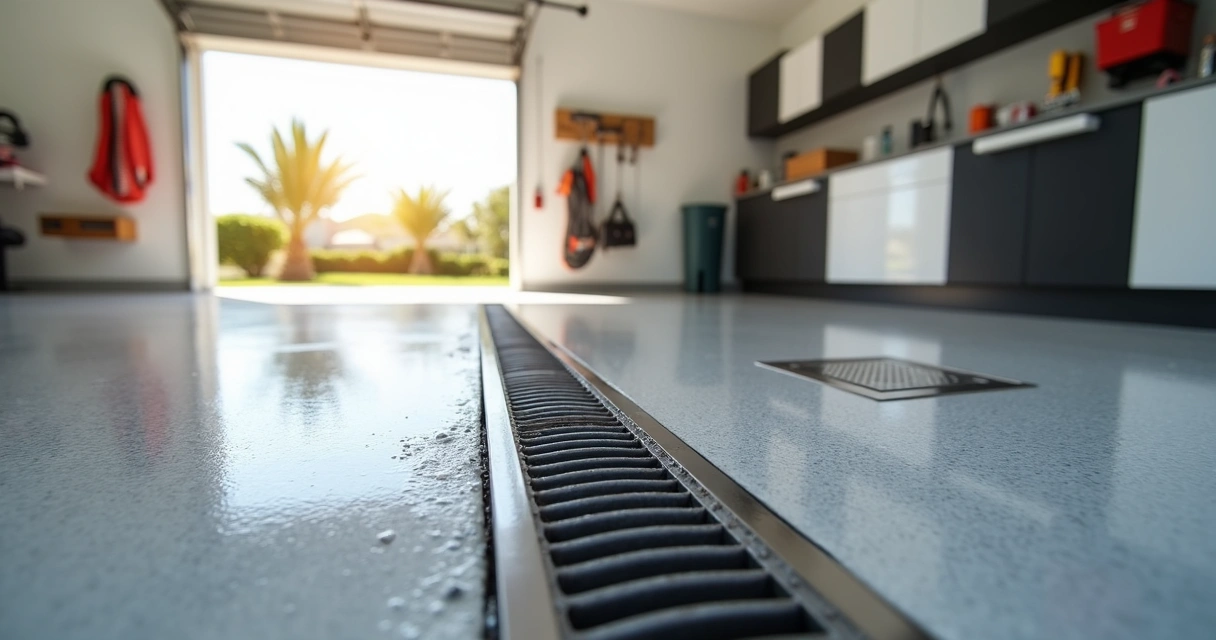
- Channel or strip drains: These linear drains sit flush with the deck surface, catching runoff and delivering it to underground pipe runs. Great for patios and walkways.
- French drains: Beneath the deck or next to patios, these buried trenches filled with gravel and a perforated pipe direct water away from the home, ideal for soggy yards or low-lying spaces.
- Area or spot drains: Positioned in deck "valleys" or where slope naturally gathers flow. They connect to discharge pipes routed far from foundations or pool equipment.
We match each system to the deck type and tie it into larger landscape drainage, especially for homes with complex yard contours or stubborn wet spots. For a deeper look at hardscape drainage, check out our guidance on drainage solutions for Florida paver installations.
The best time to add deck drainage? Before the water is an emergency.
3. Select deck materials with water in mind
Material choice is often guided by style, but in Florida, durability and drainage should be part of your decision. We’ve worked with every major option across Central Florida, and here’s what we’ve learned.
- Pavers: Brick and concrete pavers, if installed over a compacted sub-base with graded “bedding sand,” easily drain surface water. Edge restraints and polymeric joint sand lock pavers in place and allow limited permeability.
- Stamped or broomed concrete: Best when paired with crack control joints and finished with surface texture that encourages sheet flow toward drains. Avoid slick finishes or “zero-slope” slabs.
- Natural stone: Porous travertine or quarried stone can "breathe," but needs proper sub-base prep and grouted, stabilized joints to prevent water from settling underneath.
- Composite or artificial wood: These sometimes appear on pool decks as modular platforms. Adequate ventilation and spacing between boards is essential for fast drainage.
No matter the material, integrating drainage and planning for sub-surface water movement is key—even the most water-resistant deck will fail if water isn’t guided away.
4. Pay attention to expansion joints and seams
We’ve seen it often: a gorgeous concrete pool deck compromised by one overlooked gap. Joints—whether expansion, control, or between deck sections—matter for more than cracking. They also become unplanned water traps if not properly sealed or aligned.
Our teams space and seal joints based on deck size, soil movement, and local codes. For pavers, polymeric sand in joints minimizes plant growth and prevents sand washout, which leads to "channels" where water pools.
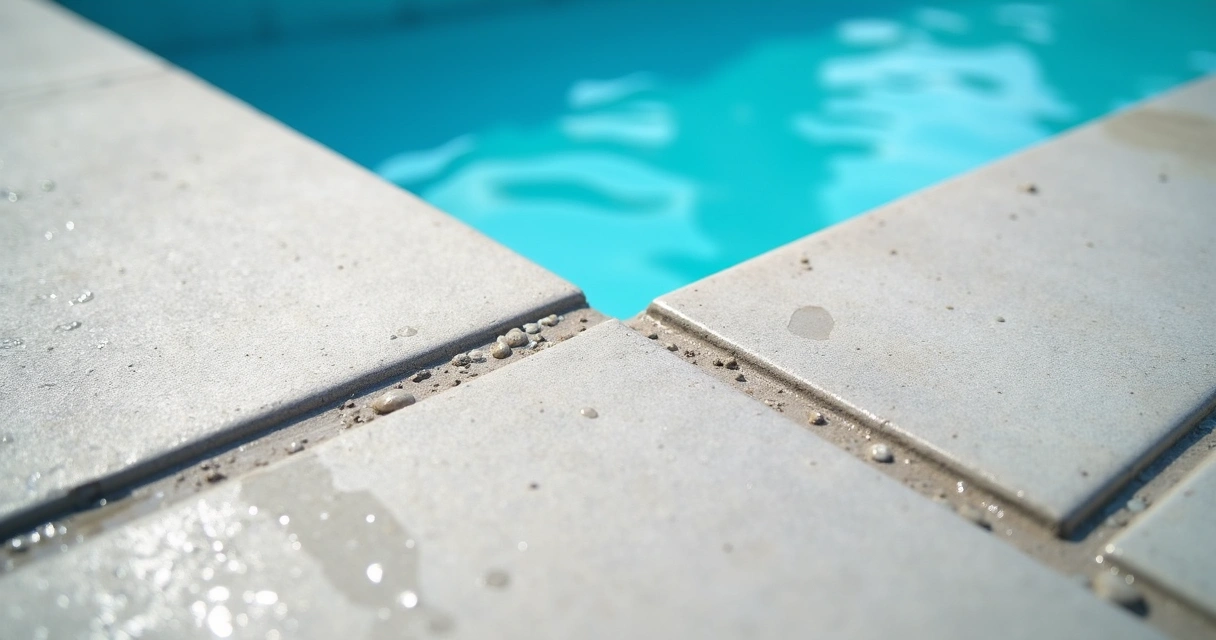
Well-managed seams and joints guide water along, not underneath, your deck surface.
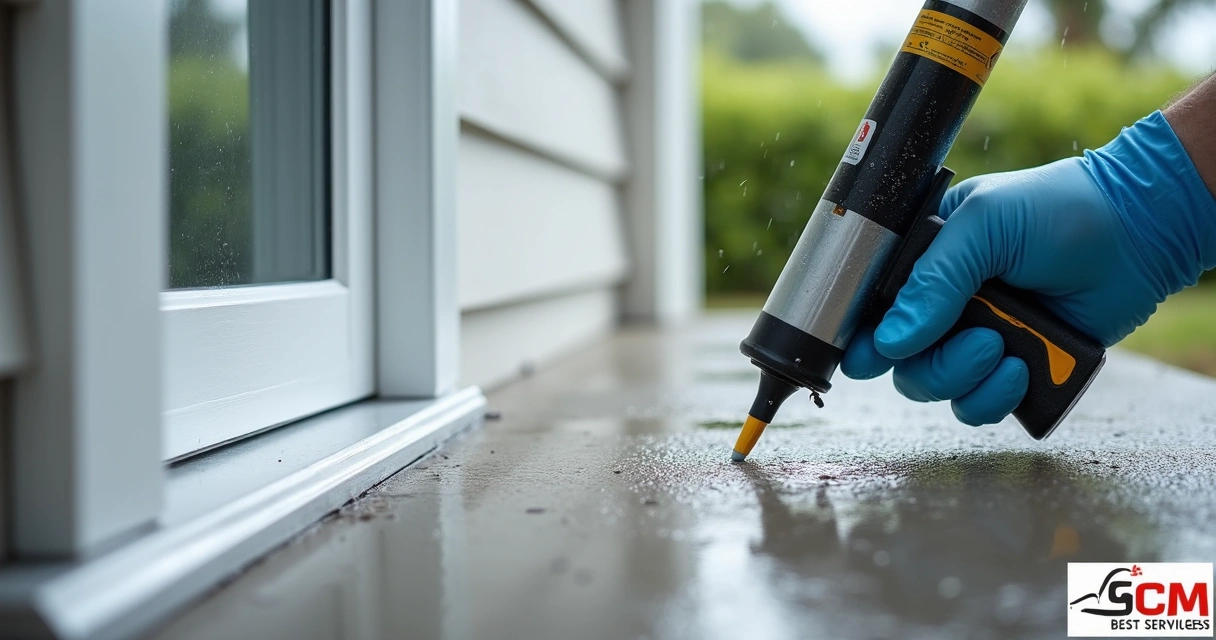
Over time, check for gaps or old, cracked caulking and renew it as part of regular maintenance. It’s far cheaper than letting water infiltration cause frost heave or cracks.
5. Blend deck drainage with landscape grading
Even the perfect deck, with slope and drains, can’t function alone. If your backyard is flat or slopes toward the pool, rainwater will keep rushing back no matter what the deck looks like.
We design transitions so the deck, lawn, and planting beds all move water away from the living space. Sometimes this means reshaping landscape grades, adding swales (shallow troughs), or building berms that slow down runoff.
- Raised planters or turf edges can block water if not properly integrated.
- Downspouts from roofs should always connect to piping that empties well away from both deck and foundation.
- Mulch and groundcover hold soil, but too much can clog drains—use stone mulches near inlets.
For landscapes with heavy clay or recurring puddles, tying yard drainage into the deck systems makes a dramatic difference. That’s why, when completing a pool deck, we always look at the big picture—ground, landscaping, and deck together.
Hardscape design is truly a "system," not a single step.6. Plan for Florida’s climate: consider screen enclosures and protective finishes
Florida’s UV rays, sudden summer storms, and falling oak leaves mean pool decks must stand up to much more than water. We routinely recommend:
- Enclosures and cages: Screened enclosures limit debris (which can clog drains and create algae food), and slow down wind-driven rain. Our pool cage and lanai projects always take wind-load codes and fast-drain mesh into account.
- High-build coatings and sealers: Elastomeric coatings, penetrating sealers, or polyaspartic/epoxy finishes reduce water infiltration and make surface cleanup easier.
- Non-slip additives: Sealed surfaces can get slick when wet. Grit or texture flags help boost traction.
Integrated solutions—matching surface finish to enclosure and landscape—turn basic decks into all-season living zones, even in stormy Orlando weather.
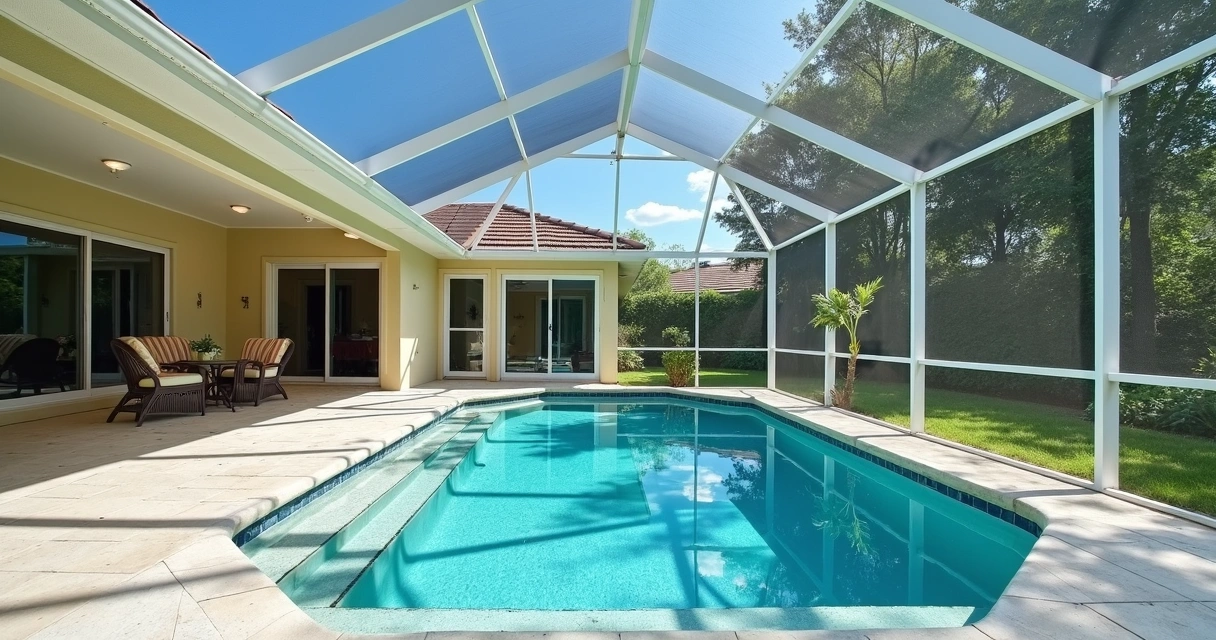
Find more about surface treatments and coatings for decks and patios in our exterior projects gallery.
7. Schedule maintenance and seasonal checks
Drainage isn’t a “set it and forget it” solution—every system needs routine care.
We encourage pool owners to create a seasonal checklist to protect their investment:
- Walk the perimeter after heavy rains and storms, noting new or persistent puddles
- Flush deck drains with a garden hose, checking for clogs from leaves, mulch, or sand
- Reapply joint sealers or sand between pavers as needed
- Prune roots or nearby plantings if you spot lifting slabs or shifting pavers
- Inspect caulk or expansion joints for cracks after hot summers or freezes
These checks take just a few minutes, but catch problems early—saving costly repairs down the road. We always include a custom maintenance guide and warranty documentation on every GCM Best Services project.
Our real-world approach: warranty, assessments, and long-term results
When our team visits your property, we look beyond the first puddle. Each project starts with a detailed site survey, moisture assessment, and drainage plan based on soil type, yard contour, and your long-term plans.
From design through installation and follow-up, we handle:
- Permits and HOA coordination so drainage upgrades are approved and documented
- Written warranties on the deck surface, drainage hardware, sealing, and structure
- Photo reports and walkthroughs at project close, highlighting drainage paths
- Clear recommendations for future care
It’s not just about fixing puddles—it’s about protecting outdoor living spaces, keeping your investment solid for the long run, and making sure you spend more time enjoying the pool and less time worrying about repairs.
When DIY fixes aren’t enough—calling a professional pays off
Some water issues are easy—sweeping debris away, clearing leaves. But if standing water persists, or you’ve noticed sinking pavers, splitting slabs, or algae stains, there’s probably a bigger problem below the surface.
Standing water rarely solves itself.
That’s when calling an experienced, local team can make all the difference. Through years of working on Florida’s toughest decks, patios, and pool surrounds, we’ve learned what works for both new installs and challenging retrofits.
If you want an assessment or just practical advice, we cover slab repair, drainage, and surface upgrades in more detail on our blog.
Conclusion: Take action for clear, dry, and safe pool decks
Standing water around your pool deck is never just a cosmetic issue. It signals that your outdoor environment isn’t working as designed. Over time, small puddles create big repair bills, unsafe surfaces, and stress you don’t need.
At GCM Best Services, we combine technical skill, local experience, and full-service project delivery from estimate to warranty. Whether you need a one-off fix, a new deck build, or a full drainage redesign, we’ve got the tools and the know-how to do it right the first time.
Ready to reclaim your pool deck and enjoy a truly outdoor lifestyle? Reach out for an assessment—professional, friendly, and no high pressure. Let’s stop those puddles from ruining your pool days in Central Florida!
Frequently asked questions
What causes standing water around pool decks?
Standing water forms when the pool deck surface is too flat, slopes the wrong way, or drainage is blocked or missing. In Florida, rapid rain, poor soil absorption, roots lifting slabs, or clogged drains also play a big role. Material wear and lack of maintenance make these issues worse over time.
How to fix puddles near my pool?
The best fix starts with finding the reason—measuring slope, inspecting drains, and checking for settling or cracks. Solutions range from regrading the deck surface, adding channel or French drains, resealing joints, or, for small dips, using patching compounds. For persistent or widespread issues, a full professional assessment is recommended.
Are certain deck materials better for drainage?
Permeable pavers and textured, sloped concrete are generally more forgiving with drainage than large, flat slabs or nonporous tile. Brick or concrete pavers over a compacted, sloped sub-base move water effectively, while proper expansion joints and sealed seams also help concrete decks shed rain. All materials, however, still need the right underlying slope and drain placement for best results.
How often should I check for standing water?
We suggest walking your pool deck after every heavy rain, especially during Florida’s wet season, and doing a full inspection at least every spring and fall. Look for recurring puddles, clogged drains, or shifting edges. Catching drainage issues early keeps repairs quick and affordable.
What are affordable ways to prevent pooling?
Budget-friendly solutions include routine sweeping and clearing debris from drains, adding gravel swales or rain gardens near low spots, and resealing paver joints to block water infiltration. For surface puddles, patching low areas or relaying small sections can help. Significant drainage installations can be spaced over time to fit your budget.