Primary keyword: garage floor drainage channels
Variants: garage drainage channel options, large garage floor water control, channel drains for garages
Audience: Home and property owners in Orlando and Central Florida with large garages or commercial spaces worried about water pooling.
Pain/Benefit: Water can cause safety risks, concrete damage, and even mold. Proper drainage channels solve these headaches and add long-term peace of mind.
If you have a large garage floor and want it to stay dry, safe, and strong, drainage channels are a smart investment.
In this article we will explain the reasons to install channels, how they work, and our pick for the top 7 options for large Florida garages, based on our experience at GCM Best Services. We’re licensed and insured to build floors that last—and dry floors always last longer.
Outline
- Why large garage floors in Florida need drainage
- How channel drains work
- Top 7 drainage channel options
- Key installation tips for Florida conditions
- Conclusion & next steps
- Frequently asked questions
Ready for a professional quote? 📞 (407) 250-1948 • 24–48h • Orlando, Tampa & area.
Why large garage floors in Florida need drainage
In Central Florida, heavy rains and high groundwater are normal facts of life. Add in the daily use—cars, trucks, utility vehicles, sometimes boats or bikes—and garage floors face a real challenge when it comes to water control.
Standing water isn’t just a nuisance. It can lead to:
- Slip hazards, risking safety for families and employees.
- Surface damage like cracks and spalling, especially when water soaks into unsealed concrete or joints.
- Mold and mildew growth if moisture gets trapped long-term.
- Eventually, foundation issues from persistent dampness and soil movement under the slab.
We’ve seen how even well-built slabs—like those engineered by GCM Best Services with reinforced sub-bases and high PSI mixes—can run into trouble if drainage isn’t addressed from the start.
Water always finds a way—give it a smart path to follow.
When designed right, drainage channels keep your garage dry and help protect everything inside.
How channel drains work
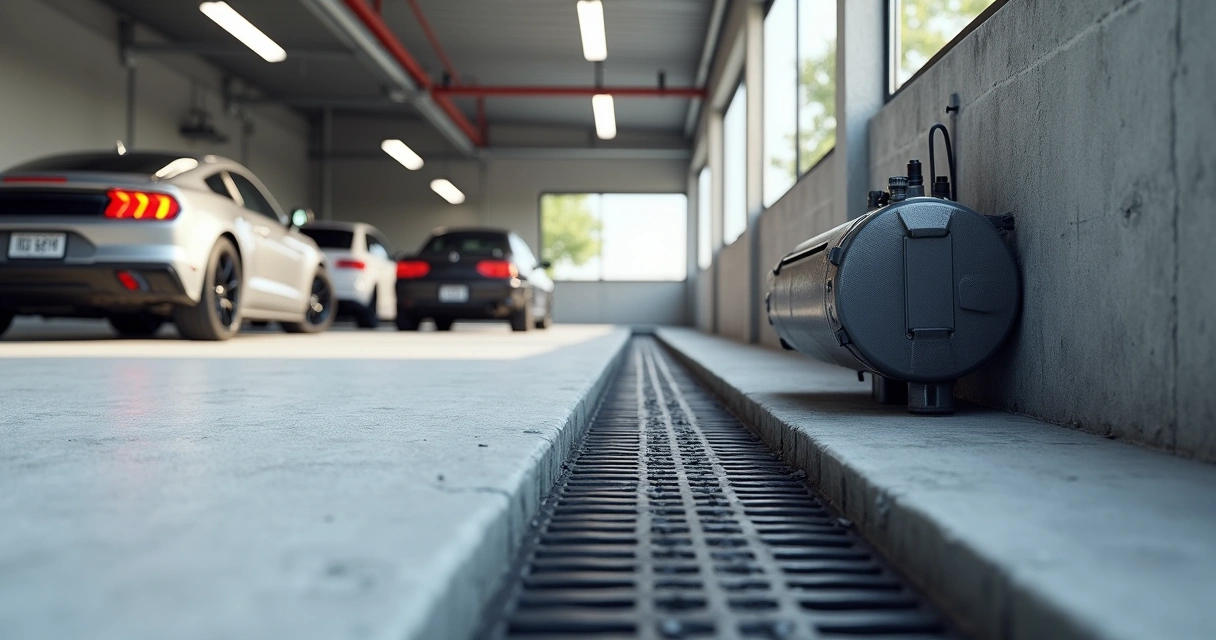
Channel drains, sometimes called trench drains or linear drains, collect surface water along the length of the floor and direct it to a safe outlet. Unlike traditional round floor drains that only catch water close by, channel drains provide continuous capture along a key line (like the garage threshold or central low point).
A typical garage channel system includes:
- Surface grate: Allows water to enter but keeps debris out.
- Channel body: Collects and guides water.
- Outlet connection: Carries water away—either to stormwater, drywell, or approved discharge.
The choice of channel, grate style, slope, and depth depends on garage size, rainfall rates, and how fast water needs to move. Recommendations from organizations like the University of Illinois stress the need for stable, well-sized outlets matched to both system flow and catchment area—especially for large paved floors.
Top 7 drainage channel options for large garage floors
After years of building and repairing Florida garage floors, we’ve learned that the best drainage channels are those that match the size, design, and usage patterns of the space.
1. Pre-sloped polymer concrete trench drain systems
These are our top pick for most large garage applications, especially when a permanent, high-capacity system is needed.
Pre-sloped systems are made from durable polymer or fiberglass-reinforced concrete. Each channel section features a built-in slope (usually 0.5%–1%), which helps water move fast and keeps debris from sitting still.
- Available in modular sections, usually 1–2 meters per piece.
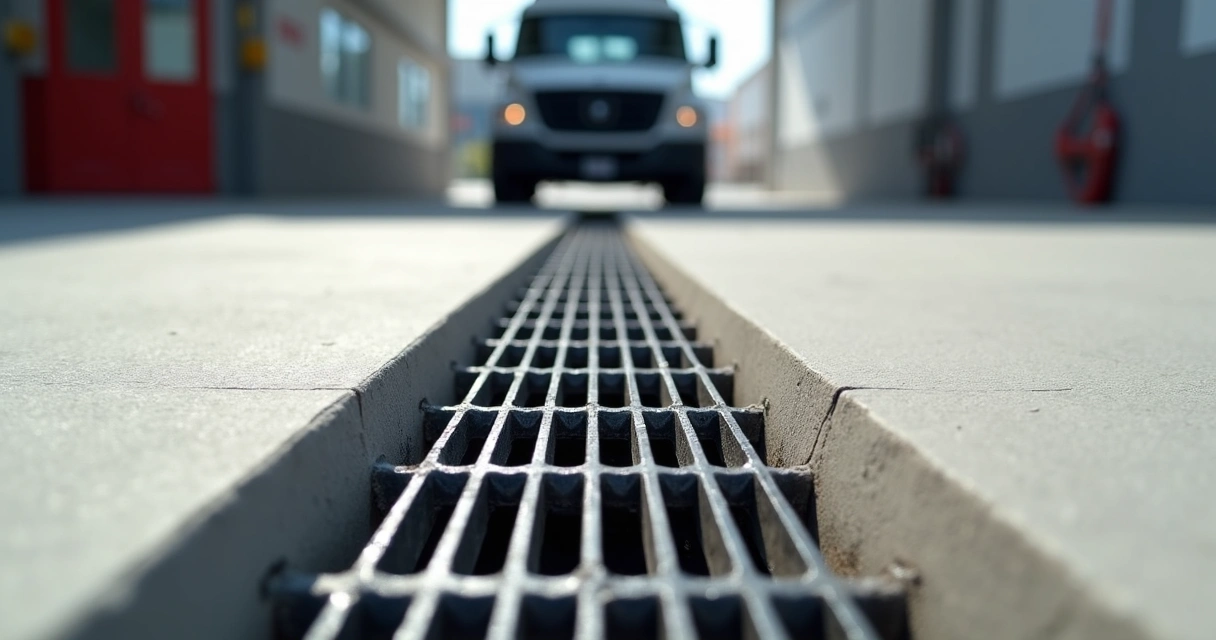
- High load ratings for vehicles, including trucks and forklifts.
- Grate options: galvanized steel, ductile iron, or reinforced polymer.
- Long lifespan; resistant to freeze/thaw, salts, and many chemicals.
The sloped base is what really stands out. Even on perfectly level floors, gravity does the work. Installation is precise but once set, these drains can move hundreds of gallons per hour per channel.
Big garages need drains that don’t back up.
A well-installed polymer concrete channel is a one-time investment for decades of drainage peace.
2. High-capacity PVC or HDPE modular channel drains
When cost or easy installation is key, modular plastic channel drains are a popular choice for both residential and light commercial garages.
Made from high-density polyethylene (HDPE) or uPVC, these drains are sold in kits that snap together. Many systems include built-in bottom outlets for direct pipe connections to stormwater or drainpipes.
- Lightweight for fast positioning and adjustments during install.
- UV-stabilized and chemical resistant for Florida’s harsh environment.
- Grate color choices to match floor finishes or garage aesthetics.
While they don’t quite match the lifespan or loading of polymer concrete, for standard driveways and large home garages, they hold up well—especially when paired with sealed concrete, as discussed in our concrete care guides.
3. Stainless steel slot drains
When appearance, smooth profile, and easy cleaning matter, slot-style stainless drains shine.
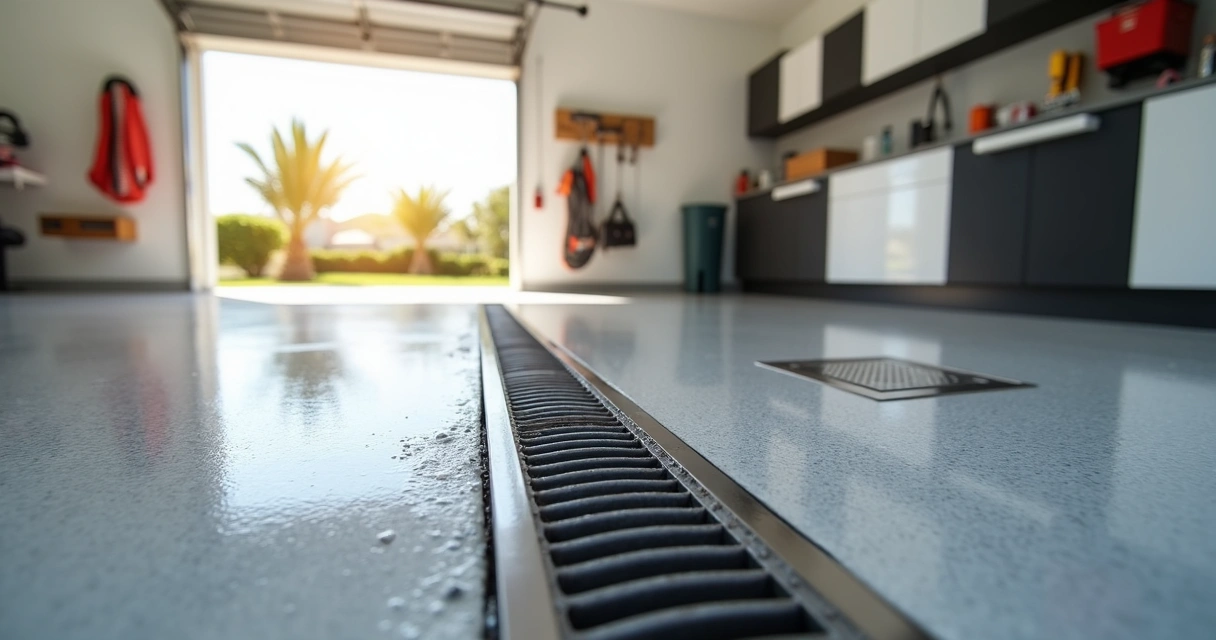
A slot drain is simply a narrow slit (as little as 1/2”) that runs the length of the trench. Below, a stainless trough carries the water away. There are no surface grates, so cars and rolling carts roll right over without a bump.
- Excellent for seamless floors: epoxy, polyaspartic, or sealed concrete.
- Simple, modern look—good for showrooms, collector garages, or retail spaces.
- Easy to flush and clean; hair or debris rarely gets stuck.
In our opinion, slot drains are ideal for spaces where maintenance must be simple and unobtrusive. They do require careful placement and slope for best results, especially for very large floors or sloped entries.
When you want drainage without distraction, slot drains are a quiet performer.
4. Custom-formed cast-in-place concrete channels
For truly massive garages or industrial repair bays, sometimes a custom-poured concrete channel is the best solution.
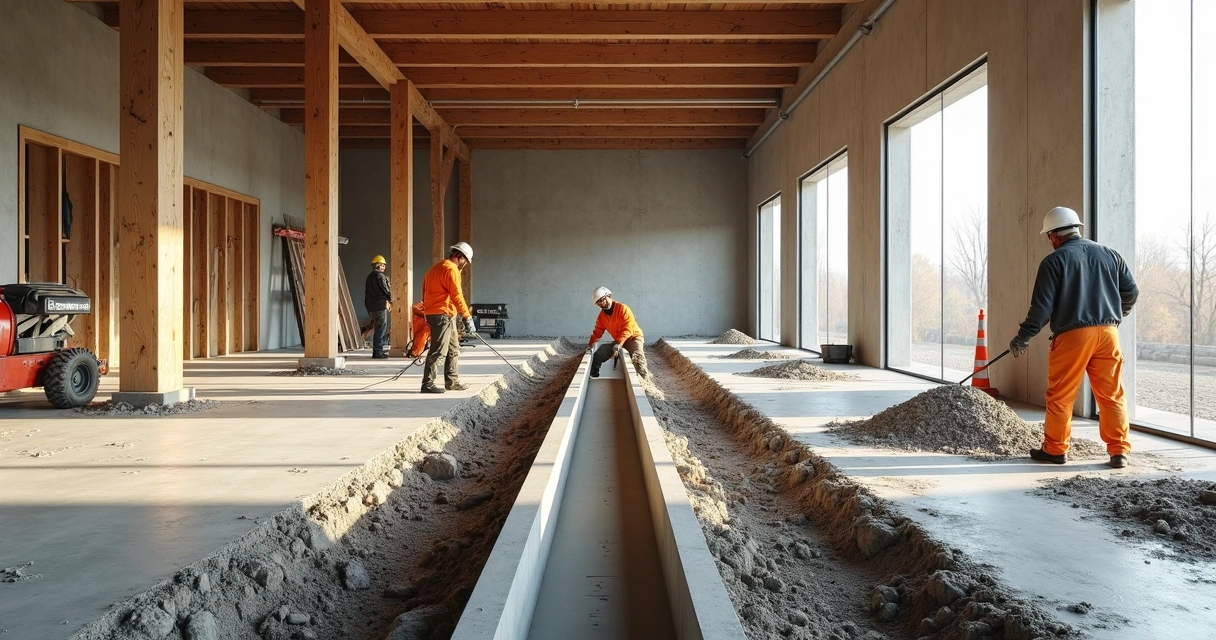
This involves creating the drain trench during slab construction, shaping it to exact needs, then adding a surface grate or slot cap. It’s the most flexible method, but also the most complex.
- Unlimited length, width, and depth to match very heavy traffic or machine use.
- Can incorporate extra rebar, mesh, or edge protection for forklifts and heavy loads.
- Integrated seamlessly into new floor pours (learn more about our concrete approach here).
A poured concrete channel gives ultimate control—but requires skilled labor and a good understanding of channel slope and stability design, as outlined by the National Cemetery Administration.
5. Grated surface channels for perimeter drainage
For some garage layouts, water most often enters or collects at the door or wall sides—not in the center.
That’s where low-profile, surface-mounted channel drains along the threshold or wall edge catch runoff before it becomes a problem. These are especially helpful for garages that slope slightly outward or spaces with roll-up doors facing driveways.
- Quick retrofits to control water at entry points.
- Easy to install along garage doors or outbuilding thresholds.
- Pair well with paver or brick transitions (see our hardscape resources for driveway design tips).
Perimeter channels rarely handle as much flow as main drains, but they’re great for stopping the “sneak attack” from blowing rain or irrigation.
Sometimes the best defense is waiting right at the door.
6. French drains and hybrid gravel trench systems
If your garage floods from groundwater or distant surface water—not just rain inside—the answer may lie just outside the slab.
A traditional French drain is a gravel-filled trench with a perforated pipe collecting water below ground. These are excellent when you need to intercept water before it enters the building.
- Installed parallel to foundation walls or under garage entries.
- Connect to daylight outlets or stormwater (see our coverage on paver site drainage).
- Can be combined with surface drains for “layered” protection.
Studies from Michigan State University show that more perforations in the pipe lead to higher inflow—so select multi-row pipes for large volumes, and use proper trench fabric to avoid clogging.
French drains are best when surface solutions alone won’t keep rain at bay.
7. Internal floor trench drains with integrated sumps or pumps
Some large garages, especially below-grade structures or those needing full water control, use internal trench drains that feed a sump basin and pump.
This allows for automatic water removal, even when slopes for gravity drainage are not possible.
- Critical for basements, underground garages, or facilities below street grade.
- Keeps the floor dry no matter the weather or outside water table.
- Requires reliable power and periodic sump maintenance.
These solutions add a layer of protection against the “worst-case scenario”—assuring peace of mind for valuable equipment, classic cars, or commercial spaces.
When every drop must go, put the solution underground.
Key installation tips for Florida conditions
After hundreds of installations with GCM Best Services, we know that no two garages are alike—but Florida’s environment brings some shared challenges. Here are practical tips for success:
- Always compact and prepare the sub-base under channel drains and garage slabs. Soft sand or clay can lead to settling, lifting the channel or letting it sink.
- Select reinforced, high PSI (3,000–4,000) concrete for any cast-in-place work as we do for all flatwork projects, including repairs (see more tips here).
- Maintain a minimum slope (1% if possible) inside the channel or the trench system to help even modest rainfall clear quickly (see recommended slopes).
- Follow proper layout for outlets. The University of Illinois guide points out that for larger areas, channel outlets must handle all flow efficiently—a narrow outfall will back up in heavy rain, even if your channel is large.
- Integrate expansion joints between channel drains and the garage slab, especially if using heavy grates or large exposed aggregate finishes. This helps prevent cracking at transitions (guides for crack prevention).
- Don’t ignore the landscaping and hardscape transitions. Water flowing from the channel must have a planned path—connect to swales, French drains, or paved drains as in our linked hardscape advice.
Custom designs and installations from GCM Best Services make sure your garage drainage system fits the exact needs of your property, from engineering to final walkthrough.
Conclusion & next steps
Choosing the right drainage channel for your large garage floor protects your investment, avoids headaches, and helps your property age gracefully—especially in rainy Florida.
From polymer concrete trench drains for industrial durability to perimeter channels, French drains, and pumped sumps, we have solutions for every situation. Every garage is unique, so it pays to start with a proper site visit and design.
At GCM Best Services, we manage concrete, drainage, permitting, and HOA approvals, always aiming for dry, safe, long-lasting results. We document every step with photos and provide signed warranties—so you know exactly what you’re getting.
If you’re tired of puddles and want a garage floor that stays dry year-round, book a no-obligation assessment with our team. We’ll provide a clear, tailored quote and help you find the best drainage solution for your needs in Orlando, Tampa, and Central Florida.
Contact GCM Best Services today—where your clear path to a dry, safe garage begins.
Ready for a professional quote? 📞 (407) 250-1948 • 24–48h • Orlando, Tampa & area.
Frequently asked questions
What is a garage floor drainage channel?
A garage floor drainage channel is a linear system installed at floor level that collects water across a wide area, directs it into a grated trench or slot, and safely routes it away from the garage. This helps keep floors dry, prevents slips, and protects concrete from water damage.
How to install a drainage channel?
Installation steps generally include marking the drain path, cutting or forming the channel in the slab, compacting the sub-base, setting the channel sections in concrete, leveling for proper slope, attaching grates, and finally sealing all joints and transitions. For complex jobs or large garages, we always recommend professional design and installation to avoid future water issues.
Are drainage channels worth it for garages?
Yes, drainage channels prevent water pooling, slip hazards, concrete damage, and mold growth in large garages. They reduce maintenance, add to property value, and ensure your space is safer and more usable no matter the weather.
What are the best drainage channels?
The best channel depends on garage size and use. Polymer concrete trench drains last longest and handle the most water, while plastic modular drains are affordable and easy. Stainless slot drains give a sleek finish, and French drains work best for outside groundwater. For most large Florida garages, pre-sloped polymer concrete systems are our top overall pick.
How much do drainage channels cost?
Costs vary with size, material, complexity, and installation needs. For large garage floors, basic modular plastic channels installed may run $30–$60 per linear foot, while heavy-duty polymer or custom concrete systems may cost $90–$160 or more per linear foot, including professional labor. Add more for sumps or pumps. For an accurate estimate, our team will assess your space and soil and provide a detailed written quote.