Sweltering afternoons. Humid evenings. A patio should be your retreat, not a hotplate. In Central Florida, we know the unique mix of sunshine, rain, and high temperatures doesn’t just affect our comfort—it can even limit how often we enjoy our own backyards. At GCM Best Services, we believe that thoughtful upgrades transform patios into refreshing sanctuaries, making summer more enjoyable and less draining. In this guide, we share seven proven ways to achieve thermal comfort on your patio during Florida’s toughest months, drawing on both scientific research and our deep local experience.
Patios can offer true relief—even on the hottest days.
Florida summers are getting hotter, according to projections from the Florida State University Institute for Successful Longevity. With more than 70 days per year above 91°F expected by 2050, choosing smart upgrades is no longer just a luxury for comfort—it’s become a matter of real well-being and safety for outdoor living lovers.
Here are the upgrades we’ve found most valuable for our customers in Orlando and across Central Florida:
- Smart patio shading
- Thermal mass and reflective surfaces
- Misting and evaporative cooling systems
- Strategic ventilation and airflow
- Landscape design for natural cooling
- High-performance coatings and finishes
- Comfort-focused screen enclosures
Why Florida patios need special comfort upgrades
The humidity isn’t the only culprit. Patio comfort in our area comes down to a nuanced interaction between temperature, radiant energy, humidity, and air movement. As reported in thermal comfort in buildings research by the Florida Solar Energy Center, these factors don’t just add up—they multiply each other’s effects. An extra degree or a slight lull in the breeze can dramatically change how a patio feels.
In our work for hundreds of Central Florida homeowners and property managers, we’ve seen how ordinary patios—especially with older concrete or paver designs—often bake in the sun. Lack of airflow, poor shade, and the wrong materials all compound the problem. Our goal at GCM Best Services is always to create outdoor spaces that invite people outdoors even during July.
1. Smart patio shading: your first defense
Nothing beats shade for stopping heat before it reaches you. We take shading seriously. Not all shade solutions are created equal—some can even make a patio hotter by trapping heat or blocking breezes. Our approach is to combine shade elements for maximum effect.
Permanent structures vs. flexible shade
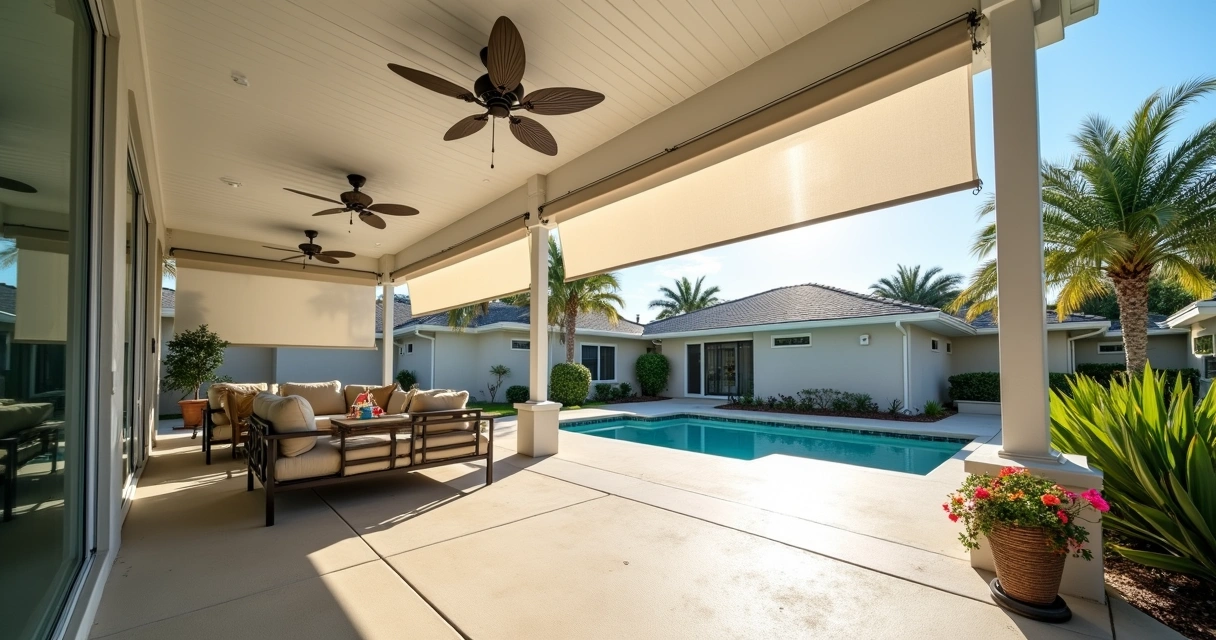
Permanent patio covers, like insulated aluminum roofs, composite pergolas, or fixed canopies, deliver robust sun protection and rain shelter. These can drop surface and air temperatures by 15°F or more. Well-designed louvered roofing or adjustable pergolas add control over sun and airflow, making the space comfortable morning through evening.
Flexible solutions like shade sails, retractable awnings, or temporary umbrellas provide customizable shelter perfect for parties or changing seasons. We recommend 98% UV block for sails and canopies, ideally in lighter colors (which reflect more heat). Placement matters: analyze sun angles to shield seating and high-traffic zones without blocking healthy airflow.
Layering is key. Combining fixed roof elements with movable sails or side panels allows for precision. During late-day sun or quick rain, you can adapt instantly for best comfort.
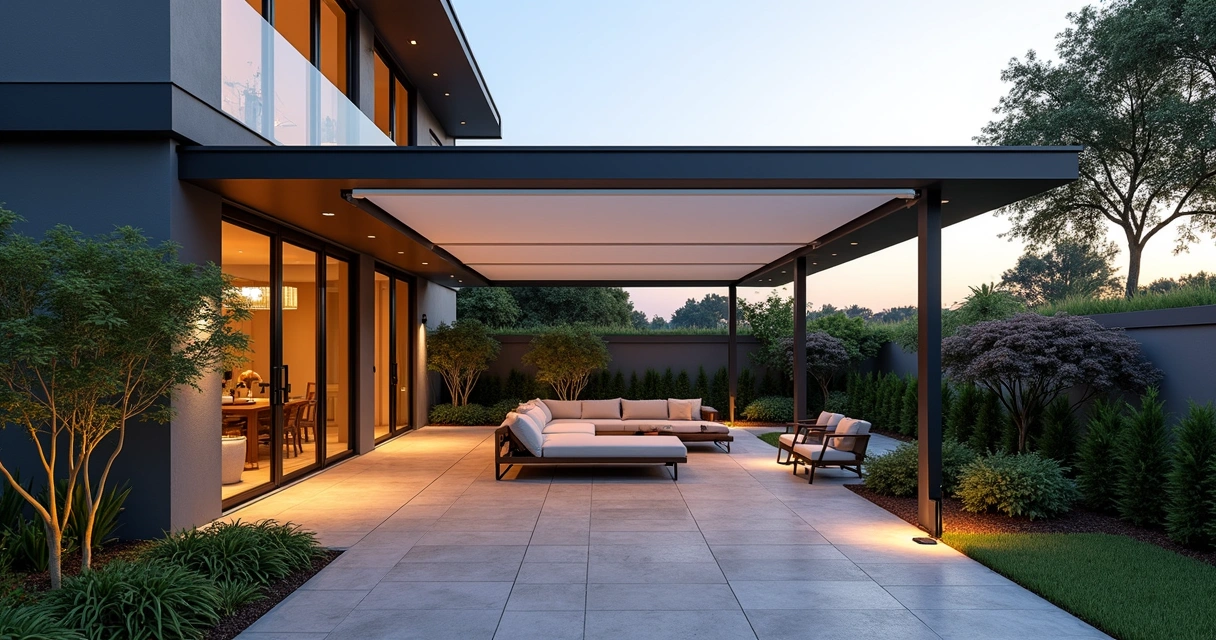
Shade placement and air movement
Too much shelter can stifle air. Following recommendations from the University of Florida’s guidelines on ventilation, we plan patio cover structures with gaps or vented sides. This allows breezes to pass while still cutting radiant heat, keeping you within 10°F of outside air.
For patios that double as pool decks, partial enclosure with vented roof panels solves two problems: less sunburn and cooler air, with a little privacy bonus built in. We often blend shaded and open zones for groups that want both sun and shelter.
2. Thermal mass and reflective surfaces: be cool from the ground up
Many homeowners overlook how much heat rises from the surface underfoot. Stone, plain concrete, and uncoated brick can soak up sunlight and radiate it back for hours after sunset. We recommend “cooler” materials and treatments.
Material selection for heat control
Paving choice matters. We use light-colored, dense pavers or concrete finishes with reflective properties. In our patio and driveway projects, we’ve found that:
- Exposed aggregate and light-toned slabs stay up to 13°F cooler than standard dark concrete under peak sun.
- Porous pavers allow air and water to move below, helping moderate surface temps.
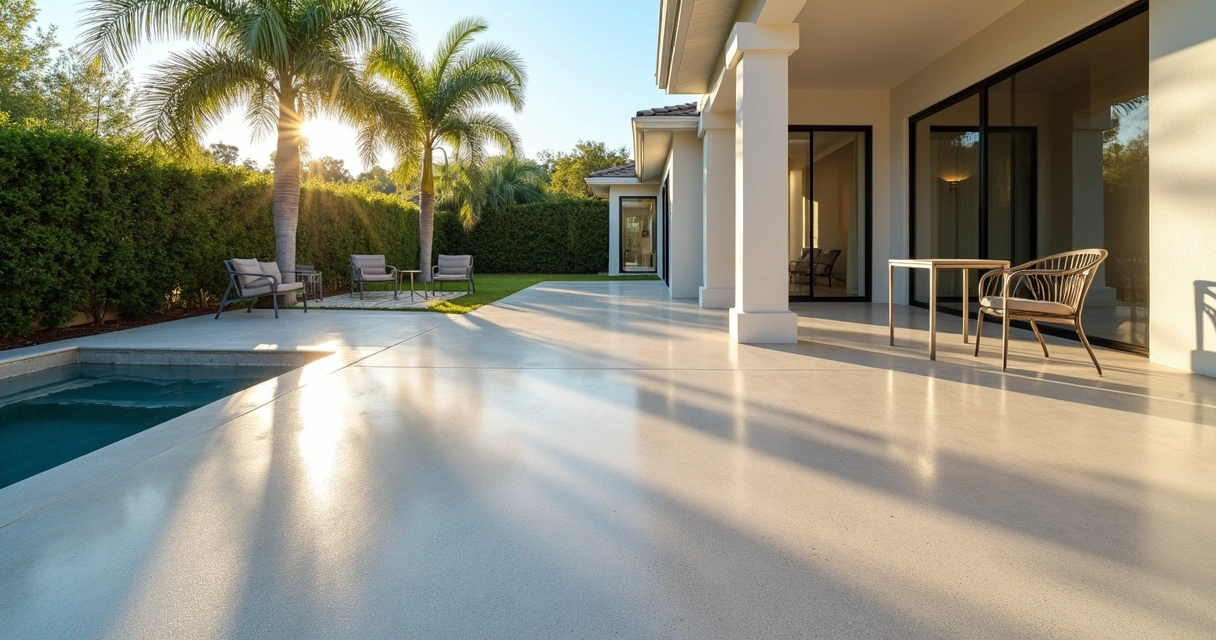
- Modern reflective coatings on concrete reduce radiant gain and are easy to clean.
Even artificial turf gets hot without the right infill and edge treatments. Our artificial turf installations include high-drainage underlayment and light sand infill that stays cooler than rubber crumbs.
Clever use of water near patios
Pools, fountains, or little “splash strips” integrated into patios soak up heat and provide psychological coolness. Water features paired with cool paving can drop the immediate environment’s temperature by several degrees—plus, it revitalizes a space visually and acoustically.
3. Misting and evaporative cooling: fast relief when you need it
Evaporative cooling is time-tested science. The Florida Automated Weather Network shows that wet-bulb temperatures in Florida can fall 5°F–6°F below air temperature with even modest evaporation and air movement.
By installing discreet misting lines along eaves, pergola edges, or shade structures, we find it’s possible to rapidly cool a patio by 10°F–15°F almost instantly. Key tips from our work:
- Misters should atomize water into ultra-fine droplets (under 20 microns) to avoid puddling or slippery surfaces.
- Combine with ceiling or upright fans for even distribution and faster drying.
- Misting is most effective in low humidity afternoons—very humid days work, but with less dramatic effect.
- Quality anti-drip hardware and easy seasonal shut-off are musts for Central Florida’s weather swings.
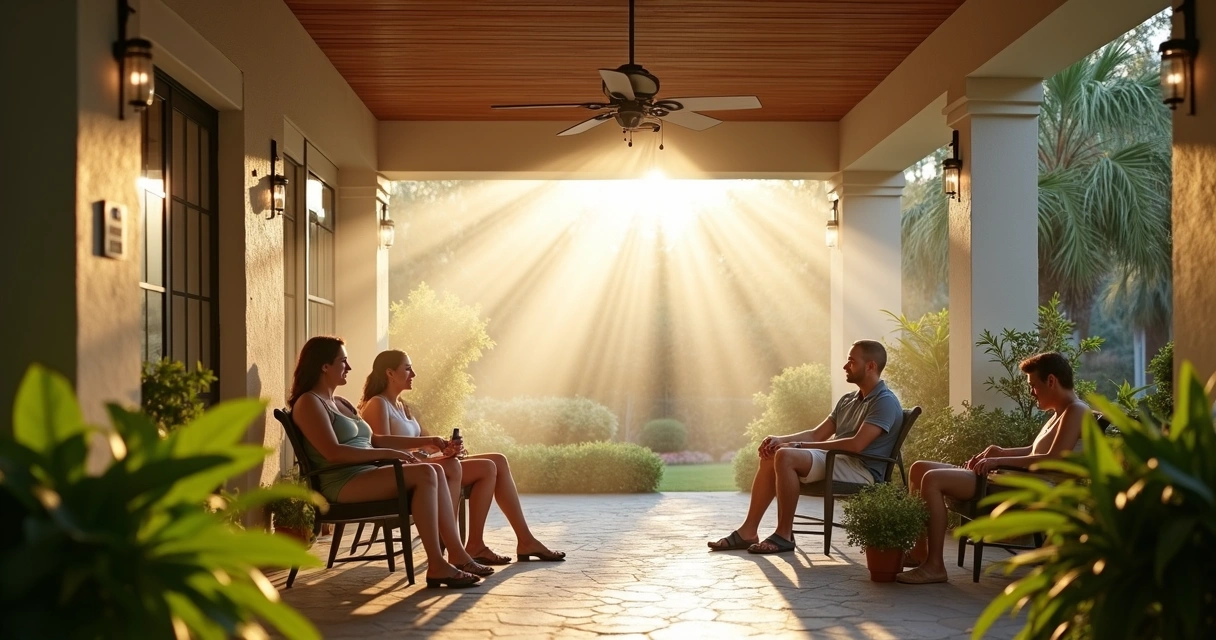
Misting isn’t just for pool parties. We build turf-play zones and pet runs with fast-draining bases and adjacent mist heads for quick relief that doesn’t soak surfaces for hours.
4. Strategic ventilation and airflow: nature’s AC
Fans and breezes can double the effect of other cooling strategies. Movement both speeds up the feeling of coolness and removes built-up humidity. In fact, the University of Florida IFAS Extension confirms that “natural ventilation using ridge and side vents can reduce indoor temperatures toward outdoor levels.”
Integrated ceiling fans and airflow
On patios with roofs or screens, we always plan for oversized outdoor-rated ceiling fans. On open patios, upright tower fans or portable misting models get air moving without dead spots. Important considerations:
- Install fans at 8–9 ft above finish floor for wide airflow.
- Choose reversible fans with sealed components to handle both summer and the rare Florida cold snap.
- Position fans and vents to align with prevailing breezes, boosting natural cooling rather than fighting it.
On enclosed patios or screened lanais, adjustable side vents and partial wall cut-outs allow heat to escape rather than pile up overhead. Our favorite designs mix fixed screening with vented “windows” at eave height.
5. Landscape design for natural cooling
Plants are not just decoration—they’re a summer comfort upgrade. Thoughtful landscaping can shade, direct breezes, even cool the air itself (thanks to a process called transpiration). A curtain of palms or a hedge of crotons to the west shields late afternoon heat, while climbing vines over pergolas or screens break up sunlight without stopping airflow.
When installing hardscape surfaces or patios, we always blend landscape beds, gravel swales, and tree or shrub plantings. This buffers radiant heat and lowers surface temperatures. Native and adaptive plants are best: they require less irrigation and rebound quickly from storms.
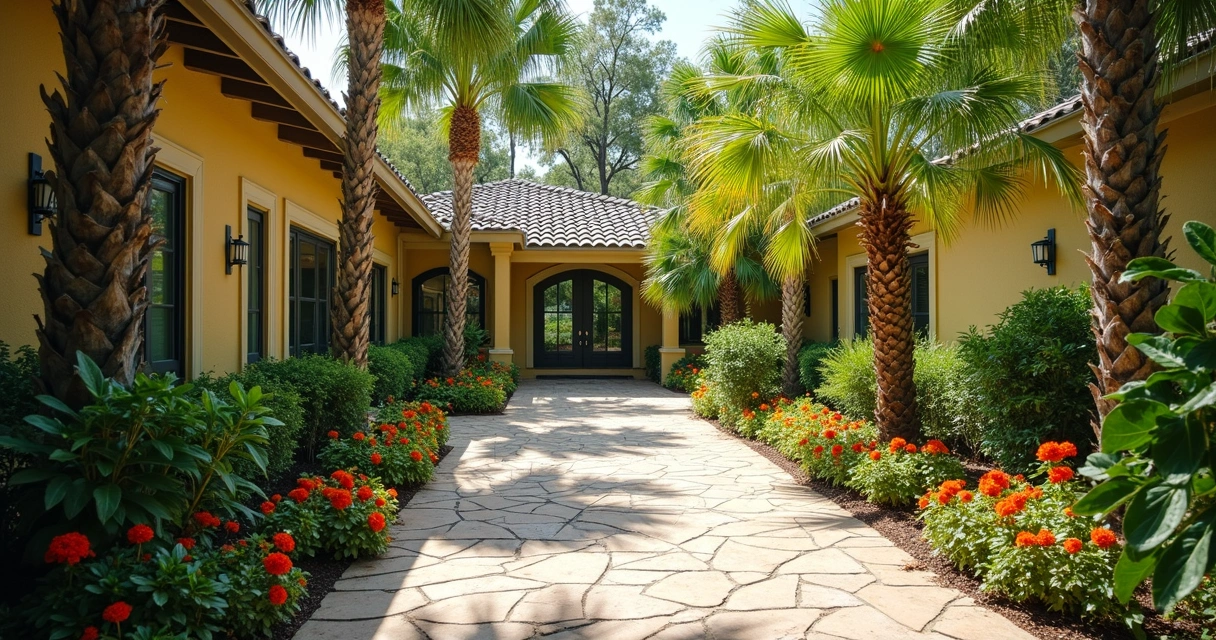
Looking for even more solutions that blend pavers with landscape for effective thermal control? Our specialists at GCM Best Services discuss smart materials and layouts in more depth at our hardscape guide for Orlando homes and patios.
6. High-performance coatings and finishes: beyond plain paint
Sometimes the simplest fix is just a new surface. We apply elastomeric or heat-reflective coatings to patios, pavers, and even exterior walls. These finishes reflect rather than absorb solar radiation and offer bonus protection against the heavy Florida rains.
- Elastomeric coatings bridge micro-cracks in old slabs, shielding from moisture and restoring a bright, clean look.
- Polyaspartic and epoxy coatings, typically used in garages, can transform hot concrete patios into low-heat, easy-clean entertainment zones.
- UV-stable topcoats keep colors vivid and reflect harsh sun.
Painting wood or stucco surfaces in lighter colors helps, too. The difference in surface temperature between the darkest and lightest shades can be over 20°F at peak sun, according to industry tests and our field measurements. No two patios or homes are alike—for the best match between aesthetics and performance, our crew performs on-site color sampling and gloss testing before every coating upgrade.
7. Comfort-focused screen enclosures: the Florida classic, evolved
Screen enclosures aren’t just for bug control or hurricane code compliance. Modern materials and designs allow these structures to double as climate buffers. We engineer enclosures at GCM Best Services to meet local wind loads and maximize usable shade, but also to improve cross-ventilation, reduce pollen, and provide dynamic weather protection.
- Solar screen mesh with UV-blocking fibers stops over 80% of radiant heat, without turning a patio into a dark cave.
- Removable or adjustable vinyl panels allow for open breezes when weather permits, and instant protection from storms.
- Enclosure designs mapped to the house and landscape, rather than a one-size-fits-all rectangle, prevent hot stagnant zones.
Upgrading to a modern screen enclosure is a strong comfort multiplier when combined with shaded seating, fans, and misters. Many of our residential clients upgrade aging pool cages or lanais with heavier-gauge frames, better hardware, and new mesh for a space that feels naturally cool under the same footprint.
For those rebuilding patios, see our guide to driveway and patio paving for ideas on blending screening, drainage, and surface cooling harmoniously.
What about drainage? The hidden comfort factor
One overlooked factor in patio comfort in Florida is drainage. Standing water superheats in the sun, growing mosquitos and raising humidity around your seating area. Proper grading, invisible drains, and gaps between pavers are not just for durability—they directly improve post-rain comfort.
We address these factors at every stage of patio, paver or turf project. Want to see some recommended strategies? Our effective drainage tips for brick paver installations can help you avoid future headaches and maximize your patio time.
How we approach comfort-boosting upgrades
Every property and family is different. That’s why our process always starts with a free, on-site assessment, followed by a detailed, photo-backed plan that covers not just shading or misting, but what it will take to keep your space enjoyable year-round. Our projects combine:
- HOA-friendly upgrades that respect neighborhood standards
- Materials and finishes proven for Florida sun, rain, and wind
- Insurance-compliant installs with written warranties
- Integrated lighting, audio, gas, plumbing, and more—because comfort is more than a temperature reading
You can learn more about our patio and driveway installation standards, from soil compaction depth to inspection tips, at our installation guide for St. Cloud patios.
Small upgrades, big difference: Our favorite patio comfort add-ons
- Solar powered outdoor fans—energy savings plus strong wind effect
- Quick-dry outdoor rugs, especially for families with children or pets
- UV-blocking curtains or moveable bamboo screens for targeted afternoon shade
- High-capacity drainage grates under paver borders for post-storm dry time
- Built-in seating with shaded or ventilated backs
- Low-voltage LED lighting that operates cool, reducing heat spots after dark
We suggest testing a few of these upgrades during different times of day before committing to permanent changes. Our consultation team is happy to advise on quick-win solutions—for patios of any size or budget.
Conclusion: A cooler patio, a better summer
Thermal comfort upgrades transform Florida patios from seasonal luxuries into essential parts of everyday living. We’ve helped homeowners and businesses alike reclaim their summer afternoons and evenings with mixes of shade, science, and smart design. The result isn’t just an appealing patio—it’s a space you’ll actually use, even when the thermometer climbs.
Patios aren’t just about the view. They’re about how you feel every time you step outside.
If you’re ready to enjoy cooler outdoor living in Orlando, Tampa, or anywhere in Central Florida, we invite you to connect with us for an expert, no-obligation assessment. At GCM Best Services, our goal is clear: a patio you’ll love all summer—and all year—guaranteed.
Ready for a professional quote? 📞 (407) 250-1948 • 24–48h • Orlando, Tampa & area.
Frequently asked questions
What is thermal comfort for patios?
Thermal comfort for patios means creating outdoor spaces where the temperature, airflow, humidity, and radiant heat work together to keep people feeling cool and relaxed, even in hot weather. According to Florida Solar Energy Center research, it’s more than shade—surfaces, air movement, and moisture control all contribute to a comfortable patio.
How to keep patios cool in summer?
We suggest starting with layered shading like permanent patio covers and shade sails, adding reflective or light-colored hardscapes, and boosting airflow with outdoor fans or vents. Misting systems and smart landscape design can quickly drop the felt temperature. Finally, high-performance coatings and screened enclosures improve comfort and safety. These upgrades together lower surface temperatures and enhance airflow, resulting in consistent patio usability during Florida’s summer heat.
Are misting fans effective in Florida heat?
Yes, misting fans are effective, especially when combined with air movement and drainage solutions suited for Florida conditions. Studies referenced by Florida Automated Weather Network show that evaporative cooling can reduce air temperature by 5°F–6°F, with even better results in drier afternoons. In very humid periods, results are still noticeable but slightly less pronounced.
What are the best shade options?
The best options use a mix of permanent structures (like aluminum patio covers or vented pergolas) with flexible elements such as shade sails or UV-resistant curtains. Placement should prioritize sun angles and preserve natural airflow. Light colors and adjustable designs are preferable for the Florida climate, optimizing both shelter and breeziness according to University of Florida recommendations on passive cooling.
How much do patio upgrades cost?
Costs vary widely based on patio size, material choice, and the number of upgrades. Simple improvements like shade sails, fans, or high-reflective coatings can fit modest budgets, while engineered covers, advanced misting, and custom screening represent larger investments. At GCM Best Services, we always provide transparent, detailed quotes with warranty-backed work, so you can prioritize what fits your needs best.