Adding shade to a patio doesn’t require a major construction project. In Central Florida, where sunshine turns patios into hot plates for much of the year, temporary and flexible shading options mean we can create cool retreats that fit both changing seasons and personal styles. At GCM Best Services, we often encounter homeowners who want to enjoy their patios for more hours each day, even when building a permanent roof or enclosure isn’t the right solution. In this article, we share nine creative, practical ways to add shade to patios—without permanent structures—while staying true to our values: clear communication, solid design, and Florida-tested durability.
We’ll address everything you need to know: from easy, portable solutions to options that combine form and function, plus some innovative ideas that make your outdoor space more inviting year-round. And, we’ll explain how these choices can mesh with professional patio surfaces, pavers, drainage, and landscaping—helping you get the most from your investment. Whether you’re seeking weekend-friendly upgrades or long-term additions, our team’s experience across Orlando and Central Florida means we’ve seen what works (and what doesn’t) in this climate.
Cooler outdoor spaces invite more life and better memories.
Why choose non-permanent shade for patios?
Before we detail each option, let’s clarify why temporary, flexible shade solutions are popular, especially in Florida:
- Mobility – They can be moved, taken down, or adjusted with the angle of the sun, giving you seasonal flexibility.
- Ease – Installation is quick, requiring little or no invasive digging or heavy construction.
- HOA-friendly – Many homeowners associations support these solutions because they don’t alter the property long-term.
- Affordability – They’re usually less expensive than building a permanent structure.
- Personalization – Colors, shapes, and fabrics allow for easy style changes as your tastes or trends evolve.
Florida’s heat can limit patio use, but by making smart shade choices, we increase comfort, protect surfaces, and reduce sun-related fading. Studies such as those from the U.S. Department of Energy show that even simple shading can reduce surrounding air temperatures by up to 6°F and directly underneath shade, people may feel as much as 25°F cooler (landscaping shade impact).
1. Patio umbrellas: classic, movable shade on demand
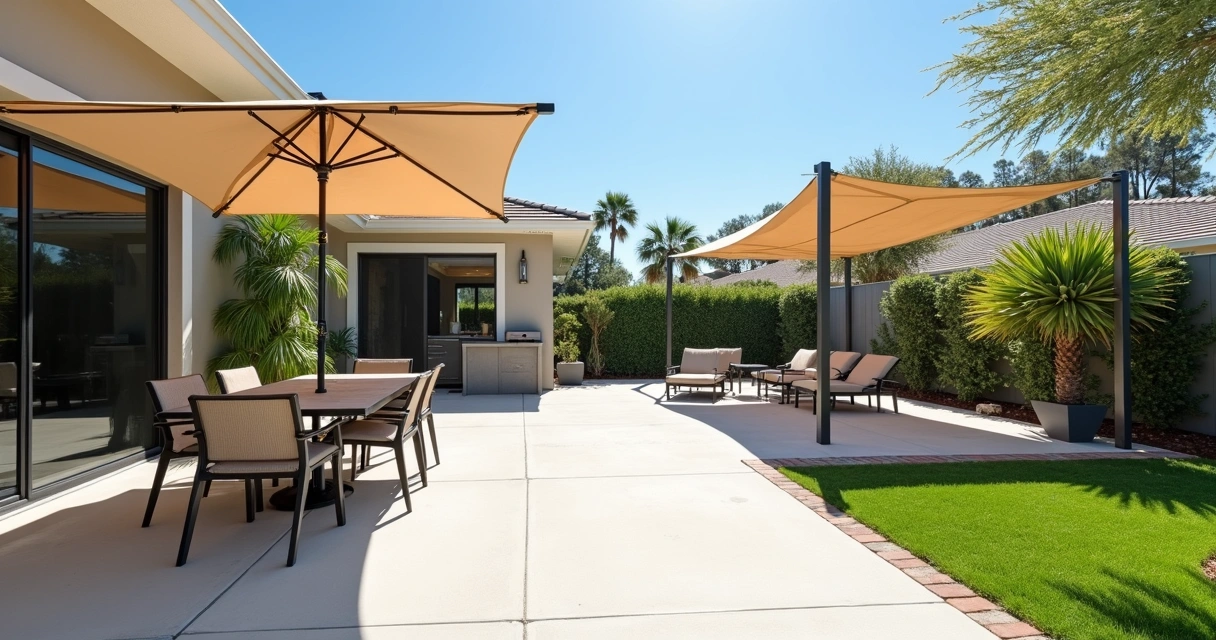
We’ve seen patio umbrellas act as a go-to solution for fast, effective shading. They come in many shapes and sizes: from table-centered market umbrellas to big off-set cantilever umbrellas that cover lounge areas or outdoor kitchens. Their primary advantages are portability and instant setup.
Patio umbrellas are ideal for targeted shade wherever you sit, with no installation skill required.- Adjustable tilt lets you block morning or afternoon sun quickly.
- Choice of colors and canopy materials can match any outdoor style.
- Weighted bases or portable stands support different surfaces, including concrete and paver patios.
At GCM Best Services, we encourage customers to look for umbrellas with UV-resistant fabric and rust-resistant frames for better reliability under Florida’s afternoon storms. Pair these with slip-resistant patio coatings or paver borders to keep walkways safe on rainy days.
2. Shade sails: modern flair with maximum coverage
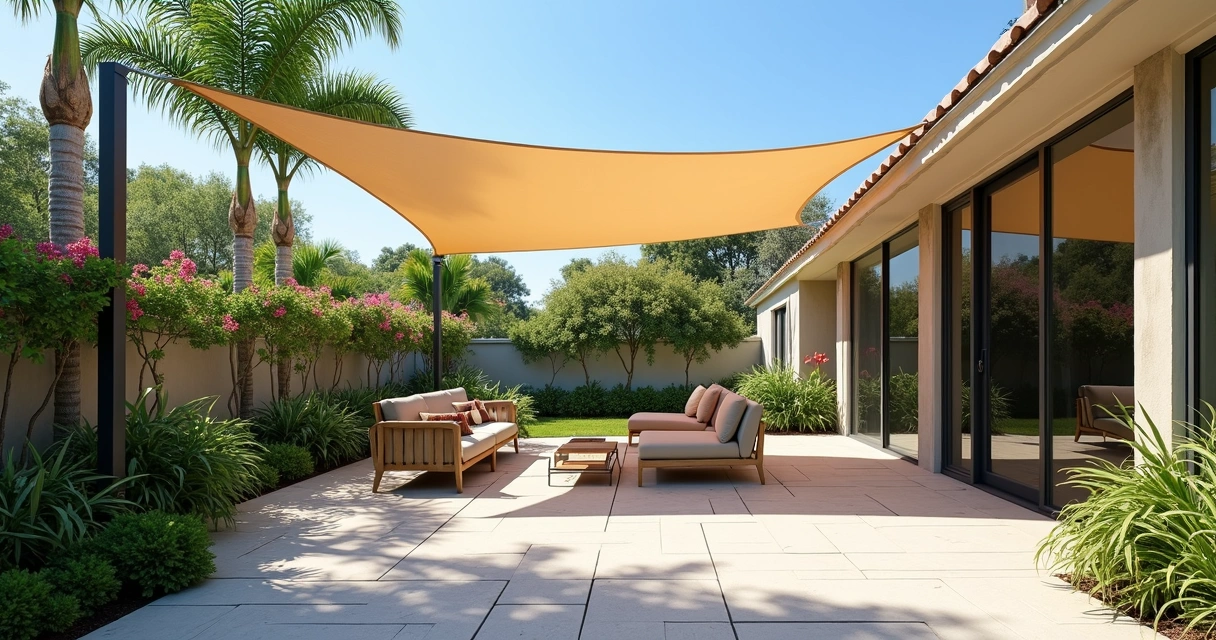
A shade sail is a triangle, rectangle, or square of durable fabric—like HDPE or canvas—stretched between anchor points. These sails offer both style and broad coverage, resembling sails on a ship that float overhead. Most sails are attached to posts, fences, or even trees, using strong hardware and ropes that come down when needed.
- Fast installation: Attach to existing structures or custom steel poles set in heavy planters.
- Configurable angles: Adjust heights or overlap sails for layered protection.
- Color and design: Sails come in vibrant or neutral tones and may block up to 98% of UV rays.
For patios with artificial turf or surrounded by pavers, sails can be set up and taken down before hurricane season, aligning with local code and HOA preferences. We recommend always checking clearances for grilling and any HOA guidelines before installing anchor points.
For more on combining sails with hardscape, see our patio and driveway paving overview at GCM’s driveway and patio paving page.
3. Pop-up canopies and gazebos: instant shelter, perfect for gatherings
Pop-up canopies (sometimes called event tents) and portable gazebos create flexible, temporary rooms outdoors. We see these used for backyard parties, family reunions, or adding shade to a work site while painting or installing surfaces.
- Quick setup – Framework expands like an umbrella; can usually be set up by 1–2 people in minutes.
- Height-adjustable legs and various canopy sizes (8’ x 8’ to 12’ x 12’ or larger).
- Walls or netting can be added for wind/sun protection.
- Easy removal, transport, and seasonal storage.
For spaces with artificial turf or pavers, padding beneath the feet prevents dents or scratches. When shopping, opt for UV-resistant fabrics and frames that resist corrosion for Florida’s humidity.
A shaded canopy transforms a patio into a pop-up destination.
4. Retractable awnings: shade that disappears at a moment’s notice
Retractable awnings attach temporarily to a home’s siding or soffits using brackets; some lean on ground supports or clamp to railings. Manual crank systems or remote-controlled awnings roll out as needed, covering patios, grills, or outdoor kitchens without blocking views all the time.
- Quick deployment for sudden afternoon storms.
- Wide range of widths and projections (up to 20’ across, 10–13’ deep).
- Easy removal if needed for wind or code compliance.
If working with masonry or brick, use manufacturer-recommended anchors, and ensure any awning doesn’t interfere with home drainage. Those who entertain often or who want partial enclosure can pair awnings with screen enclosures or even potted plant barriers for a “room” effect.
Customers with patios next to pools or driveways frequently blend retractable awnings with paver installations, as described in our Orlando hardscape guide.
5. Outdoor curtains: customizable, breezy and elegant
Outdoor curtains, hung from rods or tension wires between posts or walls, add a soft, beach-like appeal to patios. We see curtains used to shield specific sides of a patio from sun, to create privacy, or to give outdoor rooms a touch of resort style.
Outdoor curtains can be adjusted for drifting shade, privacy, or as a windbreak, and require no permanent supports.- Choose fade-resistant, mold-resistant curtain fabrics.
- Install with portable stands, weighted planters, or on overhead rods spanning patio edges.
- Easily removed and laundered for a fresh look seasonally.
We’ve also installed curtain rods into freestanding planter boxes filled with tropical greenery, which adds cooling shade while integrating with current landscaping. This works especially well for patios that blend with hardscape or artificial turf edges.
6. Shade from natural elements: using trees, tall plants, and living walls
The U.S. Department of Energy points out that shade from trees can drop air temperatures under the canopy by up to 25°F, making greenery one of the most effective non-permanent shade strategies (impact of landscaping shade). Even potted trees, tall shrubs, and rolling planters can provide real relief from afternoon heat.
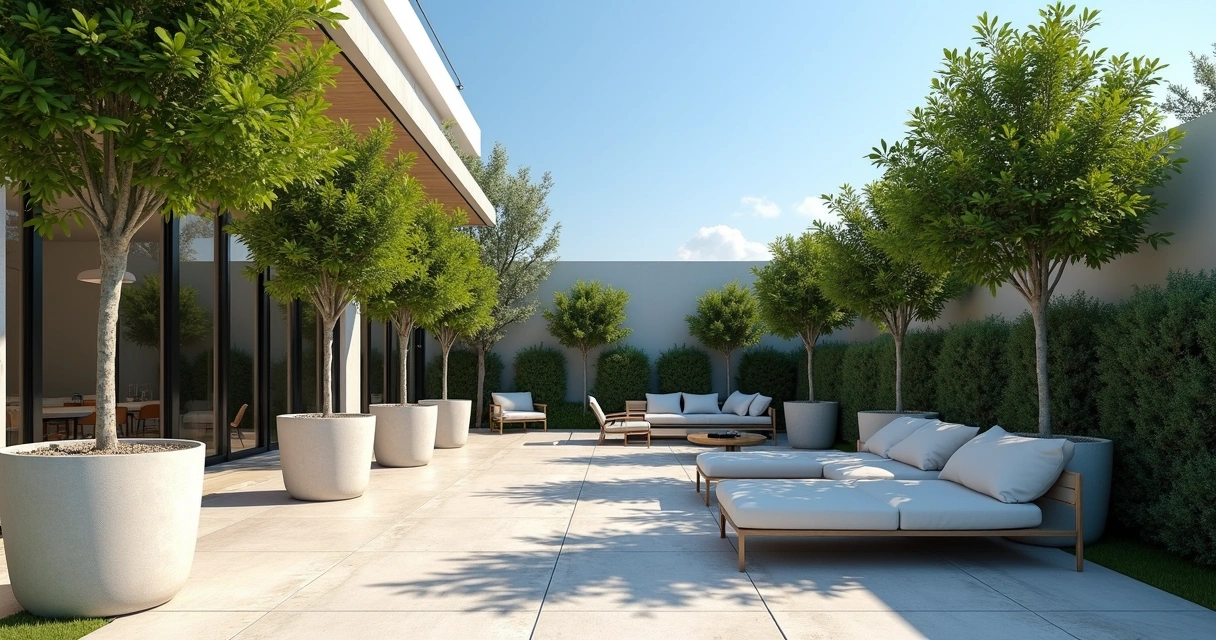
Here’s why we like movable plant shade:
- Instant cooling and air purification with little to no construction.
- Planters can be rolled or moved as the sun shifts.
- Option for flowering vines or vertical gardens on trellises for side shade.
For patios not ready for in-ground planting, our team suggests grouping wheeled planters with tall bamboo, palm, or ficus for zones of dappled shade. Vertical walls, made from modular planters or trellises, can support climbing plants—giving both privacy and cooling benefits. These also complement hardscaped patios, detailed on our hardscape solutions page.
7. Freestanding arbors and pergolas (with removable covers)
While full pergolas or gazebos might seem like permanent upgrades, there are portable, freestanding versions using lightweight aluminum, treated wood, or even composite frames. Optional fabric canopies or retractable tops turn these into movable, non-permanent features.
- No digging or foundation required.
- Can be anchored with planters, sandbags, or concrete pads (temporary fix).
- Removable slats, lattice, or sliding canvas roof for flexible shade control.
We advise considering the weight and wind-resistance of these freestanding frames, especially in Florida’s storm season. They work well adjacent to patios with embedded lighting, paver borders, or turf, as described in our hardscaping insights.
8. Portable shade panels and screens
Movable panels—made from UV-resistant mesh, canvas, or woven rattan—are a designer’s trick for instant, simple shading for any surface. They can stand alone, fold accordion-style, or be wheeled from one edge of the patio to another.
- Lightweight and easy to move for changing sun angles.
- Doubles as privacy barrier for patios exposed to the street or neighbors.
- Combine two or more panels for L-shaped or curved shade zones.
We find shade panels especially popular for patios that act as play areas or where semi-permanent fixtures aren’t allowed. They’re excellent for renters, and can be paired with outdoor area rugs or turf for extra comfort.
Adjustable panels give freedom to chase comfort wherever the sun moves.
9. Shade from temporary structures: pop-up parks and communal ideas
Larger patios or shared community spaces can benefit from more communal, flexible approaches to shade. Some neighborhoods, inspired by “pop-up parks,” use modular benches and large shared umbrellas, or host events where tents and canopies are combined for group gatherings. According to research in the Journal of Urban Health, such spaces increase use, social ties, and provide vital shade (pop-up park studies).
- Pop-up furniture and canopies can be added during weekends, then stored away.
- Temporary pergolas (kits) for special occasions then removed after.
- Outdoor rugs, movable tents, and planter barriers combine for creative, “park-like” shading on personal patios.
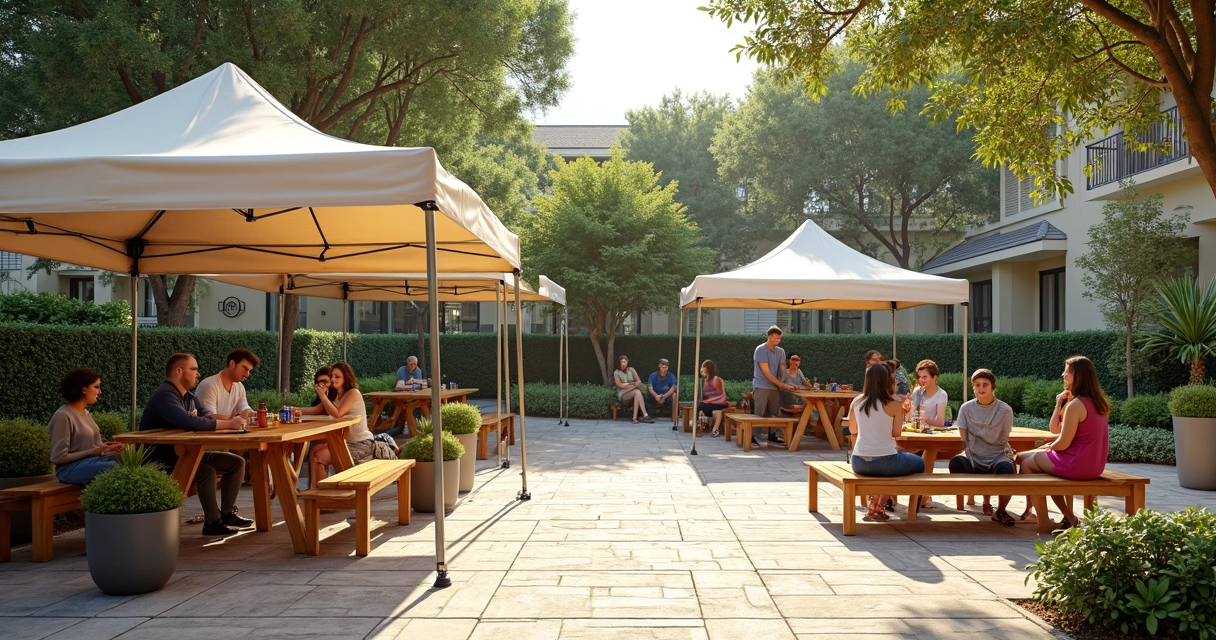
Bringing neighbors together with flexible, easy-to-move shade options is not only practical, but helps create lasting social value. For larger patios—like those built with brick or concrete slabs—modular approaches blend style with adaptability.
Tips for maximizing shade and patio comfort
We’ve noticed that combining more than one type of non-permanent shade extends patio hours even further. For instance, a movable umbrella near a shade sail can let you fine-tune protection as the sun shifts. Using light-colored covers, misters, or fans beneath your shade structures can improve cooling and air flow. Add UV-protective coatings to patios, pavers, or outdoor furniture to prevent fading. And always check with HOA guidelines, especially for visible covers or larger structures.
Proper drainage around patios is key, so water doesn't pool under canopies or along curtain lines. Learn more in our St. Cloud concrete driveways and patios installation guide at our resource hub.Frequently asked questions (FAQ)
What are easy ways to add shade?
The easiest ways to add shade are using patio umbrellas, pop-up canopies, or portable shade sails. These options provide instant relief from the sun, require very little setup skill, and can be repositioned as your needs change. Adding planters with tall greenery or rolling out a retractable awning also offers quick, flexible shade. Many of these products are designed for tool-free setup.
How can I shade my patio cheaply?
If budget is your main consideration, start with a quality patio umbrella or a simple pop-up canopy, which both offer shade from $50–$200. Outdoor curtains made from weather-resistant fabric and hung from basic rods give both shade and privacy for little cost. Using movable potted plants or DIY trellises with climbing vines is another affordable method for natural shade, especially in Florida’s climate where greenery flourishes. Look for deals at local hardware stores or shops that sell outdoor gear near Orlando and Tampa.
What is a temporary patio shade?
A temporary patio shade is any movable, non-permanent structure or object designed to block sunlight and cool a patio zone. Popular examples include umbrellas, pop-up canopies, shade sails, outdoor curtains, and freestanding panels. These shades are not anchored with footings or permits, so they can be taken down, stored, or moved without impacting the patio’s underlying surface. These solutions are especially popular for renters and anyone living in HOA-regulated communities.
Is it worth using outdoor umbrellas?
Outdoor umbrellas are a smart investment for anyone looking for fast, flexible shade. Their ability to tilt, rotate, and be moved makes them one of the most user-friendly options for patios, especially on concrete or paver surfaces. They protect skin from UV rays, cool the seating area, and prevent fading on garden furniture. Since umbrellas come in various sizes and quality levels, we recommend selecting heavy, wind-resistant models with UV-resistant canopies for Central Florida weather.
Where to buy non-permanent shade solutions?
Non-permanent shade solutions can be bought at most home improvement stores, outdoor living retailers, big-box stores, and through online shopping. Orlando and surrounding areas have many locations specializing in outdoor furnishings. When buying, check reviews and look for products with features designed for hot and humid climates, such as UV resistance, anti-rust frames, and mold-resistant fabrics. For larger projects—especially when combining hardscape or drainage upgrades—we suggest reaching out for a professional site assessment, like those provided at GCM Best Services.
Conclusion: Create a cooler, more inviting patio today
Adding shade to your patio doesn’t mean you have to commit to a full construction project or permanent addition. With the nine solutions we’ve described—patio umbrellas, shade sails, pop-up canopies, retractable awnings, outdoor curtains, movable planters, freestanding arbors, portable panels, and communal pop-up setups—you can make your outdoor space cooler, safer, and more stylish almost instantly. Our experience serving Central Florida homeowners shows that comfort, flexibility, and appearance can all be balanced when you choose the right shade options for how you want to use your space.
If you’re planning to upgrade your patio, need help integrating new shade features with your existing surfaces, or simply want advice tailored to your site, our team at GCM Best Services is ready to help. From hardscaping and artificial turf to concrete, painting, and screen enclosures, we deliver projects with safety and care, and we’re always happy to recommend solutions that align with Florida’s weather, HOA requirements, and your personal preferences.
Ready for a professional quote? 📞 (407) 250-1948 • 24–48h • Orlando, Tampa & area. Connect with us today, and let’s make your patio a comfortable retreat—season after season.