Primary keyword: lightning protection for outdoor kitchens
Variants: outdoor kitchen lightning safety, backyard kitchen storm protection, lightning safe kitchen design, weatherproof outdoor kitchens
Audience & pain: Homeowners and property managers in Central Florida worry about lightning dangers and want peace of mind for outdoor living spaces during storm season.
Benefit: Lower fire, shock, and property risk with recommended lightning solutions for each type of outdoor kitchen. Aligns with Central Florida’s weather and local building practices.
Lightning is a dramatic force of nature, but for many Orlando and Central Florida homeowners, it is a very real and recurring risk. Outdoor kitchens, where we gather to enjoy the Florida lifestyle, have unique exposure and need thoughtful safety planning. At GCM Best Services, we are dedicated to guiding property owners through every step—design, permitting, build, and warranty—so you can entertain outdoors with confidence, rain or shine. In this article, we share practical, code-aligned strategies for lightning protection, drawn from our local experience and industry standards. Let’s get into the necessary steps and smart options for safer outdoor kitchens.
Table of contents
- Why lightning protection matters for outdoor kitchens in Florida
- Understanding the risks: Lightning and outdoor kitchen hazards
- How lightning protection systems work
- Step-by-step approach: Making your outdoor kitchen safer
- Top lightning protection options for outdoor kitchens
- Best practices for design, materials, and installation
- Maintenance, inspection, and code compliance
- Integrating lightning protection with other outdoor features
- Cost, value, and insurance considerations
- Conclusion: Safer outdoor kitchens with GCM Best Services
- Frequently asked questions
Why lightning protection matters for outdoor kitchens in Florida
Central Florida is nicknamed “the lightning capital of the U.S.”. In our region, a sunny afternoon often turns into a flashing sky, catching people off guard. Between 2007 and 2011, U.S. fire departments responded to an average of 22,600 lightning-started fires per year, causing deaths and over $400 million in annual property damage as documented in national lightning safety studies.
Florida storms are both sudden and severe—protecting outdoor kitchens is not optional.
Outdoor kitchens are different from backyard cookouts of decades past. Now they include electrical runs, refrigeration, metal appliances, and even gas lines—all in open, storm-exposed spaces. For families gathering at sunset, or businesses hosting events, even a single bolt can threaten both safety and substantial property investment. We believe protection must be both visible (like lightning rods and grounding) and planned (such as proper siting and drainage). It’s a blend of science, design, and responsibility. At GCM Best Services, safety-first construction is part of every project, ensuring the spaces we create are ready for nature’s surprises.
Understanding the risks: Lightning and outdoor kitchen hazards
Outdoor kitchens face particular lightning risks due to their exposed location, metal content, and reliance on electrical and gas connections.
Let’s break down the primary hazards:
- Direct strikes: Lightning often seeks the highest, most conductive point. Metal grills, pergolas, or screened enclosures can attract current directly.
- Side flashes: Lightning may jump from trees, houses, or fences—hitting metallic elements or even people standing nearby.
- Ground surge: When lightning hits ground near a structure, it can surge through connected pipes, rebar, or electrical runs—damaging equipment and increasing risk of shock or fire.
- Fire hazards: Lightning can cause structure fires directly or ignite flammable materials like wood framing, decking, or stored fuel near the outdoor kitchen.
We’ve seen that even modern materials (such as concrete, pavers, and metal) don't make an outdoor kitchen immune to damage. Low-voltage lighting, speakers, and even irrigation or turf systems can be affected. In Florida, where sandy soils have lower electrical conductivity, proper grounding and surge protection are especially critical. The unique mix of storms, soil, and building style makes every project’s risks a little different.
How lightning protection systems work
Most property owners are familiar with the concept of a lightning rod, but a full lightning protection system is more comprehensive. Here’s a plain-language breakdown:
- Lightning air terminals: These are vertical rods or points installed at high spots (such as the top of a pergola or enclosure) to attract lightning in a controlled way.
- Conductors: Heavy gauge metal cables that safely route the electrical current from the air terminals down to the ground—never through the kitchen’s wiring.
- Grounding electrodes: Metal rods driven deep into the ground, spaced to dissipate current safely beneath the surface, away from people and key systems.
- Bonding and surge protection: Connecting metallic kitchen elements (grills, sinks, etc.) to the system ensures the whole kitchen stays at the same “potential,” which helps prevent side flashes and electrical shocks. Surge devices protect appliances and lighting from current spikes.
A full system does not “prevent” lightning, but it manages where and how lightning energy is safely released—protecting both people and property.
As seen in NFPA 780-aligned system studies, such protection reduces fire and property loss dramatically, when installed and maintained properly. In our experience at GCM Best Services, the right combination of air terminals, conductors, and grounding is tailored to each project’s layout, features, and soil conditions.
Step-by-step approach: Making your outdoor kitchen safer
Every lightning-safe project follows a logical flow. Here’s the process we recommend, and that we use with GCM Best Services’ outdoor kitchen clients in Orlando and throughout Central Florida:
-
Site assessment: We begin with a thorough inspection of the outdoor kitchen area, understanding both visible and hidden risks. Are there nearby trees or structures? Is the kitchen “free-standing” or attached to a lanai or pool cage? Do we see evidence of previous storm damage?
-
Design planning: We analyze how high the kitchen is relative to nearby landscape, how far metal appliances and features extend, and where electrical or gas lines run. This guides placement of lightning rods, conductors, and ground rods.
-
Permits and code review: Orange and surrounding counties often follow NFPA 780 or similar code for outdoor living areas, though enforcement can vary. We manage proper notification to local utilities, HOAs, and city building departments—preventing unsafe DIY approaches.
-
Installation: Our crew installs air terminals, conductors, and grounding with weatherproof, code-compliant hardware. All connections are checked, and visible components often blend with kitchen structures for aesthetics.
-
Bonding & testing: We test continuity between all metal elements, appliances, and grounding, and check resistance meets local code and national recommendations. Surge protectors are added to protect outlets and electrical runs.
-
Document & warranty: We provide clear documentation and photos, walk the client through every element, and include written warranties and a maintenance guide as part of our process.
This methodical approach ensures every step, from project planning to completion, is transparent and tailored to the property owner’s needs and site specifics.
Top lightning protection options for outdoor kitchens
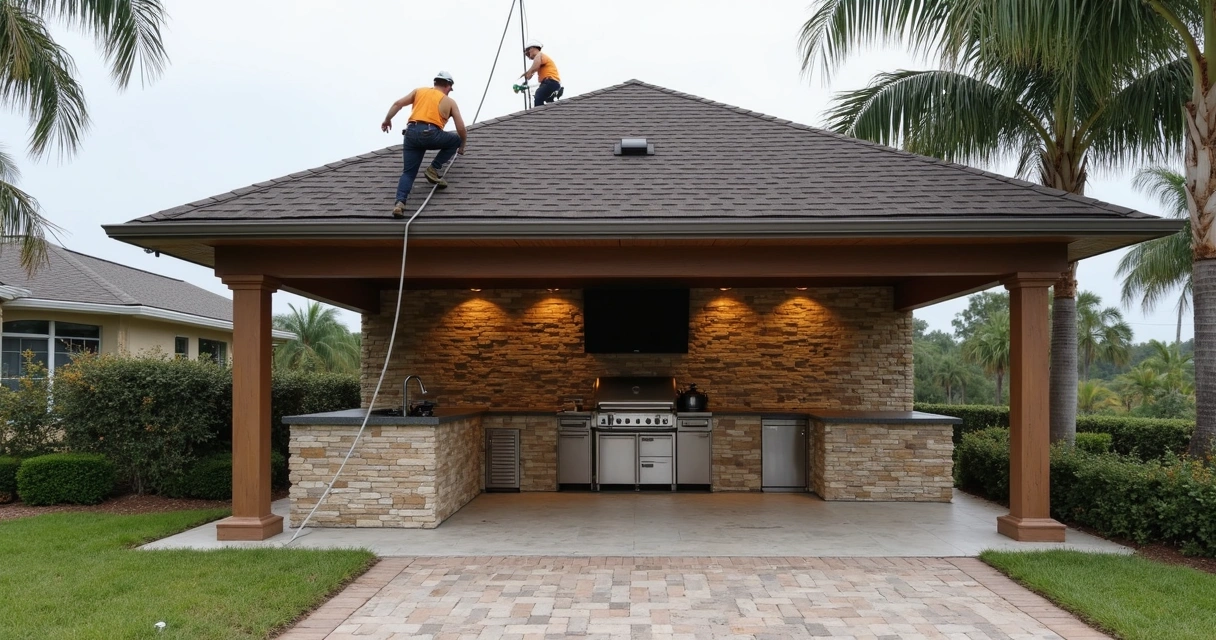
Options align with the structure’s size, materials, and location. Here are the common solutions we offer at GCM Best Services:
- Standalone lightning rods/air terminals: These are placed atop metal pergolas, CMU chimney features, or screen enclosures close to outdoor kitchens. They are visible, simple, and effective for smaller or detached spaces.
- Integrated protection (mesh and air terminal combos): For large covered kitchens, multiple air terminals joined by braided or mesh conductors create a “zone of protection”, keeping lightning away from people or appliances below.
- Bonded grounding of all metal components: Grills, sinks, lighting, and any built-in appliances get bonded together and connected to the main ground rod, minimizing shock risk from side flashes or partial strikes.
- Surge protection: For kitchens with electrical outlets, refrigerators, or entertainment systems, surge protectors (at the subpanel or dedicated circuits) reduce damage from transient voltage spikes, even if the strike is not direct.
- Custom solutions for site features: Where artificial turf, paver walls, or water features surround the kitchen, the protection system is extended and adapted to include these elements, as we ensure full coverage and continuity.
The “best” option is always site-specific—but full compliance, tested ground connections, and continuous coverage are non-negotiable.
We guide our clients through each of these choices, using proven techniques and drawing from many outdoor projects throughout Central Florida. The result: an outdoor kitchen that feels like a haven, not a hazard, when the weather turns stormy.
Best practices for design, materials, and installation
Effective lightning protection always begins in the design phase. Here’s our list of strong practices to consider:
- Choose non-combustible framing and finishes: CMU or steel-stud frames, stone, and poured-concrete surfaces reduce fire risk from both direct and indirect strikes. GCM Best Services always aligns materials with longevity and safety. More can be learned in our hardscape project portfolio.
- Siting and separation: Place outdoor kitchens away from tall isolated trees or high elevation points. If the kitchen must be on a hill or near water, engineered protection is even more crucial.
- Integrate ground and surge protection during initial build: It is always easier and less expensive to plan for conductors and bonded rebar before walls or counters are finished.
- Design with “zone of protection” theory: Think of air terminals as creating an invisible tent over the kitchen, intercepting lightning before it can “see” appliances or guests. This is the principle behind commercial-scale protection, adapted to the backyard.
- Work with local experts: Every county in Central Florida has inspection quirks; permitting protects you and ensures resale value stays high. We manage this process and guarantee systems are built and inspected right the first time.
For more technical details, visit our design and build resources or review recent outdoor living project highlights. Each step ensures resilience, not just code compliance.
Maintenance, inspection, and code compliance
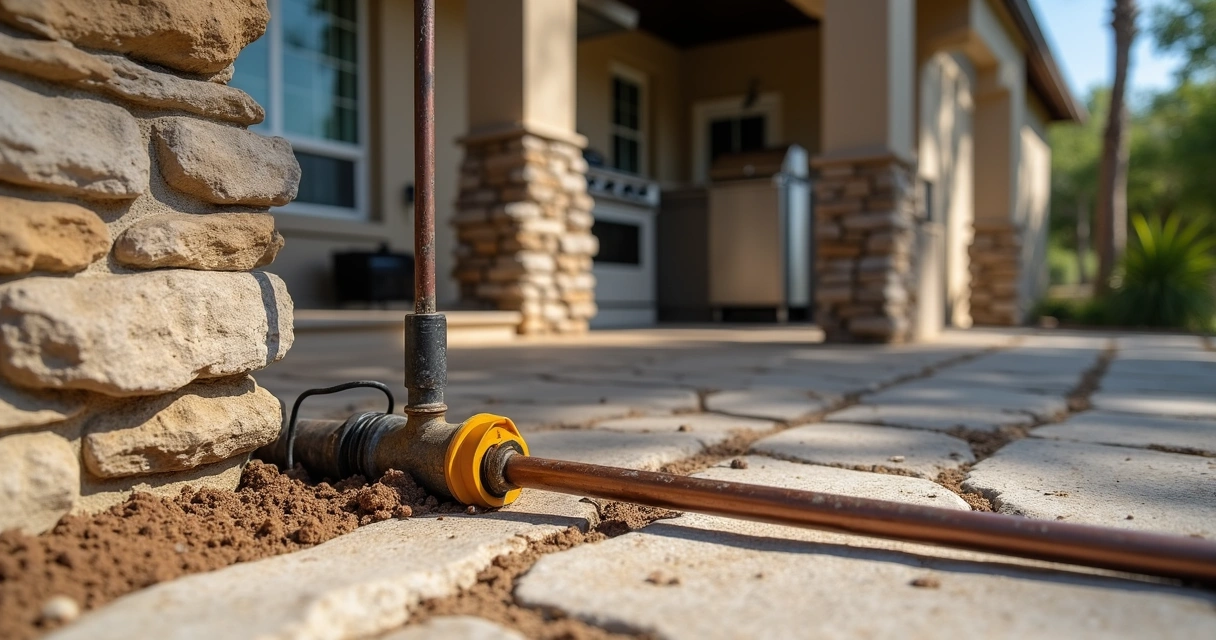
Lightning protection systems, once installed, require periodic inspection and basic upkeep—especially in Florida, where corrosion and landscape work can affect connections.
- Visually inspect all outdoor rods, down conductors, and ground connections semi-annually (once before storm season, once after). Look for loose hardware, corrosion, or landscape damage.
- Test continuity from air terminals to earth ground with a qualified electrician every few years. This ensures systems are still functioning as designed.
- Maintain surrounding landscape and avoid burying or accidentally disconnecting conductors during gardening, turf replacement, or patio repairs.
- Comply with all local permitting, especially if kitchen layouts are expanded or nearby site features (such as a new lanai or structure) are added.
We weave maintenance guidance and re-inspection into our warranty package. No storm protection is ever a “set it and forget it”—it is a living part of your home investment, and reliable when you need it most.
You can always find up-to-date maintenance tips and seasonal reminders on the GCM Best Services blog.
Integrating lightning protection with other outdoor features
Outdoor kitchens are often at the heart of larger spaces: patios, pavers, artificial turf play areas, and pool cages. A truly storm-resilient yard is one where all these zones are considered together.
Examples of integrative strategies:
- For kitchens next to screen enclosures, connect the enclosure’s aluminum frame to the kitchen’s protection system, preventing voltage differences and arc risks.
- Bond ground conductors to rebar in concrete slabs and steps, so lightning is safely diverted at every possible pathway (see more at hardscape integration).
- Extend surge protection to outdoor entertainment systems, irrigation controllers, and even landscape lighting for full-area coverage.
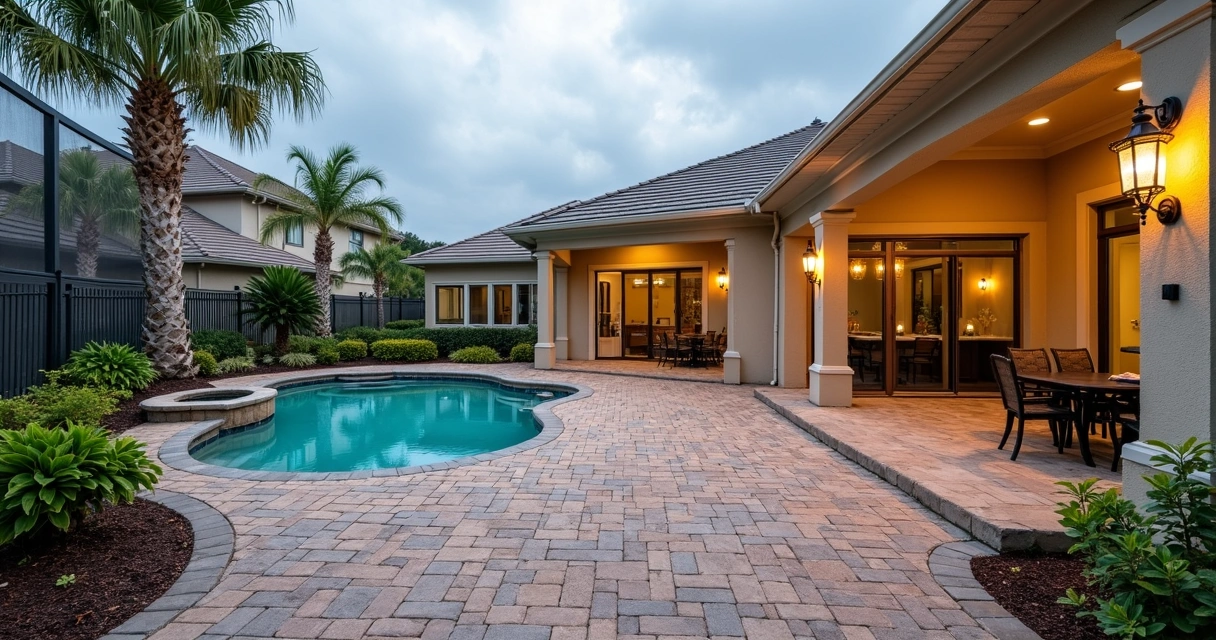
We think of the entire backyard as a network. Our design team makes sure protection flows, not just to the kitchen, but to every connected feature in your space.
Cost, value, and insurance considerations
Lightning protection for an outdoor kitchen is a specialized investment, but in Central Florida, it is hard to put a price on peace of mind during storm season. Here's what we have seen in terms of cost and value:
- Installation costs: For a typical outdoor kitchen or lanai, a fully installed system (rods, conductors, ground rods, and surge protection) ranges from $1,200 to $4,000 depending on kitchen size, number of appliances, and property layout. Complex yards or additional features may increase this.
- Insurance benefits: Many homeowner and commercial policies recognize code-compliant lightning protection, and some even offer premium discounts or faster claim processing if systems are properly permitted and documented.
- Resale and property value: As outdoor living increases in popularity in Central Florida, buyers are asking about safety features—including visible protection systems and written warranties from reputable contractors like GCM Best Services.
We always provide transparent estimates during our design consultation, and help clients evaluate return based on property type, frequency of use, and other insured assets nearby (such as pools, outdoor kitchens, and play areas). It’s a smart investment matched to the realities of Florida living.
Conclusion: Safer outdoor kitchens with GCM Best Services
Outdoor kitchens turn our Florida homes into year-round havens for gathering, cooking, and relaxing under the palms and stars. But the very things we love—open air, metal fixtures, and the wild beauty of Central Florida—bring risks that demand good solutions.
Lightning protection is not just about rods and wires. It’s about peace of mind, safety, and protecting your investment with careful planning, expert installation, and ongoing support.
At GCM Best Services, our process starts with listening and ends with a kitchen you can rely on—storm after storm, season after season. We handle the design, permitting, installation, and warranty for every job, with care and local expertise you can see and trust.
If you are ready to make your outdoor kitchen safer—and want a team you can trust from the first visit to the final walkthrough—contact us today for a no-obligation on-site assessment and personalized quote. Our family-owned team is proud to keep Orlando and Central Florida safe and stylish, rain or shine.
Ready for a professional quote? 📞 (407) 250-1948 • 24–48h • Orlando, Tampa & area.
Frequently asked questions
What is lightning protection for outdoor kitchens?
Lightning protection for outdoor kitchens is a combination of rods, conductors, ground rods, and surge protectors designed to safely capture, redirect, and dissipate lightning energy away from people, appliances, and structures. It includes bonding all metal kitchen components together, connecting them to deep earth ground, and protecting all electrical circuits. When correctly installed, it reduces fire and shock risk even in severe storms, as shown by code standards and relevant safety studies.
How much does lightning protection cost?
On average, lightning protection system installation for an outdoor kitchen in Central Florida ranges from $1,200 to $4,000. This cost covers air terminals (rods), conductors, grounding, bonding, and surge protection. For larger or custom kitchens with special features, the price may be higher. Factors affecting cost include kitchen size, appliance count, and the complexity of the outdoor space. Initial quotes from experienced contractors like GCM Best Services always provide a breakdown by feature and scope.
Is lightning protection worth it?
Yes, lightning protection is worth the investment for outdoor kitchens in Central Florida due to high storm frequency, direct strike risk, and fire hazard statistics. According to fire department incident data, thousands of properties are lost annually to lightning, with significant costs and insurance impacts. Reliable protection systems safeguard people, property, appliances, and peace of mind, often adding resale value and insurance benefits as well.
What are the best lightning protection options?
The best lightning protection options for outdoor kitchens include perimeter air terminals, braided or mesh conductors, deep earth ground rods, surge protection for all circuits and appliances, and thorough bonding of all metal features. The specific combination depends on kitchen size, materials, and whether it’s attached to a house, lanai, or free-standing. Custom designs are tailored to each property’s layout, use, and local soil conditions, always meeting or exceeding NFPA 780 guidelines and current local codes.
How to install lightning protection systems?
To install a lightning protection system, begin with a site assessment to identify risks and layout features, then plan the placement of air terminals, conductors, and ground rods according to national and local guidelines. Always bond all metal appliances and utilities, install surge protectors on all electrical lines, and ensure ground connections are continuous and meet resistance standards. For safety and compliance, use licensed, experienced professionals such as the GCM Best Services team, and secure all necessary permits before starting work.