Outdoor kitchens are transforming backyards everywhere, and in Central Florida, where hosting, cooking, and gathering outdoors happens all year long, the right refrigeration can make or break the experience. At GCM Best Services, we get questions every week about outdoor fridges—built-in vs. freestanding, durability, and what really works for our climate. There’s no one-size-fits-all answer, but there is a smart choice for every setup.
Choosing between built-in and freestanding outdoor refrigerators affects convenience, aesthetics, longevity, and even food safety. We want you to invest wisely, avoid headaches, and get the most out of your patio or summer kitchen. This comprehensive review will walk you through the details that matter, supported by energy efficiency data from the U.S. Department of Energy and ENERGY STAR, plus our hands-on experience in Orlando neighborhoods.
The right fridge keeps the party—and your food—fresh.
Let’s compare, step by step, what each refrigeration style brings to a Florida backyard.
What do we mean by outdoor refrigeration?
When we talk about outdoor kitchen refrigeration, we’re not talking about bringing out a spare mini fridge from the garage and plugging it into an extension cord. Outdoor-rated refrigerators—both built-in and freestanding units—are engineered for variable humidity, temperature swings, UV exposure, and even critters.
- Outdoor-rated units are weather-resistant, sealed, and use specialty components for Florida’s climate.
- Indoor units are not designed for heat, bugs, or driving rain and will often fail within a year in our experience.
- Outdoor fridges mostly come in two installation types: built-in (integrated into cabinetry or masonry) and freestanding (standalone, movable).
With that context, let’s see how each type performs in the real world.
Builtin outdoor refrigeration: Features and benefits
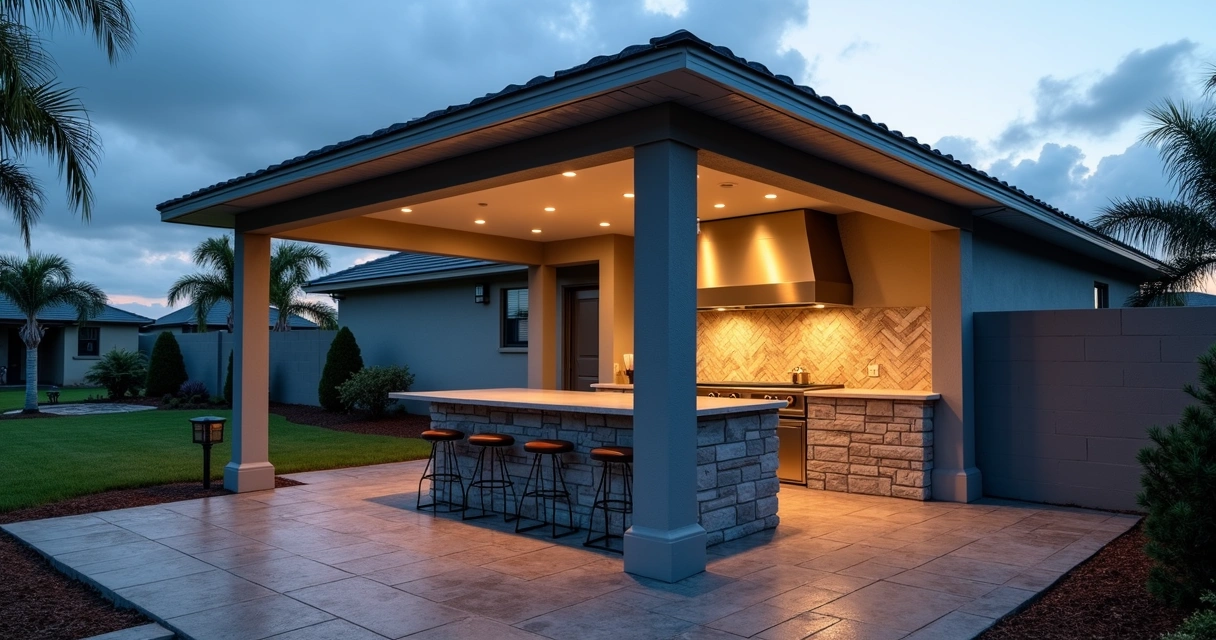
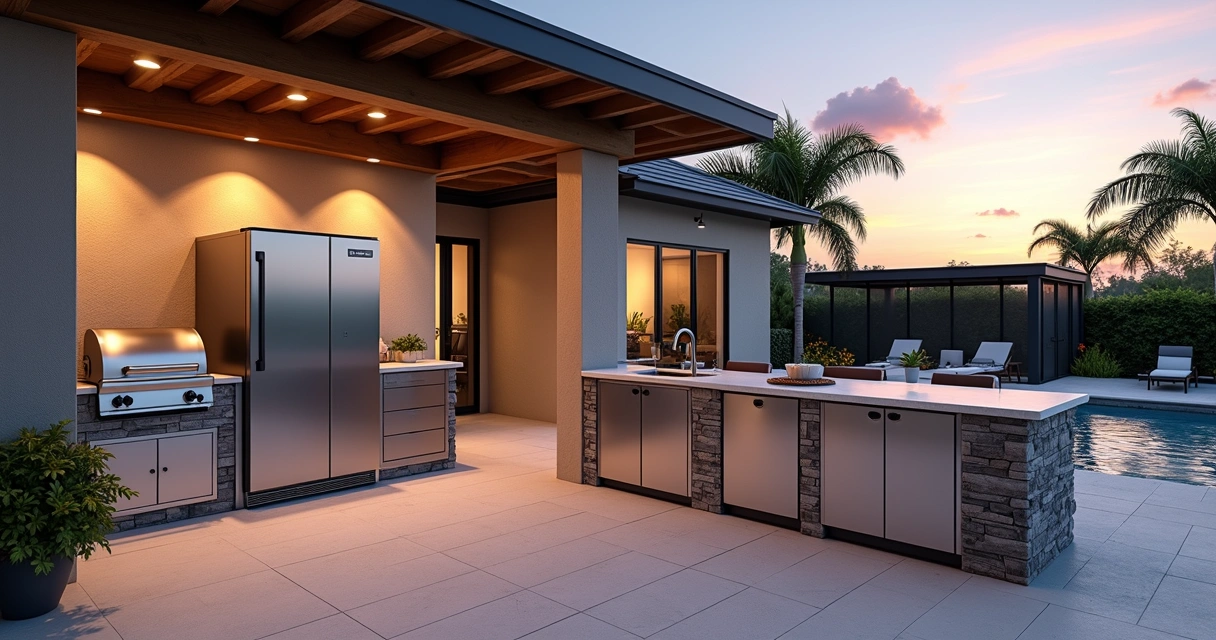
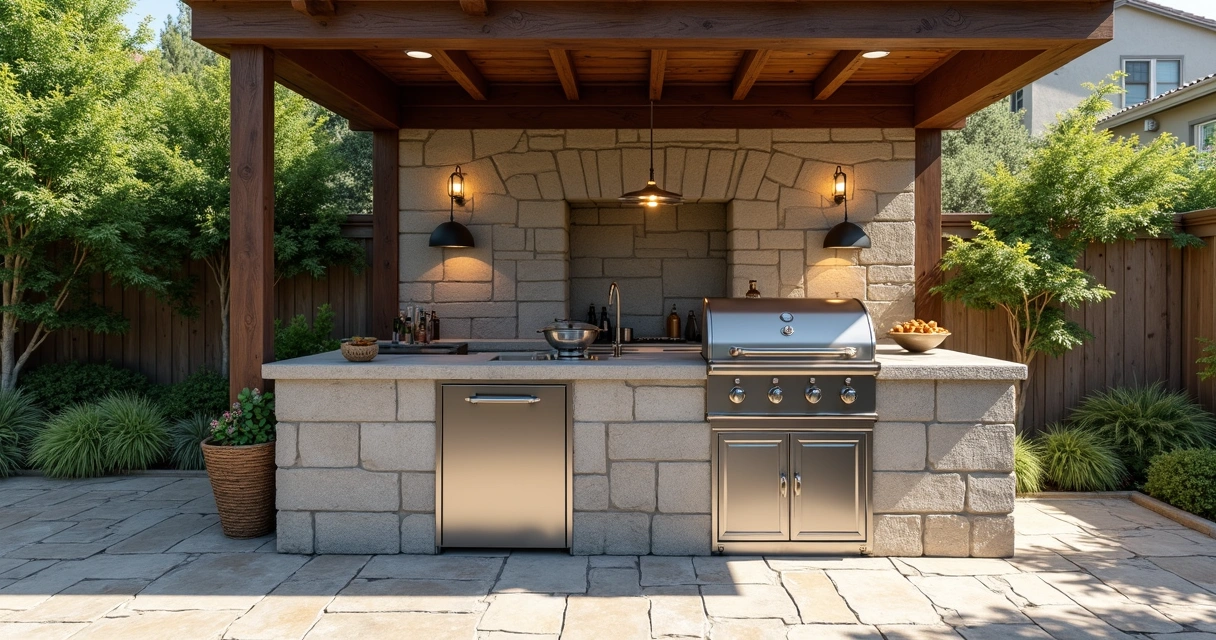
Built-in outdoor refrigerators are designed to slide seamlessly into cabinets, stone, or concrete enclosures—like the summer kitchens we design with CMU or steel frames at GCM Best Services. They create a smooth, unified look and are permanently anchored in place.
Main advantages of built-in units
- Finished, custom fit: They look like part of the cabinetry, not an afterthought.
- Air flow design: Built-in fridges have front-venting systems that work even when surrounded on all sides.
- Better for large outdoor kitchens: If your layout includes grill islands, sink, and seating, a seamless fridge adds value and style.
- Higher weather resistance: Most built-ins use heavier steel, improved gaskets, and corrosion control for all-weather reliability.
Things to keep in mind
- Front-ventilation is required; a regular “back-vent” fridge will overheat and fail if installed flush in a cabinet.
- Cutout dimensions and ventilation space must be planned in advance—this is something we always address at the permit/design stage at GCM Best Services.
- Repairs, upgrades, or replacement may need cabinet work, depending on how the fridge was installed.
For homeowners aiming for a seamless, permanent outdoor living upgrade, built-in fridges often receive top marks, especially in custom summer kitchens featuring stone, paver, or stucco finishes. Built-in refrigeration also ties together upgrades like hardscape installations and integrated grilling stations for a professional result.
Freestanding outdoor fridges: Flexibility on the patio
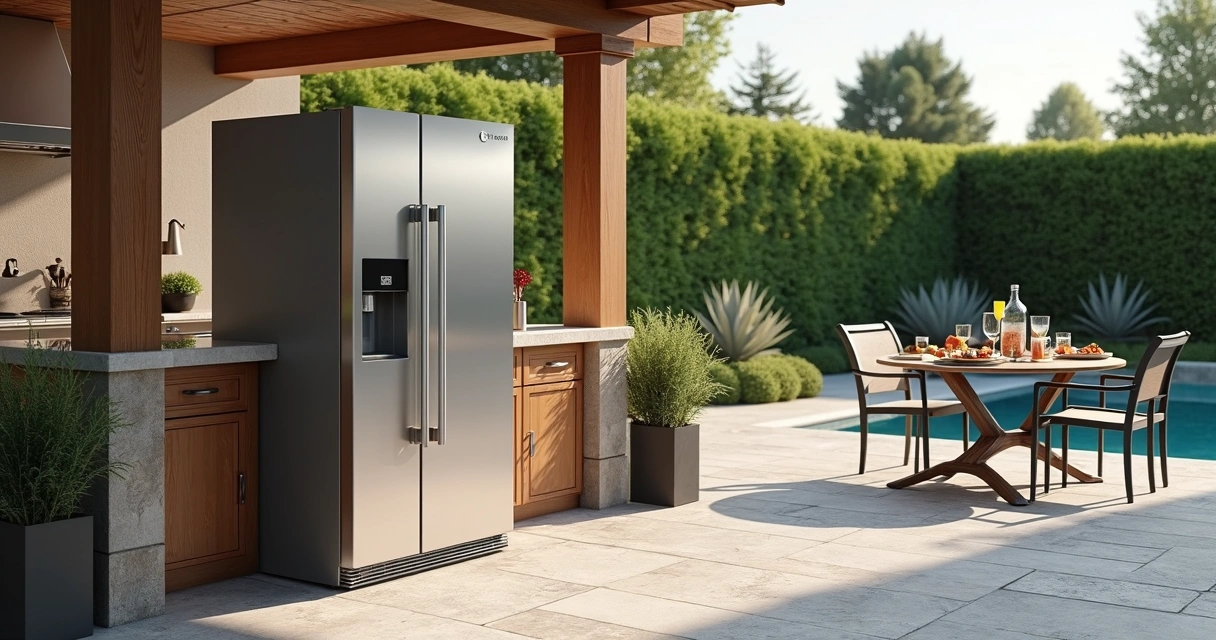
Freestanding units are standalone appliances, typically with finished sides and backs. They are designed to be moved, repositioned, or replaced without altering surrounding structures—handy when layouts shift or if you need a mobile refreshment station near the pool one day and on the porch the next.
What makes freestanding refrigerators attractive?
- Installation is quick: Place on a level surface and plug in. No need to cut cabinetry.
- Mobility: Move as needed for parties, renovations, or when you want to refresh the space.
- Flexible sizing: Freestanding models come in a wide size and capacity range.
Potential drawbacks
- They typically require back and side ventilation, so placing flush against walls/cabinet is not recommended.
- In hurricane-prone regions, securing freestanding units is vital—they can blow over if not anchored or shielded.
- May look out of place in custom cabinetry unless specifically styled to match.
Freestanding refrigerators are ideal when you aren’t ready for a full remodel or expect to reconfigure your outdoor setup as your family’s needs change. They pair well with modular cabinets, rolling grill carts, and temporary bar setups—especially if you are waiting to decide on a permanent design.
Design and appearance: Which suits your vision?
Aesthetics matter just as much as function for many of our clients. An integrated, built-in fridge provides that “finished room” feel, making your summer kitchen a seamless extension of the home’s style.
Freestanding fridges can stand out a bit—but with the right finish, color, and placement, they can blend well with modern patios using pavers and artificial turf. When designing with GCM Best Services, we often recommend integrating hardscape elements or border plantings that soften transitions, whether a fridge is built-in or freestanding.
If cabinets or paver walkways are already part of your patio, as detailed in our paving projects, then a built-in fridge is usually more visually pleasing. If not, a freestanding unit near your grill or pool deck may be the better match.
Durability in Central Florida’s climate
Humidity, torrential rain, and blazing sun test any appliance placed outdoors. According to Department of Energy guidance, refrigerator longevity is tightly linked to outdoor suitability and proper sizing.
- Built-in units: Heavy-duty insulation, sealed controls, dual evaporators, and stainless hardware fight off rust, mold, and Florida’s uninvited wildlife.
- Freestanding outdoor-rated units: They also use corrosion-resistant materials, but are more exposed to weather if not shielded by a roof or enclosure.
What fails fastest in Central Florida? Any fridge not rated for outdoor use. Cheap “bargain” units attract moisture, corrode rapidly, and lose resilience after just a season. On every GCM Best Services summer kitchen or bar project, we specify true outdoor-rated appliances with secure doors, solid venting, and hurricane-resistant fasteners to align with local wind-load codes.
Protect your investment by selecting weather-ready refrigeration built for Florida’s wild weather.
Performance, capacity, and temperature safety
The best outdoor refrigerators keep your drinks cold in August and your salads safe—even on the hottest day. But capacity and temperature stability vary by model and style. The EPA’s ENERGY STAR program recommends right-sizing fridges: larger units use more energy, but under-sizing invites spoilage. Top-freezer configurations, though less common outdoors, are the most energy-thrifty.
- Built-in fridges typically run 4–6 cubic feet for undercounter models, great for drinks, trays, and condiments.
- Freestanding models range wider—compact 1.7–3.5 cu. ft. for portable needs, up to 20 cu. ft. for professional setups.
- Temperature control is critical; look for units that specify tested outdoor operating ranges (often 34°F–50°F adjustable).
In our experience designing outdoor kitchens in Orlando, most families find a single undercounter built-in (or one mid-sized freestanding unit) meets their needs for weekend entertaining, but avid entertainers may opt for a dual setup: one for beverages, another for food.
Energy use and efficiency
Energy efficiency matters in an outdoor kitchen, both for your utility bill and to keep waste heat from raising the patio temperature. As pointed out in Department of Energy guidance, ENERGY STAR–certified models in the 16–20 cubic-foot range save significant amounts of electricity, especially if sized appropriately.
Outdoor-rated fridges often draw more power than similar indoor models, simply because they must fight higher ambient heat, especially in Florida summers. Choosing stainless interiors, efficient compressors, and low-emissivity glass doors (if you want door windows) will help keep costs and temperatures in line.
According to ENERGY STAR, top-freezer refrigerators use less power, but door and drawer style can also impact performance. Many built-in units feature auto-defrost, door alarms, digital thermostats, and interior LEDs to boost both energy and food safety.
Remember: A fridge that “sweats” heavily or runs its compressor non-stop is likely oversized or not vented properly. Our GCM Best Services team always reviews appliance specs to ensure efficient operation and correct ventilation in every outdoor design.
Installation, location, and safety considerations
Outdoor refrigeration isn’t simply about plugging in an appliance. Safety, code compliance, and long-term usability all depend on smart installation.
- Built-in units: Require exact cabinet cutouts, front venting, proper clearances from heat sources like grills, and GFCI-protected outlets. Placement close to prep and serving zones works best.
- Freestanding units: Need solid, level surfaces—think drainage-managed pavers or slabs—plus coverage from afternoon rainfall. Rolling models must be secured in place, especially near pools or on uneven patios.
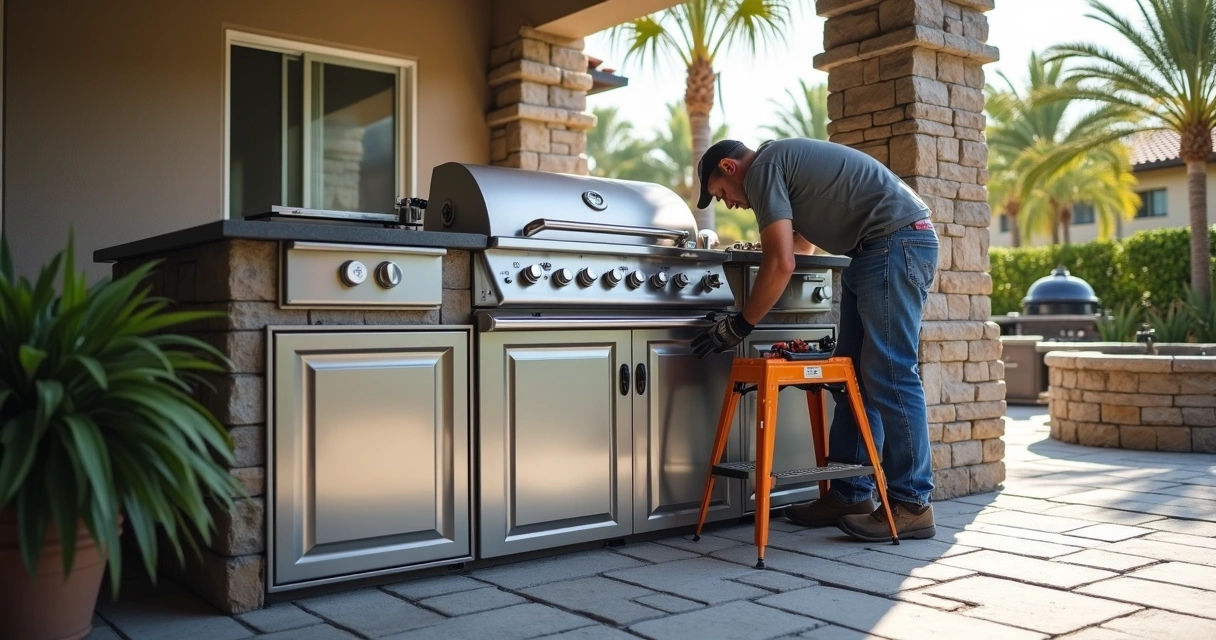
Electrical safety is non-negotiable. We always specify outdoor-rated, ground-fault circuit interrupters (GFCI), sealed outlets, and armored or buried wiring for every installation. Our process at GCM Best Services handles these checks, so your kitchen is protected against shorts and surges, especially with Florida storms.
Strong drainage design is vital—especially for the concrete, paver, or artificial turf bases commonly used in Central Florida. This not only prevents tripping hazards, but also guards your fridge against standing water, which can cause damage or void warranties. If you want to see how drainage integrates with hardscape, review our insights at our hardscaping blog.
Cost comparison: Upfront and long-term investment
Cost is always part of the decision. Both built-in and freestanding outdoor-rated fridges are pricier than their indoor-only cousins, simply due to their construction and certification.
- Built-in models cost more upfront: Not just the fridge, but the additional cabinetry/masonry and electrical work.
- Freestanding units generally offer lower initial cost (appliance only), but may require later upgrades to match changing outdoor layouts or aesthetics.
- Both require regular cleaning and professional service checks to maintain performance and warranty.
For many customers, the built-in cost premium pays off through years of reliable service and a seamless look, especially in the context of a full-featured summer kitchen designed and installed by GCM Best Services. But those just starting out or looking for flexible, movable outdoor chilling may find a freestanding model the right first step.
When should you choose built-in over freestanding?
Based on our field experience building outdoor kitchens across Central Florida:
- Choose built-in when:
- You’re investing in a permanent, well-planned summer kitchen or bar.
- Style and integration with masonry, cabinets, or covered paver patios is a priority.
- You expect high year-round usage or want to add resale value to your property.
- You want to match insulation, ventilation, and wiring to code from day one.
- Choose freestanding when:
- You want flexibility, with the option to move or swap out your fridge as your needs change.
- Your outdoor space isn’t finalized, or you want to test appliance placement before committing.
- You’re working with a smaller budget and prefer a ‘plug-and-play’ approach.
We have installed both styles in projects ranging from pool decks with artificial turf borders (learn more about turf integration) to large paver patios with permanent summer kitchens. There is no “wrong” choice—only the right fit for your space, style, and the way you entertain.
Fit your fridge to your life—not the other way around.
Conclusion: Built-in and freestanding refrigeration both have their place
Selecting the best outdoor fridge boils down to how you cook, entertain, and want your backyard to feel for years to come. Built-in units deliver that wow factor and reliability in a permanent kitchen, while freestanding models offer flexibility, especially as your space evolves. Both require outdoor-rated construction, proper installation, and regular maintenance to handle Florida weather and meet the needs of your family.
At GCM Best Services, we help you plan, build, and maintain outdoor kitchens and hardscapes that raise the value—and fun—of your home. Start with a free consultation and let us recommend refrigeration that keeps your backyard the heart of every gathering, season after season.
Ready to transform your outdoor space? Reach out for a no-obligation quote—we’ll guide you to the right solution.
Frequently asked questions
What is a built-in outdoor fridge?
A built-in outdoor fridge is a weatherproof refrigerator designed to be installed within outdoor cabinetry, stone, or masonry for a seamless, permanent look. These units feature front venting, stainless steel or weather-resistant exteriors, and insulation that withstands temperature swings, rain, and Florida sun.
How does freestanding differ from built-in?
A freestanding outdoor fridge is a standalone unit with finished sides and back that can be placed anywhere on a patio or outdoor area, requiring only a level surface and power outlet. Built-in fridges are integrated into cabinetry and require front ventilation; freestanding units are movable and generally not suited to fully enclosed layouts.
Is it worth it to get built-in?
If you plan a permanent outdoor kitchen or want a polished, “installed” look that adds value to your home, a built-in fridge can be an excellent investment. It typically lasts longer, looks more finished, and is matched to cabinetry and hardscaping for lasting appeal. For temporary or flexible patio spaces, freestanding units may offer better value.
How much do outdoor fridges cost?
Outdoor-rated refrigerators cost more than indoor models, typically starting around $800–$2,000 for freestanding and $1,200–$4,000 or more for built-ins, excluding installation or cabinetry work. Prices vary by brand, size, features, and the complexity of the installation. Running costs are also higher than similar indoor units due to the need for robust cooling in outdoor temperatures.
What are the best outdoor fridge brands?
We recommend sticking to brands with outdoor-specific ratings and weatherproof construction, but do not promote any particular brand or competitor in this article. Look for outdoor-specific certification, robust warranties, and features like front venting, strong seals, and stainless exteriors for optimal performance in Central Florida conditions.
Ready for a professional quote for your outdoor kitchen project? 📞 (407) 250-1948 • 24–48h • Orlando, Tampa & area.