Wheelchair accessibility outside the home can mean the difference between independence and isolation. For many families and businesses in Orlando and throughout Central Florida, making an outdoor space truly accessible takes careful planning, understanding of the standards, and the right materials. At GCM Best Services, this is a journey we guide our clients through, step by step, with clear communication and proven outdoor solutions.
This article is about more than installing a ramp. We'll share our experience and national best practices to help you understand what it takes to retrofit outdoor surfaces for wheelchair access. Our recommendations are based on research, accessibility codes, and what really lasts in Florida's climate.
Accessible design creates freedom and dignity for everyone.
We’ll give you the practical knowledge you need and show you how our full-service approach at GCM Best Services can help Central Florida homeowners and property managers move from idea to finished, warrantied project.
Why does accessible outdoor design matter?
Outdoor access is more than just getting from point A to point B. It’s about inclusion in daily life—meeting friends on a patio, reaching the community pool, or enjoying the garden. Yet, not all outdoor surfaces support this freedom, especially for wheelchair users. Obstacles like rough paths, steep transitions, or narrow doorways can turn simple errands into challenges or prevent people from participating at all.
By retrofitting for accessibility, we open these spaces. And that can mean tangible benefits:
- Greater independence and mobility
- Safer movement for everyone, not just wheelchair users
- Better compliance with federal, state, and local accessibility codes
- Potential increases in property value and appeal
We believe accessibility should be part of every hardscape project in Central Florida, from parks to patios. We find that the right solutions not only meet code—they improve how the space serves every visitor.
What makes an outdoor surface wheelchair accessible?
Accessibility isn’t just about a ramp. For wheelchair access, surfaces must be stable, firm and slip-resistant, as defined by U.S. accessibility guidelines (U.S. Access Board guidance on floor and ground surfaces for accessibility).
- Stable – the surface does not shift or deform under use
- Firm – wheels do not sink or leave ruts
- Slip-resistant – less risk of skids, even when wet
According to research on accessible exterior surfaces (U.S. Access Board research findings), surfaces with these qualities reduce physical effort and increase user speed, leading to better outcomes for real people. Both concrete and well-installed pavers, when built to current code, are among the best choices for Central Florida properties.
Other outdoor accessibility factors
Surface quality is just the beginning. To truly retrofit for wheelchair access, you must consider:
- Pathway width and slope
- Transition heights or "lips" between surfaces
- Turning radius and clearance for maneuvering
- Drainage—so water doesn’t create puddles or hazards
Each of these is covered by accessibility standards, such as those detailed by the U.S. Access Board’s guidance on clear floor and ground spaces and turning areas.
Step 1: Assessing your site and identifying barriers
Before we bring out the concrete mixer or redesign a patio, we start with a walk-through and a notepad. Assessing your outdoor space means looking for any physical barriers to comfortable movement. This is how we do it at GCM Best Services:
- Look for rough or unstable surfaces – Loose gravel, deteriorating concrete, uneven pavers, or grass may be impassable with a wheelchair.
- Check transitions and level changes – A step as small as ½" can pose a real barrier. According to research and recommended surface-roughness thresholds, even surface roughness or small height differences affect comfort and vibration for wheelchair users.
- Measure width and slope – Standard minimum clear width for accessible routes is 36", with a grade maximum of 1:12 (about 5% slope).
- Identify drainage issues – Standing water or mud after a Central Florida downpour can render otherwise passable routes hazardous or unusable.
We record these findings using both checklists and photos. Sometimes, we’ll use a ball or a marble to check slopes and water flow—a trick that always gets a smile from clients at our site visits!
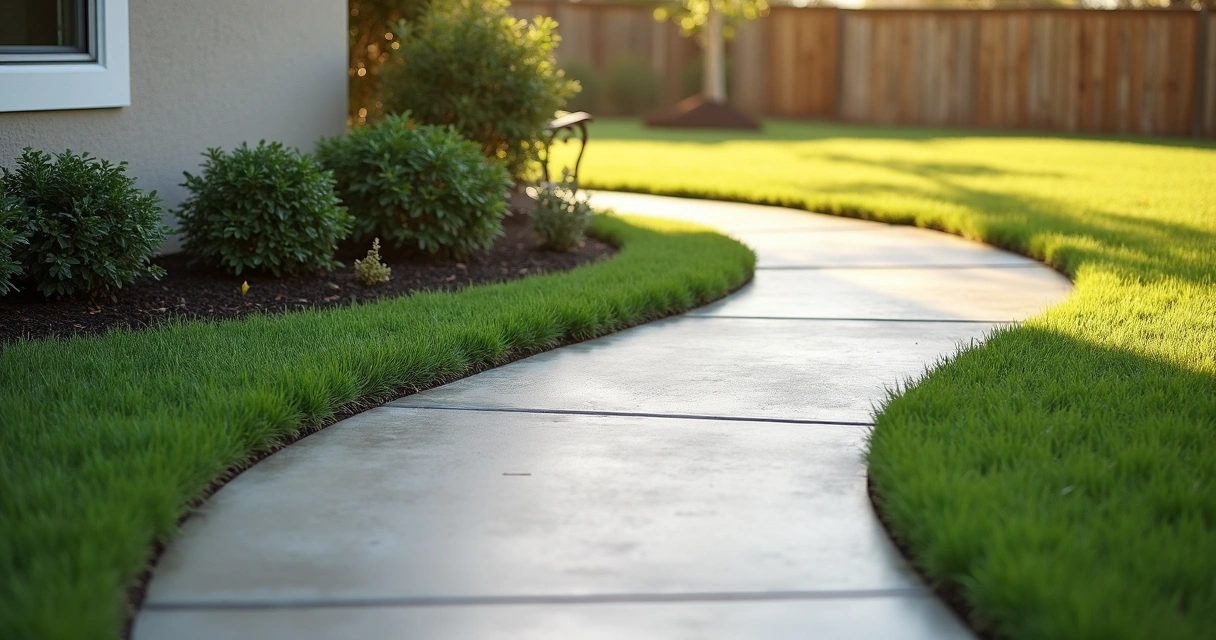
Step 2: Designing for accessible movement
Once barriers are identified, we develop a plan to create or retrofit a truly accessible route. Designing for wheelchair access is about predicting real world use—not just satisfying regulations.
Setting up accessible pathways
Our design process includes:
- Routing paths with minimum length and avoiding tight corners
- Specifying turning areas in high-use or resting spots
- Providing clear access to key features—front doors, patios, pools, parking
As per U.S. Access Board guidance on clear floor and ground spaces, turning spaces must be at least 60" diameter, and clear spaces of 30" x 48" are recommended at doors, gates, and key fixtures.
Picking materials and finishes
We select materials that last in Central Florida while supporting wheelchair use:
- High-strength concrete (3,000–4,000 PSI), with wire mesh or rebar per load requirements
- Broom, exposed aggregate, or slip-resistant coatings for texture—never slick troweled or polished surfaces outdoors
- Paver stones with tight, level joints and solid, compacted bases
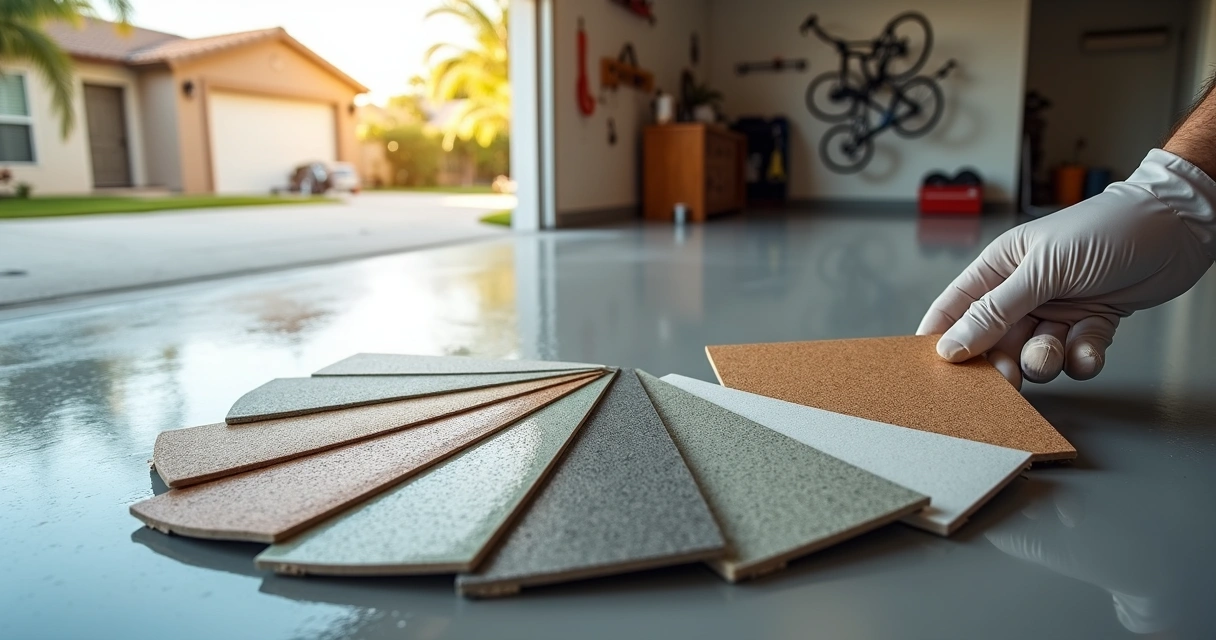
- Epoxy or polyaspartic coatings on garage ramps or utility spaces
Each of these materials can be customized for finish, color, and blending with other landscape features. The most important goal: meet and exceed the accessibility threshold for firmness and stability, as supported in research on accessible exterior surfaces.
Measuring roughness and comfort
Field research shows that wheelchair users encounter physical discomfort as surface roughness increases. Recommended thresholds are:
- A maximum roughness of about 1.20 inches per foot for short ramp segments
- A reduced threshold, closer to 0.60 inches per foot, for longer paths
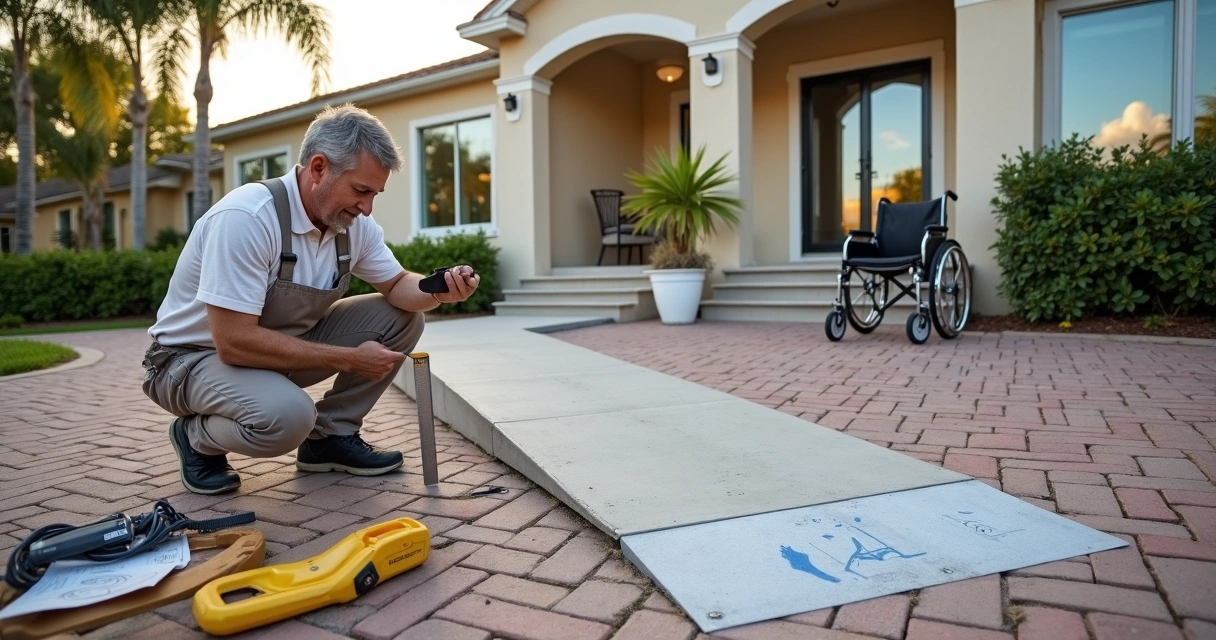
At GCM Best Services, we use straightedges, levels, and sometimes tactile gauges to verify work and can provide roughness numbers for clients who want it. This is rarely discussed on most job sites, but we believe it’s a key detail for true accessibility, supported by recommended surface-roughness standards.
Step 3: Removing barriers and retrofitting surfaces
Retrofit work almost always involves some demolition, adjustment, and new construction. The advantage of choosing a team like ours is experience with these elements—minimizing disruption and getting it right the first time.
Common retrofit methods
We frequently use these approaches in Central Florida:
- Removing loose gravel, stone, or broken slabs and replacing with compacted base plus new concrete or pavers
- Regrading to ensure compliant slopes—sometimes cutting or adding fill and compacting thoroughly
- Installing code-compliant ramps or walkways with wide, smooth landings
- Bridging transitions using flush threshold pavers or metal strip transitions
- Repointing existing paver joints or releveling sunken areas
- Adding or upgrading drainage cuts and surface channels to keep routes dry and safe
All retrofit work carries its own design and permitting needs. We manage HOA, municipal permits, and inspections as part of our process at GCM Best Services, making the experience as straightforward as possible for our clients.
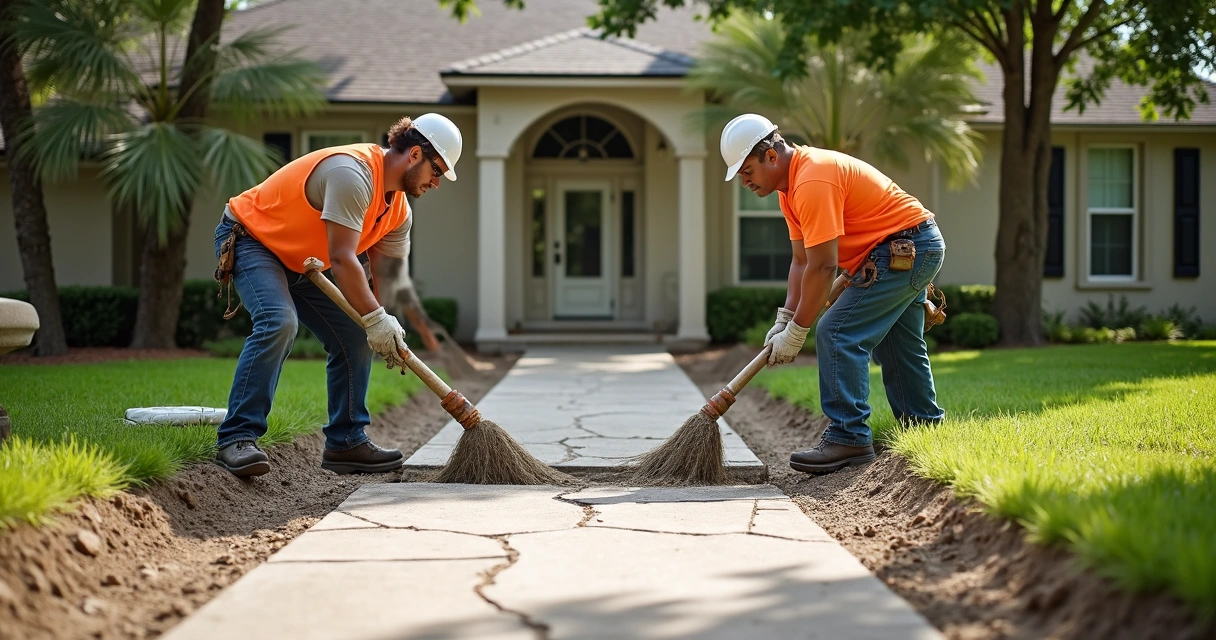
Step 4: Surfacing and finishes—making the path last
The finished surface makes or breaks an accessible pathway. A strong, properly installed surface will resist weeds, water, and the constant roll of wheels for years. At GCM Best Services, we adhere to Florida construction guidelines and use a combination of durable materials and best-practice installation steps:
Concrete surfacing
- 6–8" compacted sub-base for Florida soil conditions
- 3,000–4,000 PSI concrete mix, tailored for the load
- Steel reinforcement: mesh or rebar as specified
- Control and expansion joints for crack resistance
- Broom or exposed aggregate finish for safe traction
See more about our techniques for accessible driveway, patio and sidewalk paving.
Paver stones
- Compacted aggregate base, minimum 4–6"
- Paver surface flush with adjoining slab or transition zone
- Polymeric sand joints—resist weeds/erosion, remain smooth
- Edge restraint/concrete banding to keep pavers from shifting
More about proper paver installation is on our hardscaping services page.
Coatings and turf for special-use areas
- Epoxy and polyaspartic for garages or utility ramps, with moisture testing and slip-resistant texture
- Artificial turf over compacted, permeable base for play and pet areas, with paver or hard border for containment and stability
Artificial turf can be a great option for yards or outdoor play spaces that need to balance drainage, maintenance, and access. Multiple examples can be found on our website and within the hardscaping project gallery.
Step 5: Permits, inspections, and documentation
Retrofit projects require careful planning and compliance with local building codes. We routinely handle:
- Permits for new walkways, driveways, and ramps
- HOA documentation and approvals
- Site inspections and code compliance checks
After the job, we provide photo documentation, a written warranty, and a detailed maintenance guide. This process gives peace of mind to our clients and supports future resale or audit needs.
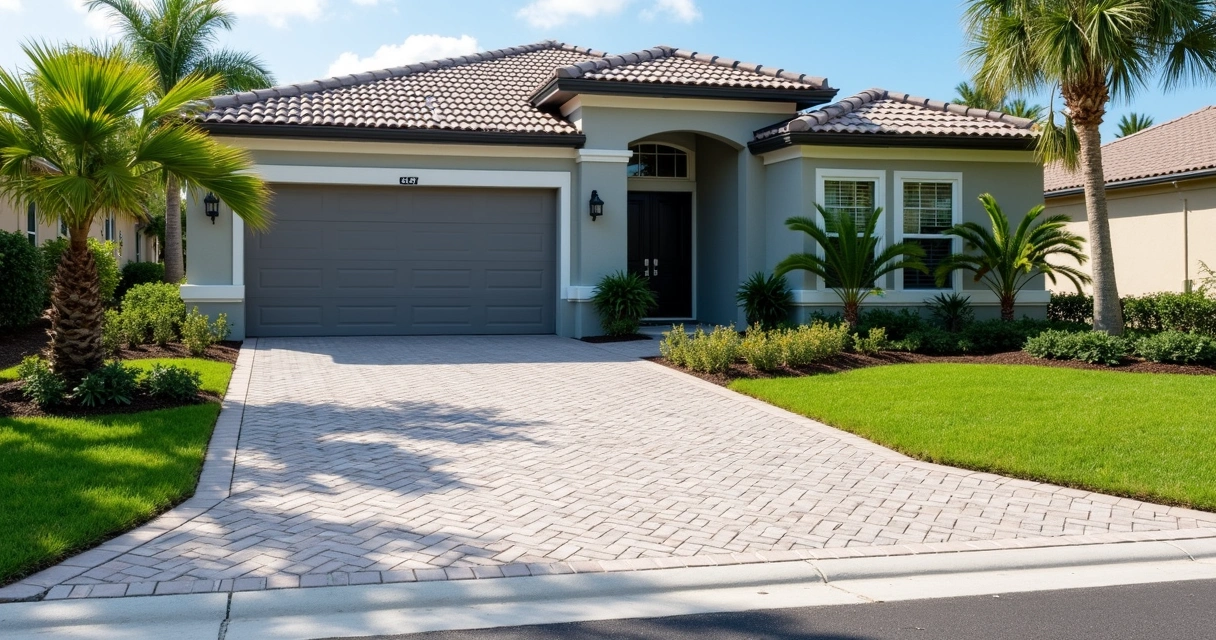
Tips for retrofitting in Central Florida’s climate
Every region has its particular challenges, and Central Florida is known for rain, heat, and a mix of older and newer construction. When retrofitting here, we focus on:
- Drainage design – Proper grading, surface channels, and permeable bases minimize ponding and slippery algae buildup after summer storms.
- Slip resistance – Humidity and dew make smooth finishes hazardous. Sand-enhanced paints and broom finishes offer much better grip.
- UV protection – For artificial turf and some coatings, we use only UV-stabilized, colorfast products.
- Long-wear features – Edge restraints, sealed surfaces, and quality polymeric sand help resist erosion and shifting from tree roots or weather events.
Experience shows that even small upgrades—such as improved curb ramps, fixing a sunken paver, or fixing a drainage swale—can dramatically boost access and satisfaction. For detailed guides and inspiration, see our concrete improvements blog section.
Ongoing maintenance and preserving access
Retrofitting is not a one-and-done activity. Accessible routes need regular inspection and prompt repairs if cracks, gaps, or drainage issues develop.
- Inspect for settlement, trip hazards, and blockages each season
- Clean surfaces with accessible power-washing or low-pressure water as needed
- Reapply joint sand or surface sealant every few years
- Fix spalling concrete or loose pavers promptly
Our concrete repair and maintenance guide for Central Florida is a great resource for homeowners and property managers ready to make proactive upkeep part of their plan. We offer repair and resurface services backed by a written warranty and maintenance support after every project.
How GCM Best Services supports accessible retrofits
We’re licensed, bonded, and insured for projects across Orlando, Tampa, and Central Florida. We handle:
- On-site assessments, photo documentation, and accessibility code consulting
- Design-build services for pathways, driveways, patios, ramps, and hardscapes
- Drainage planning, custom surfacing, paver work, turf, and coatings—all designed for long-term accessibility
- All permitting, HOA, and warranty paperwork
- Clear communication so you’re never in the dark
We approach every retrofit not just as a construction job, but as a way to create real freedom for the people who use the space. We offer free, no-obligation visits, and are happy to provide references and project photos throughout Central Florida.
Everyone deserves a home or business that welcomes all.
From HOA-friendly paver designs to accessible summer kitchens and retrofits for older concrete, our process is built around transparency and service. You can learn much more about our services in the rest of our site—especially in our project galleries and solution guides.
Conclusion: Move from barriers to freedom—retrofit your outdoor spaces for access
Retrofitting outdoor surfaces for wheelchair access is one of the most direct ways to increase independence, safety, and value in any property. The right approach combines technical know-how, compliance with accessibility codes, and a keen eye for the details that matter most to users.
At GCM Best Services, we help you each step of the way—from the first assessment to the final walkthrough and ongoing maintenance.
If you’re ready to make your Central Florida property accessible to all, let us show you the difference our proven process and commitment can make. Get started with a professional, no-obligation quote and see what real accessibility can look like for your space.
Ready for a professional quote? 📞 (407) 250-1948 • 24–48h • Orlando, Tampa & area.
Frequently asked questions
What is the best surface for wheelchairs?
Based on the U.S. Access Board’s research and federal codes, the best outdoor surfaces for wheelchairs are concrete and tightly set pavers, properly installed with stable bases and minimal joints. These materials create a firm, stable, and slip-resistant route. For garages or utility ramps, properly finished epoxy coatings can also provide long-term access and slip resistance.
How to make outdoor paths wheelchair accessible?
To make outdoor paths wheelchair accessible, ensure a stable, firm, and slip-resistant surface, at least 36 inches wide, with slopes less than 1:12, and minimal level changes at transitions. Remove loose or unstable coverings like gravel or uneven bricks, fix drainage problems, and use tactile or visual edge cues where helpful. Turn areas and proper clearances—like those outlined in U.S. Access Board guidance—are also necessary for independent movement.
How much does retrofitting usually cost?
Retrofit costs vary widely depending on the length of the pathway, materials chosen, existing site conditions, and special features like drainage or custom finishes. Simple sidewalk adjustments may cost a few thousand dollars, while new driveways, patios, or complex yard regrades can be more. At GCM Best Services, we provide a detailed estimate after an on-site assessment, with transparent pricing and written warranty.
Where can I find accessible design guidelines?
The most widely used guidelines are set by the U.S. Access Board, specifically at their accessibility standards website for floor and ground surfaces, exterior routes, and clear spaces. We recommend starting with the U.S. Access Board guidance on floor and ground surfaces for clear summaries and diagrams. Our team at GCM Best Services also stays current and can interpret these guidelines for job sites in Central Florida.
Is it worth it to retrofit old surfaces?
Yes, retrofitting old surfaces often transforms both usability and property value—providing safety and access for wheelchair users and everyone else. Research shows that smoother, more stable paths reduce user effort, increase speed, and decrease injury risk. We find that quality retrofits pay off in independence, mobility, and community inclusion, making them a wise investment for most properties in Central Florida.