Primary keyword: Pressure washing artificial turf
- Clean artificial grass
- Turf power washing
- Orlando artificial turf cleaning
Audience: Homeowners and property managers in Central Florida want beautiful, low-maintenance artificial lawns and play surfaces.
Pain/Benefit: Stains, odors, and buildup can make turf look old or unsafe; professional pressure washing keeps it fresh, safe, and long-lasting.
Summary: In Central Florida, artificial turf can accumulate dirt, pollen, pet waste, and mold, making cleaning a challenge. Pressure washing, when done correctly, removes debris and refreshes turf appearance, but choosing the right tools and technique is vital to avoid damage. We’ll share the most effective steps, tools, hazards to avoid, and tips from GCM Best Services for safe, beautiful turf—whether you’re in Orlando, Daytona Beach, or beyond.
Table of contents
- Why artificial turf needs deep cleaning
- What is pressure washing and when is it right for turf?
- Tools for pressure washing artificial grass
- Step-by-step guide to pressure washing synthetic turf
- Potential risks and common warnings
- How to keep your turf looking great between washes
- Professional turf cleaning vs. doing it yourself
- Conclusion: Safe, bright, and long-lasting turf in Central Florida
- Frequently asked questions
Why artificial turf needs deep cleaning
Artificial grass is popular in Orlando, Tampa, and Daytona Beach for its low maintenance and green look. Unlike natural lawns, artificial turf collects debris, pet waste, pollen, and spills right on its surface and through its drain holes. Without regular rinsing and occasional deep cleaning, turf can develop bad odors, discoloration, mold, and even pose health risks.
Studies highlighted by Public Health Post found that athletes using artificial turf experience a higher risk of injury, with maintenance and surface safety being key factors. Dirt, compacted infill, algae, or slick spots can make turf less safe to play or walk on. For pet owners, urine and organic waste trapped in the backing create unpleasant smells and attract bacteria. In Central Florida’s wet, humid climate, mold and algae thrive if turf isn’t cleaned.
Regular cleaning preserves the look, safety, and lifespan of your turf investment.
Simple brushing and rinsing help, but sometimes the surface needs a more powerful, targeted clean. That’s when pressure washing comes into play.
What is pressure washing and when is it right for turf?
Pressure washing uses a machine to spray water at high speeds through a focused nozzle. While often used on concrete, driveways or siding, it can also work for synthetic lawns—in the right hands, and with the right approach.
“Not all pressure washing is turf-friendly.”
When we pressure wash artificial turf at GCM Best Services, our goal is to remove stubborn debris and contaminants that can’t be rinsed or brushed away. But too much pressure, or the wrong type of nozzle, can damage turf fibers, backing, and infill. That’s why it’s critical to know when, how, and with what settings to use this method.
- Good reasons to use pressure washing on turf: Sticky spills (gum, sugary drinks), pet residue, caked mud, moss, heavy pollen or mildew, post-construction dust.
- When to avoid: If your turf is older, loosely installed, or the seams are weak, high pressure can damage or lift it. Also, most routine cleaning only requires brushing and hosing, not pressure washing.
Sometimes, commercial properties or high-use sports fields need scheduled pressure washing for health and hygiene. But for homes or light-use areas, it's an occasional treatment.
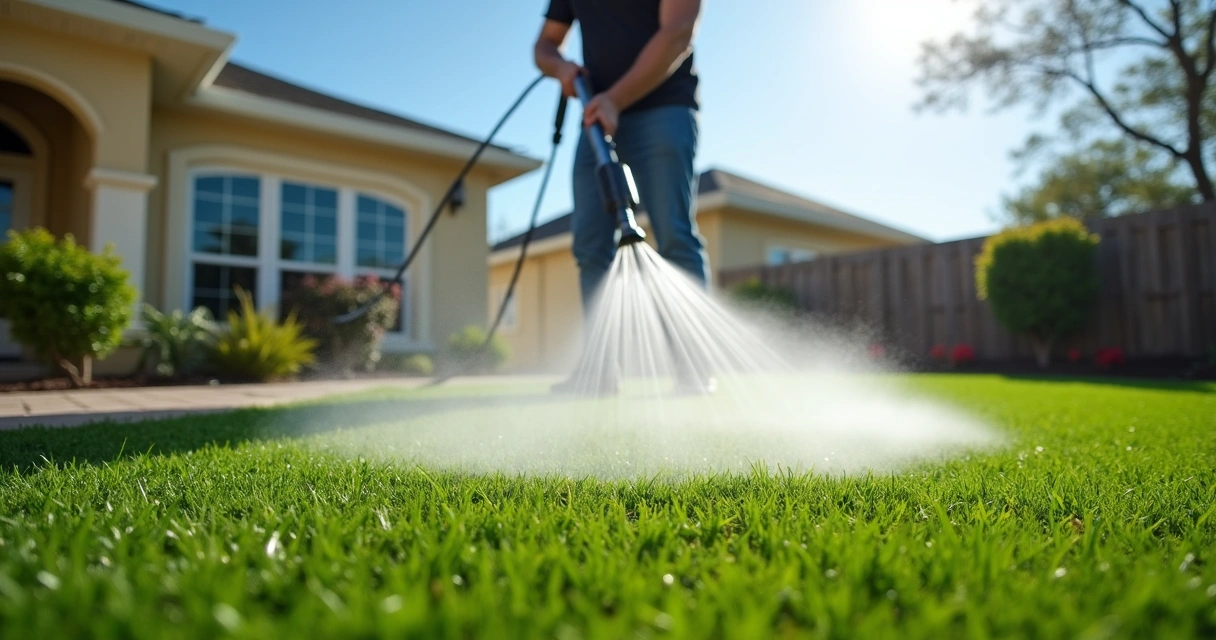
Tools for pressure washing artificial grass
Not all pressure washers, nozzles, or detergents are created equal for turf cleaning. In our experience, the right tools make all the difference:
- Pressure washer: An electric or gas unit, adjustable to low pressure (under 1,200 PSI) is safest for turf. If it’s only for turf, an entry-level electric unit is fine.
- Nozzle type: Only use a wide-angle (fan) nozzle—never a narrow or turbo tip on turf. A 25- to 40-degree tip spreads water out, lowering force.
- Garden hose (for rinse): Helpful for pre-rinsing or soaking down high-traffic areas before pressure washing.
- Broom or turf brush: To loosen debris and raise matted fibers before and after washing.
- Cleaning solution (optional): A turf-safe soap or diluted vinegar handles tougher stains or odors. Avoid bleach, ammonia, or harsh chemicals on synthetic grass.
- Personal protection: Waterproof shoes, gloves, and safety glasses are smart, especially if using cleaning products.
Be sure to read the manufacturer’s instructions for your turf brand, as some types warn against any pressure, and most specify a maximum safe PSI. At GCM Best Services, we always test a small area before cleaning the whole lawn.
Step-by-step guide to pressure washing synthetic turf
We’ve developed a process that respects the unique needs of artificial turf in Florida’s climate. Here is our safe and effective method:
1. Prep and inspect the turf area
First, clear off furniture, toys, and debris. Look for loose seams or lifted edges that might catch water or get damaged. Pick up pet waste. Check the surface for mud, sticky residue, or high-traffic stains. If any turf sections seem damaged, address repairs before washing. Review the turf area to set expectations: synthetic grass sometimes looks matted when dirty, but proper cleaning revives its look.
2. Sweep or brush to loosen debris
Use a synthetic bristle broom or turf brush to sweep the whole area. This lifts flattened fibers and pulls up sand, leaves, twigs, or trash.
3. (Optional) Pre-treat stubborn stains
If you see pet stains, spilled drinks, or algae, spray the spot with a water-diluted turf-safe cleaner or white vinegar. Let it sit for 5–10 minutes before moving on.
4. Test your pressure washer and spray pattern
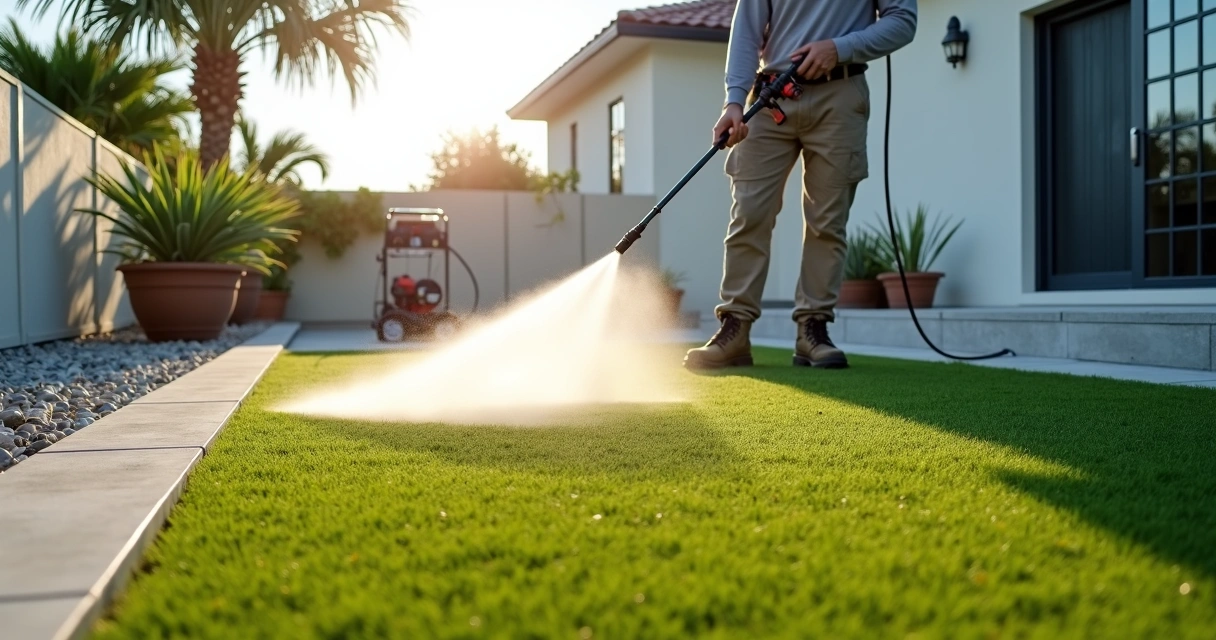
Set your unit to under 1,200 PSI. Attach only a fan tip (never a pinpoint). Test on an out-of-the-way corner, spraying at a 45-degree angle and never closer than 12 inches from the surface. Watch how the turf reacts: if fibers bend, lift, or backing looks stressed, back off.
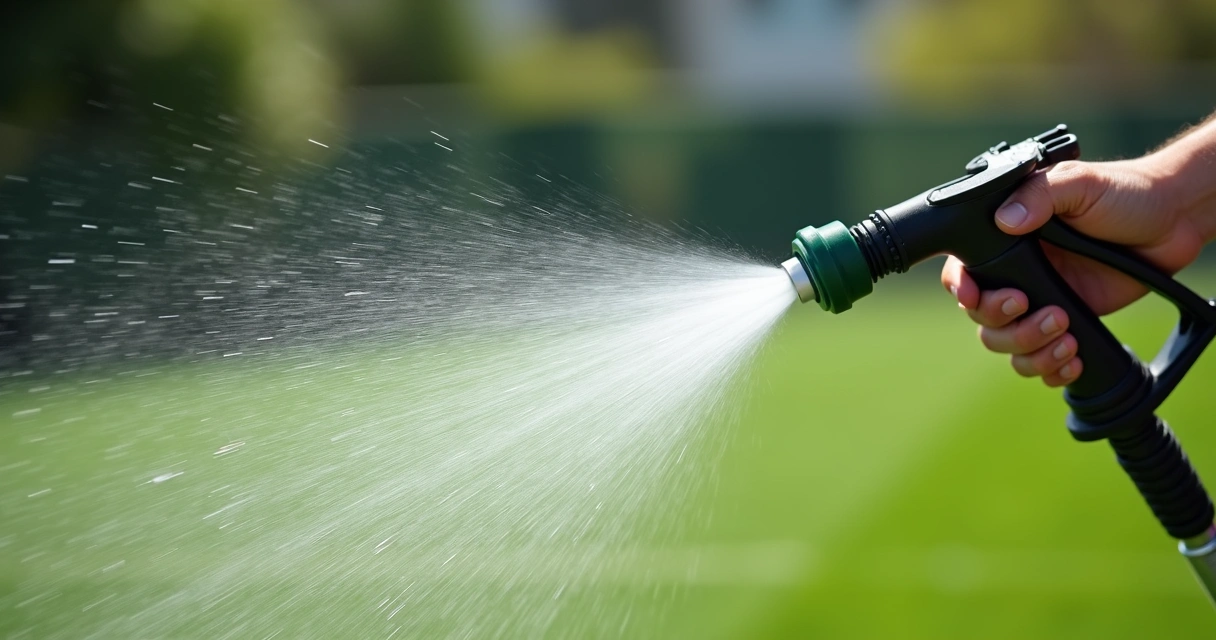
5. Wash in sections, working methodically
Move the spray wand in slow, steady arcs across the turf, always with the nozzle pointed away from seams or edges. Keep the tip at least 12 inches from the grass. Overlap your strokes slightly for even cleaning.
- Start at the highest part of the lawn or area, working toward a drain or lowest point.
- Don’t hold the spray in one spot. Keep moving so fibers aren’t pushed flat or loosened.
- If you are using a cleaning solution, lightly suds the area first, then rinse thoroughly.
6. Rinse and lift the blades
After pressure washing, hose the turf down to push debris through the drainage holes and rinse chemicals from the surface. Use your broom or brush again to fluff and stand up any flattened grass blades, working in the opposite direction from your spray path.
7. Allow to dry and inspect
Let the turf air dry completely before replacing furniture or letting kids and pets play. Walk the area—are stains gone, drainage still effective, and seams still secure? Proper drying prevents mold growth and gives you a chance to check the results.
Potential risks and common warnings
While pressure washing is a powerful cleaning tool, misusing it can shorten your turf’s life and beauty. Here are the risks we watch for on every project:
- Too much pressure: Over 1,200 PSI can bend, break, or loosen turf fibers and even tear seams.
- Wrong nozzle or technique: Pinpoint or rotary tips cut “lanes” or dig out infill—never use them.
- Spraying too close: Holding the nozzle right against the blades or seams risks lifting the turf or damaging the backing.
- Heavy water use: Artificial turf drains fast, but excess water can overwhelm poorly installed bases, leading to puddling or washouts. As the Frontiers in Sustainable Cities study explains, turf systems’ subsurface drainage can lead to faster runoff, so be mindful of water flow direction.
- Cleaning chemicals: Bleach or ammonia-based products may weaken turf backings or discolor fibers. Always stick with turf-labeled or mild cleaners.
- Loose seams or lifted edges: High-pressure water penetrates under the turf, breaking adhesive or lifting seams. Secure all edges before washing.
With pressure washing, more isn’t always better.
Gentle, patient cleaning protects your investment.
How to keep your turf looking great between washes
Preventive care makes deep cleaning less frequent. Here’s what we recommend following each pressure wash—and as part of monthly maintenance:
- Sweep/blow off leaves, twigs, and yard debris regularly.
- Brush fibers upright (especially in high-traffic play or pet areas) every 2–4 weeks.
- Rinse with a garden hose after major storms or pollen-heavy seasons.
- Spot clean urine, pet waste, or spills right away—don’t let them “bake in." Use vinegar or mild soap, diluted in water.
- Check for lifting seams, low infill, or ponding after heavy rains, which are common in Central Florida.
We see some homeowners wonder, “Do I need annual pressure washing?” The answer often depends on how much your turf is used, shade vs. sun exposure, existence of pets, and site conditions. For lawns with lots of kids, pets, or neighborhood foot traffic, two professional cleanings per year may be best. Lightly used or shaded turf needs less.

Professional turf cleaning vs. doing it yourself
Should homeowners pressure wash their artificial grass, or does it make more sense to hire professionals? Here’s how we see it at GCM Best Services.
- DIY can be cost-effective, but risks are higher. Without experience, you may use the wrong PSI, nozzle, or cleaner and harm the turf. Some rental machines are too strong for delicate surfaces.
- Professionals offer peace of mind. We assess turf condition first, adjust equipment accordingly, and know the signs of trouble before they become expensive repairs. We use only turf-safe detergents and offer warranty-backed service for our Central Florida clients.
- Time and clean-up matter. Turf cleaning is time-consuming and messy; a trained crew works quickly with the right tools. For busy property managers or elderly homeowners, outsourcing this task is often preferable.
Poor cleaning technique shortens the lifespan of your investment, leading to patchiness or loose spots. For homeowners who value long-term beauty and easy upkeep, professional cleaning is a strong choice.
If you would like to learn more about turf installation and long-term care in Orlando and Daytona Beach, see our resources on artificial turf solutions and the advantages of artificial turf in Orlando and Daytona Beach.
Conclusion: Safe, bright, and long-lasting turf in Central Florida
Keeping artificial grass clean boosts curb appeal and creates healthier play or lounging spaces. Pressure washing, when done with the right technique, preserves your turf’s look and performance, especially in climates like Central Florida where humidity, pollen, and debris are constant challenges.
We at GCM Best Services believe in clear guidance and transparent service, from turf installation to warranty-backed cleaning. Ask us for recommendations, a project quote, or help designing a low-maintenance outdoor space that works for you—whether you’re in Orlando, Tampa, or nearby neighborhoods. Quality materials, correct installation, and trusted cleaning are the keys to years of green, inviting turf.
Ready for a professional quote? 📞 (407) 250-1948 • 24–48h • Orlando, Tampa & area.
For more on hardscapes, patios, or other exterior upgrades, see our hardscaping tips and ideas as well as our other exterior service guides.
Frequently asked questions
What is pressure washing artificial turf?
Pressure washing artificial turf involves using a machine to spray water at controlled speeds to clean the surface of synthetic grass. The goal is to remove embedded dirt, debris, stains, pet residue, or mold that brushing and hosing can’t address. This process, when performed correctly, restores turf appearance while maintaining its structural integrity.
How to safely pressure wash turf?
To safely pressure wash turf, always use a fan tip (never a pinpoint or rotary nozzle), keep the pressure under 1,200 PSI, and hold the nozzle at least 12 inches away from the surface. Move in consistent strokes, avoid seams and edges, and test an inconspicuous area first. Only use turf-approved cleaners, never bleach or harsh chemicals, and brush fibers upright after washing for best results.
What tools do I need for turf washing?
You’ll need an adjustable pressure washer (preferably electric for better control), a 25- or 40-degree fan tip nozzle, a synthetic bristle broom for brushing, a garden hose for rinsing, and possibly a mild turf-safe cleaning solution. Safety wear like gloves and closed-toe shoes is also advised. Check that your tools are set to low pressure to protect the turf’s fibers and backing.
Is pressure washing turf worth it?
If your turf is heavily soiled or has odors, pressure washing can be very effective. It brightens the surface, removes hazards, and improves hygiene—especially in areas with pets or high traffic. When done correctly, pressure washing extends the life of synthetic grass and keeps it looking like new.
Can pressure washing damage artificial turf?
Yes, if you use too much pressure, the wrong nozzle, or get too close, pressure washing can bend, pull up, or even tear turf fibers and seams. Always follow the manufacturer’s guidelines, use low pressure, and avoid harsh chemicals. Professional turf cleaners like GCM Best Services use equipment and experience to clean turf safely and effectively.