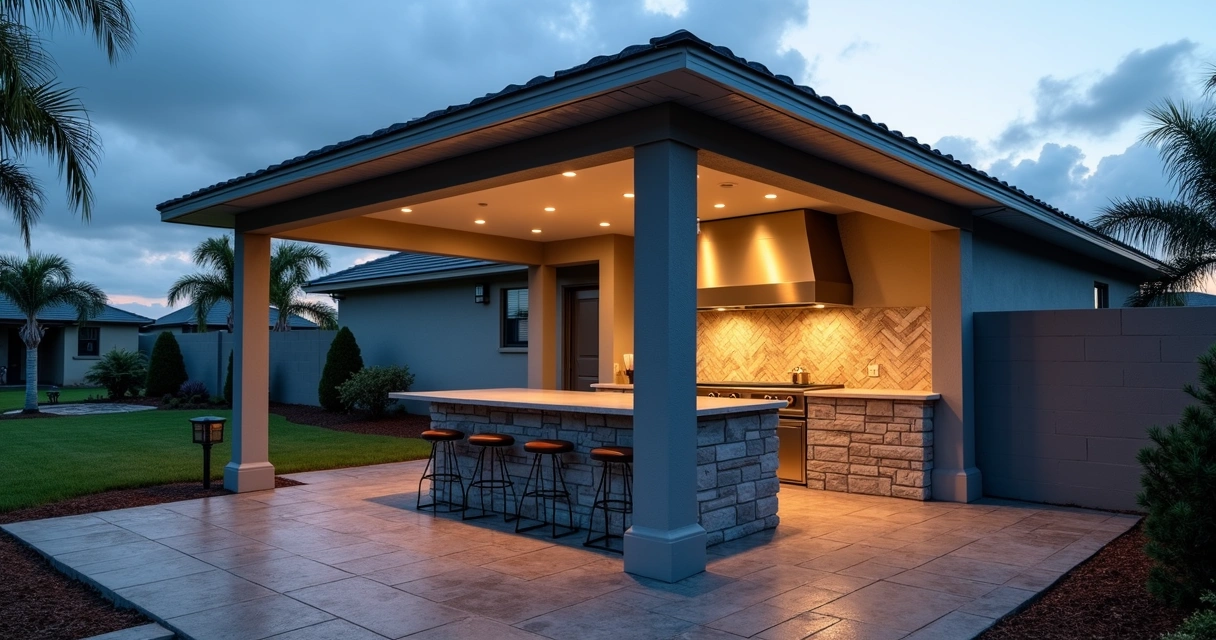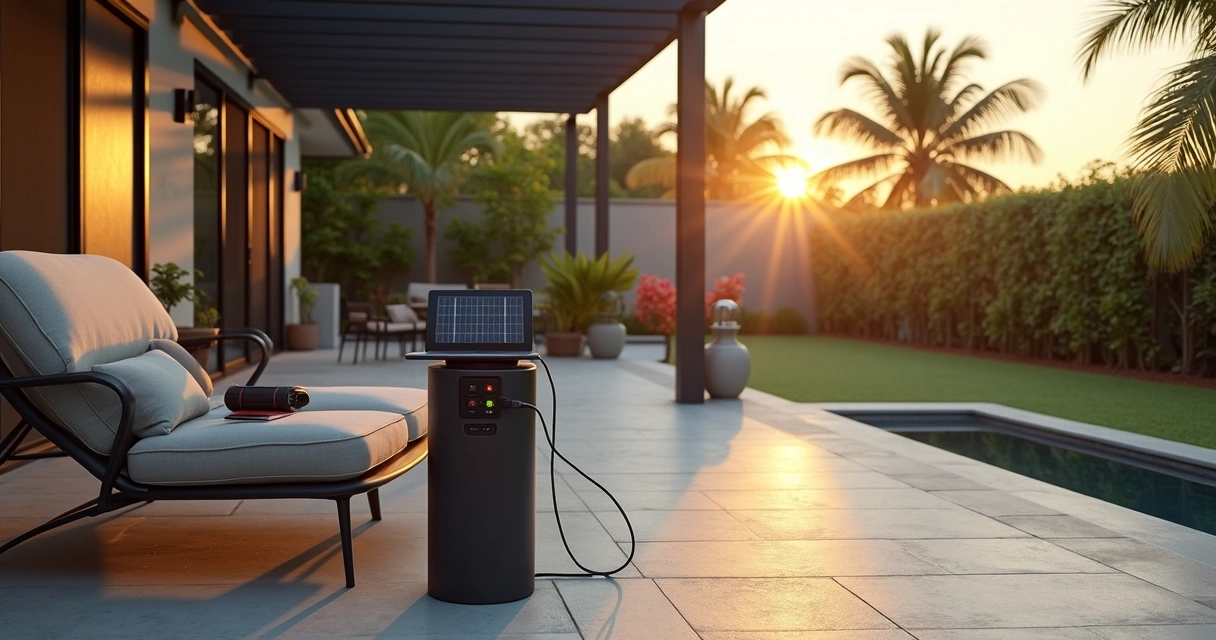
As outdoor living trends evolve, more Central Florida homeowners want patios that aren’t just beautiful, but functional. We believe adding solar charging stations to your patio is one of the smartest ways to power modern lifestyles outdoors—whether it’s for charging your phone, running outdoor lights, or even fueling tools and e-bikes. At GCM Best Services, we design hardscapes that are ready for tomorrow, and solar stations bring energy independence, convenience, and environmental responsibility, all in one upgrade. In this guide, we’ll walk through every step, from the basics of what solar charging stations bring, through technical planning, code, patios, and finishes, to the joy of plugging in under the Florida sun.
Why add solar charging stations to your patio?
We see it every day: patios becoming extensions of the home. With remote work, family gatherings, plugged-in kids, and even electric vehicles (EVs) on the rise, the patio demands more power than ever. Solar charging stations enable safe, weatherproof charging outside, free from wires through windows or clunky extension cords.
-
Energy independence:
With solar panels powering your patio, you tap into an energy source that’s available all day in Florida. You’re less dependent on your home’s electric grid, and less affected by outages.
-
Convenience and safety:
No one likes running cords from the living room for a phone, speaker, or laptop. Solar charging makes power available, right where you relax—no tripping hazards, no weather worries.
-
Future readiness:
Studies like recent Pew Research Center findings show rising EV ownership and the growing need to charge devices outdoors. Adding a patio station means you’re ready as more gadgets—and even vehicles—move outdoors.
-
Property value and appeal:
Patios outfitted with smart solar upgrades catch the eye. Modern buyers want sustainable features that make daily life easy and eco-friendly.
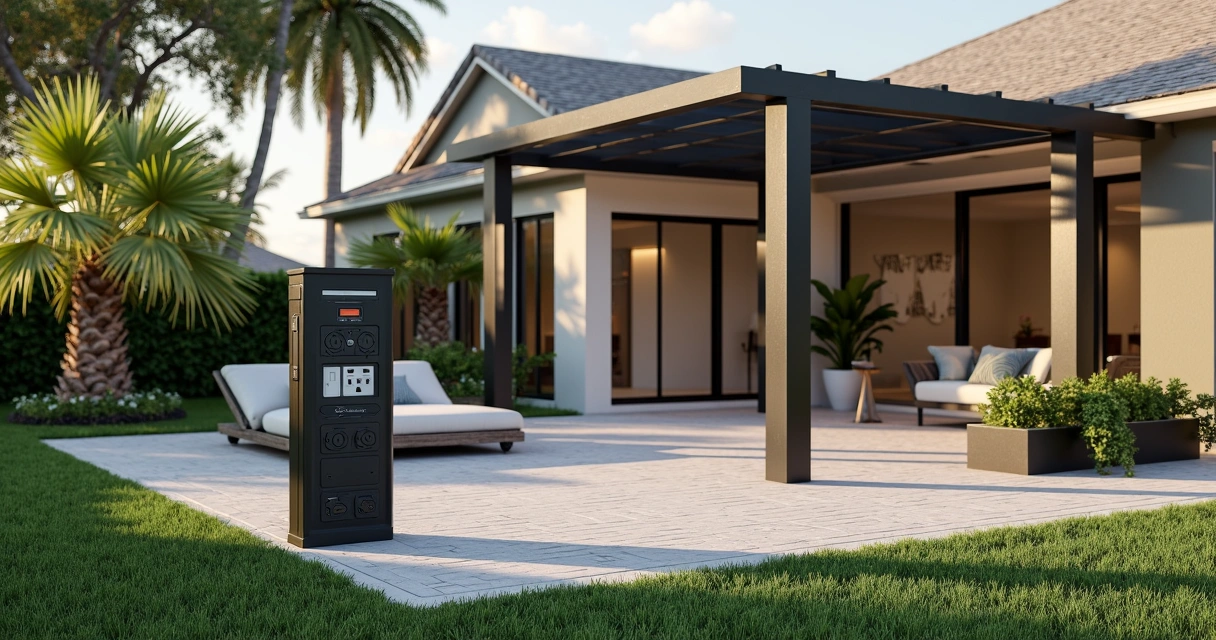
What does a solar charging station look like in a patio setting? It might be a single post with USB, AC, and wireless charging, integrated into a seating wall or countertop. Or it could be an entire solar pergola topping your lounge or summer kitchen area.
Modern patios are for living. Solar power makes them work.
Understanding solar charging technology for patios
We’ve been asked many times, “Can I put solar chargers outside and plug in like I do inside?” The answer is yes—when you follow patio-specific rules on weatherproofing, power matching, and code. Let’s break down the setup.
Solar panel selection
The most common panels used are mono- or polycrystalline silicon modules. For patios, compact 100–320-watt panels are popular for their balance of size and usable output. Flexible thin-film panels can also be used where aesthetics or curved mounting is required (pergolas, awnings).
South-facing panels with minimal shade get the best daily output in Florida. We always aim for permanent installations with sealed, tamper-resistant wiring for safety.
Batteries and inverters explained
Patio setups usually require a small battery bank to store daytime solar energy for evening use. Lithium iron phosphate (LiFePO4) batteries are reliable, with thousands of cycles—great for outdoor setups.
You may need an inverter if you’ll be running AC-powered devices (like speakers or garden tools) rather than just USB devices. Many modern stations combine solar controllers, inverters, and batteries in one weather-sealed unit.
For powering e-scooters, e-bikes, or future EVs, consider a system designed for higher wattages (1,200W+), plus fast-charging outlets.
Patio charging station design options
- Freestanding columns or bollards beside walkways
- Bench/seat wall integrations, where chargers are under overhangs
- Solar patio tables, with built-in panel tops and hidden batteries
- Pergolas or screen enclosures with integrated panels overhead
- Rail-integrated charging stations for deck or balcony-style patios
Each design should consider waterproof covers, surge protection, and tamper-resistant outlets for long, safe service. Solar charging stations for patios are available in styles that blend into modern, traditional, and even rustic settings, so creativity is unlimited.
Solar power and the Florida outdoor lifestyle
Our region enjoys some of the highest year-round sun hours in the U.S. That makes Central Florida patios among the best places to invest in solar energy for outdoor living. Many homeowners already use solar for lighting, pool pumps, or lanais—but charging stations go a step further, adding real, usable power everywhere you lounge or play.
What can you power with a typical solar patio station?
- Phones, tablets, and laptops (via USB-C or AC outlets)
- Bluetooth speakers and entertainment systems
- Outdoor fans and LED lighting
- Small appliances (blenders, portable refrigerators, etc.)
- E-bikes, e-scooters, or even outdoor tools
If you’re building a summer kitchen, pool lounge, or new paver space, it’s the perfect time to set up for solar charging.
We’ve found that, for most homeowners, starting with a modest 200 to 500-watt system is enough for every day needs. For heavier use, such as multiple devices or fast-charging higher wattage items, systems can be scaled up and connected to backup batteries.
Planning and preparing your patio for solar charging
Adding solar charging isn’t just about buying a kit and plugging it in outside. Outdoor installations require careful planning so power is always accessible, weatherproofed, and legal under local codes. Here’s our blueprint—gathered from years of patio design at GCM Best Services.
Site assessment and sunshine goals
The solar charging system’s output hinges on daily sunlight hours and shading. Patios bordered by trees, fences, or multiple-story homes may need creative panel placement or elevated mounts.
We suggest:
- Using a sun tracking app to check where sunlight falls during morning, noon, and evening at least a few times per year
- Avoiding north-facing or permanently shaded spots for panels, unless using panels designed for low-light
- Planning for future growth, such as additional panels or batteries, which may require reinforced mounting pads or bigger conduits
Direct sun = maximum power. The more your panels see, the better your patio charges.
Choosing power capacity
How much do you want to plug in? List everything you might charge, and use this example:
- Phone: 5–10 watts per charge
- Laptop: 30–100 watts
- Bluetooth speaker: 10–20 watts
- Power tool: 50–500 watts
- E-bike: 150–500 watts
Add up typical use and choose a system that meets or exceeds that by about 25%. This gives you power on cloudy days or for surprise gatherings.
Patio construction and wiring
Planning for solar starts before the pavers are finished. If you’re building a new patio, talk with your contractor before pouring concrete or setting pavers. Underground conduits should be placed early—protecting wiring and making upgrades easier for years to come. If retrofitting, surface-mount channels painted to match can also work, but below-surface conduits look best and are safest in family spaces.
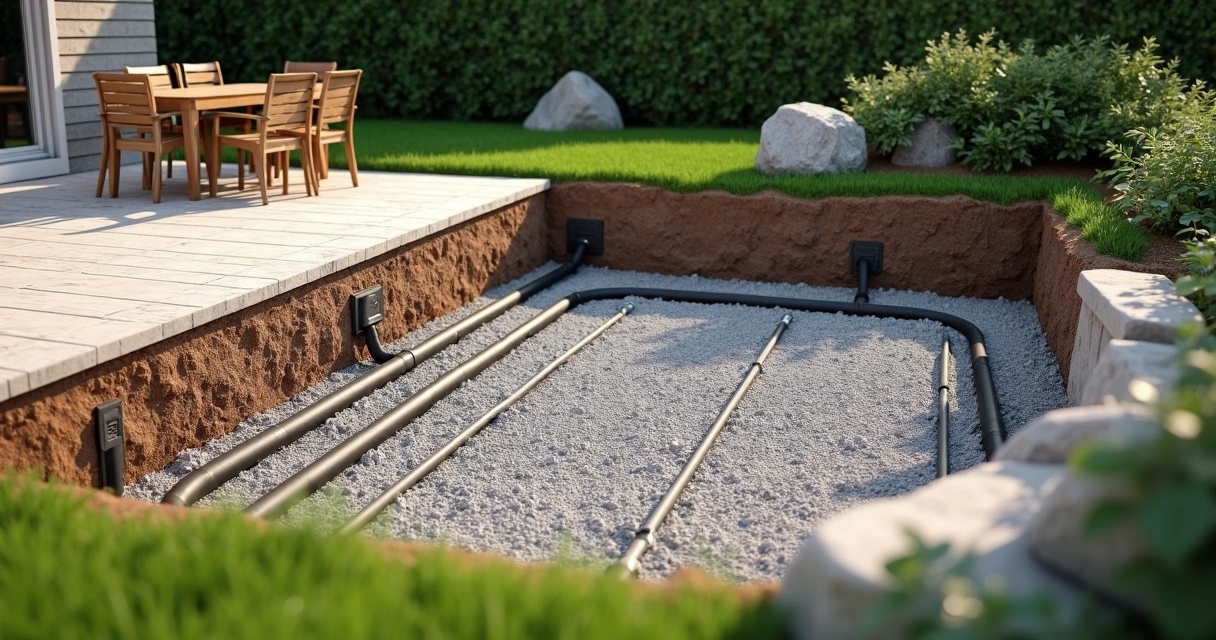
We use National Electrical Code (NEC)-rated conduit, weather-resistant boxes, and all exterior-grade wiring. For paver patios, see our guide to paver patio design and learn how conduits fit with edge restraint and compaction methods for durable, upgrade-ready hardscapes.
Weather, code, and protection
Florida’s sun brings power—its storms and humidity demand protection. All outdoor solar stations need:
- UL-listed, weatherproof charging outlets
- Impact-rated, lockable covers for USB/AC ports
- Grounding to prevent lightning surges
- Lifted foundations or drainage pads, so batteries never sit in pooled water
- Compliance with NEC and, for high-wind areas, local wind load codes
Consult your city, HOA, or local ordinance for permitting if adding power to outdoor spaces. GCM Best Services handles permitting and inspection if we’re involved in the installation, making sure every detail meets code.
Step-by-step: How to add solar charging to your patio
We always start with a clear plan—whether you want a charger for a small reading nook, a full outdoor kitchen, or a poolside lounge. Here’s our process, which works for both DIYers and those working with professional contractors:
- List devices and power needs: Write down what you’ll plug in and their wattage.
- Choose a panel size and kit: For most patios, a starter kit includes a 200-300 watt solar panel, battery bank (500–1000 Wh), smart charger/inverter combo, and weatherproof outlets.
- Locate the station: Select a sun-rich, visible (but protected) area, and plan the path for cable runs from the panels to outlets.
- Lay conduit and anchor mounts: For patios in progress, place conduit with the sub-base before pavers go in. For an existing patio, surface channels may be painted to blend in.
- Install panels and wiring: Mount panels using brackets rated for high winds. Run wires through weather-sealed boxes to the battery/storage.
- Connect controller/inverter: Set up your charger and outlets with surge protection and weather caps.
- Test and maintain: Confirm charging function on sunny and cloudy days. Inspect outlets and panel mounts every six months.
When we build new patios or outdoor kitchens, we always suggest integrating solar from the start. Our process at GCM Best Services includes design, HOA/permit management, safe site practices, and a maintenance guide with every solar-ready project, whether it’s hardscape, pavers, or even artificial turf landscapes.
Pairing solar charging stations with patio features
Solar charging can be the center of your patio design, or blend invisibly into the edges. Here’s how we help clients combine GCM Best Services patio features with the latest charging technology:
- Paver patios: Integrate chargers into seat walls or columns; use professional edge restraint and compaction for future upgrades (learn about paver patio construction).
- Concrete slabs: Leave sleeve conduits at pour time for later cable runs (see our concrete patio installation guide).
- Screen enclosures: Hide panels on top for poolside power, or mount on exterior roof for all-season charging.
- Artificial turf: Safe for running low-voltage wiring under, paired with paver borders for charger locations—see more on our artificial turf solutions.
- Summer kitchens: Install solar outlets at food prep stations, bar tops, and even next to outdoor refrigeration.

Caring for and upgrading your patio solar system
Florida weather is both kind and harsh on outdoor solar setups. For worry-free performance:
- Wipe solar panels with a soft damp cloth every few months to prevent dust build-up
- Check for loose or corroded wiring connections each year
- Confirm weather gaskets are intact before the summer rainy season
- Update surge protection as code or local requirements evolve
Batteries should be checked against the manufacturer’s recommended charge/discharge cycles. Most last at least 5–10 years. We recommend planning conduit or wiring runs oversized so you can upgrade later—adding larger panels or batteries as new needs arise or as EV trends change.
Solar charging trends for Orlando patios
Across the country, solar-powered charging stations aren’t just a tech trend—they’re a response to real energy needs. The U.S. Department of Energy reports a major uptick in new charging points each quarter. Locally, as more residents purchase EVs and solar-ready appliances, patio charging is becoming a common request.
What’s unique to Central Florida? We see:
- High adoption of solar-screened lounges and pool enclosures with power access
- Requests for solar charging at edge-of-property benches or mailbox posts
- Mixing solar with backyard lighting controls for evening gatherings
- Outdoor work-from-home spaces that need phone/laptop charging
- EV and e-bike charging/parking spaces integrated with paver driveways (learn more about hardscape driveways)
What about regulations? Orlando and nearby municipalities generally support solar upgrades, as long as installations are safe and meet electrical code. HOA guidelines may dictate solar panel placement for aesthetic reasons—so we always handle design review and permission as part of our installation workflow.
Living near public charging is increasingly common, as shown in recent Pew Research Center studies, but having private, on-demand solar power at your patio is the next step in outdoor convenience and sustainability.
Helping Central Florida homeowners create smart, powered patios
As more of our lives move outdoors, we want every patio to work as hard as it entertains. This is the heart of what GCM Best Services offers: patios, pavers, screen enclosures, concrete, and turf built with both beauty and tomorrow’s technology in mind. Adding solar power is not a fad. It’s about expanding comfort, safety, and usefulness, with a smaller footprint on the grid and the planet.
Outdoor charging isn’t just a perk. It’s the new standard for modern Florida patios.
Are you ready to plan your patio’s power upgrade? Our free on-site assessments include solar charging options along with hardscape renovation, paver installation, turf solutions, screen enclosures, and more. We handle every step: design, permits, clean worksites, and a written warranty—so you can relax under the sun, with power at your fingertips.
Contact us at GCM Best Services to start your solar patio journey. Take charge of your outdoor space, both literally and figuratively, and discover what a powered patio can do for your lifestyle.
Frequently asked questions
What is a solar charging station?
A solar charging station is a system that uses solar panels to collect sunlight and convert it into electricity, which is then used to charge devices or power outdoor equipment through dedicated outlets. These stations typically include solar panels, a battery storage system for use after sunset, and weatherproof outlets (USB, AC, or even wireless chargers) integrated into posts, columns, or patio furniture.
How do I install solar charging stations?
Installing a solar charging station involves mounting solar panels in a sunny patio location, running wiring—ideally in underground conduit—to a weatherproof battery/inverter box, and connecting outlets in a safe, accessible spot. You should use outdoor-rated, code-compliant materials, and for best results, plan conduit and outlet locations during patio construction. Always check local codes and permit requirements in your city or HOA.
How much do solar charging stations cost?
In our experience, a basic patio solar charging setup (panels, battery, inverter, outlets, and wiring) can range from $750 to $2,500+ in Central Florida, depending on power needs, materials, and installation approach. Upscale stations designed for higher wattage or EV charging, or those built into custom hardscape features, will cost more. Planning during a new patio build lowers retrofit costs.
Are solar charging stations worth it?
Solar charging stations for patios offer both convenience and long-term cost savings—especially in sunny areas like Orlando where outdoor living is popular. They add property appeal, support outdoor technology use, and provide energy resilience during power outages or storm events.
Where can I buy solar charging stations?
Solar charging station kits and components are widely available through home improvement retailers, specialty solar companies, and licensed contractors. For tailored solutions that match your patio style and local codes, we recommend consulting with professionals like GCM Best Services, who can integrate systems during hardscape or patio upgrades.