Primary keyword: Concrete patio drainageKeyword variants: Florida patio drainage solutions, drainage systems for patios, best drainage for concrete patios
Audience pain/benefit: Florida homeowners and property managers need patios that stay dry and crack-free, with drainage solutions that handle heavy rain and reduce flooding risk.
Summary: Florida’s subtropical weather makes drainage a priority for every concrete patio. With our extensive experience at GCM Best Services, we recognize the unique drainage challenges caused by Florida’s frequent downpours, sandy soils, and strict building codes. This article compares seven patio drainage systems for Florida, with practical insights and local references to help you choose the right approach for your property.
- Why drainage matters for Florida patios
- The challenges with Florida soils and weather
- Key design considerations for drainage
- 7 concrete patio drainage systems compared
- Slope-to-drain
- Surface drains (area drains with grates)
- French drains (subsurface gravel trenches)
- Channel drains (linear surface drains)
- Permeable concrete and permeable paver patios
- Dry wells and soakaway pits
- Rain gardens (bioretention areas)
- Which system is best for your patio?
- Local code, HOA, and permit factors for Florida
- Common design mistakes and how to avoid them
- The GCM Best Services process for Florida patios
- Conclusion: long-lasting patios start with drainage
- FAQ: patio drainage in Florida
Ready for a professional quote? 📞 (407) 250-1948 • 24–48h • Orlando, Tampa & area.
Why drainage matters for Florida patios
Florida is famous for sun and sudden storms, but for property owners, these downpours can bring more than puddles. Patio flooding means slip hazards, mildew, insects, and unsightly stains. Prolonged moisture also invites cracks and structural failures—especially on hard, impervious surfaces like concrete. The Florida Department of Environmental Protection highlights that impervious surfaces like patios often lead to rapid runoff, overloading stormwater systems and impacting water quality.
We have seen far too many patios poured flat, without proper drains, only to become unusable swamps after a summer cloudburst. Something as simple as standing water can even void manufacturer or contractor warranties. Good drainage is the difference between a comfortable, long-lasting outdoor space and a headache that keeps getting worse.
At GCM Best Services, we always design Florida patios with drainage in mind from the start—whether it’s a new slab, a replacement, or an upgrade.
The challenges with Florida soils and weather
Florida’s soils and climate present unique patio drainage challenges not found in drier parts of the country. Most of Central Florida is built on mostly sandy or silty soils, with a high water table and frequent, fast, heavy rain. Sandy soils drain quickly, but with enough rain, even these get saturated and shed water into streets and low-lying yards.
Add to this the typical flat landscape and rising groundwater levels in some regions, as reported by the U.S. Geological Survey, and you have all the ingredients for persistent flooding and patio damage. These issues are even more relevant for homes with poorly planned grading, older storm sewers, or urban infill lots with little green space.
Patio drainage is not an afterthought in Florida. It’s a requirement.
Key design considerations for drainage
Any successful patio drainage design for Florida weighs these key factors:
- Surface slope: How fast and where does the water move?
- Sub-base layers: Are there 6–8 inches of compacted gravel, sand, or other draining material?
- Soil permeability: Does water quickly seep down, or does it pool?
- Rain intensity and volume: Does your area get true tropical downpours, or lighter rains?
- Available outfalls: Is there a safe place for drained water to go—lawn, street, rain garden, or storm drain?
- Regulations: What do local authorities, HOA, or flood maps require?
In Florida, a project that looks good on paper can sometimes fail on wet ground. We double-check every detail: even the best concrete mix or finish won’t keep a patio dry if the drainage is wrong. And, as described in the Florida Department of Transportation's Drainage Design Guide, surface grading and storm drains must be tailored to Florida’s unique storm patterns.
7 concrete patio drainage systems compared for Florida
This is where theory meets real-world experience. Below, we compare the main drainage options for concrete patios, including their pros, cons, and best use cases in Florida’s climate.
Slope-to-drain (proper patio grading)
A sloped patio directs water away from the house, lawn, or hardscape, using gravity alone—no grates, pipes, or landscaping required. This remains the simplest and most reliable approach for most Florida residential patios.
- How it works: The concrete surface is poured with a slight slope (typically 1/8 to 1/4 inch per foot), causing water to flow toward safe edges or planting beds.
- Best for: Small to medium patios with open borders and permeable landscaping nearby.
- Pros: No moving parts, minimal maintenance, naturally self-clearing—if properly built.
- Cons: Needs expert layout and consistent sub-base; not effective if patio is surrounded by walls, fences, or raised planting beds with no outfall.
In our experience, about 80% of patio drainage problems we encounter stem from flat or back-sloped slabs poured by contractors who don’t understand Florida soils. We ensure all surfaces drain away from structures, integrating the landscape and respecting property boundaries, as detailed in our guide on preventing cracks in Florida patios.
Surface drains (area drains with grates)
Surface drains, often called “area drains”, are installed in low spots on the patio. These attach to buried pipes that transport water elsewhere, typically out to the yard or storm drain.
- How it works: Grated inlets collect surface runoff. Solid pipes carry water to a safe outlet.
- Best for: Larger patios, courtyards, or enclosed spaces with no open lawn edges.
- Pros: Handles sudden heavy rains; adapts to flat and complex layouts; catches surface debris.
- Cons: Drains can clog with leaves or debris; requires regular inspection and cleaning.
On properties where patios are adjacent to pools, screens, or landscape walls, area drains are often paired with channel drains or French drains for backup protection. Our team at GCM Best Services selects commercial-grade grates that resist rust and popping up after storms—a common maintenance call we receive after hurricane season.
French drains (subsurface gravel trenches)
French drains are perforated pipes set in gravel-filled trenches beneath or beside the patio slab. They collect water from the sub-base, intercepting it before it rises to the surface.
- How it works: Subsurface water flows into the gravel trench, is picked up by a perforated pipe, and is redirected away from the slab.
- Best for: Yards with high water tables, areas prone to standing water after storms.
- Pros: Discreet (nothing visible except possible inspection ports); reduces sub-base heave, mud, and settlement.
- Cons: Must be built with the proper slope and outlet; can clog if not installed with a filter fabric barrier and proper gravel size.
Sometimes, what’s underground matters more than what’s at the surface.
Many Florida patios that show early cracks or unexpected “popping” corners have too little—or too much—groundwater movement. French drains act as underground insurance, especially in areas where the water table fluctuates after a rainy week.
Channel drains (linear surface drains)
Channel drains are long, narrow surface drains, often installed at the edge of a patio or across doorways and garage thresholds. They are designed to intercept fast-flowing water before it enters structures or low-lying areas.
- How it works: Surface water drops into the trench channel, then flows through connected pipes to a discharge point.
- Best for: Patios that butt against homes, pool decks, or driveways; door thresholds vulnerable to ponding.
- Pros: Stops water from entering unwanted areas; can be walked over safely; many aesthetic options.
- Cons: Installation must be precise; can collect debris along its length; periodic cleaning is required.
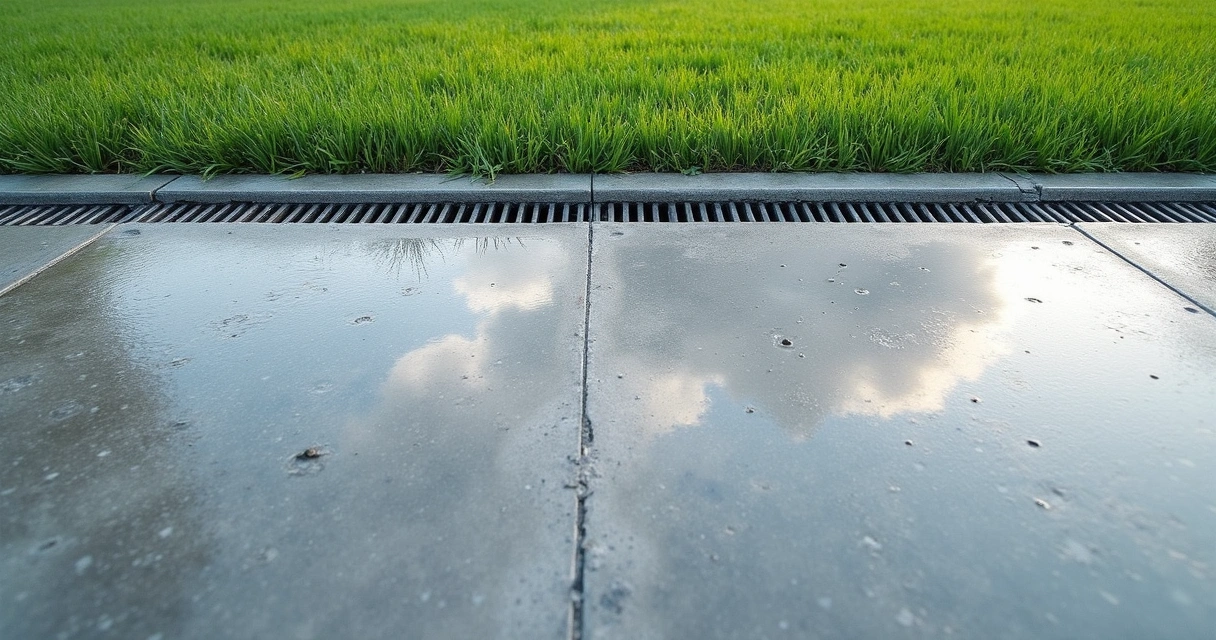
We frequently recommend channel drains for patios that connect to screened rooms, summer kitchens, or homes with frequently opening sliding doors, as shown in our installation guide for St. Cloud concrete patios.
Permeable concrete and permeable paver patios
Permeable materials allow rainwater to soak through the patio, seeping into the soil below. The Floridadep.gov case study in Palatka demonstrates that permeable paving can cut surface runoff by more than 50% in Florida urban settings.
- How it works: Pervious concrete or permeable pavers are set over a thick open-graded gravel base, allowing water to infiltrate rapidly and move laterally through the stone to drains or landscaping.
- Best for: Eco-conscious designs; patios near street inlets or storm-prone areas; properties aiming for stormwater credits; light-duty traffic areas as recommended by studies from the University of Florida's IFAS.
- Pros: Reduces runoff, helps recharge groundwater; slows peak flows to storm drains.
- Cons: Can clog from sand, leaves, or debris if not swept/blown regularly; initial cost higher than standard slab; not suitable for heavy vehicle traffic unless specified.
We offer permeable pavers as an option for new patios, blending eco-friendliness with style. Proper edge restraints, underdrain design, and base compaction are essential—as we detail in posts like hardscape paving and drainage design.
Dry wells and soakaway pits
Dry wells (sometimes called soakaway pits) are underground tanks or rock-filled holes designed to capture water from patio drains and let it slowly filter into the surrounding soil. They are widely used on tight urban sites and areas with no storm sewer or natural outfall.
- How it works: Water from drains or downspouts is piped into a pit lined with stone, open-bottom tanks, or special chambers. The water seeps out over time.
- Best for: Smaller patios with poor drainage, where water cannot exit to the street; homes not in flood zones; areas with fast-draining subsoils.
- Pros: Keeps water on site, supports groundwater recharge; works passively after installation.
- Cons: Can fill up if installed too small or in areas with poor soil percolation; not suitable in high-water-table zones or close to foundations.
Sometimes, the best place for water is underground—out of sight, out of mind.
We always verify locations for dry wells with a drainage engineer or local guidelines. Sizing and placement are critical; poorly designed dry wells can worsen, not solve, patio drainage problems.
Rain gardens (bioretention areas)
Rain gardens are shallow vegetated beds that collect and soak up excess patio runoff. They use deep-rooted native plants and engineered soils to boost infiltration and filter pollutants, as recommended by the Florida Department of Environmental Protection.
- How it works: Patio surface water is directed to a low area or swale planted with tolerant species. Water temporarily ponds, then filters down.
- Best for: Large properties with some open landscaping; patios near lakes or stormwater retention areas; eco-friendly projects.
- Pros: Enhances landscape beauty; provides wildlife habitat; reduces fertilizer and pesticide runoff.
- Cons: Needs space, regular mulching, and weeding; not suitable for tiny lots or steep slopes.
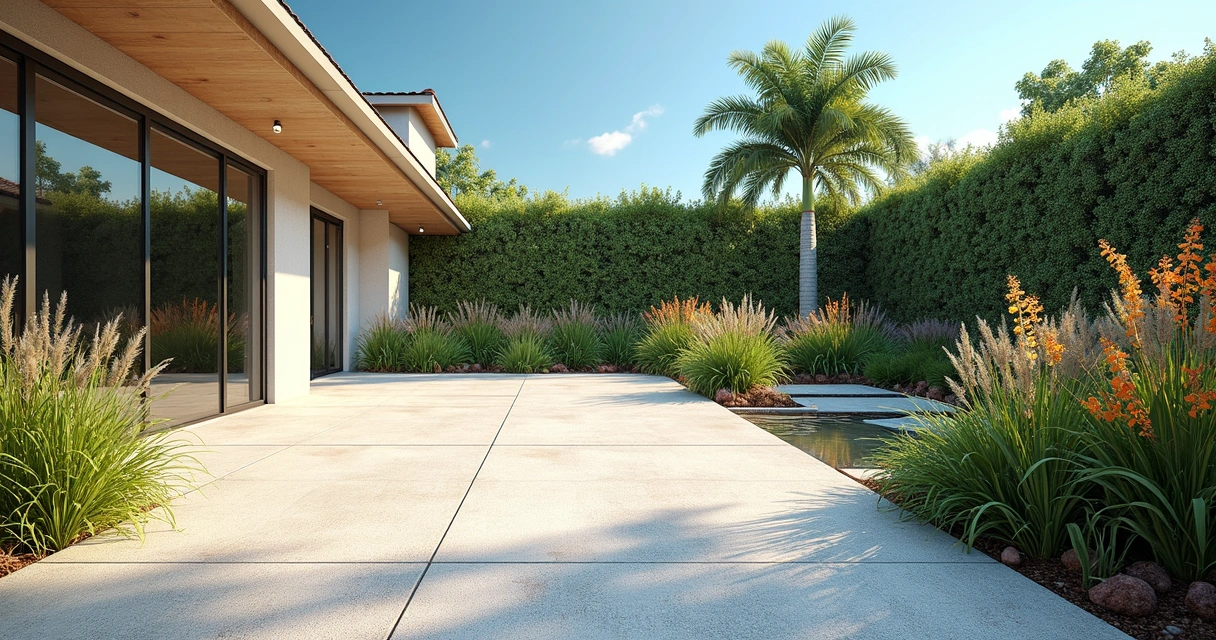
Rain gardens can be a rewarding way to solve drainage and improve curb appeal. We recommend pairing rain gardens with bioswales or French drains to handle heavier flows, as explained for Florida properties in articles on drainage and hardscape installations.
Which system is best for your patio?
There’s no one-size-fits-all answer. In our experience at GCM Best Services, the best drainage solution depends on five things:
- Patio size, shape, and location relative to the house
- Soil absorption and groundwater table
- How much space you can use for outfalls or landscaping
- Proximity to storm drains, lakes, or protected wetlands
- Budget and long-term maintenance preferences
For new patios, we often combine a gently sloped surface, area or channel drains for heavy rain, and (on eco-focused projects) permeable pavers or a rain garden border. If the lawn floods or grows musty after every storm, adding subsurface French drains or a dry well can protect both patio and landscaping. You can see practical design examples and installation advice at our specialized hardscape solutions page.
Local code, HOA, and permit factors for Florida
Florida jurisdictions typically require permits for patio work involving drainage changes. HOA communities in Orlando, Tampa, and surrounding cities often have additional restrictions on concrete finishes, colors, and where runoff can go.
- Permits: Patios with new drains, grading, or alterations will need city/county review to check that water does not spill onto neighboring property or cause erosion.
- HOA/admin approval: Some neighborhoods require submissions before work starts. We handle the paperwork—plus photos and written warranties—for all projects.
- Drainage codes: Following both local codes and the Florida DOT Drainage Design Guide, we ensure projects meet setbacks, finished floor elevations, and safe water discharge standards.
Our clients value how we coordinate permitting, HOAs, and inspections as part of our standard process.
Common design mistakes and how to avoid them
We see a few recurring errors in DIY or rushed patio builds across Florida:
- Patios placed too low in the yard, acting as catch-basins for runoff from all directions.
- Slope that directs water toward the home, not away from it.
- Surface drains positioned with nowhere for pipes to safely discharge.
- Area or French drains blocked by roots, mulch, or leaves after the first season.
- Permeable pavers installed without correct edge restraints or weed barriers, quickly clogging or shifting.
- Using fill or sand that compacts poorly, leading to settlement and new low spots.
Our trained installers and project managers work from written plans, on-site elevations, and post-construction walkthroughs—with photos—to catch problems before concrete is poured.
The GCM Best Services process for Florida patios
From free on-site assessments to written warranties, our process ensures Florida patios stay dry, safe, and attractive:
- Detailed onsite evaluation to spot drainage weak points
- Custom design with all options: slab slope, drain types, sub-base, landscaping
- Permits, HOA, and inspection management
- On-time, clean execution with OSHA-safe sites
- Final walkthrough and maintenance guidance
- Written warranty and aftercare support
We build patios the right way, from the ground up. Always have. Always will.
We recommend reviewing case studies and tips on drainage-smart patios in Central Florida at our expert articles and guides, such as St. Cloud installation advice and our in-depth guide to hardscape installation.

Conclusion: long-lasting patios start with drainage
Nearly every patio problem we fix at GCM Best Services comes back to poor drainage design or neglecting Florida’s soil and rain challenges. Whether you choose a traditional sloped concrete slab, high-tech permeable pavers, or layered drains, the right system will keep your patio dry, resilient, and looking great for years—no matter the weather.
Our experience and commitment to communication, standards, and warranties make us a partner you can trust for every exterior project in Central Florida. If you're ready for a custom plan, a lasting solution, and a team that stands behind its work, reach out now for a no-obligation consultation.
Ready for a professional quote? 📞 (407) 250-1948 • 24–48h • Orlando, Tampa & area.
Frequently asked questions on concrete patio drainage in Florida
What is concrete patio drainage?
Concrete patio drainage is the method or system used to remove excess water from patio surfaces, preventing ponding, cracks, slipperiness, and mold. This can be achieved through grading (sloping), surface drains, underground French drains, channel drains, or permeable surfaces, tailored to Florida’s heavy rainfall and soil conditions.
How to improve patio drainage?
Patio drainage can be improved by ensuring the slab slopes away from the home, adding area or channel drains connected to safe outfalls, installing French drains to lower groundwater, using permeable paving materials, and maintaining drain inlets and outlets. Sometimes, landscaping or rain gardens are added to absorb and filter runoff.
Which drainage system works best in Florida?
The best system depends on your property, but sloped concrete slabs with well-placed area or channel drains are the most popular in Florida. For eco-friendly solutions, permeable pavers or rain gardens are effective for reducing runoff, as recommended by state agencies and the University of Florida’s IFAS. Subsurface French drains are best for high-water-table or flood-prone areas.
How much does patio drainage cost?
Costs vary widely, from a few hundred dollars for minor slope corrections or simple surface drains, to several thousand for subsurface French drains, dry wells, or permeable paver systems. Site-specific factors like size, soil, access, and materials all influence the price. A detailed site visit and design is the best way to estimate cost accurately.
Is it worth installing patio drainage?
Yes. Installing drainage protects your patio investment, prevents costly repairs, improves safety, and boosts property value. It limits erosion, prevents damage to foundations and landscaping, and, with the right design, can enhance curb appeal and reduce stormwater issues for your whole property.