Primary keyword: drainage mats for artificial turf
Variants: artificial turf drainage solutions, best turf drainage mats, drainage mat installation for synthetic grass
Audience: Homeowners, business owners, and property managers in Orlando and Central Florida looking for long-lasting, low-maintenance artificial turf without drainage or flooding problems.
Pain/Benefit: Drainage issues cause standing water and artificial turf failure. Correct drainage mats keep turf dry, safe, and attractive for years in Florida’s wet climate.
Proper drainage is the key to stress-free, long-lasting artificial turf. In this guide, we draw on our project expertise at GCM Best Services to help you choose the right drainage mats for your Florida installation—minimizing headaches and maximizing your investment. We’ll walk through why drainage mats matter, how they work with local soils, which product features make the difference, and what to ask when planning your next synthetic lawn, pet area, or play space.
Outline
- Why drainage matters for artificial turf performance
- How drainage mats work under turf
- Florida soils and climate: unique drainage demands
- What makes a quality drainage mat?
- Types of drainage mats for turf
- Matching mats with site: roof decks, yards, play areas, pet runs
- Installation: base prep, mat layout, edge restraint
- Maintenance, longevity, and warranties
- Conclusion and next steps
- Frequently asked questions (FAQ)
Great turf installations start from the ground up.
Why drainage matters for artificial turf performance
If you’ve ever walked across a flooded artificial lawn, you know: Poor drainage is the number one cause of artificial turf failure in Florida.
When water pools on the surface or seeps up from below, you get mushy footing, mold, odors, unwanted weed growth, and damaged seams or fibers. These headaches are not just ugly—they reduce your turf’s safe use and longevity.
Studies by Penn State University Plant Science emphasize the role of surface grading and internal drainage to ensure artificial turf performs in real-world conditions, especially after heavy rain. Consistent, rapid water movement away from the surface is the most reliable long-term solution, and drainage mats are the hidden champions here.
We’ve seen many turf projects in Central Florida that looked beautiful at first but failed within one wet season due to short-cut drainage prep. That’s why, at GCM Best Services, we always recommend purpose-built drainage mats for synthetic grass—especially in tough soils or low-lying areas.
How drainage mats work under turf
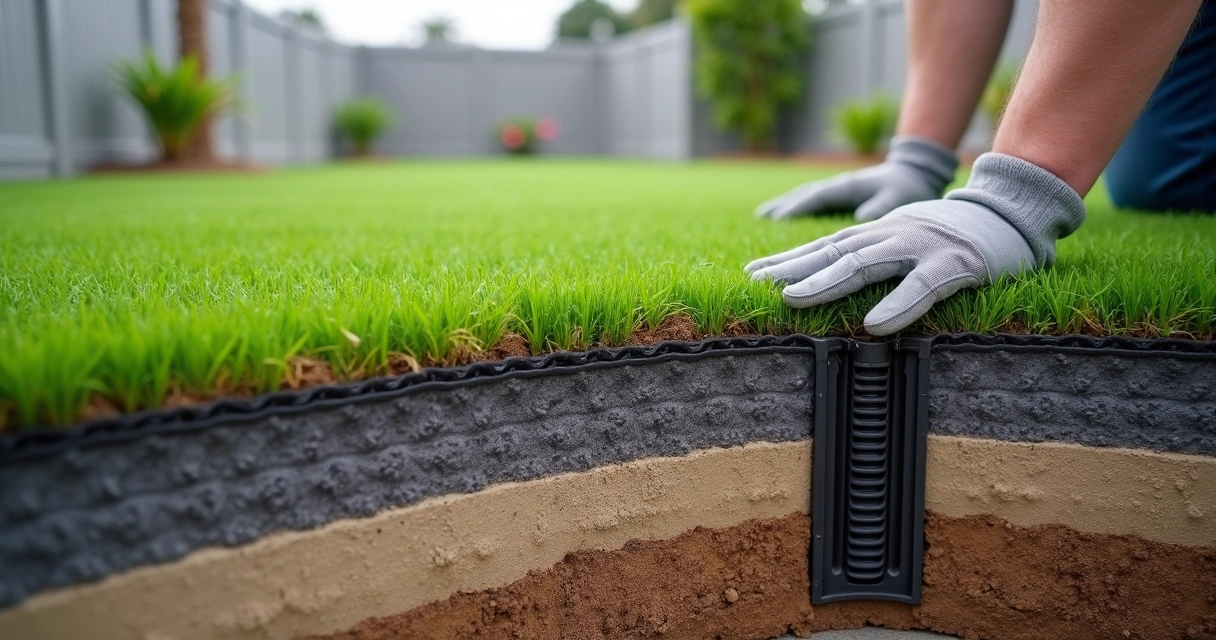
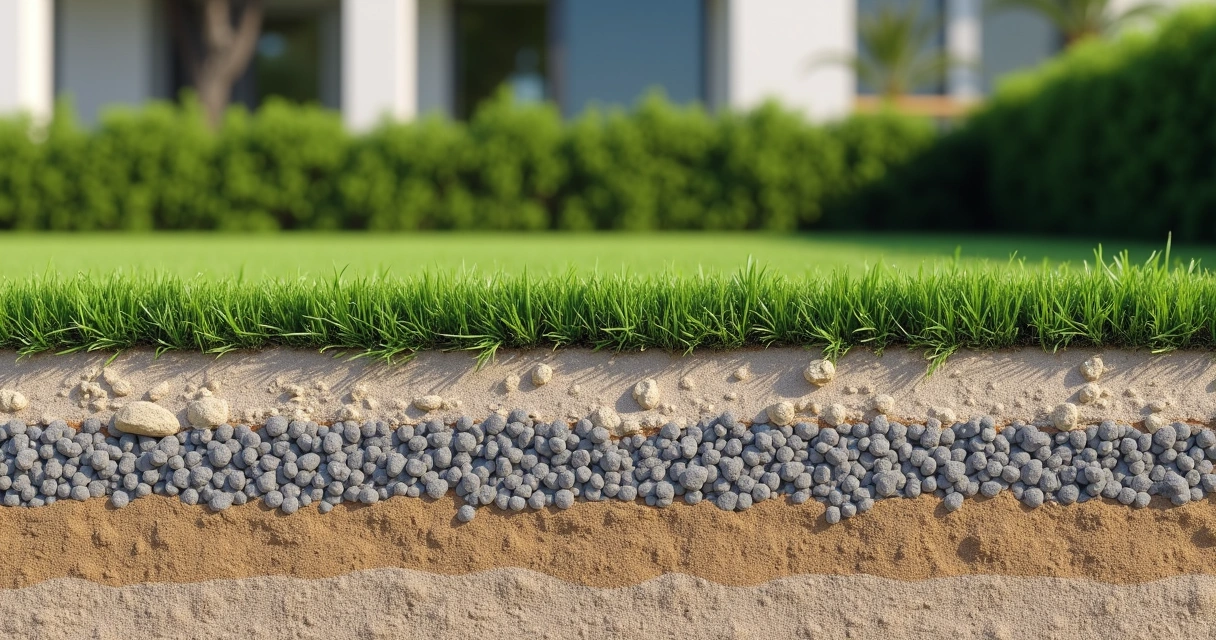
A drainage mat is a specialized layer installed directly beneath artificial turf (above the compacted base). Its job is simple: create space and channels so water can rapidly move away from the surface and disperse into the sub-base below.
Typical drainage mats are made of lightweight, durable synthetic materials—like perforated plastics or structured geotextiles—with a pattern of raised dimples, cross-laid mesh, or built-in channels. Water flows downward through the turf backing, enters the mat, then runs horizontally until it meets a way out: base gravel, edging, subsurface drains, or slopes out to natural ground.
Drainage mats turn a flat, compacted surface into an engineered water highway under your turf.
This means water won’t pool or seep back up through your artificial grass even during the worst summer downpour. With proper drainage mats, you can enjoy fast-drying, safe, and clean turf all year long—no matter what Florida’s sky throws your way.
Florida soils and climate: unique drainage demands
Not every region puts turf drainage systems to the same test as Central Florida. Orlando and the surrounding areas have a unique set of conditions:
- Heavy seasonal rain—Sudden storms rapidly release inches of water in short periods.
- Mostly sandy subsoils—Somewhat permeable, but often poorly compacted and prone to shifting or “blowouts.”
- Hardpan, clay, and fill soils—These exist in pockets and subdivisions, sometimes stopping water movement entirely.
- Flat or poorly-graded lots—Water may have nowhere obvious to escape, leading to ponding.
Even the best turf on earth can only handle as much water as the base below it allows. In our experience, the difference between a low-maintenance lawn and a constant headache is usually the subsurface drainage layer.
Drainage mats for artificial turf can be tailored to work with any soil profile—clay, sand, rocky urban infill—and are especially recommended when the existing soil does not perk quickly after heavy rain.
What makes a quality drainage mat?
All drainage mats are not equal. In fact, using the wrong product often causes new problems. Based on our years of installing synthetic lawns in Central Florida, here are the main features to look for:
- High flow rate—Look for mats rated for rapid water movement (at least 12–30 gallons per minute per square foot).
- Mold and rot resistance—UV-stabilized plastics or geotextiles that won’t degrade or harbor bacteria.
- Proper thickness—About 0.3–1.0 inches is typical; thick enough for real water volume, but not so thick that the turf feels spongy.
- Load capacity—Mats must support the expected foot traffic, pets, or even vehicles (golf carts, mowers) without crushing.
- Surface compatibility—Mat texture and shape should work with your chosen turf’s backing and base materials.
- Easy seaming and shaping—Mats designed to join tightly together, with minimal gap or overlap, prevent weak spots.
- Compliance with regulations—Meets Florida building codes for drainage and permeability, when applicable.
Some drainage mats even offer extra benefits: antimicrobial coatings, root-barrier membranes, or sound-dampening properties for rooftop decks or play spaces.
Types of drainage mats for turf projects
The word “drainage mat” covers a few different products. We break them into several useful categories, each suited to different site needs:
Punched sheet mats
Flat sheets of synthetic material with thousands of closely-spaced holes, designed to promote direct vertical water movement. They work best where the base below is already free-draining, but you want to add insurance against brief surface pooling, or want something thin for tight spots like roof decks or patios.
Dimple board mats
These thick, “egg crate” mats are made of stiffer plastic, with high dimples and channels. Water moves into the air space between the dimples, then is directed laterally to exit points. They’re ideal for challenging clay or hardpan soils, and can be used for heavier, high-traffic installations.
Geocomposite mats
Geocomposite mats combine a strong plastic structure (like a mesh or dimple board) with a filter fabric on one or both sides. The filter keeps soil fines and sand from clogging the mat’s channels, extending the life of your system—helpful in wetter or shifting sandy soils like those found throughout Central Florida.
Specialty mats and root barriers
Some locations require mats with extra properties—like heavy root-barrier layers to stop tree roots, antimicrobial or odor-reduction coatings for pet runs, or sound-reducing undersurfaces for rooftop turf. These are used in more technical installations but may be worth considering for unique site needs.
Matching mats to your project: yards, pet areas, decks, and more
Each artificial turf site in Florida deserves a drainage solution that matches its intended use and location. Here’s how we recommend selecting mats for popular project types:
Residential lawns and play areas
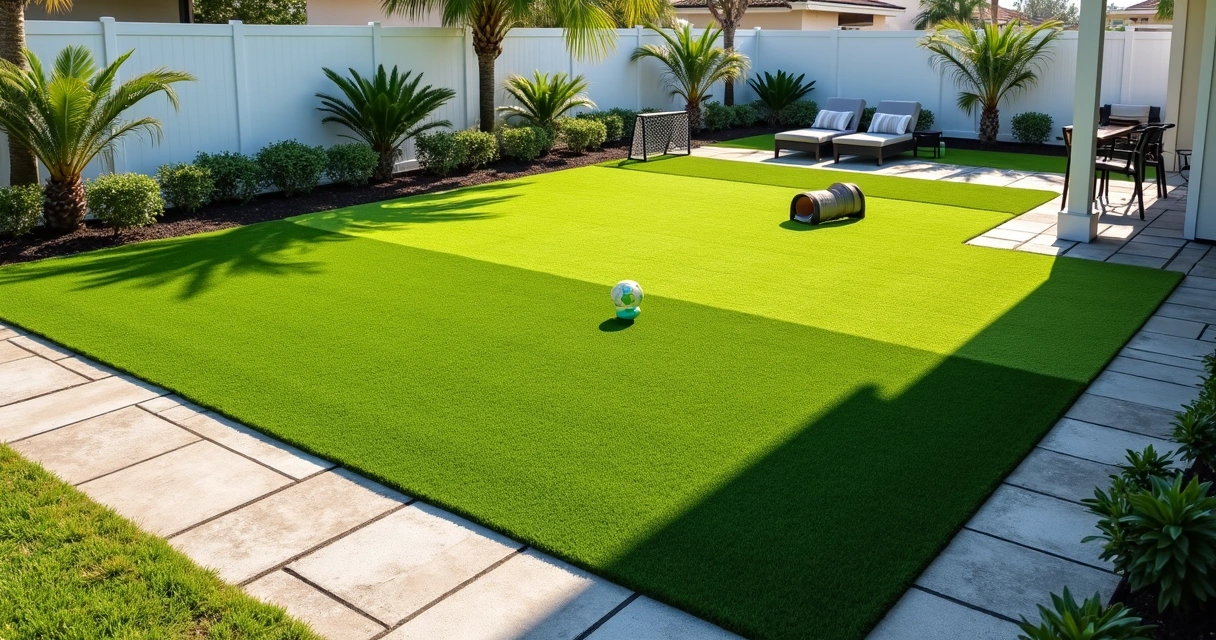
Yards and playgrounds need mats with a balance of drainage, durability, and safety. We choose mats with open profiles and built-in filter fabrics where kids or dogs are present, to keep the surface firm and dry even after repeated use. For residential projects, integrating the mats with perimeter drainage or solid edging (as described in our artificial turf installation guide) gives the best long-term results.
Pet turf runs and kennels
Pet turf demands extra drainage because of liquid waste and frequent hose-downs. We use antimicrobial mats with fast vertical and horizontal flow, ensuring that urine, water, or spills leave the surface quickly and the area stays sanitary. Mats with built-in odor control offer peace of mind for pet owners.
Rooftop decks and patios
These projects often need thinner mats (to reduce weight on the structure) but still provide water flow to roof drains. Dimpled mats or composite root-barrier products keep water from getting trapped between the turf and waterproof membranes. We secure these mats per building code and coordinate with drainage engineers when needed.
Pool decks and shaded spots
In moist or shaded areas, drainage mats reduce the risk of mold, algae, or slippery zones. For pool edges or between screens and turf (as in hardscape projects), we recommend mats with textured surfaces and fast flow ratings for quick drying.
In our projects, the right drainage mat often saves on future repairs—especially when paired with our driveway and patio paving expertise or integrated paver drainage planning.
Proper installation: base prep, mat layout, and edges
No drainage mat can make up for poor sub-base construction. Here’s the step-by-step process we use to ensure system reliability:
- Remove organic material and loose fill.
All roots, stumps, and debris should be gone. Anything left below the mat can decay and cause sinking.
- Build a well-compacted sub-base (typically 6–8" of gravel or crushed stone).
This provides the base strength and serves as the primary water reservoir. The material and depth will match your soil and project load (as described by Penn State’s turf grading recommendations).
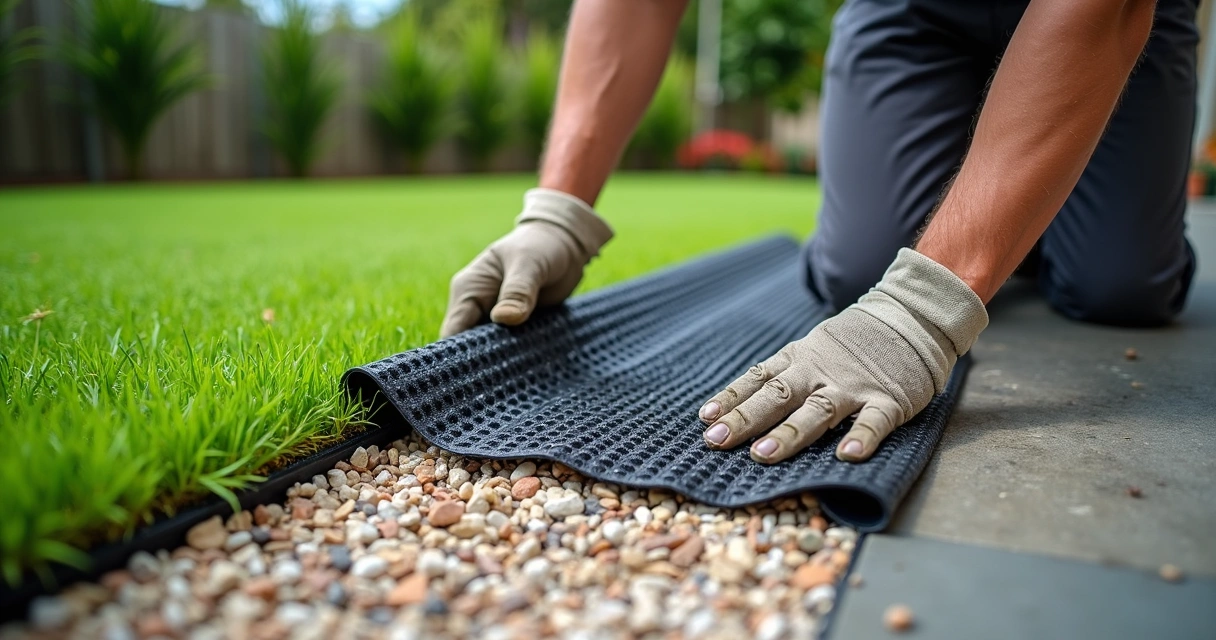
- Install the drainage mat flat and seamless.
All mat seams get overlapped and taped or tied, with no gaps that could trap water or shift under load. Cut mats to fit snug around curves, edges, and drains as required.
- Edge restraint installation.
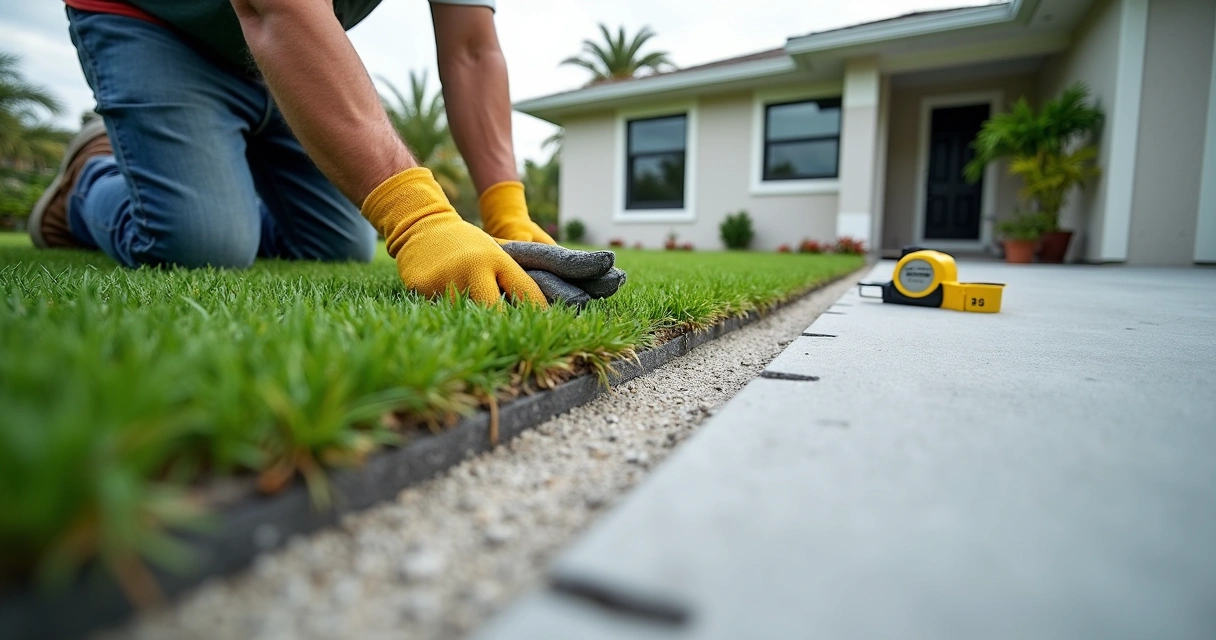
Rigid plastic, metal, or concrete curbing locks the mat and turf in place, prevents weeds and soil wash-in, and protects the full drainage layer from collapse.
- Lay turf, join seams, and add infill.
Only after double-checking that the drainage mat isn’t folded or bunched. Infill is brushed in to support the blades and help disperse water during storms.
When each layer is done right, water has nowhere to hide.
Maintenance, longevity, and warranties
Once installed, quality artificial turf drainage mats are nearly invisible to the owner and require very little care. Still, a few best practices make a difference:
- Inspect edges at least yearly to check that mats remain tight and drainage channels are clear. Loose mats or weeds at edges may need minor touch-up.
- For pet turf, rinse the surface regularly and use antimicrobial turf cleaners approved for synthetic turf. This will prevent odors and bacteria buildup.
- After unusual rain, watch for any ponding or surface bubbles—these can indicate obstructions below or settling that needs repair.
With the right drainage mat and installation, your turf should last 8–15 years or even more. At GCM Best Services, we provide written warranties and maintenance tips after every artificial turf installation—because we know that real assurance matters in Florida’s climate.
Research and standards for drainage mats
It’s not just our experience that confirms the value of drainage mats—formal studies back this approach. The University of Kentucky’s research on turf reinforcement mats shows how composite mats outperform rock or sand alone for erosion control and water quality. The Penn State University Plant Science summary outlines the importance of internal drainage layers for high-traffic and high-rainfall installations.
Safety is a regular concern with turf products. The California EPA’s latest field study confirms: synthetic turf and its drainage layers, when professionally installed, show no significant health risks related to runoff or materials—great news for Florida homeowners and business projects alike.
Conclusion: expert drainage, beautiful turf
Choosing the right drainage mat for your artificial turf is about more than a dry yard. It’s the difference between years of hassle-free enjoyment and the frustration of muddy puddles or costly repairs after every storm. The Orlando climate doesn’t forgive shortcuts. That’s why we design every GCM Best Services turf project—from backyard play zones to rooftop lawns—with drainage as the foundation.
We hope this guide has given you a clear starting point to make informed choices for your property. If you want to learn more or get a personalized recommendation, our team is just a call away, ready to help you create an outdoor space that stands up to Florida’s toughest weather.
Let’s build your synthetic turf project right—starting with smart drainage from the ground up.
Ready for a professional quote? 📞 (407) 250-1948 • 24–48h • Orlando, Tampa & area.
Frequently asked questions
What is a drainage mat for turf?
A drainage mat for turf is a synthetic layer designed to sit beneath artificial grass, creating channels that allow water to move quickly away from the surface and into the sub-base below.It’s usually made from dimpled plastic or geotextile composites and prevents standing water, mud, and odors caused by poor drainage. Good drainage mats also protect your turf from shifting, root intrusion, and bacteria buildup.
How to choose the right drainage mat?
When choosing a drainage mat, consider flow rate (gallons per minute per square foot), durability (mold- and UV-resistance), thickness, compatibility with your turf product, and the specific demands of your installation site (traffic, pets, underlying soil, and whether installation is on a rooftop or the ground).Always look for mats that can join tightly together, are easy to cut and lay flat, and come with a warranty from an experienced installer like us at GCM Best Services. Each project may require a slightly different mat—there’s no universal “best,” but the right fit for your site makes all the difference.
Is a drainage mat necessary for turf?
In high-rainfall areas like Orlando and Central Florida or on sites with slow-draining soils, a drainage mat is highly recommended and often necessary for long-term turf performance.While simple lawns on well-drained sand may manage without one, the Florida experience (and university research) shows that a dedicated drainage mat prevents the most common problems: pooling, soft spots, mold, and turf movement. For pet, play, or rooftop installations, we always advise a suitable drainage mat.
Where to buy quality drainage mats?
You can source quality drainage mats through professional landscape suppliers, artificial turf specialists, or certified contractors like GCM Best Services. We supply and install a range of proven drainage mats as part of our artificial turf projects, ensuring the product matches the needs of your home, business, or sports space.
How much do drainage mats cost?
Drainage mat prices vary depending on material, thickness, and special features, but most fall between $1.50–$4.00 per square foot, including professional installation.Higher-end specialty mats (for rooftop, playground, or pet zones) might cost slightly more per square foot. Because correct drainage saves money by avoiding repeated repairs, we see it as a smart long-term investment for all artificial turf projects in Central Florida.