Primary keyword: outdoor heaters for patiosVariants: best patio heaters Florida, patio heating solutions, outdoor heating Central Florida
Audience pain: Homeowners and businesses want outdoor comfort during Florida’s chilly evenings without risking safety in a warm, humid climate.Benefit: Choosing smart patio heating adds year-round enjoyment and value to outdoor living spaces while aligning with Florida’s unique weather.
When evenings get cool in Central Florida, a comfortable outdoor living area can keep gatherings going. At GCM Best Services, we've helped clients enjoy their patios, lanais, and pool decks no matter the season. Choosing the right outdoor heater for your patio is more than a question of temperature—it’s about safety, style, and performance tuned to Florida’s climate. In this guide, we break down the types, features, and considerations so you select the best solution for your home or business.
Table of contents
- Why Florida patios need careful heating choices
- Main types of patio heaters: Pros and cons
- Features that matter in Central Florida
- Safety and local codes for Florida patios
- Sizing and placement for maximum comfort
- Running costs and energy insights
- Design and usability—blending with your outdoor space
- Installation and maintenance best practices
- Smart extras: Accessories and upgrades
- Our project approach: From patios to heaters
- Conclusion: Creating warm outdoor spaces with confidence
- Frequently Asked Questions
Why Florida patios need careful heating choices
We all know Florida’s heat can be intense. But while summer days may feel endless, cool evenings are common from late fall to early spring. The need for outdoor heaters on patios is real—especially in Central Florida, where nights can dip into the 50s and gatherings move outside as humidity drops.
Unlike northern climates, the Florida approach to patio heating is about targeted warmth, flexibility, and minimizing risks from overheating and high humidity. We want enough comfort for guests to linger, but without raising safety concerns that can come from overpowered or poorly placed heaters.
Recent data from the Florida Policy Institute also show that our state leads in heat-related illnesses, a reminder that any outdoor heating should be managed with care—especially in partially enclosed patios or where guests are active.
Balance warmth and safety. That’s the Florida way.
Main types of patio heaters: Pros and cons
When we look at patio heating options for our clients in Orlando and Central Florida, we typically discuss four main types:
- Propane patio heaters
- Natural gas patio heaters
- Electric patio heaters
- Infrared and radiant heaters
Propane patio heaters
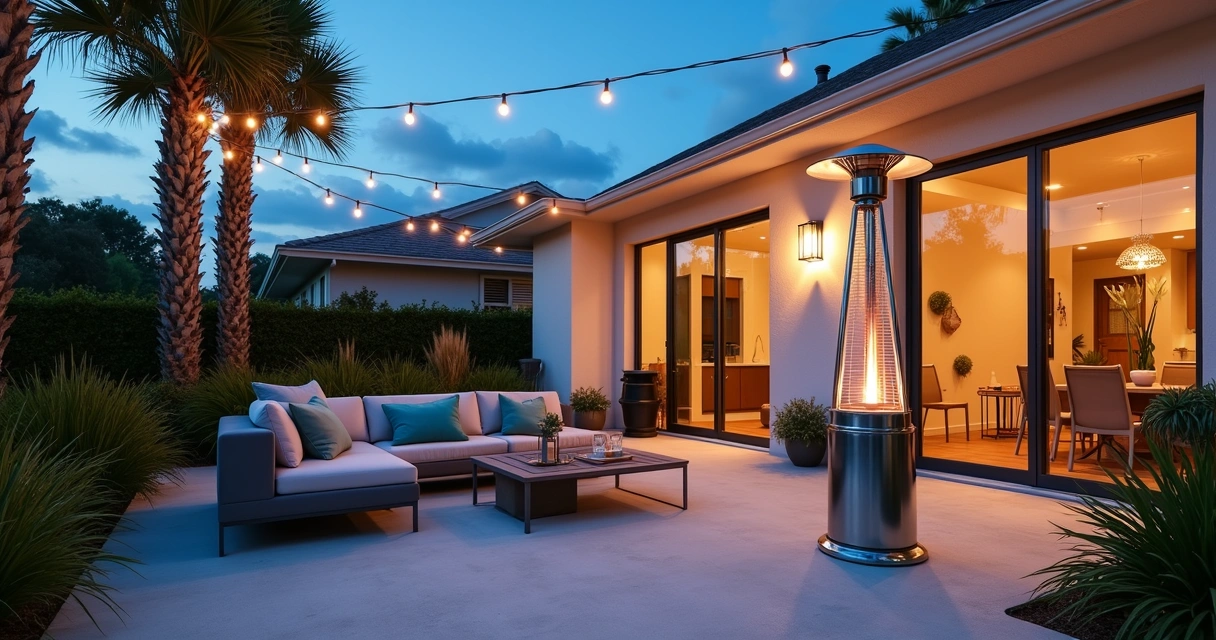
We often get requests for these mushroom-style freestanding heaters seen at restaurants and backyard parties. They’re portable, don’t need wiring, and deliver strong, focused heat. Propane tanks are widely available in Florida.
Propane heaters deliver instant warmth, making them great for spontaneous gatherings. However, they need regular tank changes, and storage is required when not in use. Due to open flames, placement should always be in well-ventilated outdoor areas away from overhead obstructions.
Natural gas patio heaters
Natural gas heaters work like propane units, but they connect directly to a home’s gas line, removing the need for tank swaps. These are best for permanent installations—think covered patios or summer kitchens where a licensed installer handles the gas connections.
This option means no fuel runs, usually lower ongoing costs, and unlimited operation as long as the gas supply flows. However, natural gas patio heaters require professional installation and aren’t easily moved.
Electric patio heaters
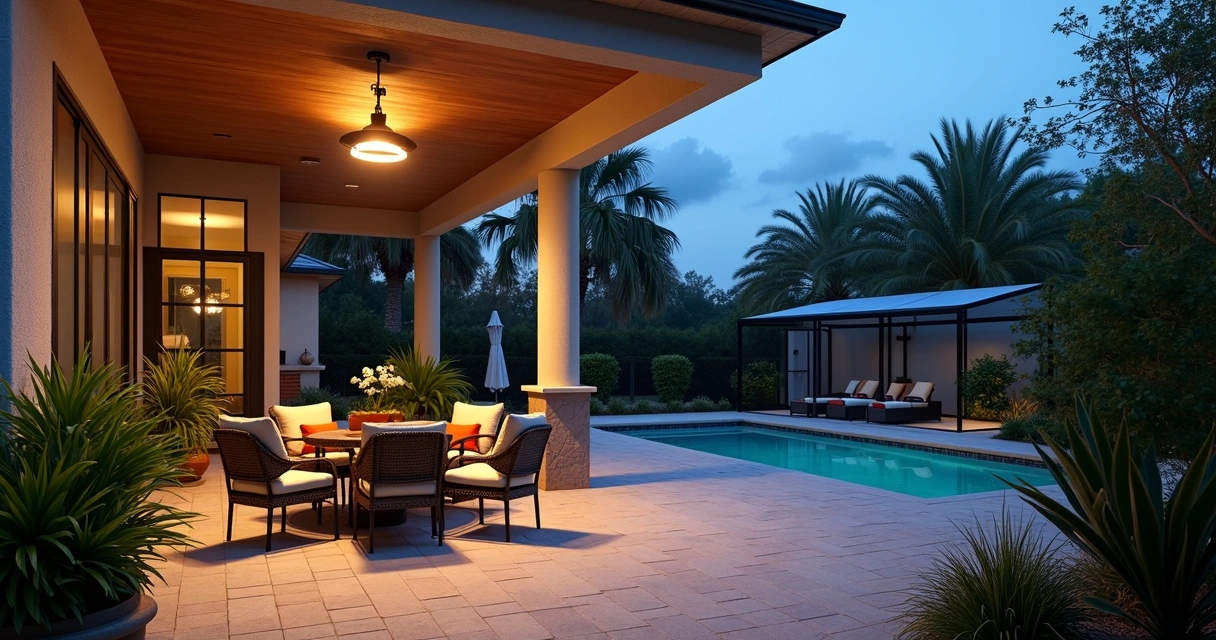
Electric heaters are clean, quiet, and easy to mount on walls or ceilings. They’re popular for residential covered patios and commercial settings where gas lines aren’t accessible. They require electricity, so access to outdoor outlets or new wiring is part of setup.
Electric patio heaters offer precise temperature control and are often the easiest to turn on and off as needed. Many use infrared technology, heating people and objects rather than the surrounding air, which is highly efficient in breezy patios.
Infrared and radiant heaters
In our experience, infrared and radiant heaters work well in Florida’s semi-open spaces. Rather than warming the air, these models use energy waves to deliver direct heat. Since Central Florida can be breezy, traditional convection heaters lose effectiveness—while radiant heat cuts right through, providing comfort only where it’s needed.
Direct heat—no waiting for the air around you to warm up.
We’ve installed these in covered patios, lanais, and even screened pool enclosures where fast comfort and minimal waste matter.
Features that matter in Central Florida
It’s easy to fall in love with a sleek patio heater, but details matter when you’re facing Florida weather. When we suggest models to clients, we always check for these key features:
- Weather resistance: Stainless steel or powder-coated finishes resist rust from humidity and salty air
- Corrosion-proof hardware: Especially important for patios near the coast or around pools
- Safe shut-off controls: Tip-over and overheat protection minimize accidents
- Adjustable output: The ability to fine-tune heat keeps you comfortable as temperatures shift
- Mobility: Wheels or lightweight design help you adapt as patio layouts change
- Certified for outdoor use: Always select units rated for Florida’s outdoor (and sometimes damp) conditions
For permanent installations, we often recommend weatherproof electrical boxes, sealed wiring, and mounting hardware tested for wind loads—we’ve learned from Florida storms.
If integrated patio upgrades are your style, consider pairing quality hardscaping and drainage with your heater plans for full outdoor comfort.
Safety and local codes for Florida patios
Every project at GCM Best Services starts with compliance. For outdoor heaters, that means reviewing local, HOA, and state codes for installation—even when a heater seems “plug and play.”
Many Florida cities and counties have clear guidelines on gas and electric heater placement, clearance to combustibles, and ventilation for any patio with overhead enclosures or screens. Always check the manufacturer’s minimum clearance recommendations.
We’ve seen that under Florida building code, gas lines for heaters must be installed by licensed professionals, and any outdoor electrical work should meet local code for wet locations.
Proper drainage and stable patios also play a safety role. A well-levelled, compacted surface—like those in our paver patio installs—prevents tip-overs and pooling water around standing heaters.
Sizing and placement for maximum comfort
Choosing the right size patio heater is a mix of art and science in Florida. Unlike enclosed spaces, patios lose heat fast—so the “BTU” (for gas) or “wattage” (for electric) becomes important.
As a rule of thumb, a 40,000 BTU propane heater covers 200–400 square feet in mild Florida climates, while a 1,500–2,400 watt electric heater warms about 10–18 feet in diameter. For larger areas, multiple heaters spaced apart will do better than a single oversized unit.
- Place freestanding heaters away from pathways, at least two feet from walls or screens
- For mounted heaters, check mounting height—typically eight to ten feet for electric and radiant types
- Avoid heating near plastic or fabric patio covers
We always recommend a site survey—especially if your patio includes multiple zones, like dining, lounging, or a summer kitchen. Integrating heat with effective drainage solutions keeps heaters stable and helps prevent unexpected hazards with water exposure.
Running costs and energy insights
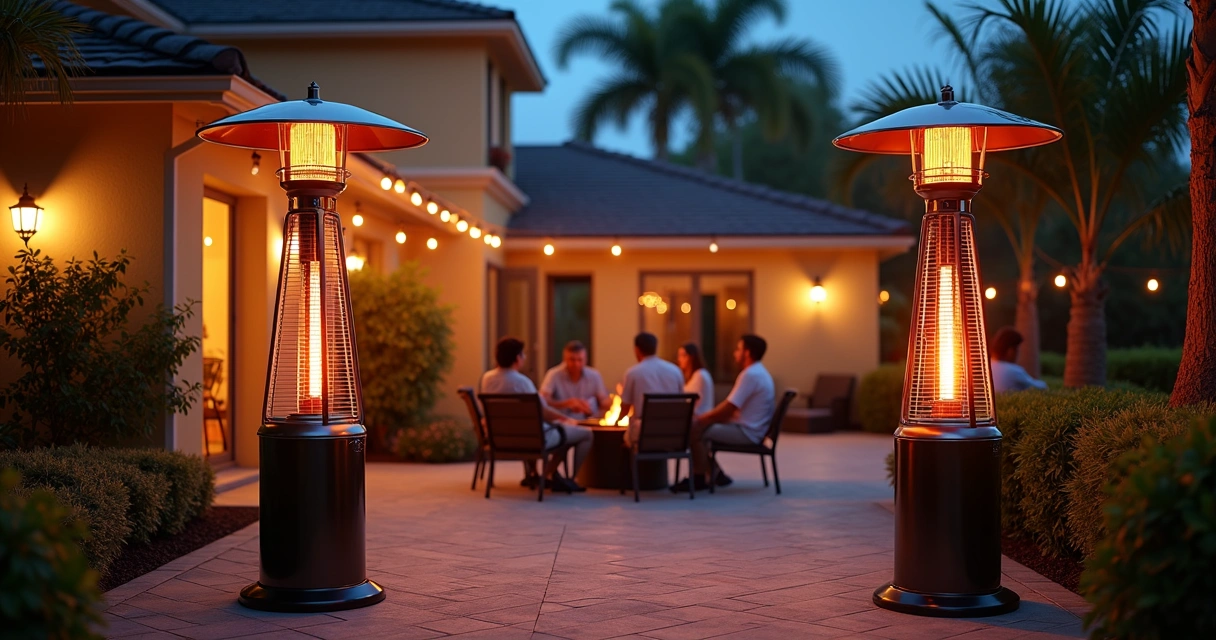
Energy use is a common concern, especially with Florida’s fluctuating utility costs. Propane heaters typically burn a 20-pound tank in 8 to 10 hours when set to high—costing $15–$25 per refill. Natural gas models are cheaper to operate but have upfront installation costs.
Electric patio heaters vary but look for the energy consumption listed in watts. In Central Florida, powering a 1,500-watt heater for 5 hours a week might add $4–$8 per month, depending on your local rate.
Infrared heaters can cut operating costs by 30% or more, since heat is directed only where needed. This means less wasted energy warming empty space.
Smart placement + efficient heaters = More comfort for less money.
We encourage clients to factor running time, area size, and usage when setting heating budgets.
Design and usability—blending with your outdoor space
A heater that works well but stands out for the wrong reason can disrupt the design of your patio. Our goal has always been to make heating feel integrated, not tacked on.
- Freestanding mushroom heaters add a festive restaurant look—perfect for large parties, but less subtle
- Wall- or ceiling-mounted electric and infrared heaters can be tucked under patio coverings for a modern, low-profile look
- Permanent installations can be color-matched to awnings, railings, or paver borders for a seamless feel
If you’re upgrading a patio, consider surface finishes and heater color in your plans. Combining patio heating with new concrete or paver work allows coordination early, not as an afterthought.
Comfort and style go together.
Installation and maintenance best practices
We’ve found that patio heaters work best—and last longer—when installed and maintained correctly. For homeowners, this often comes down to reading the manual, following code, and occasional seasonal checks.
- Clear away leaves and debris each month from heater bases
- Check gas connections for leaks with soapy water at the start of each season
- Wipe all surfaces with a damp cloth to prevent corrosion
- Inspect electrical cords and weather-sealing before each use
- Store propane tanks securely in dry, shaded areas
For permanent mounts, we secure heaters to block, brick, or metal structures when possible—never to flimsy wood or loose pavers.
Seasonal use is common in Florida, so heaters often sit unused for months. Before each “patio season,” a quick check ensures safe operation when it’s finally time for outdoor gatherings again.
Smart extras: Accessories and upgrades
Today’s patio heaters can include more than just warmth. We see homeowners and businesses asking for:
- Remote controls and smart thermostats for one-touch temperature adjustment
- Weather covers to extend heater lifespan during Florida’s rainy season
- LED lighting fixtures built into electric heaters for dual-purpose comfort
- Portable side tables or safety screens for mushroom heaters
- Integrated mounts for pool cages or lanai screens
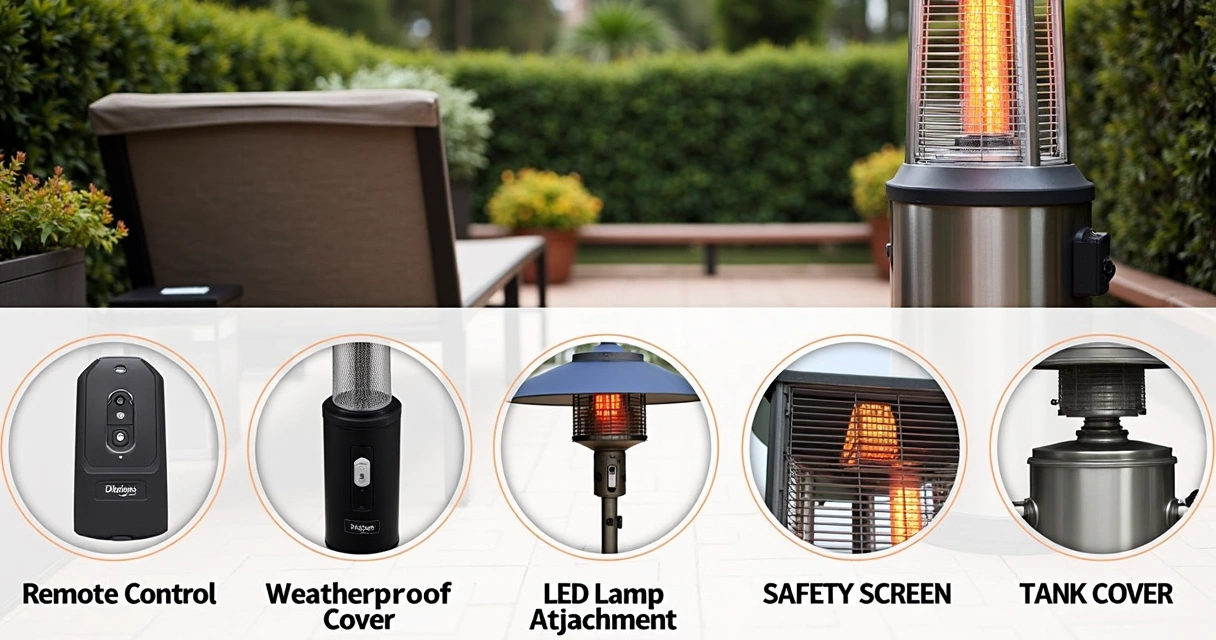
By working these features into your outdoor space from the start, comfort and usability are never in conflict.
We help clients select heaters that not only fit their space but match their lifestyle and aesthetic, with a focus on simple, low-maintenance operation.
Our project approach: From patios to heaters
At GCM Best Services, we see patio heater projects as a part of a bigger outdoor vision. Many of our clients ask about heaters when redoing patios, installing pavers, fixing drainage, or adding screened enclosures across Central Florida.
By starting with a solid surface—whether fresh pavers, custom hardscape, or repaired concrete—we make sure heaters have a safe, level, and attractive base.
We handle the details: HOA submissions, permitting for gas or electric lines, and even integrating lighting and drainage so your patio works as well on a cool evening as on a sunny day. If your project includes paver borders or artificial turf, heaters can be planned as part of the overall design—never an afterthought.
A comfortable patio is built on smart planning.
Conclusion: Creating warm outdoor spaces with confidence
Florida patios are best enjoyed year-round, and a thoughtfully chosen outdoor heater can turn a short season into lasting memories. We recommend starting with safety, understanding your space, and choosing technology and designs that match both your lifestyle and the unique demands of Central Florida’s climate. At GCM Best Services, we stand by clear, on-time project delivery and honest communication—from the first patio sketch to the perfect heating setup.
Ready to make your patio comfortable in every season? Reach out for guidance and let our team show you how the right heater, installed with care, can transform your outdoor space.
Warmth. Comfort. Safety. Your patio, ready for every gathering.
Frequently asked questions
What is the best patio heater type?
The best patio heater type for Florida patios depends on the layout, whether it’s covered or open, and your access to gas or electricity. In our experience, electric and infrared models work well for screened or covered patios, offering safe, targeted warmth. For open spaces, propane freestanding heaters are a popular, flexible choice, while natural gas models excel in permanent, larger installations.
How much do outdoor heaters cost?
Outdoor patio heaters range from about $150 for entry-level portable electric units up to $1,500 or more for permanent, high-power gas models and integrated systems. Most residential electric or propane heaters in Florida fall between $250 and $600, with installation or mounting adding extra cost for built-in types.
Are propane or electric heaters better?
Propane heaters deliver strong, instant heat and can be moved as needed, while electric heaters are easier to install, safer for enclosed patios, and often have lower operating costs in Central Florida. Each type fits different needs—a quick party fix, permanent installation, or low-profile design. We help clients choose based on the actual use and patio design.
Is it worth it to buy a heater?
If you want to extend outdoor living into Florida’s cooler months or make patios usable for more events, an outdoor heater can add a lot of value. They increase comfort, allow longer gatherings, and make upgrades like paver patios or covered lanais more enjoyable year-round.
Where to buy patio heaters in Florida?
Patio heaters can be purchased at local home improvement stores, online retailers, or through professional installation services that combine design, code compliance, and integration with your patio project. We recommend discussing options with professionals who understand Central Florida’s weather and safety needs, like our team at GCM Best Services.