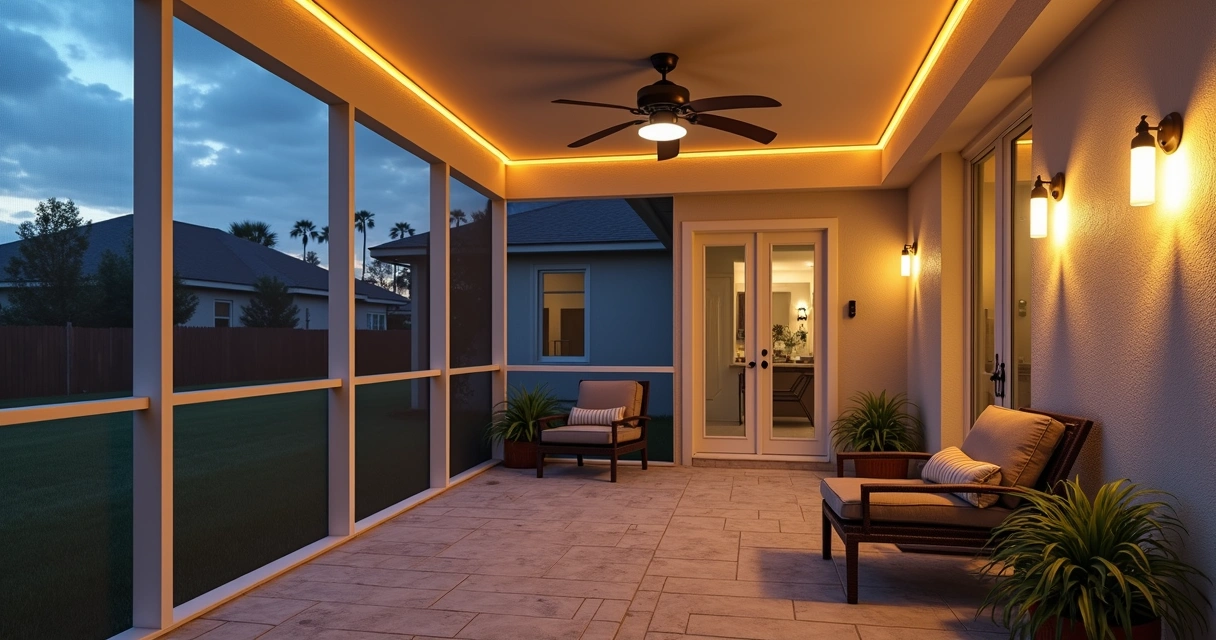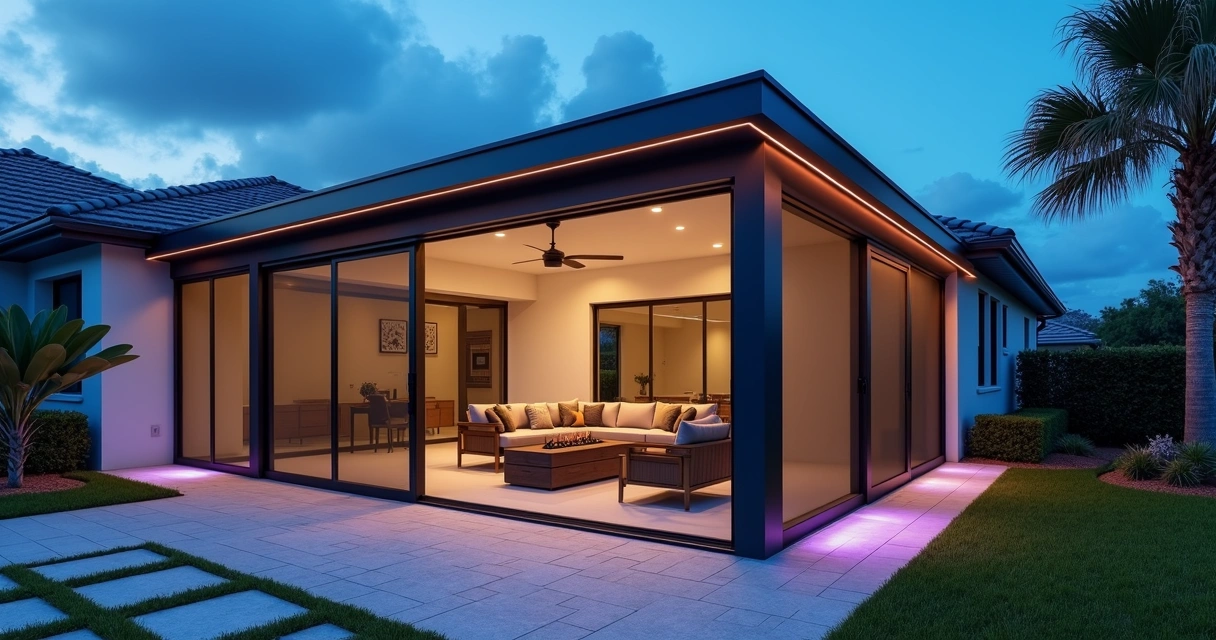
Wireless lighting controls are changing the way we design, use, and enjoy modern enclosures such as lanais, pool cages, outdoor kitchens, and covered patios. Whether we are talking about safety, aesthetics, or convenience, having the right lighting transforms a basic enclosure into a showcase for relaxation or entertaining. As a contractor serving Orlando and Central Florida, we at GCM Best Services have seen how wireless controls for custom lighting are making every outdoor and indoor setting more attractive, practical, and energy-conscious.
Primary keyword: Wireless lighting controlsVariants: wireless lighting systems, smart lighting in enclosures, custom light control, remote lighting for patios
Audience pain: People seeking reliable and flexible lighting design in enclosures without complex wiring or intrusive installs. Audience benefit: Save time, trim energy bills, and set the mood in any enclosure through user-friendly lighting control.
Whether you are remodeling your screened lanai, building a summer kitchen, or updating your retail front, we believe wireless lighting controls will set a new standard for comfort and control. In this article, we walk through what wireless controls are, the types available, key installation points, benefits, limits, and smart ideas for enclosures of every size.
Outline:
- Introduction to wireless lighting controls
- Key benefits of wireless systems in enclosures
- Core technologies that power wireless control
- Types of wireless controls and features
- Designing lighting for patios, lanais, and pool enclosures
- Wireless controls and energy savings: What studies show
- Security, maintenance, and code alignment
- Seamless upgrades in finished enclosures
- Integrating lighting with smart home and business automation
- Case studies and results from Central Florida
- Choosing the right wireless system for your enclosure
- Conclusion and next steps
- Frequently asked questions
Ready for a professional quote? 📞 (407) 250-1948 • 24–48h • Orlando, Tampa & area.
Introduction to wireless lighting controls
Wireless controls for lighting give homeowners and business owners the ability to adjust brightness, color, and timing in their enclosures—without running new wires or opening up walls. The controls often use radio signals or Wi-Fi to send instructions from either a handheld remote, a smartphone app, or a paired wall switch.
Smart lighting is not just for inside your home—it works beautifully outside, too.
GCM Best Services has installed wireless systems that let owners manage their enclosure lighting from the comfort of a lounge chair, a kitchen seat, or miles away using cloud access.
Key benefits of wireless systems in enclosures
Why are wireless controls becoming such a popular upgrade? We see several key points:
- Flexible design options—No need to route wires to every fixture, so we can position lights exactly where they work best.
- Easy installation—Wireless retrofits minimize drywall cuts and patching, which means less mess and faster jobs.
- Personalized control—Owners adjust color, dimming, scenes, and timers to match the time or use, all from one place.
- Lower energy bills—By using dimming and scheduling, energy use drops. Federal evaluation studies found energy savings of up to 78% with the best wireless controls compared to old fluorescent setups.
- Prepares your home or business for future automation—a true “smart” home feature.
Core technologies that power wireless control
Wireless lighting systems use a mix of communication standards, such as Wi-Fi, Bluetooth, Zigbee, or custom RF signals.
- Wi-Fi is the most common in smart homes. It connects your lights directly to your home network so you can control them anywhere with internet.
- Bluetooth is best for short-range, energy-efficient control, useful in smaller enclosures or outdoors.
- Zigbee and Z-Wave are used in robust home and business automation networks, allowing thousands of devices and sensors to work together.
- Dedicated radio-frequency remote systems are ideal when Wi-Fi is spotty or privacy is needed.
Each technology has pros and limits, but at GCM Best Services, we match your enclosure and lighting needs to the control that fits best.
Types of wireless controls and features
Let’s look at what you can get with wireless lighting control:
- Remote controls: The simplest, usually a handheld device that pairs with one zone or several. Great for basic on/off and dimming.
- Wall-mounted wireless switches: These look like regular switches but communicate with the light wirelessly. We often install them where no new wiring is possible.
- App-based controls: The most flexible, these allow you to control everything from your phone or tablet—on-site or remotely, with timers, scheduling, color control, and even routines.
- Voice controls: Many systems work with popular digital assistants, allowing you to use voice commands for hands-free lighting scenes.
- Sensor-based scenes: Add-in motion sensors can trigger lights as you enter or dark falls, saving effort and energy.
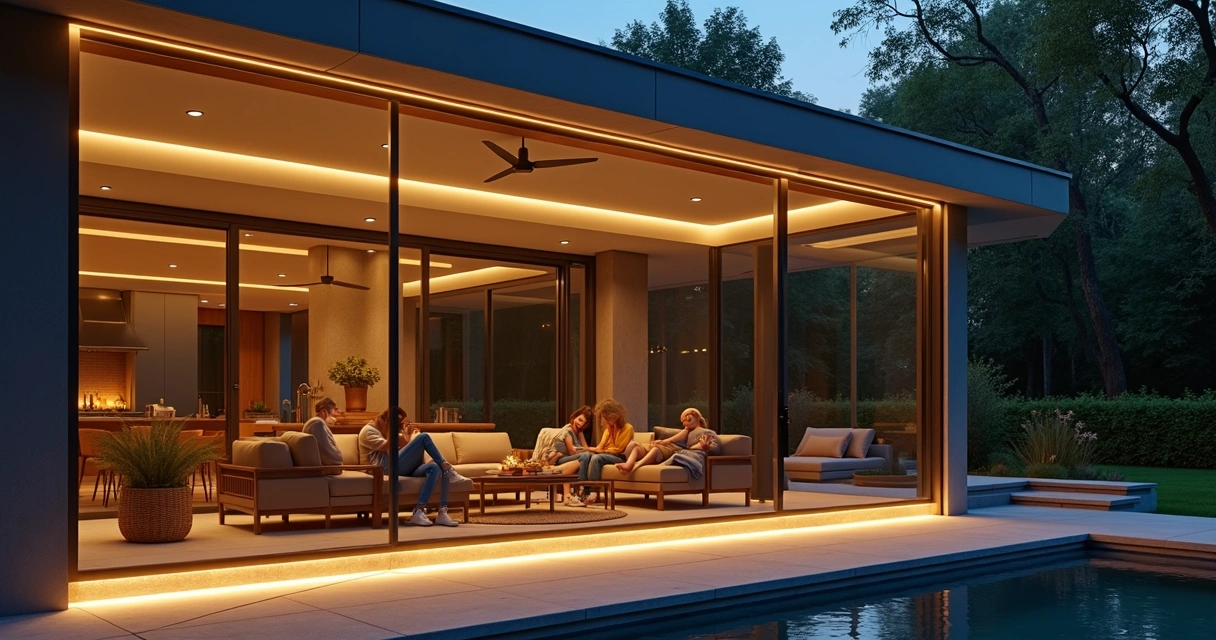
There is no need to settle for a single on/off switch in your enclosure anymore. We’ve installed systems that allow scene-setting for parties, dimming for quiet evenings, and color changes for game nights or holidays, all tailored to how people use the space.
Designing lighting for patios, lanais, and pool enclosures
In Central Florida’s climate, enclosures do double duty—as extensions of your living room or as outdoor entertainment spaces. When we plan custom lighting, our top priorities are:
- Safe and even visibility (no glare or dark patches, especially near water or furniture)
- Highlighting architecture—columns, screens, pavers, summer kitchen features
- Making the space feel welcoming after sunset, but never harsh
- Integrating with waterproof and damp-rated wireless fixtures
Wireless controls unlock designs that would be much harder to achieve with fixed wiring.
We have created layered lighting effects: wall washes to accent textured screen framing; downlights to define pathways between pool and kitchen; RGB strips for fun around the games area—all easily controlled by a few swipes or taps.
Wireless controls and energy savings: What studies show
You don’t have to take our word for it—large studies confirm the impact of wireless lighting controls. Federal evaluations of advanced wireless controls for commercial spaces found:
- About 54% energy savings after retrofitting existing lighting with wireless controls and dimmable ballasts.
- Up to 78% savings by combining wireless controls with new, efficient LED lighting.
The Center for the Built Environment at UC Berkeley found wireless systems could cut energy by 65% in open-plan offices, and people liked having control over their own lighting.
Outdoor spaces benefit as well. The California Lighting Technology Center reported that using LEDs with wireless motion sensors in outdoor wall packs cut power use by up to 89% when average occupancy was low (CLTC retrofit).
According to a Lawrence Berkeley National Laboratory scoping study, integrating wireless lighting controls is a practical way to reduce lighting power demand in both homes and businesses.
Dimming, timing, and personal control means lower bills—with no loss of comfort.
When we see these results in our own enclosure projects, it matches what the studies show: less wasted light, less electricity, and tailored control.
Security, maintenance, and code alignment
Any technology added to a home or business enclosure must be reliable and safe. Wireless lighting controls, especially when professionally installed, offer secure encrypted communication. Battery-powered remotes and switches are rated for multi-year performance and weather resistance.
- Regular updates—Most modern devices update automatically over Wi-Fi for security patches.
- Battery swaps—We always use long-life cells for controls that may be outside or in screened rooms.
- Compliance—All wireless systems we install in the Orlando area are UL-listed and, where needed, aligned with current code requirements for outdoor/damp locations.
In hurricane-prone Central Florida, we make sure all lighting and controls inside enclosures are anchored to withstand high winds, and outdoor-rated, for safety and durability.
Seamless upgrades in finished enclosures
One of the best points about wireless lighting is the minimal disruption required for installation. Many of our clients at GCM Best Services come to us with “finished” spaces—walls painted, pavers set, screens tight.
Wireless controls let us upgrade and expand your lighting with:
- No new wall wiring, trenching, or surface-mount conduit
- Precision placement—lights exactly where you want them
- Discreet sensors and switches added where convenient, not where wires dictate
- A clean finish, ready to use the same day
Almost every enclosure can be upgraded with wireless lighting—especially valuable for elegant hardscapes, paver patios, and pool areas where cut-and-patch is not an option. For more about improving hardscapes with functional features, see our insights on hardscaping upgrades.
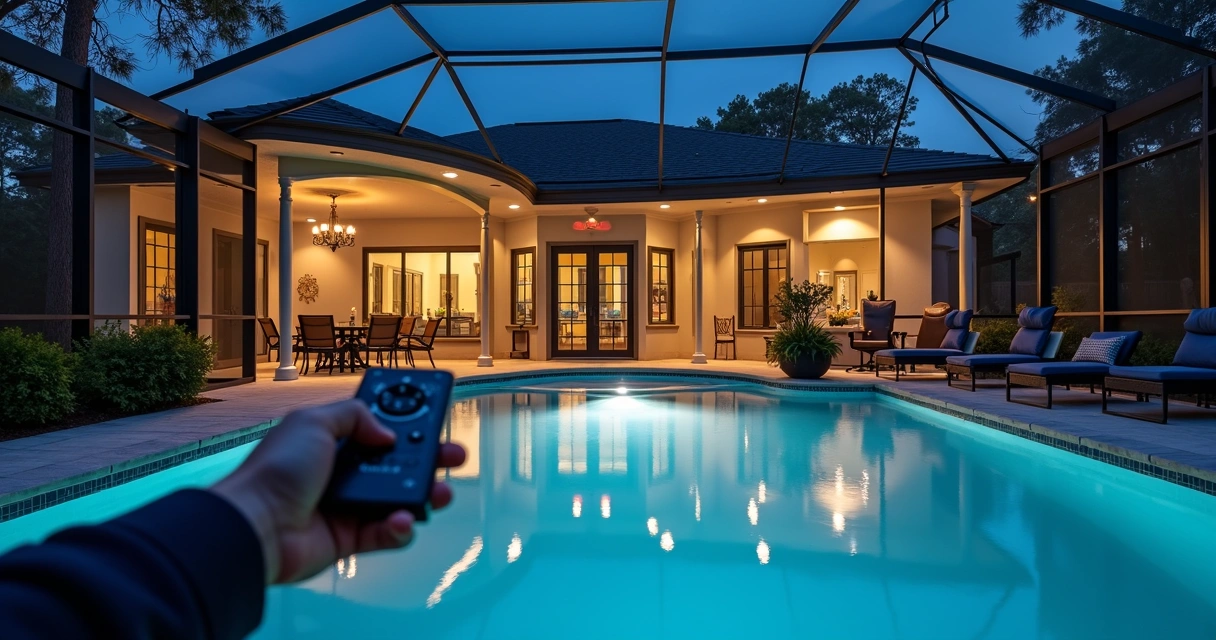
Integrating lighting with smart home and business automation
Wireless controls don’t have to stand alone. In our experience, many homeowners and business owners want to link lighting in the enclosure with other smart features:
- Motion sensors activate pathway and entry lights after sundown.
- Pool, fountain, or summer kitchen lights fade up when a door opens or people enter.
- Automated scenes, like “Evening Entertain” or “Pool Party,” combine lighting, music, and even misting fans.
- Smartphone or voice control gives access from anywhere—in town or away.
We have installed solutions where clients set routines—“turn off all lights at midnight,” for instance—through a simple app, maximizing both safety and comfort.
Adding control to more than just lights, wireless platforms can trigger security cameras, alert for open doors, or even tie into irrigation and pool controls for a full outdoor smart environment.
Case studies and results from Central Florida
From Orlando to Tampa, we see real benefits for both residential and business enclosures:
- A homeowner in Winter Garden wanted to highlight a paver walkway and avoid running conduit over existing landscaping. We used solar-rated LED strips with wireless dimmers and motion sensors—automatic path lighting every evening.
- A retail shop in Orlando installed wireless controls for its screened outdoor sales area, managing lighting transitions from bright midday to evening ambience. They reported guests commented how “inviting” the space was and noticed a drop in after-hours electrical use.
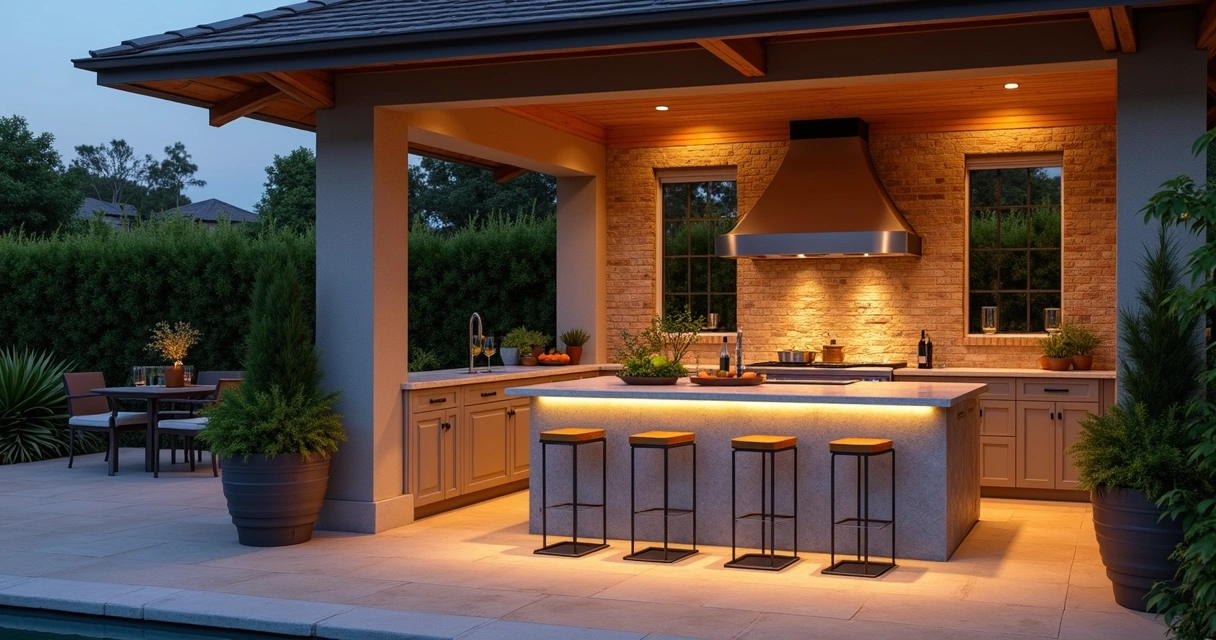
- An Apopka resident with a new lanai asked for app-based lighting for their outdoor kitchen. Now, entertaining is as easy as pressing a scene button—colorful accents for parties or warm white for family dinners.
We always finish such projects with a written warranty and maintenance guide, just as we do for all our enclosure upgrades.
Choosing the right wireless system for your enclosure
With so many options available, what’s the best path for your own outdoor or indoor enclosure? We recommend considering:
- Size and coverage: Larger spaces might need systems with repeaters or mesh networks (Zigbee, Z-Wave), while smaller enclosures work great with Wi-Fi or Bluetooth.
- Style of control: Do you want phone/tablet control, wall switches, or basic remotes? We often install more than one option for flexibility.
- Fixture compatibility: If you love a certain lighting look, we source compatible fixtures and controls rated for wet or damp locations in Central Florida.
- Integration: Whether you want voice, timed scenes, or motion sensors, we help plan the system up front for an uncluttered and reliable result.
We always begin with a detailed assessment of your current enclosure and listen to your goals for appearance, comfort, and safety.
Expanding wireless lighting to hardscapes and turf
Wireless controls are not only ideal for screen enclosures or lanais—they also adapt perfectly to outdoor paving, driveways, and artificial turf installations. When planning features like step lights, accent lighting for landscape edges, and illuminated paver borders, wireless systems mean we can offer beautiful lighting without disrupting hardscape surfaces. Find more ideas about integrated lighting with hard surfacing on our hardscape and paving service pages, or browse additional inspiration at our hardscaping category.
Wireless lighting controls work almost anywhere—pavers, driveways, walkways, turf, and even garden beds. By planning conduits and low-voltage runs prior to turf or paving installation, or using retrofit-grade wireless fixtures, you keep your outdoor space clean and easy to maintain. If you are interested in how we link artificial turf areas with smart lighting for lawns and play spaces, we invite you to review our turf service page.
Conclusion and next steps
Wireless controls for custom lighting have moved beyond novelty and into everyday use for modern enclosures throughout Central Florida. Whether it is a pool cage, lanai, summer kitchen, business front, or unique hardscape, wireless control gives you flexibility, aesthetic options, and long-term energy savings.
We at GCM Best Services are committed to helping every client enjoy the benefits of modern technology in their outdoor and indoor spaces while providing reliable, code-aligned, and warranty-backed work. If you are planning to upgrade your enclosure’s lighting—or build a new project from scratch—get in touch for a no-obligation on-site assessment. We will help you choose the wireless system that best fits your needs and vision.
Ready to discover what wireless lighting can do for your space? Let GCM Best Services help you experience lighting control that feels like magic, built for Central Florida’s style and climate.
Frequently asked questions
What is wireless lighting control?
Wireless lighting control is a way to adjust your lights—on/off, dimming, color, and timing—without using traditional wired switches or dedicated wall controls. Wireless systems use radio, Wi-Fi, or Bluetooth signals to connect remotes, switches, or phone apps to the lights. This type of control offers more flexibility for placing and managing lights in both homes and business enclosures, making upgrades easier and less disruptive.
How do wireless controls work?
Wireless lighting controls send signals from a remote, switch, or app to a receiver connected to each light or group of lights. Depending on the system, the communication may be Bluetooth, Zigbee, Z-Wave, Wi-Fi, or RF. The receiver interprets the signal and changes the lighting as requested. This setup allows for easy addition of scenes, timers, and other features.
Are wireless lighting systems reliable?
Yes, modern wireless lighting systems are designed for reliability, especially those rated for outdoor and wet locations, as we use at GCM Best Services. Homeowners benefit from encrypted signals, weather-rated devices, and automatic firmware updates to keep things running smoothly. However, proper installation and system selection are important for best performance and coverage, especially in large enclosures.
How much do wireless controls cost?
The cost of wireless lighting controls varies by the size of the system, the features you want, and the setting. A basic wireless switch or dimmer for one light can start as low as $30–$50, while a more advanced system with multiple zones, color control, app features, and sensors can range from several hundred to over a thousand dollars. Installation costs depend on the number of fixtures and controls. We always provide detailed up-front estimates tailored to your space and goals.
What are the best brands for wireless controls?
We prefer not to name brands but instead focus on selecting wireless control systems that are proven for reliability, support, and compatibility with indoor and outdoor conditions in Central Florida. Key factors in choosing a system are whether it suits your environment, integrates well with your preferred home automation, and meets code requirements. We help our clients at GCM Best Services find the solution that will be both long-lasting and user-friendly.