Selecting the right paint system for a coastal commercial exterior is never just about color. Salt, sun, humidity, wind-driven rain, and code requirements all shape the choices, especially in Central Florida where our climate pushes materials to their limits. At GCM Best Services, we approach each project as a long-term investment, where lasting protection, easy maintenance, and strong warranties go hand in hand. In this guide, we share what works and what doesn’t, so you can specify a paint system that meets coastal demands and stands the test of time.
“Salt air never takes a day off. Your building’s paint shouldn’t either.”
Let’s walk together through the details that matter most, from surface preparation and environmental standards to choosing finishes and warranties, always referencing the most current industry standards and trusted resources.
Understanding the coastal environment and paint system challenges
Coastal Florida has a unique set of climate stressors for commercial exteriors. We see these firsthand: relentless UV, hurricane threats, heavy storms, and spray from nearby saltwater sources. Each can undermine a paint job fast if the system isn’t designed to resist these challenges.
Salt, moisture, and sun are the main enemies of paint in these regions. Humidity speeds up corrosion and degrades paint films. Salt air gets everywhere, seeping into even the smallest surface flaws and speeding up deterioration. UV rays break molecular bonds in paint, so colors fade and lose gloss, sometimes in just a year or two if not properly protected.
- Salt crystallization and surface erosion are common on concrete, stucco, and metal cladding.
- Algae, mildew, or mold growth thrive on shaded or damp sides of a building.
- Thermal cycling causes expansion, contraction, and hairline cracks in the finish.
In our experience, the most successful specifications start with understanding and working with these realities, not against them.
Step 1: Prioritize surface preparation
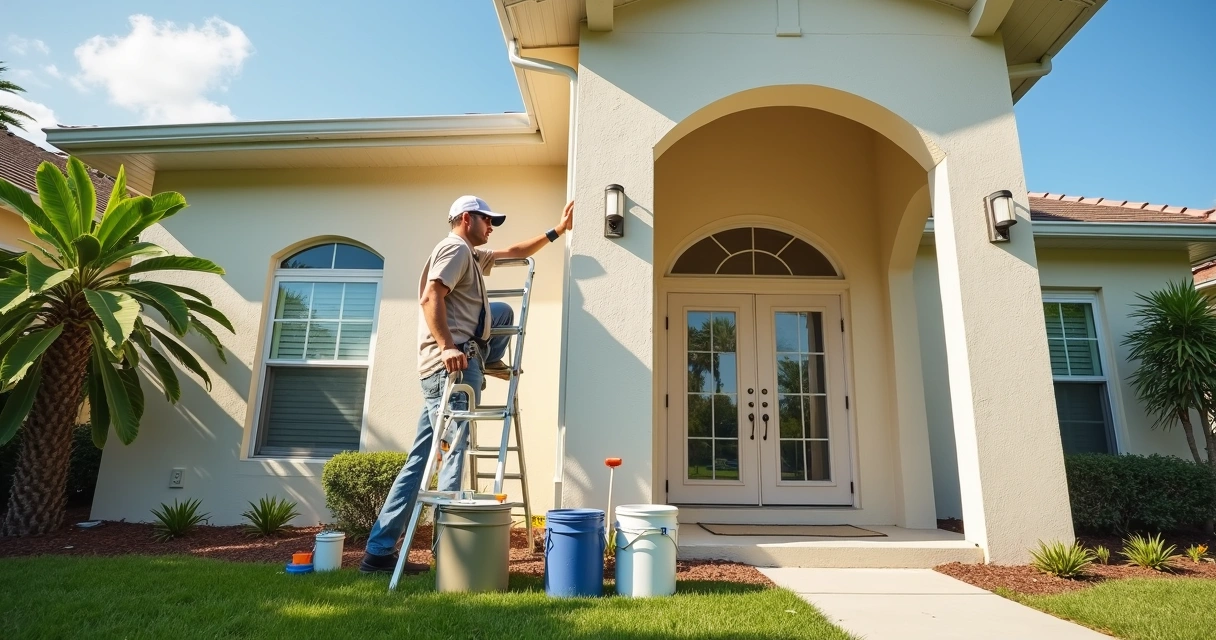
The backbone of a successful coastal paint system is always preparation. Even the highest-quality coating won’t last if surfaces are dirty, chalky, or poorly repaired. At GCM Best Services, every project begins with a clear prep plan tailored to material type and climate exposure.
- Remove contaminants:
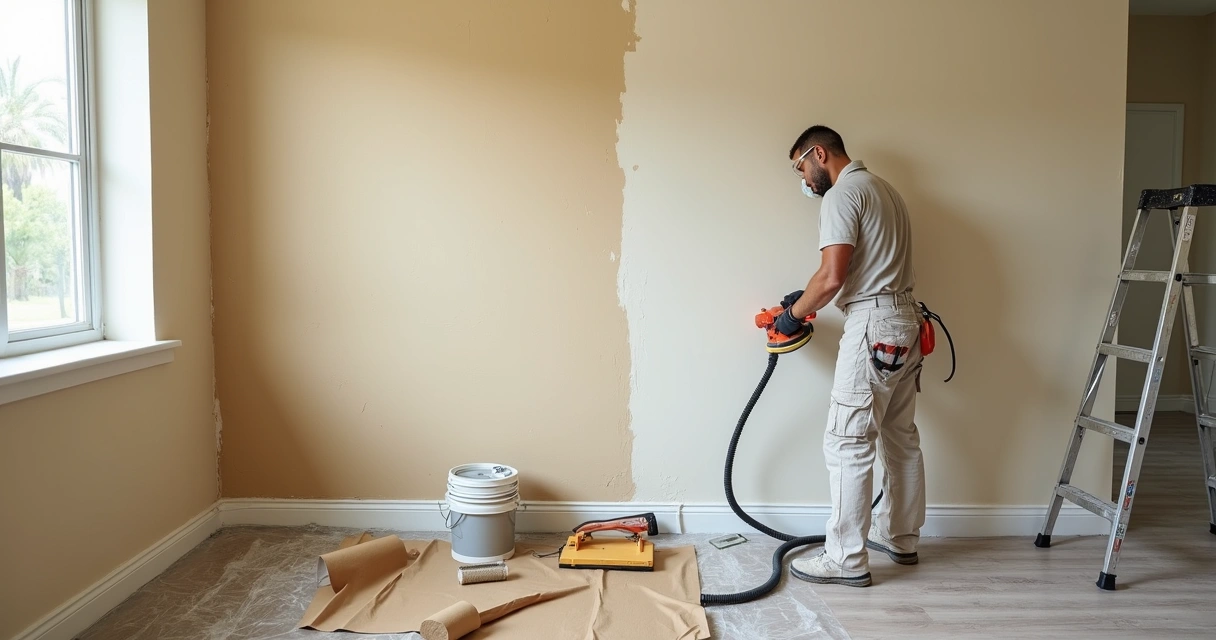
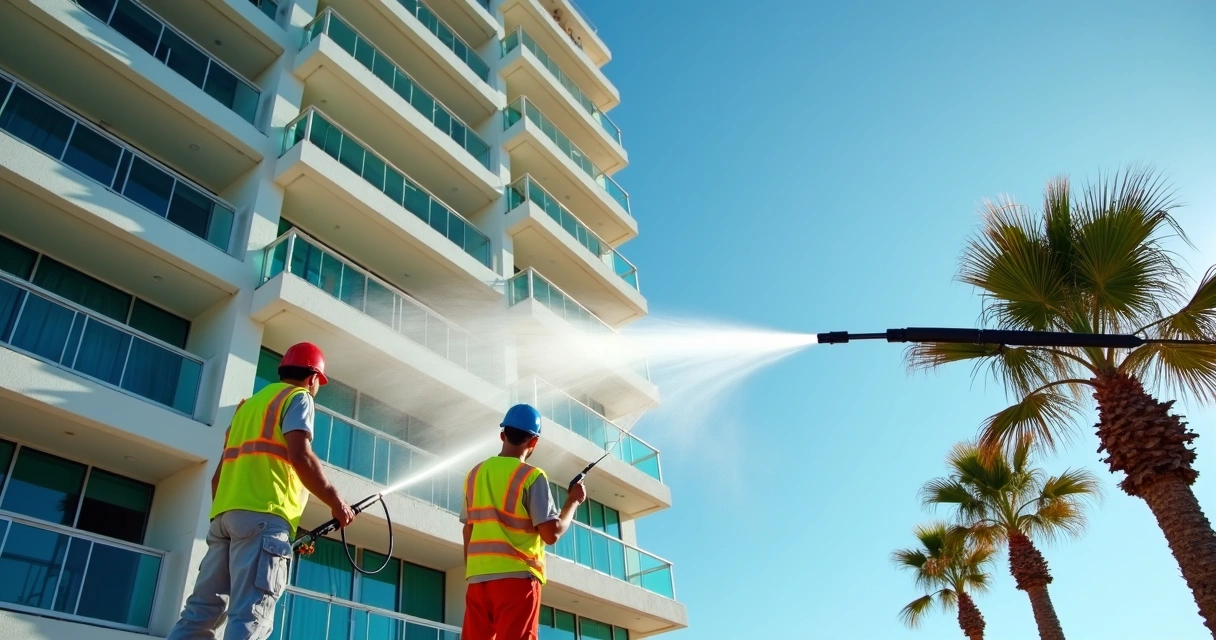
Pressure-washing with chloride-neutralizing cleaners removes salts and biologicals from stucco, masonry, or siding. For metals, any previous rust (especially on steel or aluminum) is wire-brushed or sanded using commercial-grade abrasives, then immediately primed.
- Repair and resurface:
Identify and fix cracks, spalls, and substrate movement. On concrete and stucco, we fill voids with a compatible elastomeric caulk or patch. Masonry often needs additional patching and neutralization for any efflorescence.
- Assess moisture:
When moisture is trapped below the surface, paint won’t stick or will blister. We perform moisture meter checks in shaded or suspect areas and only proceed when readings are within manufacturer tolerances.
Skipping or rushing this stage wastes money and time later.
Step 2: Specify the right primer and sealer
Every great paint system for coastal exteriors starts with the right primer. Primers bond finish coats, block stains, and help resist alkali salts. The right primer:
- Neutralizes lime or salt efflorescence from masonry or stucco
- Seals porous substrates, preventing moisture penetration
- Improves adhesion of topcoats and extends system life
Primer selection depends on substrate and location:
- Masonry and concrete: Use alkali-resistant or acrylic block fillers formulated for high humidity and salt air.
- Stucco or cementitious panels: Look for penetrating, elastomeric primers that flex with thermal cycles and resist cracking.
- Metal: Use zinc-rich, rust-inhibitive, or direct-to-metal primers as recommended for the specific alloy. Aluminum, in particular, should be etched and immediately coated to prevent corrosion.
For each substrate, we select primers certified by manufacturers for salt-prone locations and always apply to manufacturer’s spread rates and cure times.
Step 3: Choose premium, salt-resistant coatings
Coastal locations demand finish coatings with maximum resistance to UV degradation, salt crystallization, heavy rain, and mildew. In our experience with Florida exteriors, these proven options perform best:
- High-build 100% acrylics:
These are the workhorses for commercial walls, concrete, and stucco. They maintain flexibility and gloss, and resist chalking and fading.
- Elastomeric and high-build “weather jackets”:
When active cracks, harsh sun, or wind-driven rain are serious threats, these thick finishes bridge small building movements and minimize water infiltration.
- Polyurethane and polysiloxane topcoats:
For metal, railings, storefronts, or features requiring extra gloss and chemical resistance, these deliver longer color retention and superior toughness.
Specialty coatings for wood (like fencing or decking) should be UV-stable and contain anti-microbials to block mildew growth. For high-traffic entries or kept-wet horizontal surfaces, we may recommend anti-slip additives or epoxy-based systems.
Not all “exterior” paints are suitable for the coast. Always check product data sheets for salt spray resistance, breathability, and Florida-specific certifications.
Step 4: Address color stability and reflectivity
“A paint color can look tired in a single summer if you pick the wrong formula.”
Ultraviolet radiation in Florida fades colors and erodes gloss, especially on southern or western exposures. When specifying paint systems, we recommend:
- Mid-tone colors over deep or very light hues, for best UV resilience
- Paints with high solids and light-reflective pigments designed to reflect heat
- Addition of UV blockers and mildewcides for specially-exposed locations
Darker tones can soak up more heat, which accelerates paint breakdown. That’s why we often discuss not just style preferences, but color performance under Florida’s extreme sun with our clients.
Step 5: Verify environmental and code compliance
Coastal projects in Florida often require compliance with VOC (volatile organic compound) limits and environmental regulations. These requirements aim to protect air quality and worker safety during application. The South Coast Air Quality Management District’s database is a helpful tool for specifying compliant coatings and reviewing VOC levels for various products.
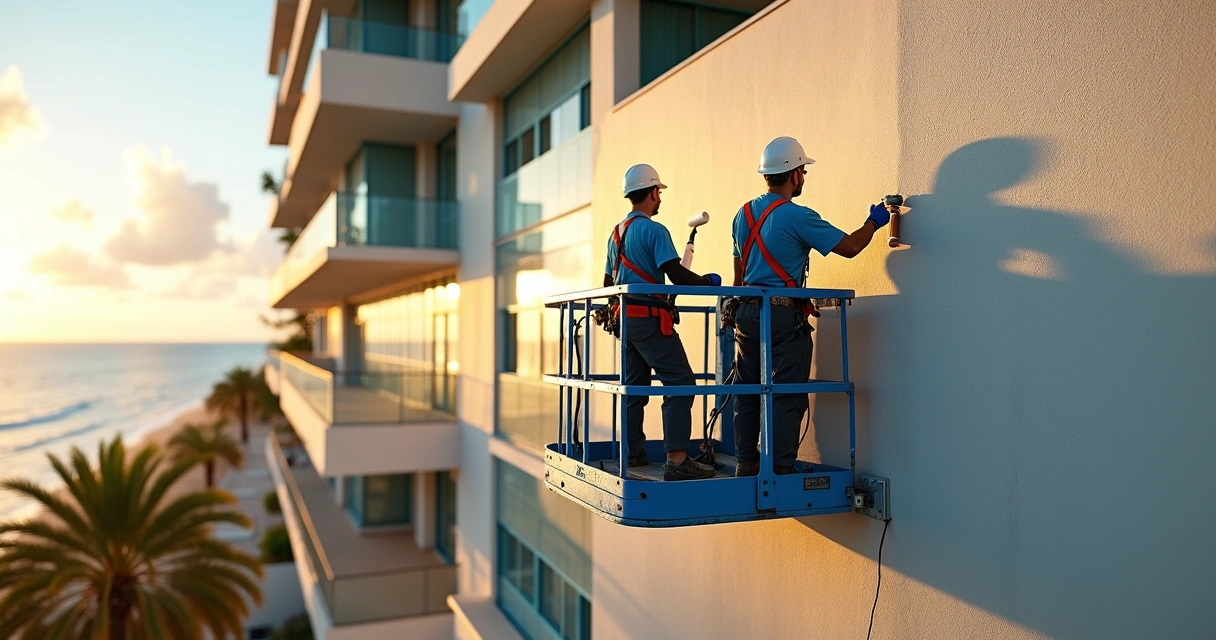
Additionally, municipalities in hurricane-prone zones may require documentation for coatings used on certain surfaces or elements, such as high-rise balconies or metal features.
Specifying a “low VOC, local code-compliant” finish system ensures both regulatory approval and a safer workspace for our crews.
Step 6: Plan around building envelope and climate details
Each commercial building is unique, and so is its exposure. We always consider:
- Building orientation: Walls facing east and south take the brunt of sun, but wind-driven rain and salt often attack from the prevailing coastal winds.
- Site specifics: Buildings near seawalls or busy roadways may need extra grit and pollution tolerance. Overhangs or facade features may trap water, leading to faster coating breakdown.
- Existing systems and history: If a building has been repainted before, knowing what systems failed (or succeeded) helps us recommend durable fixes.
Step 7: Specify application method and professional workmanship
With commercial projects, the “how” matters as much as the “what.” We always align the application method to the selected system and surface type, keeping insurance and warranty requirements in mind.
- Brush, roller, or spray:
Stucco and masonry can often be sprayed for even coverage but must be back-rolled to ensure adhesion. Metal and detail work may need brush application for coverage around bolts and seams.
- High-build or elastomeric coatings:
These require high mil thickness to meet manufacturer warranties. We measure wet film thickness as we go and allow for the longer cure times typical in humid environments.
- Night or off-hours crews:
For retail or hospitality clients, GCM Best Services offers night and weekend work to minimize business downtime and ensure clean, safe sites for workers and visitors.
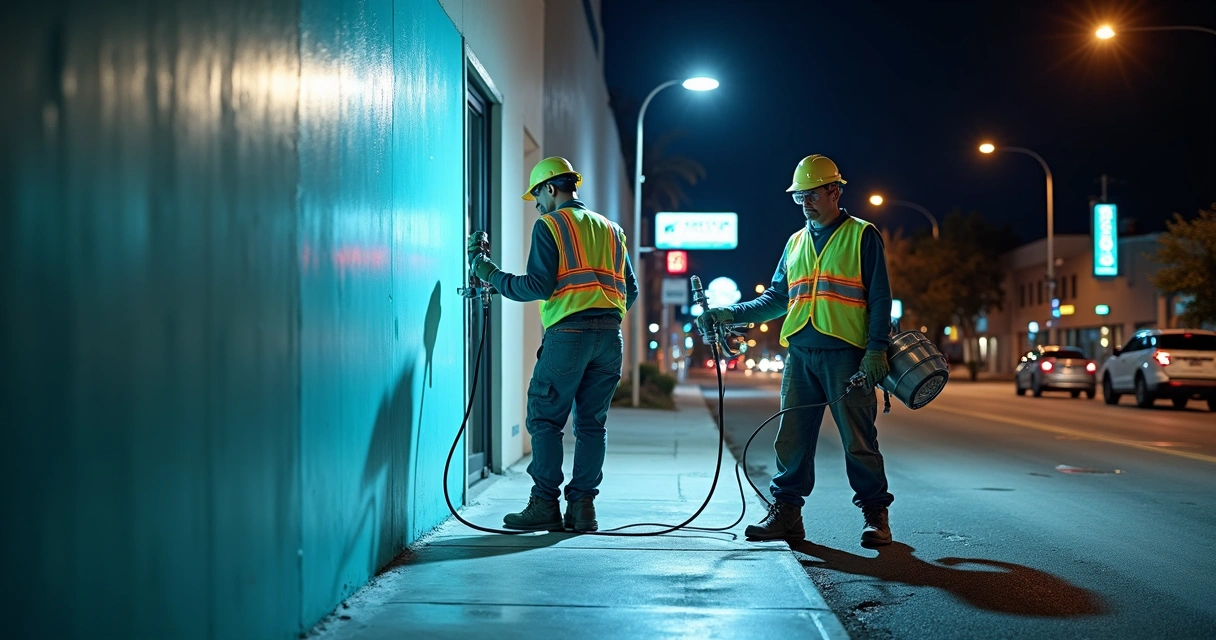
An experienced team with OSHA training, attention to masking, and thorough photo documentation makes all the difference.
Step 8: Document warranty and maintenance expectations
A paint system is only as good as its next five or ten years. At GCM Best Services, we provide not just written warranties, but also a maintenance guide for each project. Owners and managers receive:
- Written manufacturer and workmanship warranties covering adhesion, color, and film integrity for defined periods.
- Maintenance instructions:
Guidance on washing, stain removal, touch-ups, and when to call for a professional inspection.
- Photo documentation:
“Before,” “during,” and “after” photos help with insurance, tenant communications, and future touch-ups.
A detailed finish log, documenting primers, topcoats, batch numbers, and application dates, is invaluable when making warranty claims or responding to weather-related damage in the future.
Common pitfalls we help our clients avoid
We have learned over the years that skipping steps sometimes costs far more than doing it right the first time. Here are common mistakes and our recommendations:
- Selecting the wrong product:
Not all “exterior” products handle the rigors of coastal Florida. We specify by local field experience, not just datasheets.
- Ignoring proper joint detailing:
Failed sealants or improper joint design lead to water intrusion and premature paint breakdown.
- Under-preparing chalky or salt-laden surfaces:
One pressure wash barely touches deep salt contamination. We use special salt-neutralizers and verify cleanliness after prep.
- Unrealistic schedules:
Many coatings need extra curing time in Florida’s humidity. Rushing compromises longevity. We plan schedules that respect cure times and weather changes.
How to write a complete coastal paint system specification
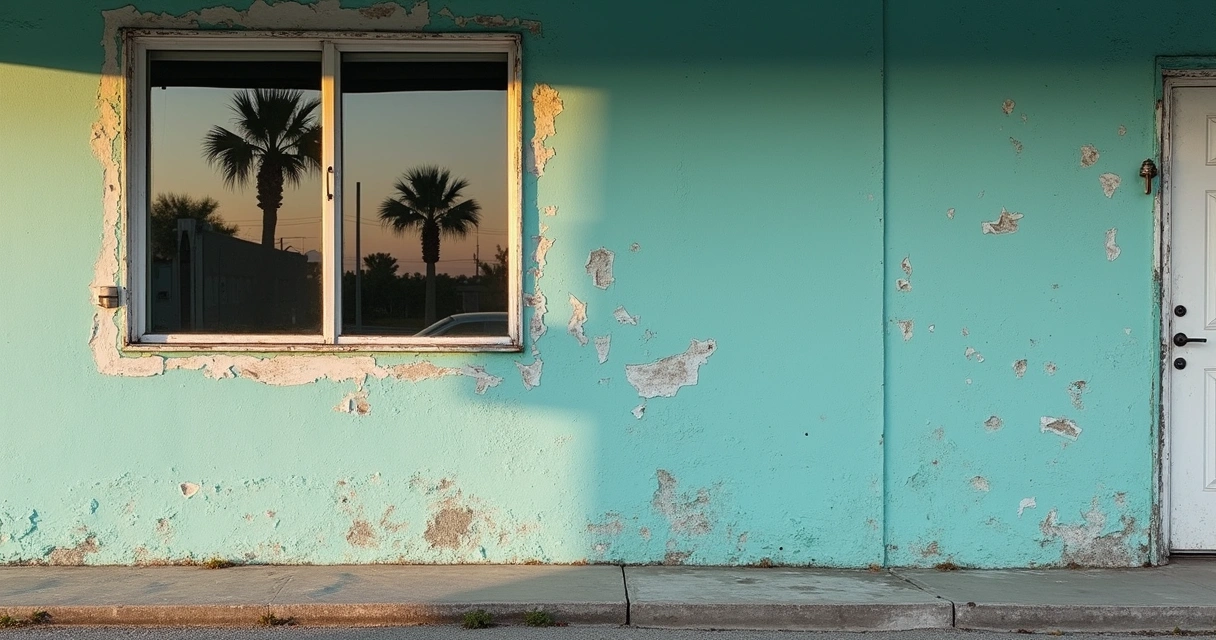
For each project, we prepare a written scope that covers every detail for all stakeholders and inspectors. A strong specification typically includes:
- Substrate description and condition:
What material are we painting? What is its current state? Prior treatments or coatings?
- Preparation standards:
Cleaning, repairs, surface-profile requirements, and the responsible parties.
- Primer and sealer schedule:
Type, number of coats, thickness, and dry times.
- Finish coating schedule:
Product name, manufacturer, number of coats, application method, and any additives (anti-slip, mildew, UV).
- Environmental standards:
VOC limits, site protection, and waste disposal.
- Weather limitations:
Min/max temperature, humidity, rain-free intervals required for each phase.
- Inspection checkpoints:
Pre- and post-paint walks, film-thickness measurements, adhesion or pull tests, documentation, and warranty approval.
A clear, detailed specification keeps projects on time and on budget, and prevents disputes or surprises down the road.
Integrating painting with other exterior upgrades
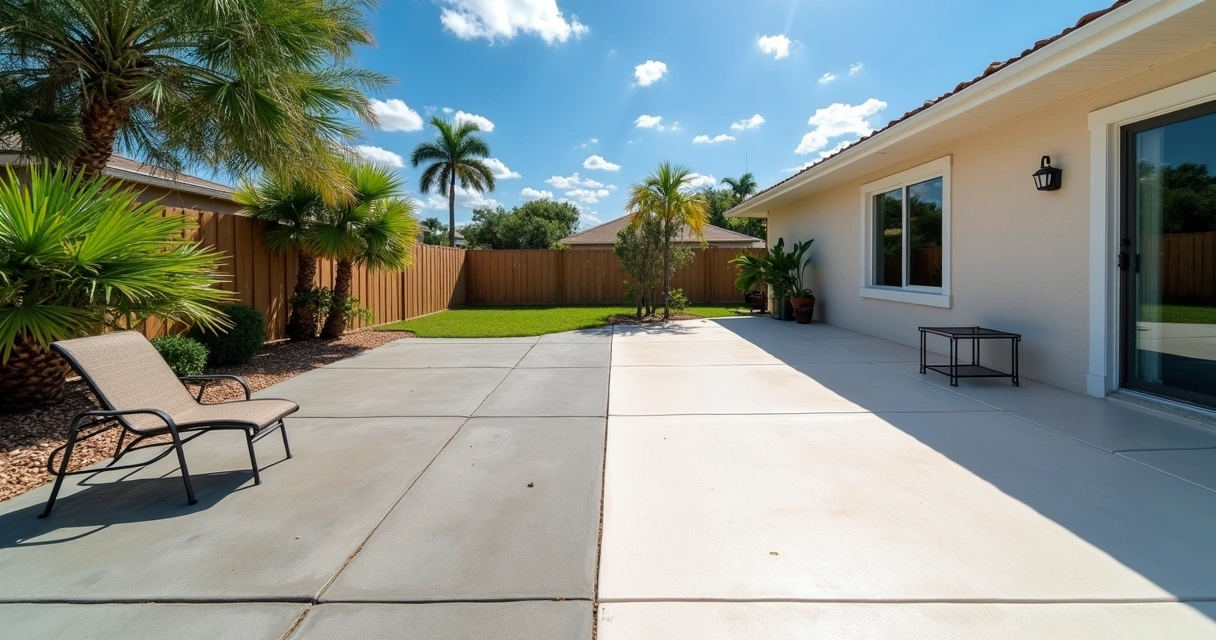
Many of our coastal clients upgrade more than just paint at once, especially for properties with patios, driveways, or screen enclosures. At GCM Best Services, coordinating trades is standard, so paver sealing, concrete resurfacing, or drainage planning happen in the right order alongside painting.
- Our experts in hardscaping can time new patio work to avoid disrupting new coatings.
- We coordinate with concrete service teams to ensure cracks, slabs, or structural repairs are sealed correctly before painting.
- More information about managing entire upgrades can be found at our hardscape overview.
Sometimes, full exterior upgrades can be bundled, making it easier for property managers and business owners to handle permits, HOAs, and inspections with a single point of contact.
How we back our coastal exterior projects
We believe that trust is built not just with promises, but with documentation, communication, and clear results. Clients get peace of mind with:
- Documented product selection based on regional performance and environmental guides, including references to environmental standards such as those found in the South Coast Air Quality Management District searchable database.
- Transparent schedules, with day-to-day updates and photo logs throughout.
- Detailed maintenance guides handed over at closeout to keep your new finish in prime shape for years, not just months.
For more on how we sync painting with paving upgrades, see our driveway and patio paving guidance and our insights on evaluating local concrete companies.
Conclusion: Making the coastal paint system process seamless
Specifying a paint system for coastal commercial exteriors is all about anticipating the demands of Florida’s sun, salt, and storms. With our process at GCM Best Services, every project is guided by experience, best-practices, and a commitment to transparency and warranty-backed results.
If you’re ready to protect and upgrade your coastal commercial property in Central Florida, count on us for a no-obligation evaluation, tailored specification, and full documentation every step of the way.
Contact GCM Best Services for your comprehensive coastal painting plan and see the difference that clear communication, technical know-how, and high-level service can make for your next project.
Frequently asked questions
What is a coastal paint system?
A coastal paint system is a combination of surface preparation, primers, and finish paints selected and applied to protect buildings in areas exposed to salt, humidity, sun, and strong winds. The system addresses moisture intrusion, UV damage, and salt corrosion, often incorporating high-build or elastomeric coatings, specialty primers, and maintenance schedules tailored to the harsh conditions found near the ocean or large bodies of saltwater.
How to choose paint for coastal exteriors?
To choose paint for coastal exteriors, focus on proven salt and UV resistance, select primers and finishes rated for high humidity and breathability, and always use products verified for coastal environments. Check for VOC compliance using resources like the South Coast Air Quality Management District database. For best results, consult with professionals like GCM Best Services to assess the substrate, exposure, and history before specification.
What are the best paints for salty air?
The best paints for salty air are high-solid acrylics, elastomeric wall coatings, and specialized polyurethane or polysiloxane topcoats with strong salt spray and UV resistance ratings. For metals, zinc-rich primers and marine-grade topcoats provide extra protection. Always select paints labeled for coastlines and review data showing resistance to salt crystal formation, blistering, and rapid fading.
How often should coastal exteriors be repainted?
In coastal Florida, we find that quality commercial paint systems last 7–10 years for walls and 3–5 years for features with constant salt or sun exposure. Maintenance, cleaning, and the original product quality have a big impact on this cycle. GCM Best Services provides tailored schedules and written warranties so you know when to budget for renewal based on your building’s specifics.
How much do coastal paint systems cost?
The cost of a coastal paint system varies based on building height, access, substrate condition, system durability, and local labor rates, but can range from $1.50 to $7 per square foot for premium warranty-backed systems. Detailed estimates are based on site evaluation, which GCM Best Services provides at no obligation. We include cleaning, repairs, priming, painting, and documentation in all scopes for commercial exteriors.
Ready for a professional quote? 📞 (407) 250-1948 • 24–48h • Orlando, Tampa & area.