Primary keyword: planning lighting zones
Variants: lighting for screen enclosures, outdoor lighting zones, zone lighting design, pool enclosure lighting
Audience: Homeowners and property managers with large screen/pool enclosures seeking inviting, safe, and attractive spaces for night-time use.
Pain/Benefit: Balances the need for functional, energy-efficient lighting with comfort, control, and style, avoiding glare and disturbance to neighbors or wildlife while ensuring safety and nighttime enjoyment.
Summary: Large screen enclosures in Central Florida benefit from well-planned lighting zones to provide safety, ambiance, and practical use after dark. We’ll share our approach, from mapping zones and choosing fixture types to control systems and guidance from current outdoor lighting standards. Whether you’re retrofitting or starting fresh, the right light plan supports night skies, personal comfort, and long-term value. GCM Best Services brings expertise in designing and delivering outdoor upgrades from concept through execution.
Outline
- Understanding screen enclosure lighting needs
- Principles of effective lighting zone planning
- Mapping and defining lighting zones
- Selecting lighting types for each zone
- Fixture placement and mounting best practices
- Controls: switches, dimmers, scenes, and smart options
- Safety, codes, and environmental responsibility
- Installation planning and maintenance tips
- Case studies and common pitfalls
- Bringing it all together: next steps for your project
- Conclusion & CTA
- FAQs: lighting zones, choosing fixtures, number of zones, best fixtures, and controls
Understanding screen enclosure lighting needs
When we look at a big screen enclosure—whether it’s a pool cage, lanai, or an expansive backyard entertaining area—good lighting goes beyond seeing where we’re walking. We want visibility for safety and maintenance, but also soft, inviting light for dining, relaxing, or playing late into warm Central Florida nights. Lighting choices must balance:
- Practical safety, including trip hazards and pool steps
- Ambiance, so gatherings feel inviting, not harsh
- Minimized glare and light spill to avoid disturbing neighbors or wildlife
- Flexibility for different uses or changing moods
- Energy use and long-term ease of operation
Our team at GCM Best Services knows that each enclosure is unique. The location, screen type, landscape, and homeowner preferences all play a role. Still, the foundation of any good lighting design is breaking the space into logical zones, each tailored for its use and setting.
Principles of effective lighting zone planning
Excellent lighting isn’t just about the fixtures or bulbs we pick—it begins with respect for the people and activities the lighting will serve. Industry recommendations, like those from the National Park Service guidance, focus on:
- Using light only when and where it’s needed
- Fully shielding fixtures to direct light down and minimize spill
- Choosing warm color temperatures (about 2700 K or below) for comfort and less impact on night wildlife and skies
- Preferring lower output or dimmable options to avoid overlit, “washed out” scenes
We have found that, even in decorative outdoor lighting, the most beautiful results come from restraint, not overkill. Breaking a space into distinct lighting zones makes it possible to combine safety and style, giving homeowners control over both brightness and budget.
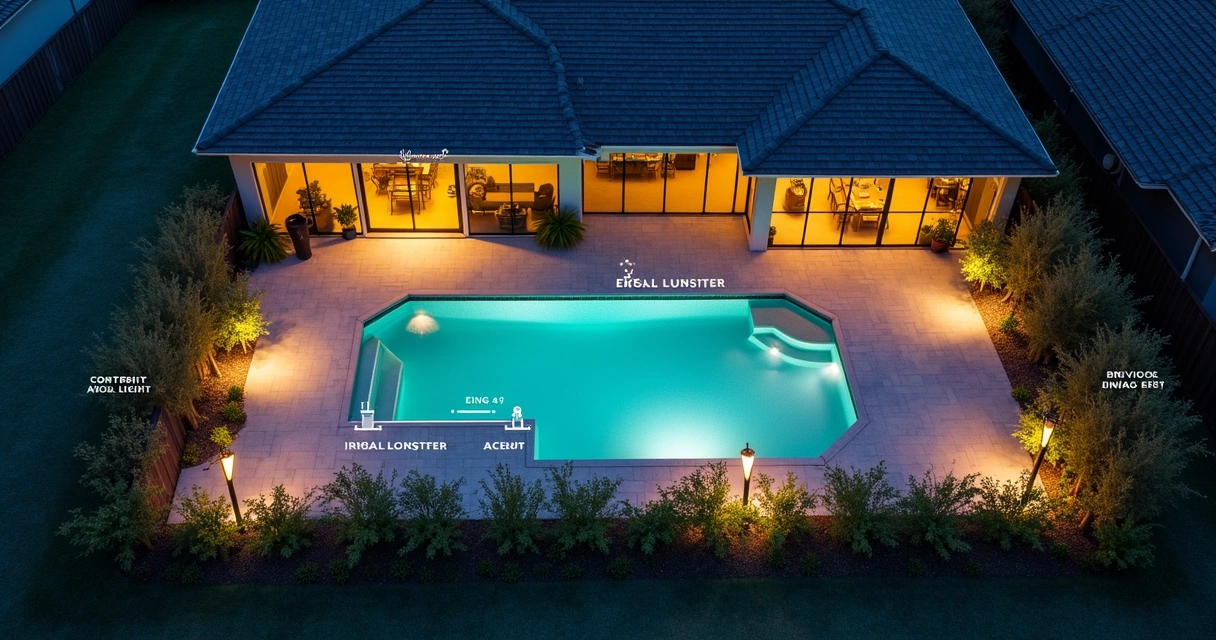
Mapping and defining lighting zones
We always begin with a scaled drawing or digital photo of the enclosure from above. This “light map” helps us identify:
- Main circulation paths, stairs, and gates for safety
- Primary activity areas—dining, lounging, grilling, or hot tub zones
- Pool and spa areas with any steps, water features, or tile details needing subtle illumination
- Accent features—landscapes, planters, architectural details, or art
- Storage and utility corners that may need bright but occasional lighting
Zones are best defined by both use and lighting need. For a typical large enclosure in Orlando, we tend to create:
- Pathway zones (entrance, exits, around pool): Continuous but low-brightness light for safe movement.
- Task zones (grills, prep counters): Focused, brighter lights for visibility when working or cooking.
- Activity/living zones (dining or lounge): Gentle overhead light, often dimmable, for comfort.
- Accent zones (columns, plant beds): Narrow-beam or discrete low-voltage lighting to highlight beauty, never “flooded” light.
- Service zones (storage, equipment): Bright when needed, controlled independently, often on motion or timers.
Zones should rarely overlap, but may softly blend for visual flow. For instance, pathway lights shouldn’t glare onto dining tables, and plant lighting should never glare in guests’ eyes.
Selecting lighting types for each zone
With zones mapped, we select fixture types and beam characteristics fitting each area’s need. This avoids “one-size-fits-all” mistakes and supports refinement later.
Pathway and circulation zones
Our favorite pathway lighting options include:
- Low-voltage LED puck or step lights along screen base, softly illuminating perimeter walkways
- Small bollard or post lights outside enclosure, angled to avoid spill inside
- In some enclosures, recessed lights in lanai overhangs or columns provide direct walk-light without exposed bulbs
We always recommend shielding all pathway lights to direct illumination downward, following standards in the Fairfax County outdoor-lighting standards for minimizing spill and glare.
Activity and living zones
For dining, lounge, or conversation areas, we like:
- Overhead ceiling-mount fixtures or track lighting with dimmer controls
- Portable lanterns or table lamps (damp-rated, LED) for flexible setups
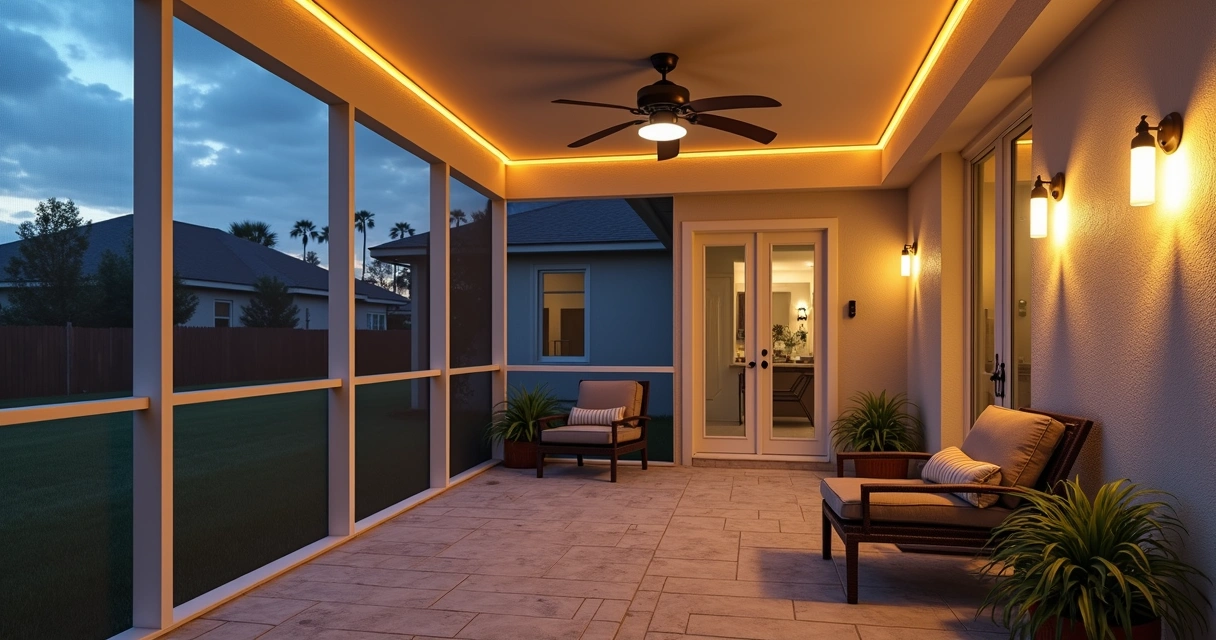
- Indirect LED strips hidden in structural beams for an “invisible” glow
Dimming is key: brighter is not always better. Warm color temperature (2700 K or less, per the National Park Service recommendations) makes a dramatic difference over cool blue-white bulbs.
Pool and spa zones
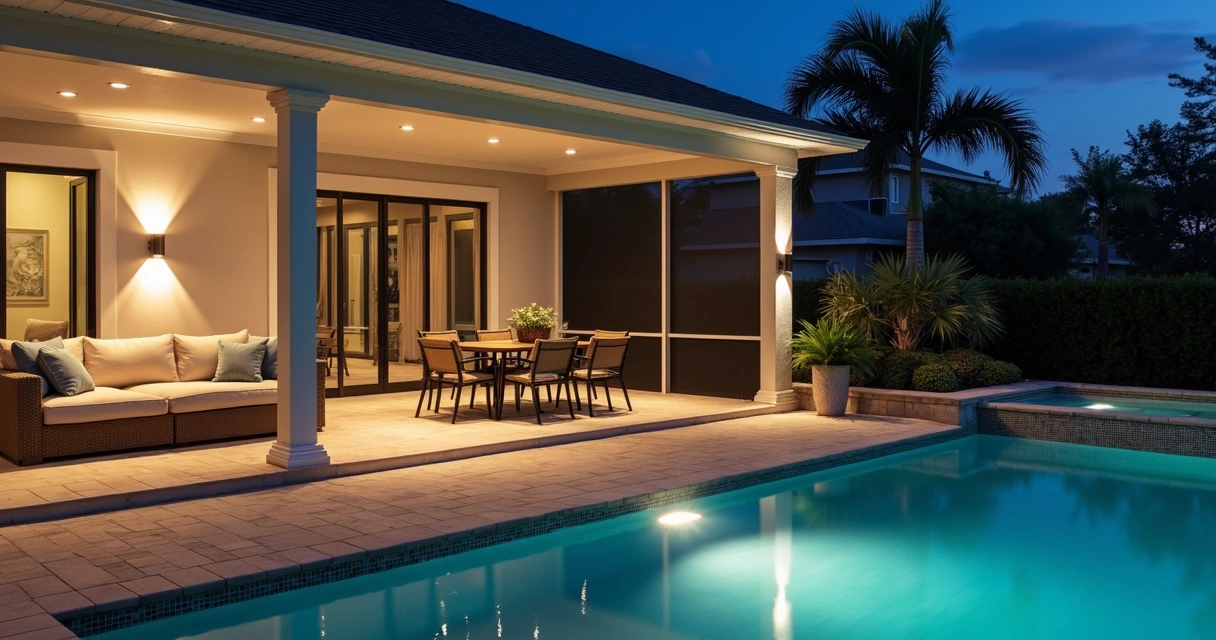
For pools and spas, we usually combine:
- Built-in underwater LEDs for visibility and color effects
- Low-output spotlights (fully shielded) for pool deck, never aimed at the water surface from above
- Fiber optic or small wall-washer lights around tile, waterfall, or steps
We always avoid uplighting here, a tip supported by National Park Service recommendations to protect night skies.
Accent and feature zones
For accents, less is more:
- Narrow-beam (15–30°) spotlights or floodlights aimed carefully so they graze columns or plant shapes
- Micro or mini LEDs in planters, emphasizing texture or color without spill
Spotlights are always capped at 1,200 lumens and downward-facing, as outlined by the City of Boulder ordinance, and put on motion or timer controls for energy savings.
Service and utility zones
Bright, wide-beam utility fixtures can make storage areas safe, but we make sure:
- They’re independently switched, with motion sensors for infrequent use
- Shielded housings prevent glare into living or pool zones
All zones rely on the right wiring and breaker allocation so that you can use only what you need, when you need it.
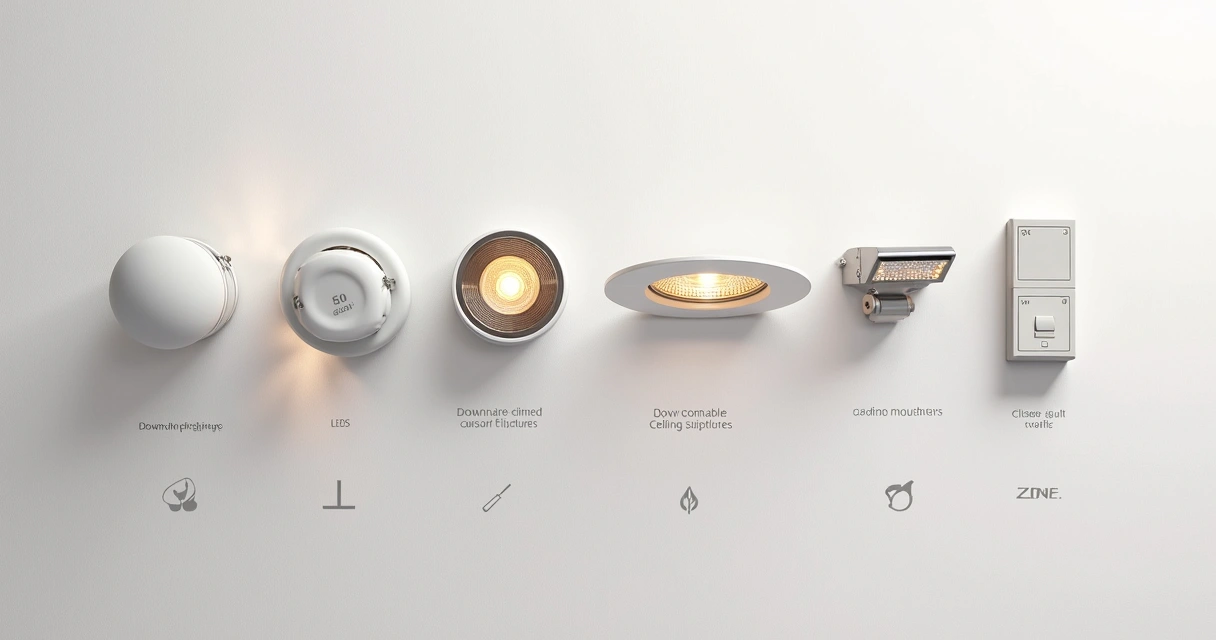
Fixture placement and mounting best practices
We follow several core rules when installing lights in large screen enclosures:
- Keep fixtures low and close to the ground for safety and maintenance access; higher is not always better
- Mount downlights on beams or lanai roofs, aiming beams away from direct lines of sight
- Stagger fixtures (rather than lining up) to avoid “runway” effects in walkways
- Use fully shielded housings with minimal exposed bulbs to spare neighbor views and the night sky
- Arrange access to controls (switches, dimmers, or apps) at all entry points for safety and convenience
Every light should have a clear “job” and not overlap too strongly with another's purpose.
We verify our plans using night-time tests (battery-powered test lights) before committing to wiring and final mountings.
Controls: switches, dimmers, scenes, and smart options
What sets a premium enclosure apart is not the lights, but the control you have over them. In our experience, the best lighting zones offer:
- Physical switches grouped by entry points, labeled for each zone
- Dimmers for living/dining areas for mood and energy savings
- Motion sensors for service and pathway zones, reducing waste
- Timer or photo-cell controls for accent and utility lighting
- App-based or voice controls for advanced “scene” setting (entertain, relax, clean)
We like mixing traditional switches with modern wireless controls, balancing reliability and convenience. You should not be forced to light every area just to enjoy a quiet evening dinner. Choose systems aligned with your habits and your guests’ comfort.
Safety, codes, and environmental responsibility
We always work within the current outdoor lighting standards and building codes. Highlights include:
- Specifying outdoor-rated (wet/damp) fixtures and conduit for longevity
- Using full cut-off fixtures and lamps no brighter than needed, as required by Fairfax County regulations
- Verifying wiring methods comply with local electrical codes (each new circuit or major retrofit may require a permit)
- Avoiding “uplighting” that can harm wildlife and disrupt neighbors per National Park Service guidance
- Encouraging dark-sky-compliant fixtures with warm (2700 K) or amber LEDs whenever possible
Small changes in fixture shielding and bulb color make a world of difference to people and planet.
Responsible lighting, especially near conservation lands or water, can minimize impact on birds, amphibians, and the beautiful Florida night sky.
Installation planning and maintenance tips
Our process at GCM Best Services always starts with a free on-site assessment and design session. We advise on:
- Running conduit and wiring under slabs, pavers, or within enclosure beams without visible clutter
- Minimizing holes in aluminum or vinyl for rodent/weather protection
- Planning low-voltage and smart system infrastructure for future upgrades
- Providing clear as-built “zone maps” for homeowners
- Specifying fixtures with replaceable, long-life LEDs to cut future repair costs
Periodic cleaning, seasonal checks, and touch-ups keep all lighting zones looking and working their best.
Case studies and common pitfalls
We’ve seen examples where skipping zone-based planning leads to issues such as:
- Too many overhead floodlights create glare and harsh shadows, making the space unwelcoming
- Unshielded lights “bleed” into neighbor yards, leading to complaints and threat of code enforcement
- All lights wired to one switch, forcing “all on or all off” choices—proven to drive up power bills and reduce enjoyment
- Accent uplights cause unwanted insect swarms, especially near the pool
Well-executed projects, in contrast, offer seamless control and subtlety. One Orlando homeowner shared how separate dimmable zones for dining and pool deck made family nights more relaxing, and motion sensors on service lights protected tools from being left in the dark.
If you’re exploring integrating lighting with other hardscape features, such as paver walkways or artificial turf areas, our resources at our hardscape page and our artificial turf info can inspire more ideas for a complete backyard upgrade.
Bringing it all together: next steps for your project
Planning out lighting zones is the foundation for every beautiful, functional screen enclosure after dark. When we combine experience, industry guidance, and detailed on-site planning, you get:
- Improved safety for family and guests
- Better comfort for dining, swimming, and relaxing—on your terms
- Flexible, efficient use of energy that saves money
- Responsible, neighborly lighting that fits Orlando’s high standards
With a team like ours at GCM Best Services, you’re assured of both the creative vision and the technical expertise to deliver stunning results, backed by photos and written warranties. We handle permitting, HOA, and inspections as well, so you stay focused on enjoying your space.
If your plans include driveway or patio upgrades, integrating lighting during a patio paver installation can streamline the entire process, as we often coordinate electrical work with slab or walkway projects for maximum efficiency.
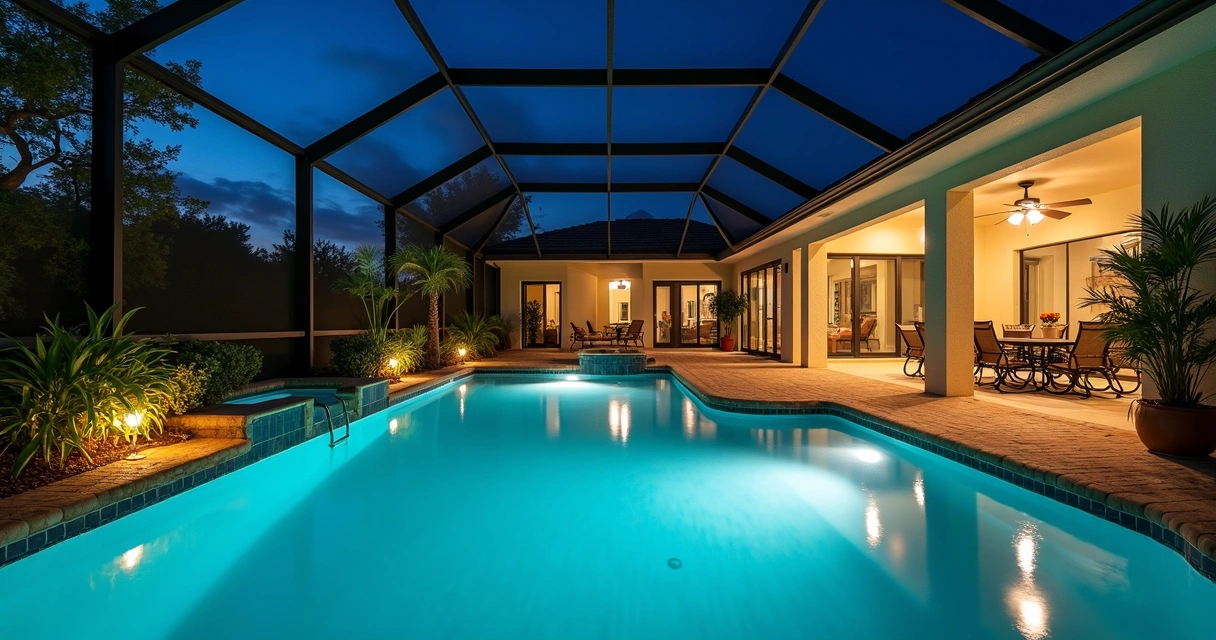
Conclusion
A carefully planned lighting zone system is the key to maximizing both comfort and value in your large screen enclosure. With the right zones, fixtures, and controls, you can turn any backyard into a true nighttime retreat—safe for your family, pleasing for your guests, and responsible toward neighbors and the environment.
GCM Best Services stands ready to help you design and execute your outdoor vision. Start with our free, no-obligation assessment and see how thoughtful lighting can transform your evenings in Central Florida.
Ready for a professional quote? 📞 (407) 250-1948 • 24–48h • Orlando, Tampa & area.
Frequently asked questions about planning lighting zones in enclosures
What is a lighting zone in enclosures?
A lighting zone in a screen enclosure is a specific area with its own lighting controls and fixture types, tailored for a particular use or activity. For example, pathways, dining areas, and pool decks may each have dedicated zones, allowing you to control brightness, color, or on/off timing for that part of the space without affecting others. This approach provides comfort, saves energy, and enables creative design flexibility.
How to choose lights for screen enclosures?
We recommend selecting fixtures based on both function and comfort. For general use, warm color temperature LEDs (2700 K or below) create the most inviting results, as supported by the National Park Service guidance. Task areas (like grilling or utility spaces) should use brighter, focused, and well-shielded fixtures, while accent or relaxation zones can use dimmable or indirect lighting. Always ensure fixtures are outdoor-rated and install shielding to prevent direct glare or spill into the neighbor’s space.
How many zones should I plan?
Most large enclosures benefit from four to six lighting zones: pathways/circulation, activity/dining, pool/spa, accent features, and service/utility. The exact number depends on your layout, size, and the variety of activities you host. Having distinct zones makes future adjustments, mood changes, and energy management much easier, letting you use just the light you need, when you need it.
What are the best lights for large screens?
The best lights for large enclosures are usually a mix of low-voltage LED pathway fixtures, shielded downlights or overhead LEDs for activity zones, and subtle spotlights or floodlights for accent features. Dimmable, warm white fixtures are preferred for general use, while utility areas may require brighter options with motion controls. Always look for full cut-off, wet-rated fixtures and avoid uplighting, as recommended by leading outdoor lighting ordinances and the City of Boulder ordinance.
How can I control multiple lighting zones?
There are many options: traditional wall switches (grouped and labeled), dimmer controls for key zones, timer or photo-cell switches for accent lighting, motion sensors for pathways, and advanced smart controls managed by apps or voice assistants. The real benefit of zone lighting is the ability to tailor each part of your enclosure to your needs with just one touch. Our team at GCM Best Services often combines simple physical controls with smart upgrades to match homeowners’ lifestyles and comfort.You can learn more about hardscape integration with lighting by visiting our hardscaping article section.