Primary keyword: painting stucco exteriors
Variants: stucco exterior painting, exterior stucco paint, how to paint stucco
Audience: Homeowners, property managers, and businesses in Central Florida seeking to enhance or restore stucco exteriors.
Pain/Benefit: Faded, peeling, or cracked paint reduces curb appeal and allows moisture intrusion—repainting with the right steps can give long-lasting, beautiful, and protected exteriors.
Summary: In the humid, sun-soaked environment of Orlando and Central Florida, stucco exteriors demand a thoughtful painting process. We outline proven steps, detailed product selections, and essential site management strategies to achieve vibrant, lasting color well through 2026. GCM Best Services delivers professional exterior painting with tailored prep, high-build coatings, careful scheduling, and reliable warranties for a seamless experience.
- What makes stucco unique in Central Florida?
- Understanding the challenges of stucco painting
- Choosing the right paint for stucco exteriors
- Step-by-step: How we prepare and paint stucco for lasting color in 2026
- Addressing common mistakes and issues
- Inspections, warranties, and maintenance
- Conclusion: GCM Best Services’ approach for homes and businesses
- Frequently asked questions
Paint is more than color—it's your first layer of protection.
What makes stucco unique in Central Florida?
Stucco exteriors have defined the look of Central Florida neighborhoods for decades, but their makeup and maintenance needs are unlike siding or brick. As GCM Best Services, we see firsthand why the right paint approach is so important here.
Stucco is a cement-based finish that breathes, protects, and shapes your property’s personality. In our climate, and especially throughout Orlando, it’s exposed to nearly constant UV, wind-blown rain, rapid temperature swings, and high humidity. These forces can be unforgiving if paint or prep are wrong.
In every project, we remind property owners: not all stucco is equal. Some homes feature traditional sand-cement stucco, while others use a more resilient acrylic-modified system. The underlying material, age, and past repairs all matter when planning a paint job.
- Breathability: Stucco must release moisture vapor. If paint traps water, it can cause blistering, peeling, or mold.
- Texture: From smooth to heavy dash, stucco’s surface affects how paint adheres and covers.
- Movement: Expansion and contraction from heat, plus settling cracks from Florida’s soils, mean flexibility is key.
Homes near the coast or beneath large oaks face added exposure to salt spray and mildew. The right painting plan takes all of this into account.
Understanding the challenges of stucco painting
Many people call us after noticing cracks, stains, or faded color on their stucco. Sometimes, the reason is as simple as age, but more often, painting mistakes years ago are the real culprit. We believe in addressing the full story, not just the symptoms.
- Moisture: Florida’s rains put constant pressure on stucco coatings. Paint must allow vapor to escape but not let liquid water in.
- Sun exposure: UV rays break down lower-grade paints—especially whites and pastels, which chalk or fade quickly.
- Algae and mildew: In shaded spots, especially facing north or under trees, organic growth is almost a given.
- Hairline cracks: Stucco’s surface moves. Rigid, thin paints split within months if not flexible or properly built up.
When reviewing other services we offer, we see that the problems faced by stucco are similar to those with pavers, driveways, and concrete: it’s all about surface readiness and choosing finishes built for Florida needs.
The process is as important as the product.
Choosing the right paint for stucco exteriors
Paint is not one-size-fits-all, and stucco paints have evolved a great deal. In our experience at GCM Best Services, elastomeric coatings and high-quality latex formulations deliver the best long-term protection and beauty for Orlando-area stucco.
When helping clients decide, we boil the options down to a few priorities:
- Elastomeric paint: This ultra-thick, flexible coating bridges hairline cracks, resists water, and flexes with temperature and movement. It’s especially suited to older stucco or homes with visible cracking.
- 100% acrylic latex paint: Easier to apply than elastomeric and still flexible, this paint is highly UV resistant, breathable, and best for newer stucco or where fine cracks are not widespread.
- Primer or block-filler: Some stucco, especially sand-cement or previously unpainted, needs a high-build block-filler primer to even out texture and seal pores for topcoat adhesion.
- Mildew resistance: Selecting paints with mildewcides is critical for shaded or north-facing facades and anywhere frequent sprinklers are present.
One question always comes up: Should we stain stucco instead of painting? In Central Florida, paint is far more common because it gives an extra layer of weatherproofing, color flexibility, and is easier to touch up or change later.
We also follow the U.S. Environmental Protection Agency's RRP guidance on special handling if stucco has a history of lead paint. Paint removal and prep methods should never put people or pets at risk.
Step-by-step: How we prepare and paint stucco for lasting color in 2026
While each project is unique, we have established a detailed series of steps for our stucco painting services. We take pride in every phase, because the results in 2026—and many years beyond—depend on what you do before the first drop of paint.
Proper prep creates a stronger canvas.
Assessment and planning
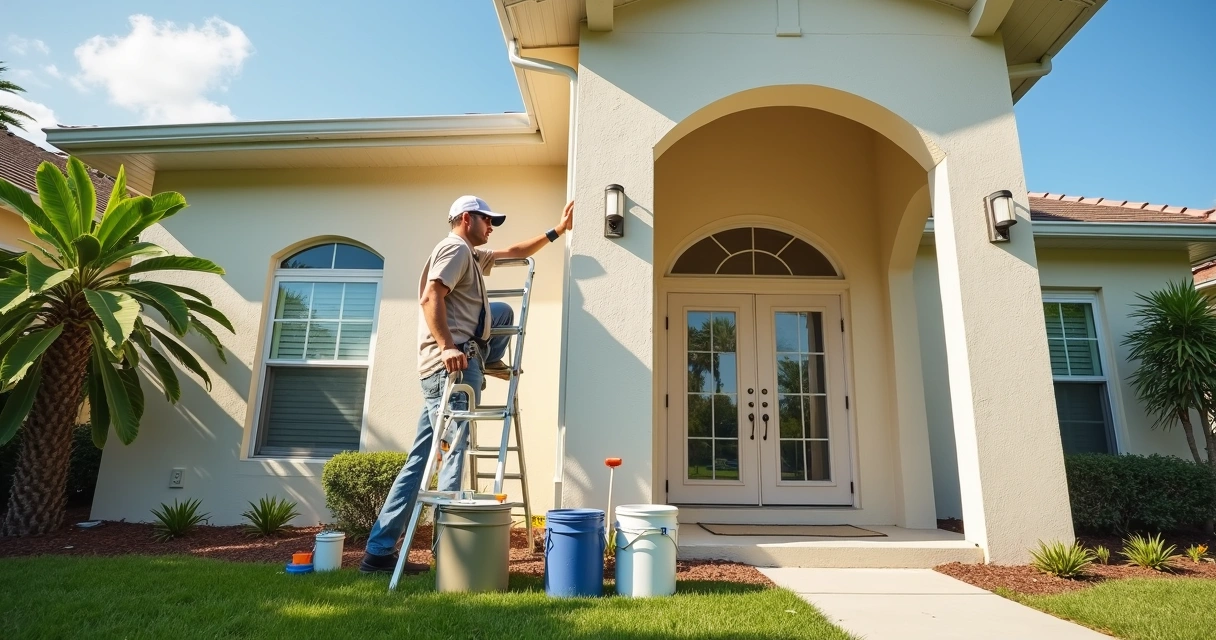
Every job begins with a full walk-around. We check for cracks, old paint failures, water stains, plant or sprinkler contact, and drainage patterns. We deliver a written estimate, and when needed, manage all HOA paperwork as part of our process and warranty structure. Homeowners often appreciate before-and-after photos and a detailed project calendar.
Surface preparation
This is where our crews spend the most time. We:
- Pressure wash: Remove dust, dirt, algae, mildew, and chalk using the right water pressure to avoid damaging the stucco.
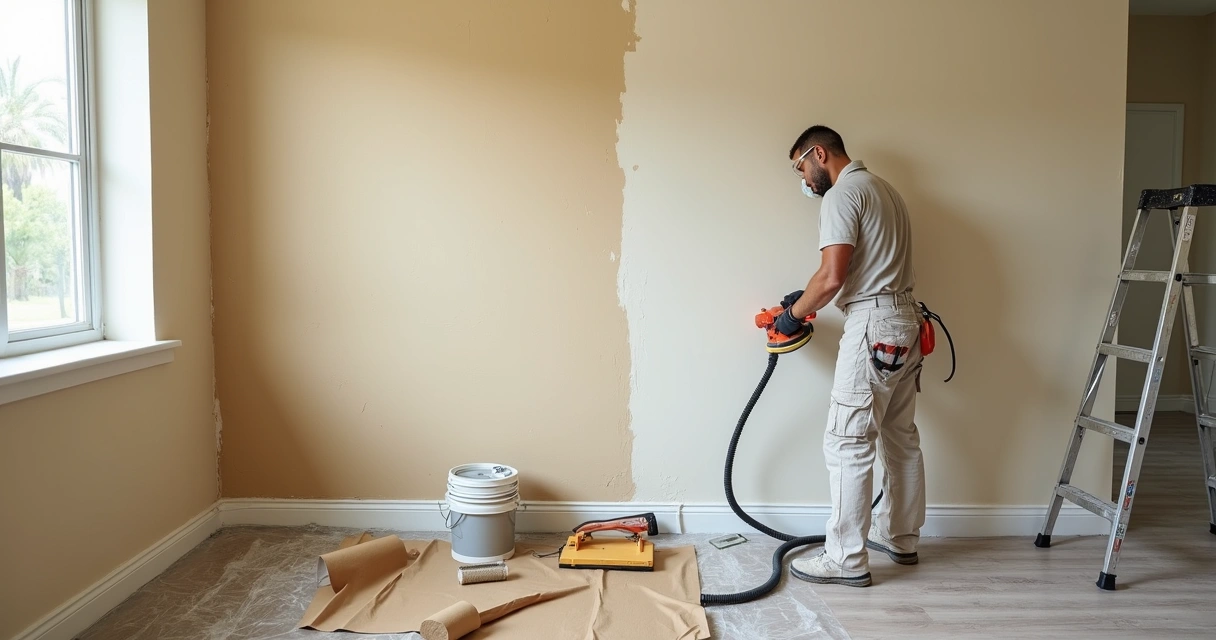
- Scrape and sand: Hand-scrape peeling paint and lightly sand rough edges, focusing on problem spots.
- Repair cracks and holes: For hairline cracks, use masonry caulk or elastomeric patch. Deeper cracks get cementitious repair.
- Prime/coating: Where raw stucco, repairs, or stains show, we use a block-filler or stain-blocking primer.
According to the EPA, safe prep matters because dust or chips from old, painted stucco could contain lead. We always control dust, use plastic sheeting, and dispose of waste safely if there’s a chance of lead presence, especially for homes built before 1978.

Masking and protection
A high-quality painting job keeps paint off windows, doors, fixtures, landscaping, and utility fixtures. All are masked with tape and plastic sheeting, and landscaping is gently moved or shielded before we paint. This stage avoids cleanup headaches and gives razor-sharp edges.
Paint application
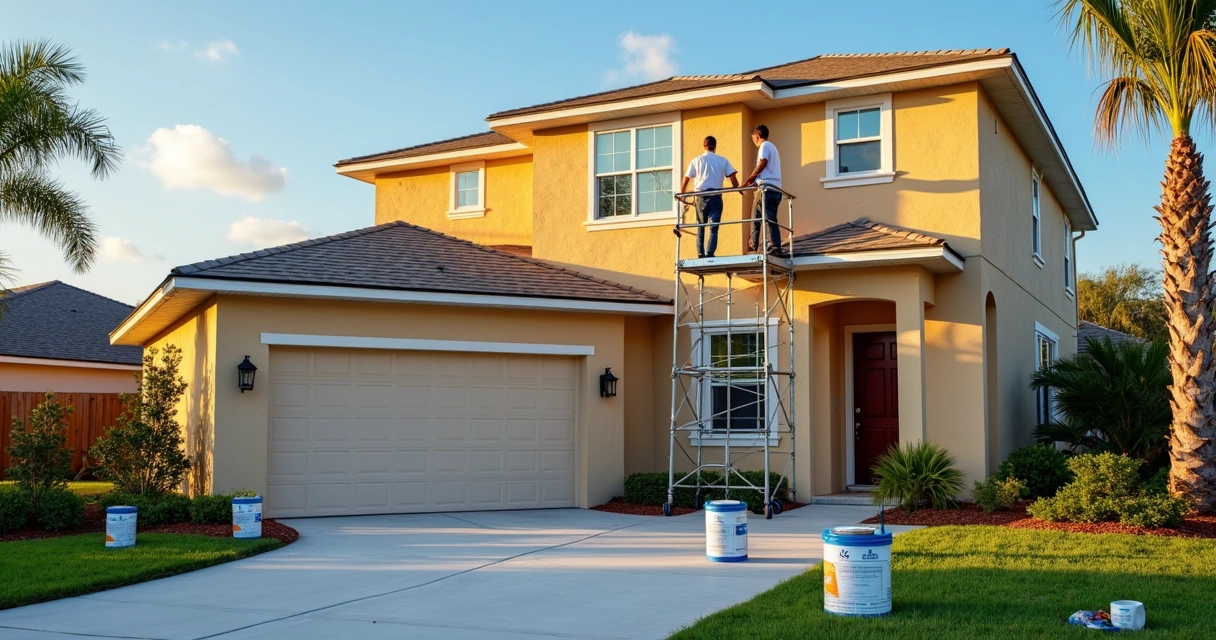
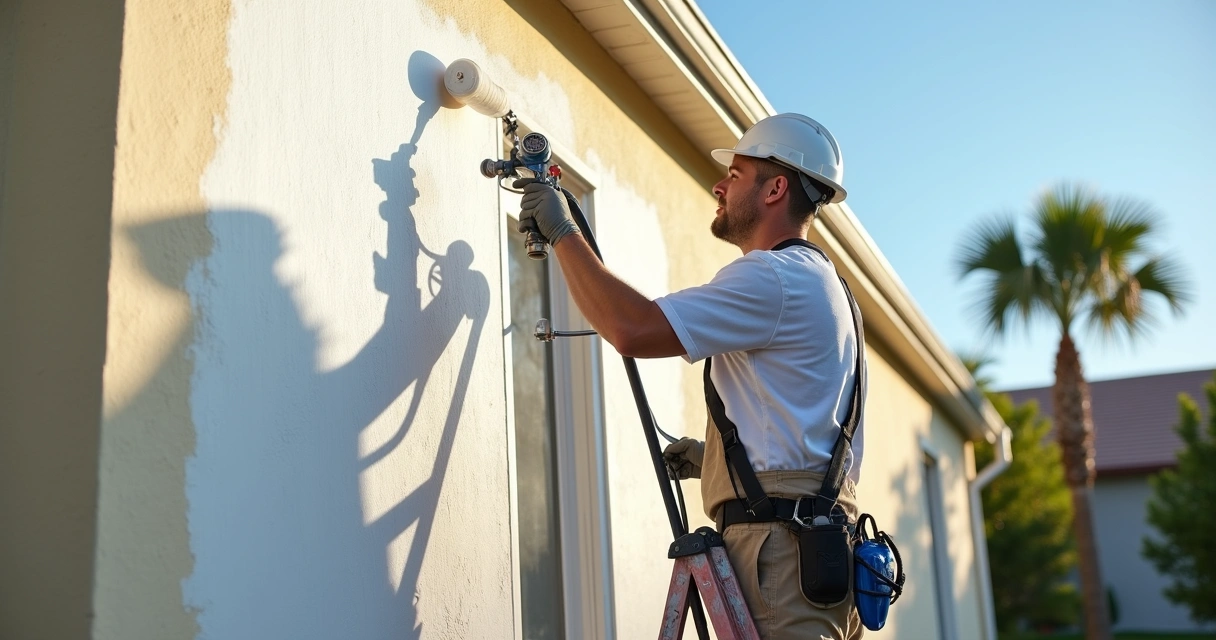
For best results, we use brush/roller for detailed work, but often apply the finish coat with commercial-grade sprayers for uniform thickness and texture. Our strategies include:
- Two full coats: Always two finish coats, each cross-rolled to fill stucco’s low spots and ensure even coverage.
- Elastomeric where needed: Problem areas and wide cracks receive elastomeric "striping" before the topcoat.
- Night or weekend shifts: For businesses, we offer overnight painting to keep properties open, as described in our commercial services.
Final walkthrough and cleanup
After the last coat dries, we remove masking, inspect every surface, clean the site, and walk through with the owner to confirm details. Our goal is nothing less than "new again"—no drops, streaks, or missed edges. A written warranty package is issued along with maintenance tips so clients know exactly what to expect for the years ahead.
For homeowners interested in related exterior combinations or hardscaping upgrades, we coordinate painted finishes with pavers and hardscape elements for a seamless look and improved curb appeal.
Addressing common mistakes and issues
We often see stucco painting projects fail because critical preparation steps were skipped or incorrect paint was used. Our team at GCM Best Services has rescued more than a few faded or peeling jobs in the Orlando area. Here’s where things go wrong most often:
- Not cleaning enough: Mold, chalk, and dust left on stucco ruin adhesion. Take time for a spotless surface.
- Ignoring cracks and repairs: Paint can’t hide cracks or seal leaks alone—repair all damage before painting.
- Wrong primer or none at all: New, raw, or repaired stucco demands deep-penetrating primer to anchor finish paint.
- Single, thin coat: Stucco “drinks” paint. Two (or even three) coats are sometimes needed for proper build and protection.
- Painting in bad weather: Humidity, rain, and high heat affect drying and can trap moisture—stick to the right windows each year, usually fall through spring.
We always help clients time their projects around Orlando’s unpredictable weather. Occasionally, even on the best-managed job, a spot might dry too quickly or not well enough. We inspect everything before calling a project complete.
Shortcuts today, regrets tomorrow.
Inspections, warranties, and maintenance
Our process does not stop with the last coat. We provide:
- Photo documentation: "Before," mid-job, and "after" images to help clients track exactly what was done.
- Detailed written warranty: Outlines coverage for adhesion, finish, and colorfastness—backed by our reputation in Central Florida.
- Maintenance guide: Steps for washing, touching up, and what signs to watch for years down the road.
Regularly cleaning finished stucco and inspecting for cracks or water entry can head off big problems. If neighbors or friends ask for referrals, our clients often share our guides and point them to more maintenance tips on our company blog.

Conclusion: GCM Best Services’ approach for homes and businesses
If you want your stucco exterior to look beautiful and stay protected in 2026 and beyond, following a detailed, methodical painting process is essential. At GCM Best Services, we bring years of experience, the right products, and a customer-first mindset that removes stress from exterior improvements. From meticulous prep to written warranties, our results reflect the pride we take in every step—and in every home and business we serve throughout Orlando and Central Florida.
Whether your priority is curb appeal, durability, or prepping for home value, we can help you choose the perfect system for your climate, architecture, and budget. Painted stucco can last for years if done right, and the investment pays off in both appearance and peace of mind.
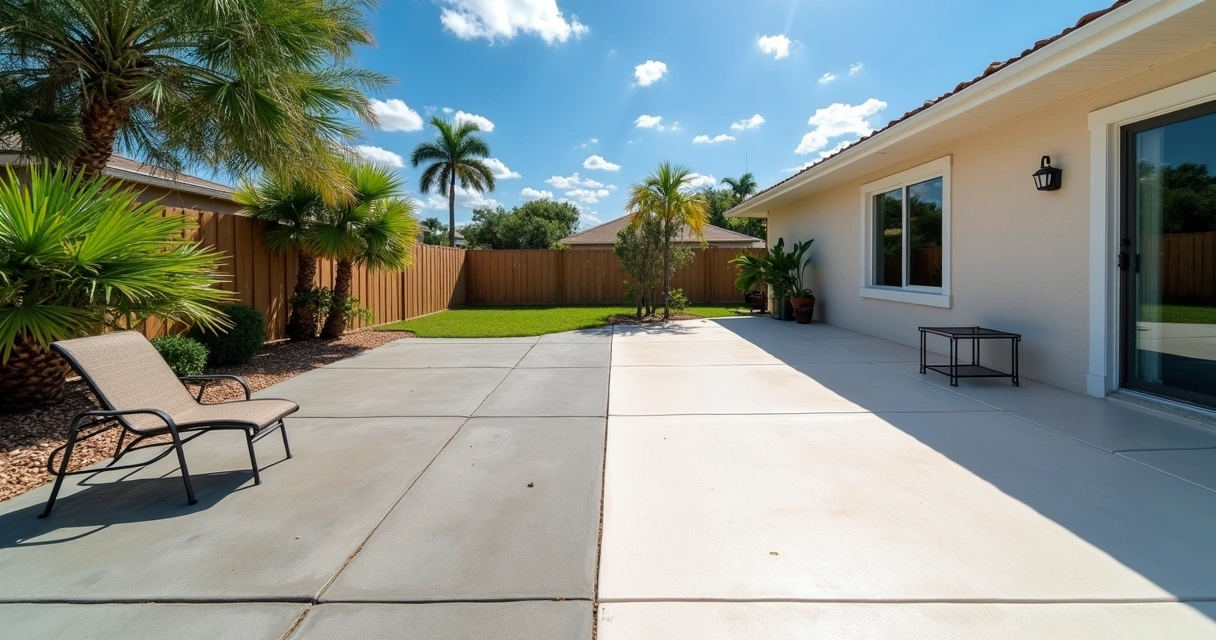
If you’re considering updating your exterior—or combining painted stucco with enhancements like driveways or patio paving—we’re here to guide you. Our process puts safety, quality, and communication first, every step of the way.
Ready for a professional quote? 📞 (407) 250-1948 • 24–48h • Orlando, Tampa & area.
Frequently asked questions
What is stucco exterior painting?
Stucco exterior painting is the process of cleaning, repairing, priming, and coating stucco walls or surfaces with weather-resistant paint designed to protect and refresh their appearance. Unlike other siding, stucco absorbs and releases moisture, so painting it requires special products and proven techniques for reliable results, especially in humid climates like Central Florida.
How to prepare stucco before painting?
We recommend a complete cleaning—pressure washing to remove dirt, chalk, mildew, and loose paint—followed by scraping, sanding, and repairing all cracks with the right patching materials. Surfaces are primed where needed, and all nearby areas are masked off to prevent accidental paint. This prep is the most time-consuming but most influential step for a long-lasting job.
What paint works best for stucco?
Elastomeric coatings and high-quality 100% acrylic latex paints are widely considered best for stucco exteriors because they flex, resist water, and allow the surface to breathe. Choosing paints with added mildew resistance and UV blockers is also recommended for homes in Florida.
How long does painted stucco last?
In our experience, professional stucco painting using top-tier products and proper prep will look great and protect the surface for 7–12 years under Florida conditions. Factors like surface orientation, color choice, and ongoing maintenance can extend or shorten this interval.
Is it worth it to repaint stucco?
Yes, repainting stucco improves appearance, protects the structure against water, mold, and sun, and often increases property value. When planned and executed the right way, the results last for years and are less costly than repairs for neglected, failing finishes. Many clients see it as an investment in both comfort and curb appeal.