Enhancing outdoor lighting for homes, driveways, patios, or commercial spaces in Central Florida demands thoughtful choices—especially in communities with Homeowners Association (HOA) rules. In our experience at GCM Best Services, the right lighting control goes beyond curb appeal and security. It ensures comfort, safety, and energy savings, all while satisfying HOA standards that keep neighborhoods unified and harmonious. This article guides you through the diverse lighting control options that meet HOA requirements, improve your property, and deliver lasting value.
HOA-compliant lighting doesn't limit good design—it shapes it.
Understanding HOA lighting compliance
Before choosing any lighting control system, we always encourage clients to review their HOA’s Covenants, Conditions, and Restrictions (CC&Rs). These rules, often detailed in neighborhood handbooks, set the standards for all exterior upgrades, including the style, brightness, operation hours, and placement of lights. Why such detail? Consistent exterior lighting preserves the community’s character and prevents issues like light trespass or neighborhood disputes.
Common HOA lighting requirements include:
-
Approved fixture types and finishes (for example, dark bronze, matte black, or concealed fixtures)
-
Maximum brightness in lumens or wattage—overly bright lights can be denied
-
Set lighting schedules for nighttime operation (sunset to midnight, or motion-only)
-
Prohibition of up-lighting or colored lights in many communities
-
Defined fixture locations—often only walkways, garages, entries, or landscaping
We never skip step one: confirming the project plan with the HOA before work begins. Permits often hinge on documented compliance, a process that aligns with our broader project approach at GCM Best Services.
The benefits of modern lighting controls for exteriors
Today’s lighting controls blend technology and practicality. Automatic sensors, timers, and dimmers do more than save electricity—they offer security, flexibility, and peace of mind. According to the U.S. Department of Energy, automated lighting controls such as motion sensors and daylight sensors can reduce energy waste dramatically. This aligns with HOA priorities for maintaining a uniform nighttime environment and responsible power use.
-
Improve safety by lighting paths and dark corners when needed
-
Save money and energy through automated schedules and LED upgrades
-
Reduce light pollution and neighborhood complaints
-
Support seamless integration of new upgrades with existing architectural features
The right lighting strategy doesn't draw attention—it fits right in.
Core lighting control technologies
We often help clients decide which type of control fits their needs the best. Each option offers a unique balance of function, energy savings, and HOA compatibility.
1. Manual switches and local dimmers
Traditional wall or fixture-mounted controls are the simplest solutions. Switching on/off or adjusting the brightness by hand gives you direct control. While effective for smaller projects or fixed-use areas such as patios or porch steps, this option may not always provide enough automation for comprehensive energy savings or safety.
In many HOAs, manual controls suffice when combined with low-wattage fixtures and limited operating hours.
2. Timers and daylight sensors
Timers automatically turn lights on or off at set intervals. For instance, they can activate pathway or driveway lights at sunset and switch off after midnight, perfectly matching typical HOA permitted use periods. Digital timers can even adjust seasonally for sunset/sunrise changes.
Daylight (photocell) sensors take this further—they respond to real ambient light, so the system only operates in darkness. These are especially valued by HOAs, since they virtually eliminate scenarios where lights are left on during daylight hours.
3. Motion sensors
Motion detectors activate lighting only when movement is detected in the coverage zone. This is ideal for minimizing nightly light output while still improving safety and deterring unwanted visitors. Motion sensors are particularly effective for driveways, backyards, and side entries.
HOAs frequently approve these setups if they use concealed, downward-facing fixtures and limited detection zones, ensuring the light targets only the homeowner’s property.
Motion sensors extend the life of your bulbs and can bring energy savings of up to 70% when compared to older always-on systems, a figure supported by the Lighting Energy Efficiency in Parking Campaign (LEEP).4. Smart controls and wireless systems
Smart lighting brings together all forms of control—timers, dimmers, motion, and daylight—into one programmable system. Using wireless or app-based platforms, you can adjust lighting schedules, select scenes, and even monitor energy consumption from a smartphone. Some platforms allow remote diagnostics, which streamlines maintenance or troubleshooting if there is ever a fixture issue.
With approval, many HOAs accept smart controls if the visible fixtures and operating hours follow the rules. The brain of the system can be installed indoors, out of sight.
Smart systems let you program complex routines, such as fading pathway lights after midnight or adjusting porch lights for holiday décor, all while staying within HOA parameters.5. Dimming options and multi-zone control
Dimmable lights allow for fine adjustments in brightness and ambiance. Multi-zone systems can divide the yard into segments with separate schedules for the driveway, walkway, pool area, or summer kitchen. With dimmers, the same fixture can serve as an accent at dusk and quiet security late at night.
We have found many HOAs allow dimming controls because they help reduce the total light output, lowering the risk of excessive glare or light spillover.
Fixture selection: LEDs, finishes, and full compliance
Even the best lighting control needs compliant fixtures to fulfill HOA demands. Here’s what we help clients focus on:
LED as the standard
Energy-efficient LEDs (light-emitting diodes) dominate outdoor lighting today and are strongly favored by both clients and HOAs. The Department of Energy’s 2020 LED Adoption Report notes that LED installations now account for about 30% of general illumination, reducing energy waste and operating costs substantially.
Further, the DOE projects LED lighting may reach 84% of installations by 2035, saving energy equal to the output of over ninety 1,000 MW power plants. HOA-aligned upgrades with LED bring both financial and environmental benefits to property owners.
LED lights also provide consistent color temperatures and are easy to pair with every type of control system.Finish and style
Outdoor fixture finishes must often match pre-approved palettes—matte black, bronze, white, or neutral metallics—and fit neighborhood architectural guidelines. Low-profile or recessed lights may be preferred for walkways or low walls, while well-shielded sconces or posts are common near garages or entries.
Most HOAs request cut-sheets or manufacturer’s photos prior to installation to ensure all finishes and style elements are in harmony with the community.
Location and mounting
Location matters. Approved fixture sites are generally limited to:
-
Front entry and porch ceilings
-
Above or beside garage doors
-
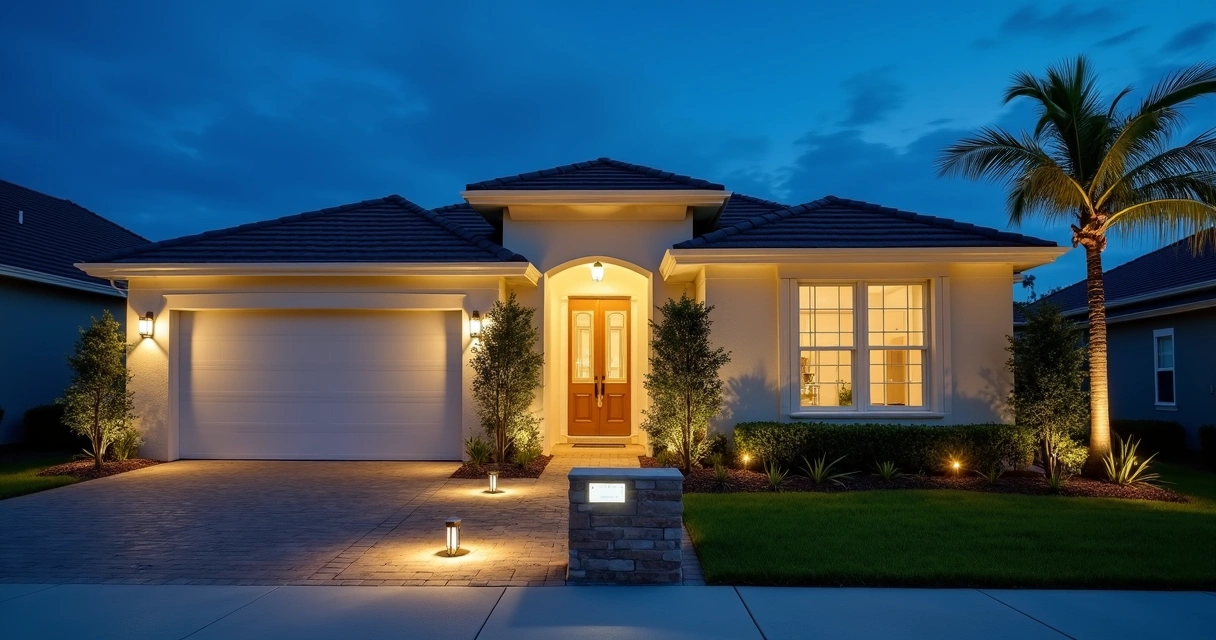
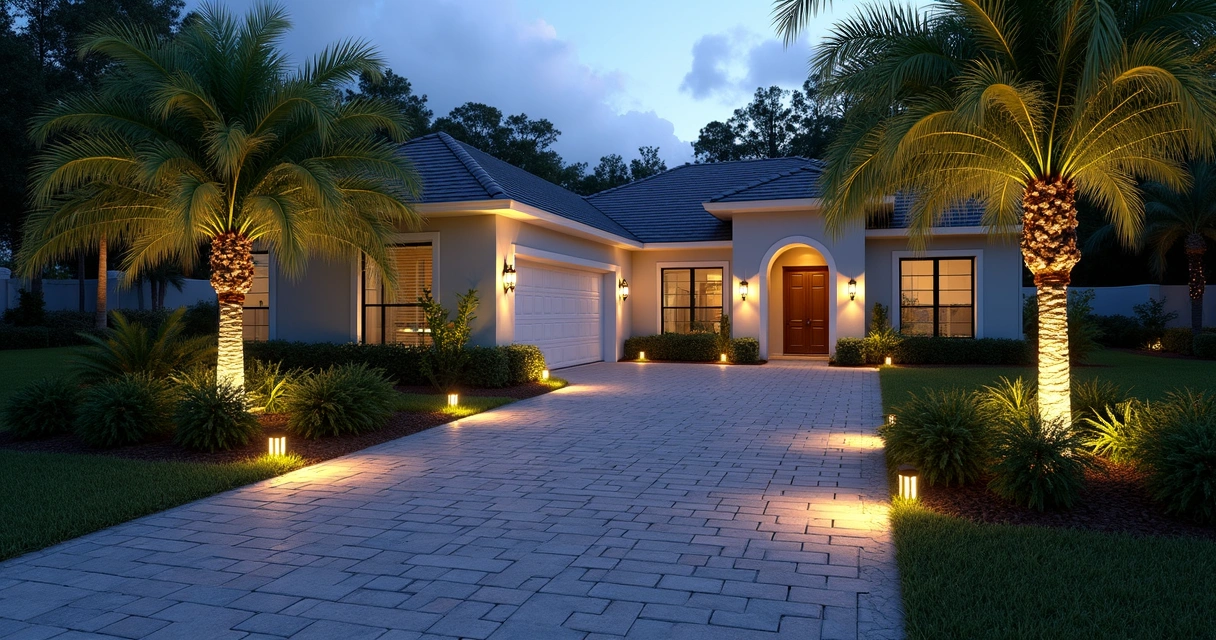
Driveway or walkway edges, using ground-level bollards or shielded path lights
-
Pool, summer kitchen, and patio perimeters (often with downward-facing shields)
We always recommend reviewing detailed site plans—such as those required with new patio, driveway, or pool projects—with the HOA before installation. For more information about compliant outdoor upgrades, visit our driveway and patio paving page or learn about hardscape options in Orlando.
Automating lighting schedules to meet HOA rules
We find that the most common violation issues with exterior lighting are schedule-related: lights left on overnight or activated outside permitted hours. Automation eliminates forgetfulness and ensures every fixture operates only when it should, satisfying both homeowners and the community board.
Some smart controllers sync with weather services or sunrise/sunset tables to automatically adapt throughout the year. If dusk falls sooner in winter, lights come on right when they're needed without extra programming. This adaptive control is often cited by the Department of Energy as a leading way to cut down energy use in residential lighting (DOE lighting controls data).
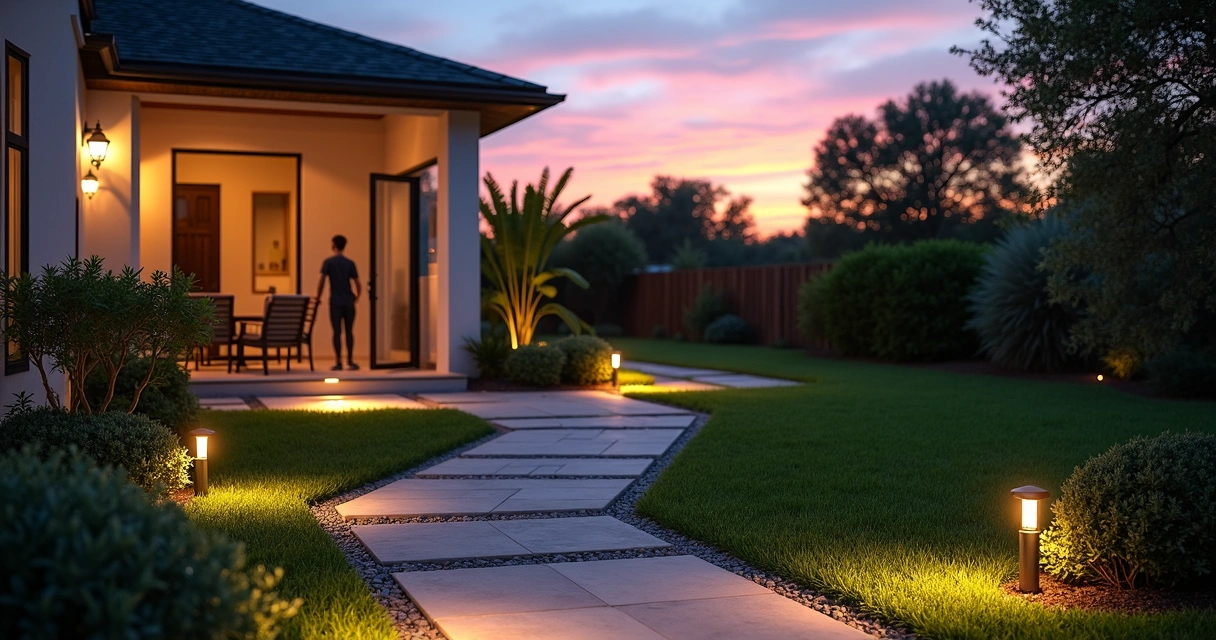
Combining timers, motions, and scenes
By combining technologies, we deliver flexible results with HOA compliance built in. For example:
-
Pathway and entry lights on at dusk, off at midnight (timer and photocell)
-
Garage and driveway lights dimmed to 50% after 11 pm, using a smart app
-
Motion-activated lights at side yards or gates, with limited run durations
This approach ensures all areas remain safe but never over-lit, minimizing neighbor disturbance and meeting strictest HOA regulations.
Best practices for installing HOA-compliant lighting controls
Every project is unique, but several principles help avoid compliance headaches and achieve flawless results:
-
Get written approval. Always submit plans, cut-sheets, and lighting diagrams to the HOA before ordering fixtures. Share detailed product data if required.
-
Document installation. Before and after photos and diagrams help in both HOA approval and future maintenance. We provide these as standard at GCM Best Services.
-
Check codes as well. Certain cities in Central Florida, including Orlando and Sanford, have their own codes for exterior lighting, layered on top of HOA rules.
-
Integrate controls with landscaping and hardscaping. Lighting should highlight pathways, gardens, and driveways without excess glare or light spill. Take a look at hardscaping project examples in Sanford for ideas.
-
Ask about warranty and maintenance. Installer-written warranties ensure accountability and swift response should adjustments or repairs be needed. Our warranty-backed approach at GCM Best Services puts homeowners at ease.
Good outdoor lighting should be seen, but not noticed.
Integrating lighting with landscaping and outdoor spaces
Lighting should enhance the overall look and function of your home’s outdoor spaces while following HOA agreements. We often plan and install lighting alongside other upgrades like artificial turf in Orlando, new patios, summer kitchens, or walkways, so it all functions as one system.
Light placement, intensity, and control help shape the final ambiance. Examples:
-
Soft ground lights on an artificial turf play area keep play safe after sunset
-
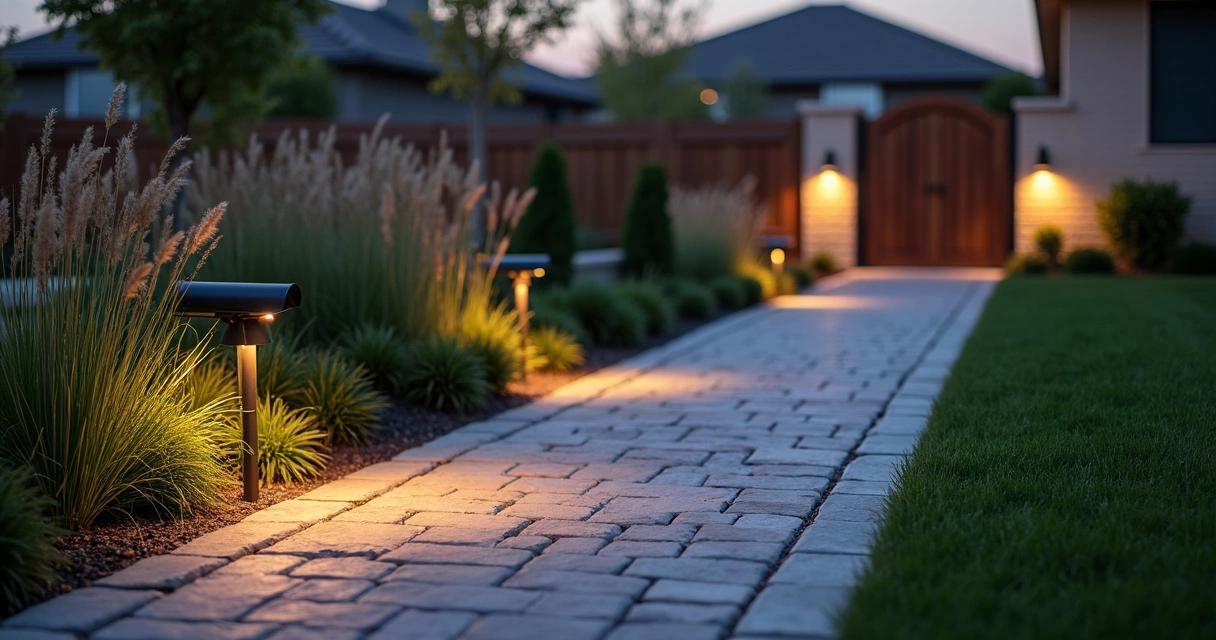
Path lighting for paver walkways can outline a route from the driveway to the backyard—controlled by dusk sensors
-
Discreet bollards by pool cages or screen enclosures emphasize safety while maintaining HOA-mandated styles
If you love landscape lighting ideas, our hardscaping blog provides inspiration and code-friendly suggestions for Central Florida homes.
Maintaining and updating lighting controls for lasting results
Homeowners sometimes overlook ongoing care, assuming new lights and controls will last forever. But even top-quality systems need checks:
-
Test sensors and timers every few months—settings or daylight detection can drift due to weather or landscape growth
-
Check for blocked fixtures (shrubs, mulch, furniture, or decorations might obstruct lights or sensors)
-
Replace faulty bulbs or controls promptly—especially those affecting safety, like entry, driveway, or stair lights
-
Schedule periodic reviews with professionals to ensure all code and HOA rules remain satisfied, especially after landscaping changes
At GCM Best Services, we offer ongoing support and documentation, so you never feel left in the dark—literally or figuratively.
HOA lighting controls: Tips for smooth project approval
Strong working relationships with local associations mean less hassle and faster project starts for you. Here’s how we keep approvals moving:
-
Communicate early: Share your vision in writing, including photos or sketches. This clarity reduces back-and-forth with the approval committee.
-
Stay flexible: Be open to adjusting fixture style or position if the board asks for changes. There’s often a similar style that fits within the guidelines.
-
Ask about pilot installations: If you’re one of the first to introduce smart controls or new fixture types, a pilot site visit or demo can allay concerns.
-
Rely on professional installers: Contractors experienced with HOA rules (like our team at GCM Best Services) avoid common pitfalls. We keep your project on track from first permit to final walkthrough.
Conclusion: Lighting control as a part of a bigger picture
Choosing the right lighting control isn’t just about gadgets and energy savings. It’s about designing outdoor spaces that blend beauty, safety, and compliance for years to come. At GCM Best Services, we’ve seen time and again that thoughtful lighting paired with proper controls increases home value, builds goodwill with neighbors, and makes every evening outside more enjoyable.
Ready to plan an HOA-compliant lighting upgrade for your driveway, patio, or backyard? Our team is here to guide you through the design, approval, installation, and maintenance steps—delivering confidence alongside great results.
Ready for a professional quote? 📞 (407) 250-1948 • 24–48h • Orlando, Tampa & area.
Frequently asked questions
What is HOA-compliant lighting control?
HOA-compliant lighting control means using lighting fixtures and operating schedules that fully follow the standards set by a neighborhood’s Homeowners Association.This often includes restrictions on brightness, fixture style, location, timing, and use of color or motion detection. Controls such as timers, dimmers, photocells, and motion sensors are typically accepted by HOAs if they help minimize energy use, prevent light trespass onto other properties, and preserve a unified look across the community.
How to choose exterior lighting controls?
Selecting exterior lighting controls starts with reviewing your HOA’s CC&Rs to identify any limits on style, type, and schedules. Then, consider your main goal—do you want security, ambiance, or both? We suggest choosing LED fixtures for energy savings, pairing them with timers for set hours, sensors for safety, and dimmers for flexibility. When combining these, ensure fixtures and programming can be adjusted to meet any changing HOA requests or property needs in the future.
Are smart lighting systems HOA-approved?
Smart lighting systems can be HOA-approved if the physical fixtures, operating schedules, and brightness all fit within the community standards.Most HOAs review these projects like any other: they want plans, specs, and installation details to confirm compliance. As long as the lighting does not create glare, exceed brightness caps, or operate outside HOA-set hours, the control method—manual, smart, sensors, or timers—is typically up to the owner.
What are the best outdoor lighting options?
The best outdoor lighting options for HOA communities in Central Florida combine LED fixtures, downward-facing designs, programmable timers, and motion or photocell sensors for efficient operation. Popular placements include driveway bollards, pathway markers, porch ceiling lights, and garage sconces in approved finishes. The most effective setups provide safety and curb appeal but remain discreet so as not to disturb neighbors.
How much do lighting control upgrades cost?
Lighting control upgrade costs vary depending on project scope, system complexity, and property size.A simple timer or motion upgrade on an existing system can start a few hundred dollars, while whole-property smart lighting with new LED fixtures and app-based controls might range upward from $1,500 to $3,500 or more, including installation and programming. Always budget for potential electrical updates or permitting costs, which are often required for HOA projects.