Fire feature codes | Patio fire pit regulations | Fire pit legality | Central Florida fire safety patio
Audience: Homeowners and property managers in Central Florida who want to add or update an outdoor fire feature without legal headaches.
Pain/Benefit: Reduce risk of fines, property damage, or injury by creating a code-compliant, inviting outdoor space.
Outdoor fire features transform patios into welcoming spaces for gatherings and relaxation. In Central Florida, though, being creative with a fire pit or fireplace requires attention to local building and fire codes. We help clients design and build patios and hardscapes that meet the strict requirements set by city, county, and state authorities.
We want your new fire feature to inspire warm memories, not code enforcement visits. So today, we’re breaking down what’s legal—and what’s wise—when it comes to adding fire to your backyard or business patio. With precise code knowledge and the right builder, like GCM Best Services, you can enhance your space and stay safe.
Outline of this guide
- Why fire features are popular in Central Florida
- Core types of fire features
- Florida’s statewide rules for open burning
- Local codes: Orlando, Orange, Seminole, and Osceola counties
- HOA and community guidelines
- Permitting, inspections, and recordkeeping
- Materials, hardscape, and base construction
- Safety zones and acceptable fuels
- Fire features under screen enclosures or lanais
- Building long-lasting patios with GCM Best Services
- Conclusion & FAQ
Why homeowners love fire features in Central Florida
We’ve seen the right fire feature become the heart of the backyard. Our clients gather around for cool winter evenings, lively parties, or just quiet family nights. The appeal is obvious:
- Year-round use: With Florida’s mild winter, outdoor living spaces are always in season.
- Ambiance: Fire offers both warmth and visual beauty, day or night.
- More usable patio space: A well-placed fire pit or fireplace creates a destination on your patio or yard.
- Increased property value: Attractive, low-maintenance fire features can enhance curb appeal and resale value.
But these perks are only possible if your fire feature aligns with Florida law and local code. Let’s look at the types of fire features and what makes each unique under regulations.
Major types of patio fire features
Most outdoor fires in our region fall into these main categories:
- Wood-burning fire pits: Classic open bowl, sunken, or built-in styles for real flame and sound.
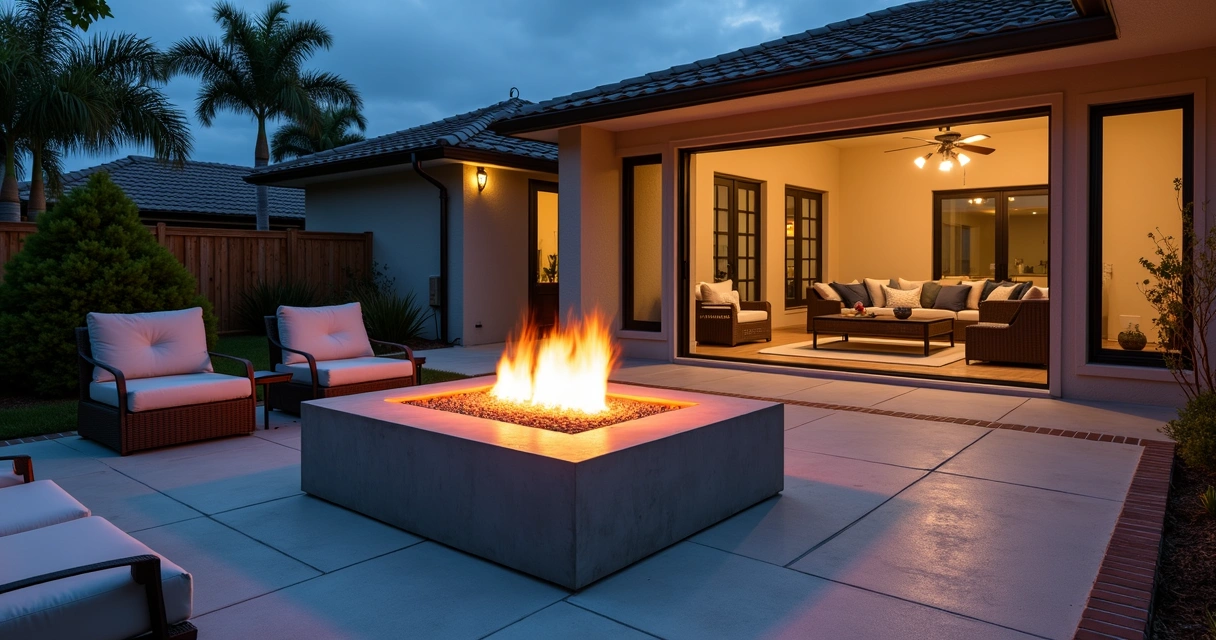
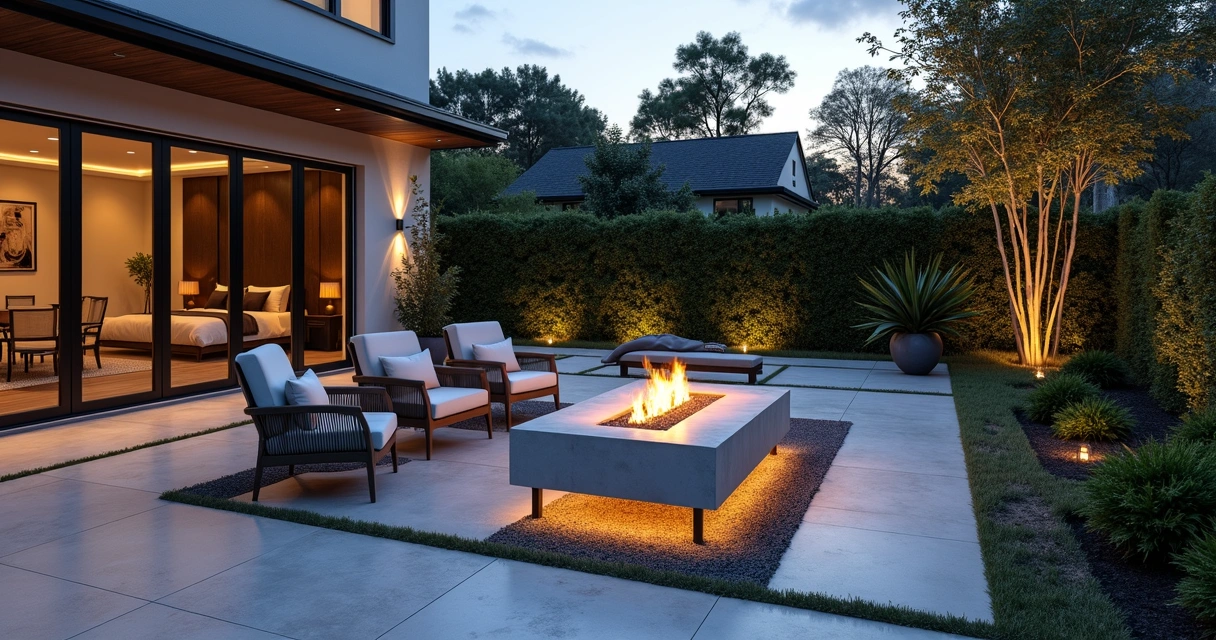
- Gas/propane fire pits & tables: Contemporary designs that ignite quickly and need no ash removal.
- Outdoor fireplaces: Masonry or pre-fab structures, can be wood-burning or gas, often with chimneys for smoke control.
- Chimineas and portable patio heaters: Small, usually clay or metal, used for ambiance and portability.
Each type may be subject to distinct legal and safety requirements, especially regarding location, construction, and permitted fuels.
“Not every beautiful fire is a legal fire.”
Florida statewide: What open burning does and doesn't allow
Before we talk city or HOA specifics, there are broad rules from the Florida Department of Environmental Protection that set the foundation. Florida permits recreational burning of clean wood and natural debris—like a backyard marshmallow roast—without special authorization, as long as it’s in a contained device and attended at all times.
- Burning treated wood, trash, plastic, or yard waste in fire pits is forbidden. Only clean wood or charcoal is allowed.
- Your fire must never be left unattended, and it must be fully out before you leave.
- If nearby homes or trees could be threatened by wind-driven embers, burning may be suspended during dry or windy conditions.
- Indoor burning, or burning under a roof without proper venting, is never allowed.
We always check daily local advisories and drought alerts, as city or county fire marshals may suspend burning temporarily during high risk.
City of Orlando & Central Florida: What the fire code requires
While Florida law sets a baseline, cities like Orlando and counties in Central Florida often layer stricter rules on top, especially for built-in fire features and commercial patio installations. As a licensed contractor here, we always reference the most recent City of Orlando fire permits and inspections guide when planning client projects.
Here’s how some of those rules tend to play out across most Central Florida municipalities:
- Permanent fire pits and fireplaces—built with stone, brick, or concrete—usually require a building permit and site plan review.
- Commercial properties (restaurants, bars, public spaces) must meet ADA, fire suppression, and egress requirements.
- Portable devices (like store-bought metal bowls) do not always require city permits, but they must still follow spacing, fuel, and usage restrictions.
- Any fire feature connected to gas lines must be installed by a licensed contractor, with shutoff valves and inspection as required.
- Clearances from property lines, structures, fences, and combustible surfaces are mandatory.
- Open flames are not permitted under covered patios or lanais unless the fire feature is UL-rated for indoor/outdoor use and professionally vented.
Each city or county has its own paperwork, so we manage the permitting process for clients to save time and confusion. That attention to detail keeps outdoor spaces both safe and legal.
How HOAs and communities shape fire pit possibilities
Central Florida is filled with communities—gated, deed-restricted, and HOA neighborhoods—each with its own flavor of rules. Based on our experience, these guidelines can be more restrictive than city or county code. Here’s what we’ve found when we handle patio projects:
- Some HOAs forbid wood-burning fire pits or open-flame features entirely. Others allow only gas/propane options with low-profile, non-intrusive designs.
- Appearance standards often apply – for example, fire features must match the home’s exterior or be screened from view.
- Distance from property lines, fences, and neighboring patios may be required beyond code minimums.
- Written HOA approval with design renderings and site plans is often a must before work can proceed.
We recommend checking HOA documents and getting written sign-off before buying or building. When you work with GCM Best Services, we handle applications and drawings, so your fire feature never triggers a compliance letter.
Permits and inspections: When are they required?
In our company, we’ve navigated fire feature permits across Orlando, Kissimmee, and beyond. The exact paperwork depends on three things:
- Is your feature permanent or portable?
- Is it wood-burning or gas-powered?
- Are you connecting gas utilities or constructing a chimney?
Permanent built-in fire pits, fireplaces, and gas lines always require a permit, site plan, and inspection. Most portable features do not unless hardwired fuel lines are involved.
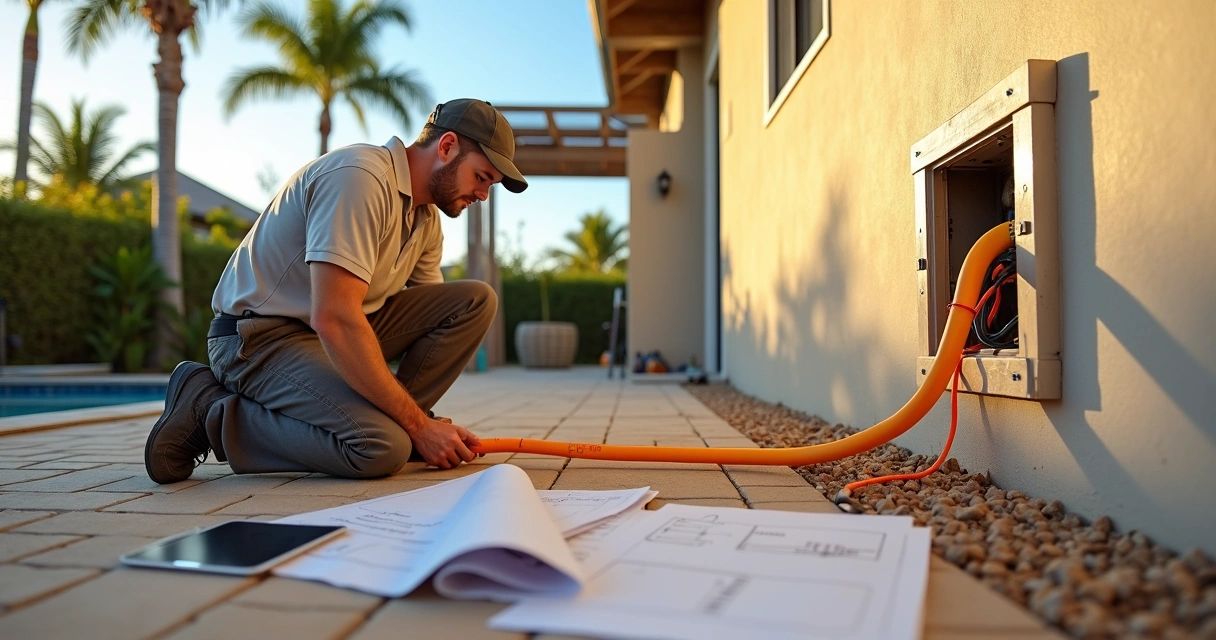
Plan review will check setbacks from boundaries and combustibles, verify non-combustible base construction, and review venting for covered spaces. Installations usually require re-inspection after placement and before the first use.
We handle these steps as part of our patio construction process. According to the City of Orlando’s fire permit guidelines, any construction involving fire alarms, suppression, or permanent fixtures needs a licensed contractor and approval before work starts.
This professional step is a core aspect of our services for patio hardscapes in Orlando and the rest of Central Florida.
Building the base: What construction methods meet code?
For a fire feature to be both legal and durable, its base, patio, and materials must meet local requirements. We build patios and fire features for Florida’s unique soils using:
- Compacted sub-base (6–8 inches) to avoid settling and cracking
- Rebar or steel mesh reinforcement in slabs
- High-strength 3,000–4,000 PSI concrete or masonry for fire pits and fireplace surrounds
- Proper drainage design to prevent ponding and erosion
- Compliance with hardscape standards like those outlined on our paver patio page
Pits, tables, or fireplaces should always be set on a non-combustible surface—concrete, pavers, or stone—not wood decks or artificial turf.
When working within pool enclosures or screen lanais, only certain fire features are compatible. All openings and venting must match code for smoke and heat dissipation. If in doubt, our process starts with a site visit to evaluate what’s possible, safe, and allowed.
Spacing rules: Where can fire features go?
Local fire code lays out simple but strict spacing guidelines. Based on public code, fire features must be:
- At least 10 feet from the home or any structure, often 15–20 feet to fences or property lines
- Directly on a non-combustible surface, such as concrete or pavers
- Clear of low trees, shrubs, and overhead eaves by at least 10 feet vertically
- Never under overhangs or roofs unless the product is UL-listed for that use and vented
Gas features can sometimes be closer to the home, as long as they’re certified and installed professionally. For HOA properties, we often see tighter rules. It’s always better to spend extra effort on placement than to risk a code violation or unsafe fire hazard.
Fuel types and what’s allowed in Central Florida
Choosing the right fuel source is both a design and compliance decision. Based on our experience and Florida DEP open burning rules:
- Clean, seasoned firewood and untreated lumber are permitted for most recreational burns outdoors, if contained and attended.
- Gas and propane fire features are preferred in dense developments and by HOAs due to cleaner operation and less smoke.
- Charcoal can be used in outdoor grills and specific fire bowls, provided all other codes are met.
- Treated wood, painted or stained lumber, trash, leaf piles, and yard waste must never be burned in any patio or outdoor setting.
Local ordinance may specify allowed fuels in drought or high-wind periods.
Special note: Fire features under enclosures, lanais, and pergolas
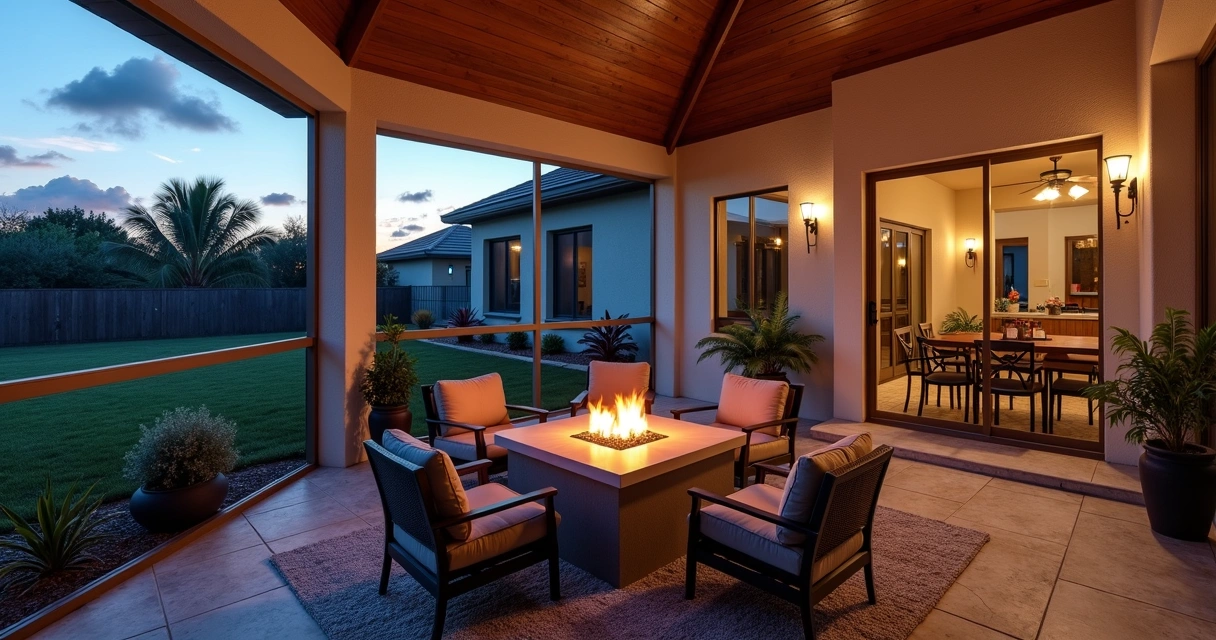
It’s tempting to put a cozy fire table inside your screened patio, especially in Central Florida’s bug season. However, codes are firm—open flames under a solid roof (even a screen enclosure or pergola) are only permitted if:
- The fire feature is specifically rated for indoor/outdoor use by an approved testing agency (check UL or ETL marks).
- There is professional-grade venting for all smoke and gases, or the flame is tightly controlled (like certain gas inserts).
- There is a fixed fire extinguisher inside, and egress paths are not blocked.
We’ve retrofitted lanais for gas fire tables that meet HOA and code, but only with strong attention to venting and spacing. Wood-burning features and chimineas should never go under a roof, porch, or screen room unless code specifically allows and all safeguards are met.
Long-life patios and legal fire features: GCM Best Services’ approach
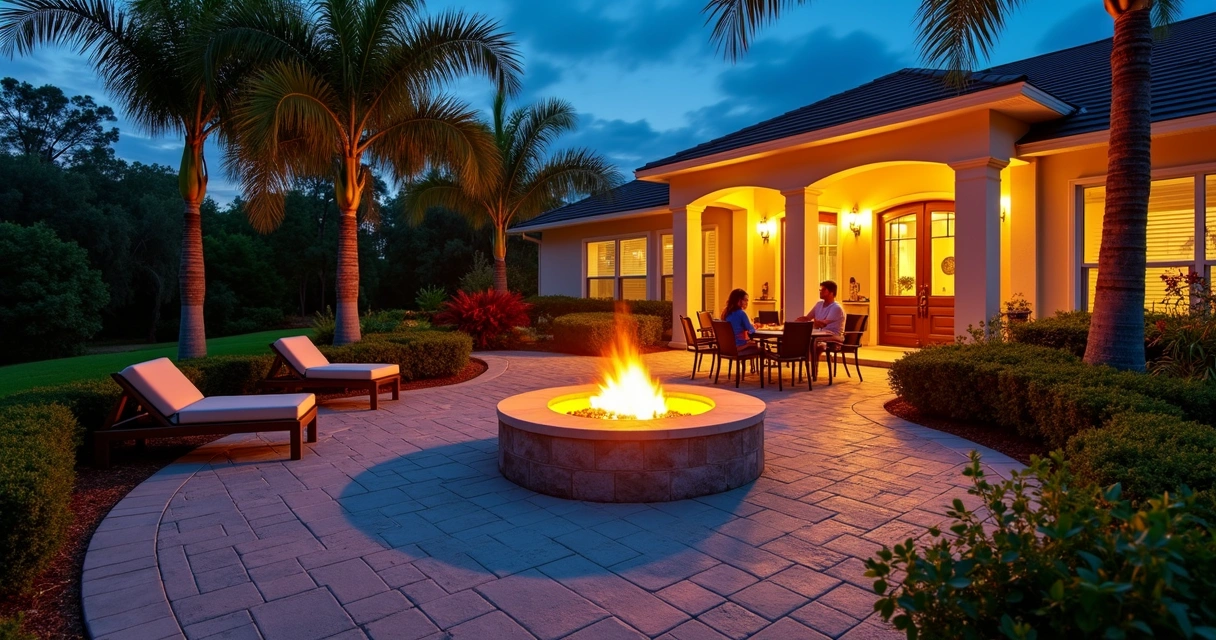
We believe every patio and fire feature should be safe, durable, and perfectly legal. That’s why, when you engage GCM Best Services for your project (whether it’s a small backyard or an expansive outdoor kitchen), you get:
- Free on-site assessment and code check for your city/county/HOA
- Stamped drawings and permit submission for permanent fire features
- Base construction with compaction, rebar, and drainage per Florida standards (see our patio paving services)
- Selection of certified fire features compatible with HOA and building code
- Professional gas line and shutoff installation (if required)
- Post-job inspection and written warranty, with all records supplied to you for peace of mind
Our teams take pictures throughout every phase. Clients receive a completed project packet with the details you need for HOA and insurance records. For ideas and case studies, you can browse our hardscaping portfolio.
Conclusion: The safest, smartest way to add fire to your patio
Fire features are one of the best ways to create warmth, beauty, and connection in any Central Florida patio—when done right, and within code.
From Orlando to Kissimmee, every city and HOA has its own spin on what you can build, where you can place it, and what fuel you can burn. We have seen how even a simple portable fire pit can lead to problems if it’s too close to the house, overhanging trees, or a neighbor’s fence.
Our process is simple. Start with an expert review, design to local code, build for longevity, and secure the necessary permits before starting work. That way, your fire feature never becomes a liability, and you get years of safe, worry-free enjoyment.
If you’re ready to add an inviting, code-compliant fire feature to your Central Florida property, we’d love to help you design and build a patio that stands out safely and beautifully. To get started, reach out for a professional quote from GCM Best Services today. We promise expert advice, transparent pricing, and complete code compliance from first spark to finished patio.
Ready for a professional quote? 📞 (407) 250-1948 • 24–48h • Orlando, Tampa & area.
Frequently asked questions
What fire pits are legal in Florida?
Legal fire pits in Florida include permanent or portable devices designed for recreational wood, charcoal, or gas burning, as long as they contain the fire, are attended at all times, and use approved fuel sources (never trash or treated wood). These must meet spacing requirements and may be restricted by local codes or HOA rules. Our experience shows that gas or propane fire features are the safest and simplest to approve in most communities.
Do I need a permit for a fire pit?
You will need a permit for any permanent, built-in fire pit or fireplace that is attached to gas, requires slab construction, or alters your patio layout—especially in cities like Orlando that require compliance with local building code. Portable, above-ground fire bowls and simple wood-burning rings do not always require permits but must still be used in accordance with local spacing and fuel rules. Always check with your city or HOA; when we manage projects, we handle all permitting for clients.
Can I use wood-burning fire features?
You can use wood-burning fire features in Florida for recreational purposes if they use clean, untreated wood, are in an approved burn device, and are placed safely from the home, overhangs, and combustibles. Permanent or large built-in wood fire pits may need permits, and some HOAs or city codes limit or prohibit wood-burning due to smoke or fire risk. Our advice: confirm with your local code and always follow state guidelines for open burning.
Are propane fire tables allowed on patios?
Yes, propane fire tables are usually allowed on patios across Central Florida—provided they are placed on a non-combustible surface, installed to manufacturer and code specifications, and not under an enclosed roof without proper venting. Propane and gas features are preferred for their cleanliness and simple control. Always use a certified unit, and if connecting to home gas lines or adding a permanent install, hire a licensed contractor and secure required approvals for inspection and code compliance.
How far must fire features be from homes?
Fire features must generally be at least 10 feet from any structure, including your home, fences, or overhangs, although best practice and some municipalities require 15–20 feet, especially for wood-burning pits. Gas and propane features rated for outdoor use may sometimes be placed closer, but all must be clear of eaves, trees, or other combustibles above and around the fire. HOA and local ordinances may require greater setbacks for safety—when in doubt, consult a professional for site evaluation before installation.