Paint overspray is an outdoor nuisance in Florida’s active construction and maintenance climate, but with advanced cleaning techniques, pristine surfaces are always within reach. In this article, we share what works, why it matters for lasting results, and how the GCM Best Services team approaches paint overspray cleaning for homes and businesses throughout Orlando and Central Florida.
We get calls from homeowners, property managers, and commercial sites every season. Sometimes it’s specks of acrylic on a driveway after a windy day painting a house. Sometimes it’s a fine mist on new pavers around the pool, or epoxy dots on the garage approach. In each case, removal isn’t just housekeeping. Untreated, those flecks can lead to stains, slip hazards, and uneven surface aging. The right cleaning approach protects your investment and keeps your outdoor areas inviting and safe.
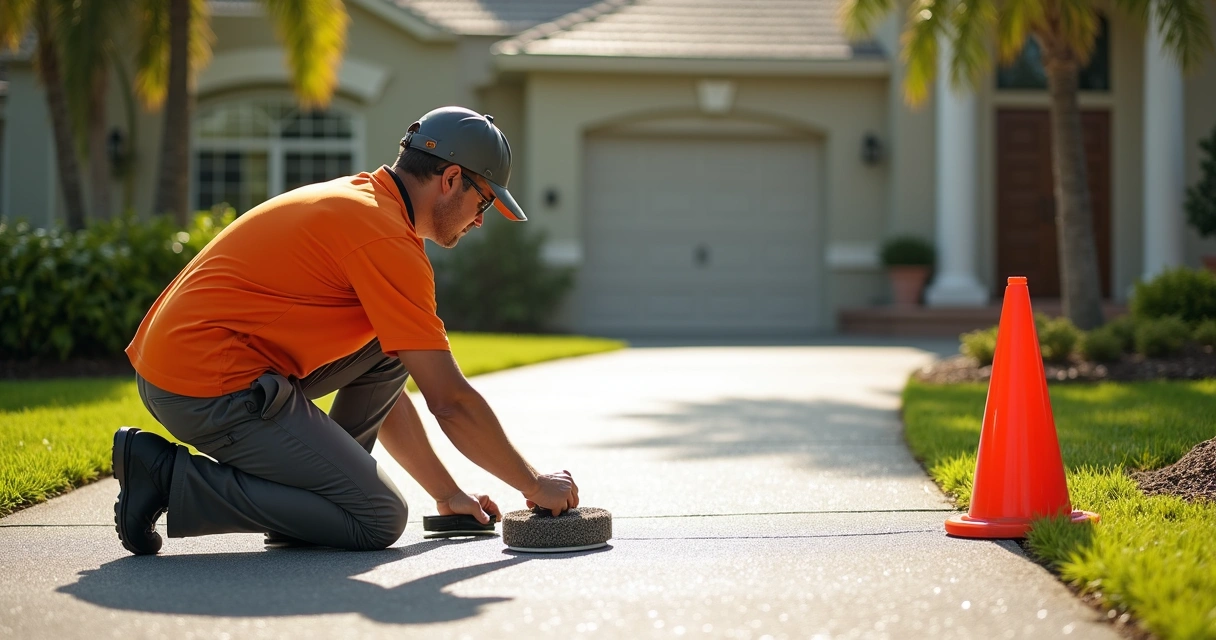
Understanding outdoor paint overspray
Before we start cleaning, we need to understand how paint overspray happens, how it behaves, and why outdoor cleanup in Florida sometimes requires more than a simple washdown.
How paint overspray ends up outside
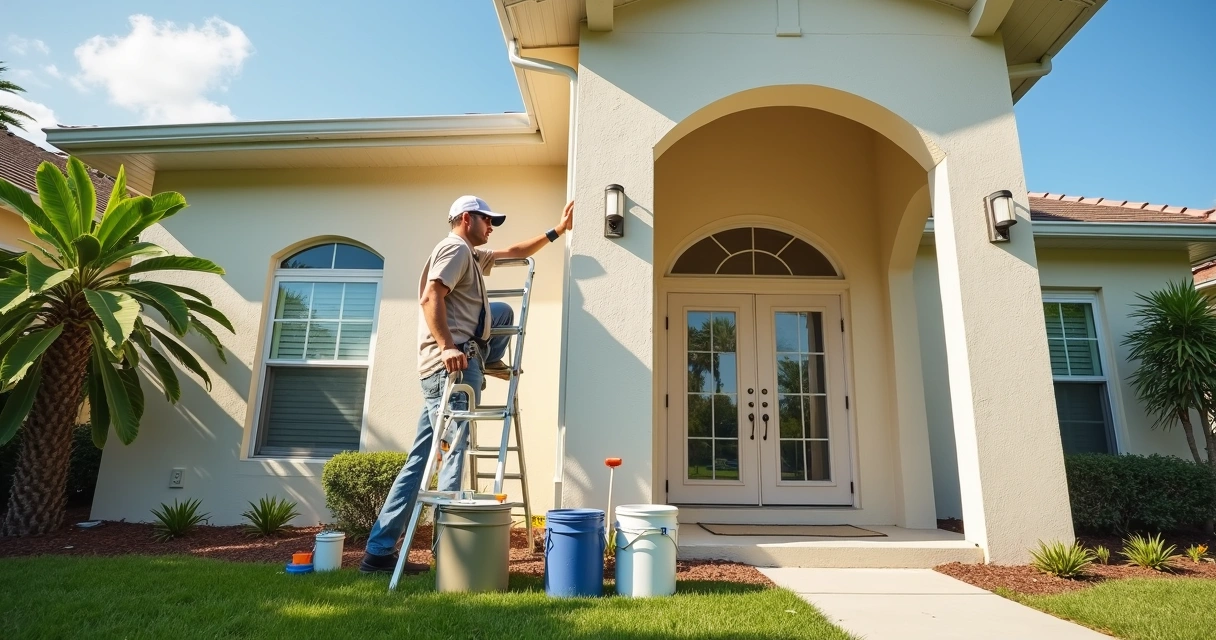
Overspray is any paint that doesn’t land on the intended target. Due to wind, atomization, or improper masking, paint can drift and settle—sometimes yards away from the main project. In Central Florida, variable winds and humidity levels make outdoor painting unpredictable.
According to NIOSH (CDC) guidance, using High Volume, Low Pressure (HVLP) spray guns can cut outdoor paint overspray concentrations by roughly 50% compared with standard spray guns. That’s a huge difference for professionals focused on both results and cleanup.
Why is quick removal important?
Once paint dries on outdoor surfaces, especially rough ones like concrete or textured pavers, it bonds more strongly. UV exposure in the Florida sun “bakes” residues, making them harder to remove. On porous surfaces, liquid paint can seep in and create shadow stains.
Unattended paint overspray can become a permanent blemish.
Quick action and the right methods are the only efficient way to restore outdoor surfaces after overspray incidents.
What surfaces are at risk?
Hardscapes like driveways, brushed sidewalks, patios, retaining walls, and pavers are top targets. But we also see paint drift onto artificial turf, fencing, screen enclosures, decking, and exterior stonework. Each surface demands a tailored strategy. Find deeper insight on protecting and repairing outdoor concrete here.
First steps after overspray: Assessment and planning
Effective overspray cleanup always starts with a clear-eyed assessment. Blindly reaching for harsh chemicals seldom leads to the best results.
Identify the paint type and age
- Water-based/acrylic/latex: Common in most home projects. Easier to remove if tackled quickly, but toughens as it cures under the sun.
- Oil-based/enamel/epoxy: Used for durability. More tenacious, often requiring solvents or mechanical action.
- Age: Fresh paint often lifts with milder cleaners. Dried, cured paint needs more aggressive, surface-safe techniques.
Surface considerations guide our cleaning approach
Porosity, texture, condition, and coatings (such as a concrete sealer or paver protector) all shape our cleaning plan. We want to remove the overspray while preserving the integrity, color, and finish of the underlying material.
Weather and timing
In our experience with Central Florida’s quick-drying heat, acting early in the morning or late in the afternoon—before sunbaked paint fully hardens—is often best.
We plan around rain forecasts too. Moisture can help soften paint, but in other cases can make removal much harder if it “washes” residue into porous surfaces.
Advanced cleaning methods for outdoor paint overspray
Not all overspray responds to a quick scrub. This section details the advanced tools, tactics, and chemistry we use at GCM Best Services to recover exterior surfaces—even when overspray has dried hard.
1. Targeted solvent cleaning for tough spots
For small patches of oil-based, epoxy, or cured latex overspray, we use specialty paint removers formulated for outdoor surfaces.
- Choose the right solvent: Solvents like mineral spirits or biodegradable paint removers must match both the paint type and the substrate. Always test in an inconspicuous area first to avoid surface etching or discoloration.
- Application tips: We apply solvent with a clean lint-free rag, allow a short dwell time (per manufacturer), then gently agitate with a soft-bristle brush. Finally, we rinse thoroughly to remove any residue or chemical traces.
- Sustainability matters: We never wash cleaning chemicals into storm drains or soil beds. Clemson University’s Home & Garden Information Center recommends proper containment and settling—see their three-bucket system for tips on reducing environmental impact.
2. Mechanical removal: From gentle to abrasive
Some surfaces shrug off solvents. For stubborn overspray, our crew uses controlled abrasive techniques.
- Plastic or nylon blades/scrapers:Effective on glass, metal, or sealed areas. Gentle enough to avoid scratching but able to lift paint particles.
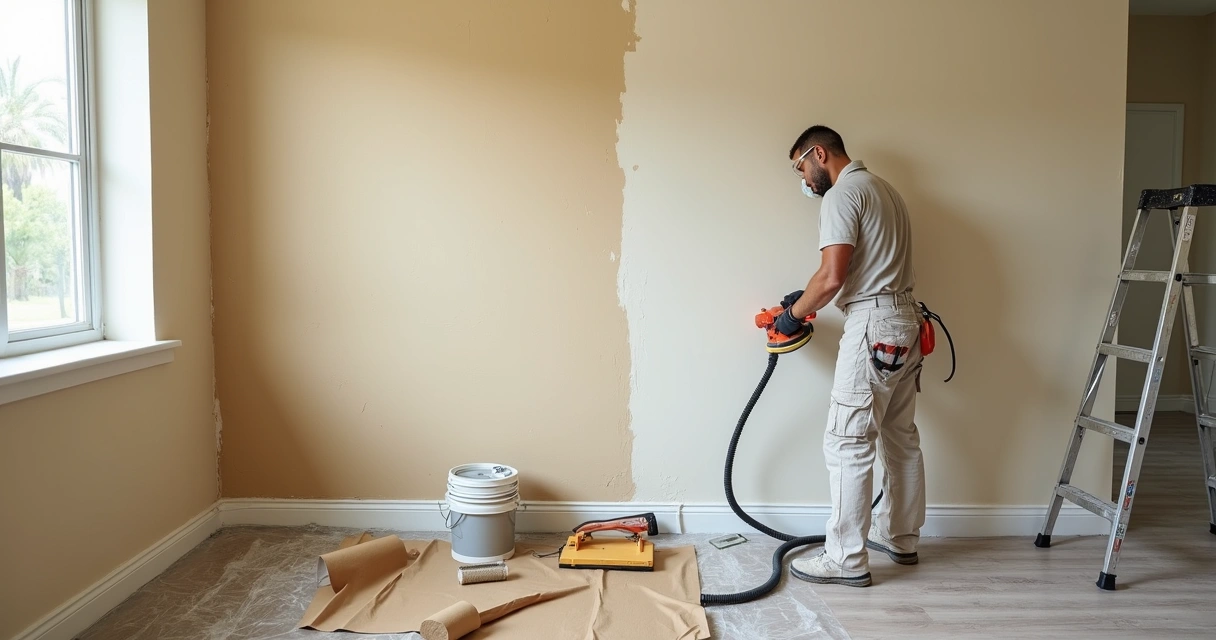
- Light sanding pads:On pavers and concrete (especially textured finishes), a light sanding block can remove paint flecks without marring the base surface. We always follow in the direction of the finish or broom marks.
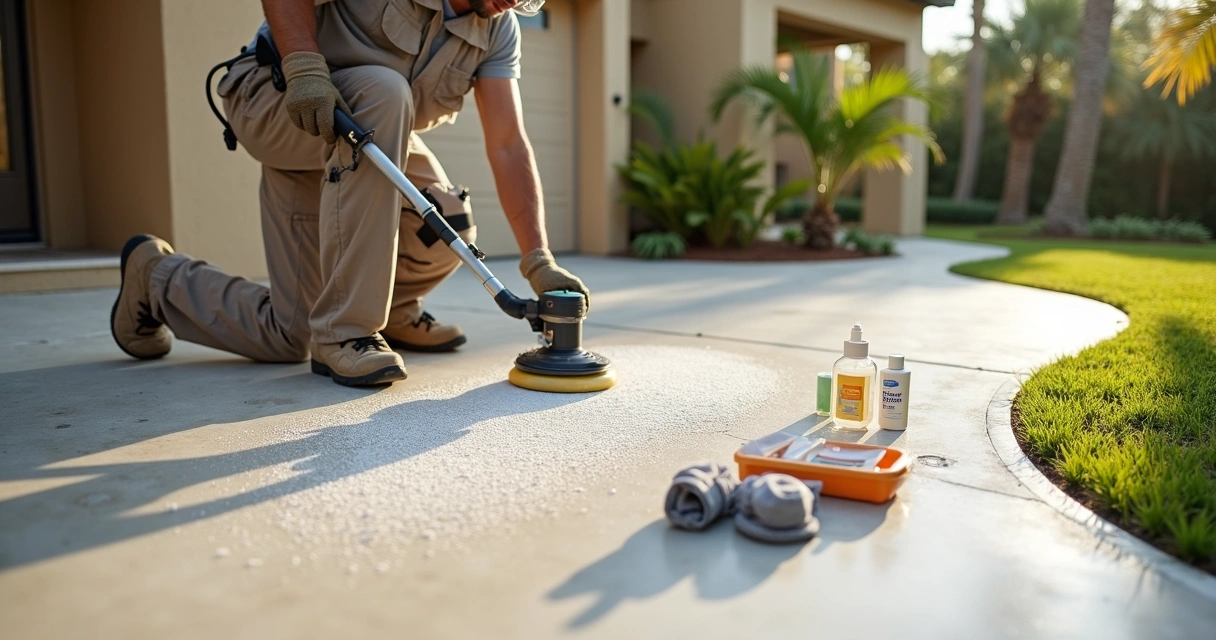
- Power scraping and rotary scrubbers:For large-scale overspray on flatwork, we sometimes employ rotary scrubbers with soft brushes and water feed. Never steel wool or wire brushes, which can scar surfaces.
The particle size of paint aerosols—the “overspray dust”—matters here. A study in the American Industrial Hygiene Association Journal found that paint overspray particles are often only 4 to 12 micrometers in diameter, which helps explain why they settle into every little nook but can be dislodged with the right fine abrasive techniques.
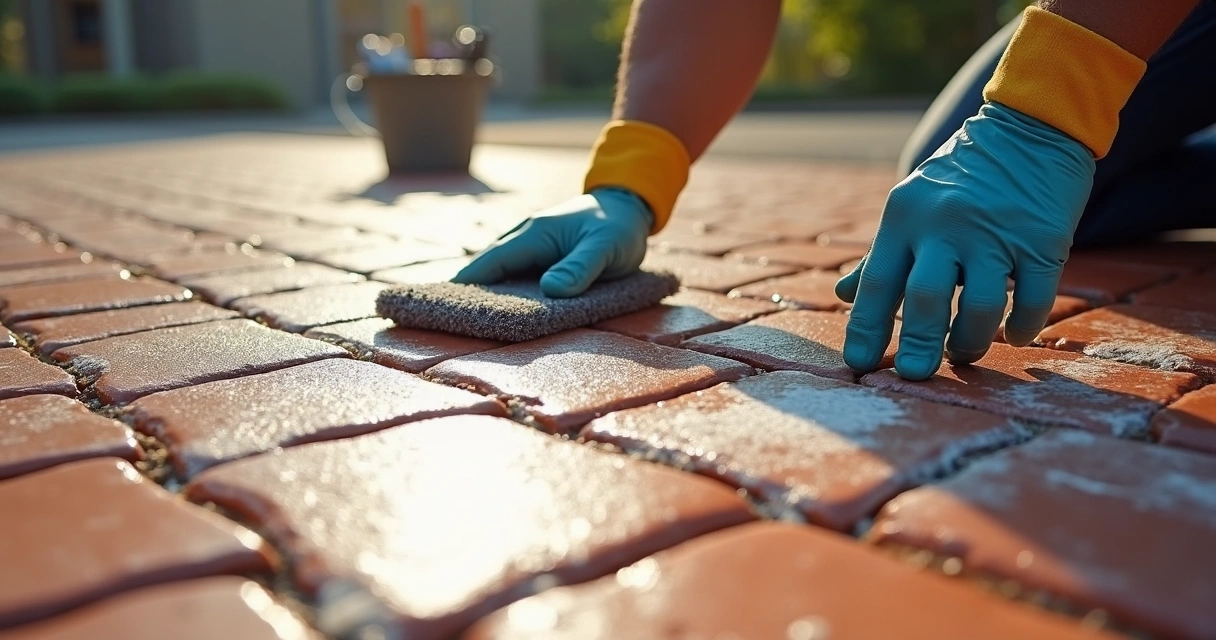
3. Pressure washing: When, how, and how much
For larger expanses of concrete, patios, or walks, pressure washing is often the fastest way to remove thin coats of overspray—but it must be done with care.
- Nozzle choice and PSI:We use a wide fan tip for general coverage, usually starting around 2000 PSI for outdoor slabs and pavers, and adjust pressure for softer surfaces or sensitive grout lines.
- Water temperature:Warm water can help lift latex and acrylic overspray more quickly. For oil-based or epoxy, pressure washing may need to follow an initial softening with the right solvent.
- Spray angle and technique:We always keep the nozzle moving, working in parallel, overlapping sweeps to avoid “striping” or surface gouging. Always at a shallow angle; never direct, perpendicular blasting.
On sealed or decorative surfaces, we often combine low-pressure washing with specialty outdoor detergents to help “float” the paint residue, gently.
4. Environmentally responsible rinsing and capture
Every cleaning step matters—but so does what happens after. We never want paint particles, residue, or rinse water to make their way into local watersheds or stormwater systems.
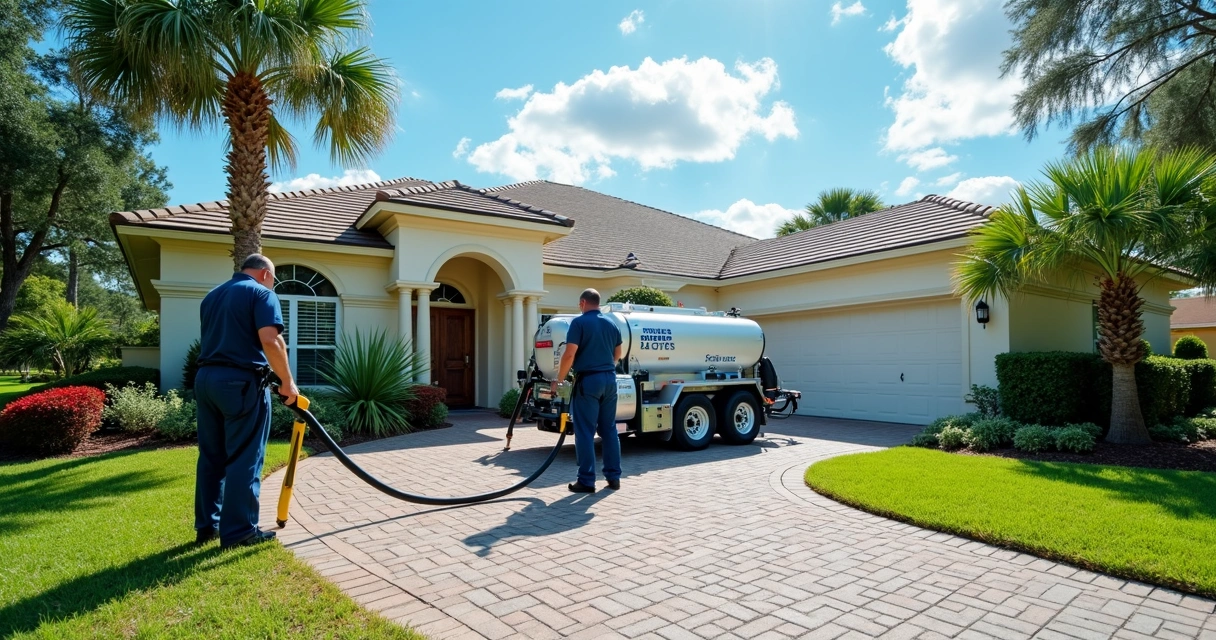
Our team sets up temporary dams, berms, or drain covers to contain runoff. We often use wet/dry vacuums to capture spent water and filter out particles before safe disposal. This not only meets Central Florida code but protects your property’s landscaping and the broader environment.
Special strategies for specific surfaces
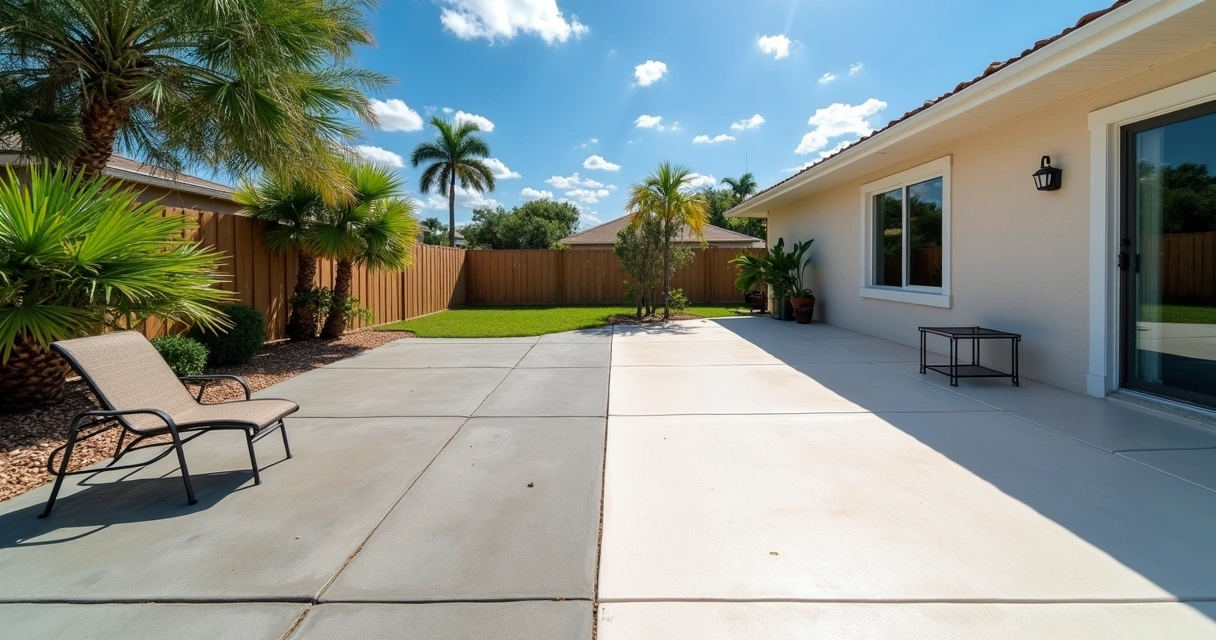
Concrete driveways and slabs
Unsealed concrete is quite porous. Dried paint can “ghost” even after aggressive washing.
- For most driveway overspray, we start with a targeted cleaner, then step up to light-power scrubbing and pressure washing as needed.
- On colored or patterned concrete (like stamped designs), we add a test patch and use angle-specific abrasive pads to avoid fading colors or marring the pattern.
- If a shadow stain persists, we use a dilution of oxalic acid or professional degreaser, always neutralizing and rinsing completely after.
We always provide a maintenance guide and, as recommended in our concrete contractor’s guide, suggest sealing the area after cleaning to resist future staining.
Pavers, pool decks, and walkways
Paver surfaces present the added challenge of joint sand and edge restraints. If overspray bonds to polymeric sand or seeps along edges, it can create both a visual and structural issue.
- We prioritize gentle chemical softening and targeted mechanical removal to lift paint without disturbing sand or shifting pavers.
- Re-sanding and sealing may be needed if joints erode during cleaning—this is always included in our estimates.
- For spaces where drainage is a concern, our techniques complement the advice outlined in our drainage solutions for Florida pavers resource.
Questions about weeds growing after cleaning? Our paver weed prevention guide dives deeper.
Artificial turf and landscaping features
Paint drift on artificial grass, edging, and nearby mulch beds introduces a new wrinkle. Standard pressure washing can damage infill or lift seams. Instead:
- We blot fresh paint with absorbent cloths. For dried paint, we gently scrape and soften residue with diluted soap and water, avoiding harsh solvents that degrade turf fibers.
- Quartering off affected areas ensures no cleaned paint debris contaminates clean turf.
- If overspray is extensive, replacing a section of the turf may be more cost-effective than repeated cleaning attempts.
Screen enclosures, fencing, and exteriors
Fine paint mist on pool cages or fences can be tedious to fix. Soft-bristle brushes, mild cleaners, and a light touch win the day. For screen mesh, chemical exposure should be limited—gentle soap or a specialty mesh cleaner usually suffice.
On powder-coated or painted metal enclosures, we never use abrasives that might void the protective finish or impact wind-load compliance, which is always top-of-mind for hurricane-ready installs as specified by GCM Best Services.
Pro tips to prevent paint overspray in the first place
While this article’s about cleanup, we know the value of prevention. At GCM Best Services, our teams always:
- Use HVLP spray technology or the lowest pressure/atomization setting practical—as supported by both CDC/NIOSH guidance and direct shop studies on paint transfer efficiency.
- Carefully mask, tarp, and temporarily shield vulnerable surfaces (such as drives, pavers, screens, turf, and doors) before any spray painting or coating begins. We even dampen concrete before spraying nearby verticals; a slightly wet surface helps prevent particles from sticking as quickly.
- Work when wind is calm, humidity is low, and sun isn’t pounding down.
- Plan for the “cleanup zone”—so if a mishap happens, we can act instantly.
After the cleanup: Inspection, protection, and aftercare
Once the paint is gone, it’s about making sure your outdoor surfaces look their best for years.
- We always walk the site with the client to check for any remaining “ghosting” or tacky patches.
- If any joint sand or sealer was removed, we replace or refresh it as needed.
- We often recommend adding a professional-grade sealer or finish to keep surfaces cleaner longer and resist future accidental staining.
- For frequent paint projects at your site, we advise a maintenance strategy—including early morning site checks, better masking, or temporary barriers.
At GCM Best Services, every overspray cleanup comes with photos, a written warranty, and our team’s guidance on staying ahead of future problems.
Why professional help makes a difference
Many outdoor overspray issues can be handled with the right know-how and tools, especially if caught early. For widespread, stubborn, or delicate surfaces, calling in experienced pros like GCM Best Services makes the process safer, quicker, and less likely to worsen the problem.
Our process includes all permitting, neighbor or HOA notifications if needed, and full compliance with environmental regulations unique to Central Florida.
Many clients are surprised how much time and future hassle a skilled crew can save them—especially when repairs, re-sanding, or re-coating are needed as part of the restoration.
We always start with a no-obligation site assessment and show you before-and-after photos, with all costs and methods detailed upfront—so there are never any surprises along the way.
Conclusion
Outdoor paint overspray is a challenge faced by countless property owners in Orlando and throughout Central Florida. From sunbaked driveways to patterned pavers and everything in between, cleanup demands both advanced skill and genuine care for your surfaces and the environment.
With careful assessment, the right cleaning combination, and a systematic approach, we can restore outdoor areas with minimal hassle and long-term success. Whether you’ve just noticed a few stray paint flecks or you’re facing a major cleanup, don’t wait until stains set in. If you’re ready to see what GCM Best Services can do to protect your property—with skill, experience, and a written warranty—contact us today for a friendly, professional assessment and quote.
Ready for a professional quote? 📞 (407) 250-1948 • 24–48h • Orlando, Tampa & area.
Frequently asked questions about cleaning outdoor paint overspray
What is paint overspray cleanup?
Paint overspray cleanup refers to the process of removing unwanted paint particles or droplets that have settled on surfaces outside the intended project area. This cleanup is required when paint mist from spray equipment, wind, or poor masking lands on driveways, pavers, turf, fences, or other outdoor features. The goal is to restore affected surfaces without causing damage or leaving stains.
How to remove overspray from concrete?
To remove paint overspray from concrete, start with a gentle method—scrubbing with warm, soapy water and a stiff nylon brush if the paint is fresh. For dried overspray, use a paint remover approved for concrete, allow it to dwell for a few minutes, and then scrub or lightly scrape. Pressure washing with proper PSI and a wide-angle nozzle is often effective on larger areas. Finish by rinsing thoroughly and capturing runoff to avoid environmental impact. For patterned or decorative concrete, always test in an inconspicuous area.
What are the best cleaning agents?
The best cleaning agents depend on the type of paint and the surface. For water-based (latex/acrylic) paints, warm soapy water or a mild degreaser works if tackled quickly. For oil-based or epoxy paints, choose a suitable solvent such as mineral spirits or a biodegradable paint remover labeled for outdoor use. On delicate surfaces, use gentle cleaners specifically formulated for the material—never harsh chemicals that might etch, bleach, or weaken finishes.
Is it safe to use pressure washers?
Yes, pressure washers are safe for paint overspray removal when used correctly. Always select the lowest effective PSI, use a wide spray pattern, and keep the nozzle moving to prevent etching or gouging the surface. Avoid direct, close-range blasting. For sealed, colored, or decorative surfaces, test first. Pressure washing is often combined with detergents for the best results, especially on broad concrete slabs or paved outdoor areas.
How much does professional removal cost?
The cost of professional paint overspray removal in Central Florida varies by surface, paint type, and extent of coverage. Small spots or a single driveway might range from $150–$400, while large-scale cleanup across multiple outdoor areas, pavers, or features can be higher. The price typically includes all cleaning agents, labor, environmental safeguards, and any needed restoration (like re-sanding paver joints or resealing concrete). At GCM Best Services, we always provide a free assessment and a fixed, written quote before starting work.