Primary keyword: brackets and fasteners for salt-prone areas
Variants: corrosion-resistant fasteners, marine-grade brackets, rust-proof fixings, salt air hardware
Audience: Property owners, contractors, and facility managers concerned about rust, failures, or expensive repairs on outdoor and coastal structures in salt-exposed environments.
Pain/Benefit: Unchecked corrosion quickly destroys standard hardware near coasts, but the right choices can keep your projects beautiful, safe, and repair-free for years.
Choosing brackets and fasteners in salt-prone areas is a technical decision that affects every outdoor project’s longevity. In this guide, we look at how GCM Best Services approaches hardware specification for the harsh realities of Central Florida's weather—where ocean breezes, summer storms, and high humidity add extra challenges to any exterior structure. From materials, finishes, and standards, to installation and long-term care, we’ll break down what really matters for rust-proof, compliant, and hassle-free results.
We include advice for concrete, screen enclosures, pavers, drainage, and artificial turf border hardware—so you get the longest life and fewest problems from your investment. If your property is anywhere close to a coastal breeze, learn how we help you choose hardware you can rely on.
Outline
- Why salt-prone areas require special attention
- How salt triggers corrosion and hardware failure
- The most reliable materials for brackets and fasteners
- Plating, coatings, and treatments that hold up in coastal zones
- Choosing brackets and fasteners for concrete, pavers, screen enclosures, and more
- Understanding building codes and warranty impacts
- Smart installation practices for salt zones
- Routine care and inspection tips
- Cost, sourcing, and avoiding false economies
- Conclusion: Reliable hardware choices protect your investment
- Frequently asked questions
Why salt-prone areas require special attention
Florida’s climate brings sun, humidity, rainfall, and for much of the state—including Orlando—occasional gusts of salt air swept inland from both coasts. Even being 40 miles from the ocean doesn’t guarantee protection.
At GCM Best Services, we have seen first-hand how quickly standard steel hardware shows surface rust, or worse, suffers deep pitting and loss of strength—sometimes within a single season.
Salt spray doesn’t just affect beach houses. Wind and storms spread it far inland.
Salt, humidity, and relentless UV combine to attack fastener metal, welds, and finishes. This is why code, warranty, and experienced pros call for a higher standard for exterior connector hardware, especially for:
- Pool cages and screen rooms
- Decks, patios, and fences
- Driveways, paver borders, and hardscapes
- Outdoor kitchens, pergolas, and shade structures
- Concrete and CMU (block) anchoring
- Artificial turf edging and sub-base retention
Ignoring these factors can lead to staining, early repairs, stuck fasteners, and even dangerous failures—or insurance and HOA conflicts later.
How salt triggers corrosion and hardware failure
Corrosion isn’t just a surface “ugly issue.” We’ve responded to projects where improper hardware had to be chopped out, stains sandblasted, or large sections replaced.
Salt air accelerates electrochemical reactions between metal and moisture, breaking down even ‘galvanized’ or ‘zinc’ hardware if not specified for marine or salt-exposed zones.
- Salt acts as an electrolyte, boosting the flow of ions—meaning rust and pitting kick in faster.
- Once a protective layer is breached (by a scratch or tool nick), rust advances rapidly.
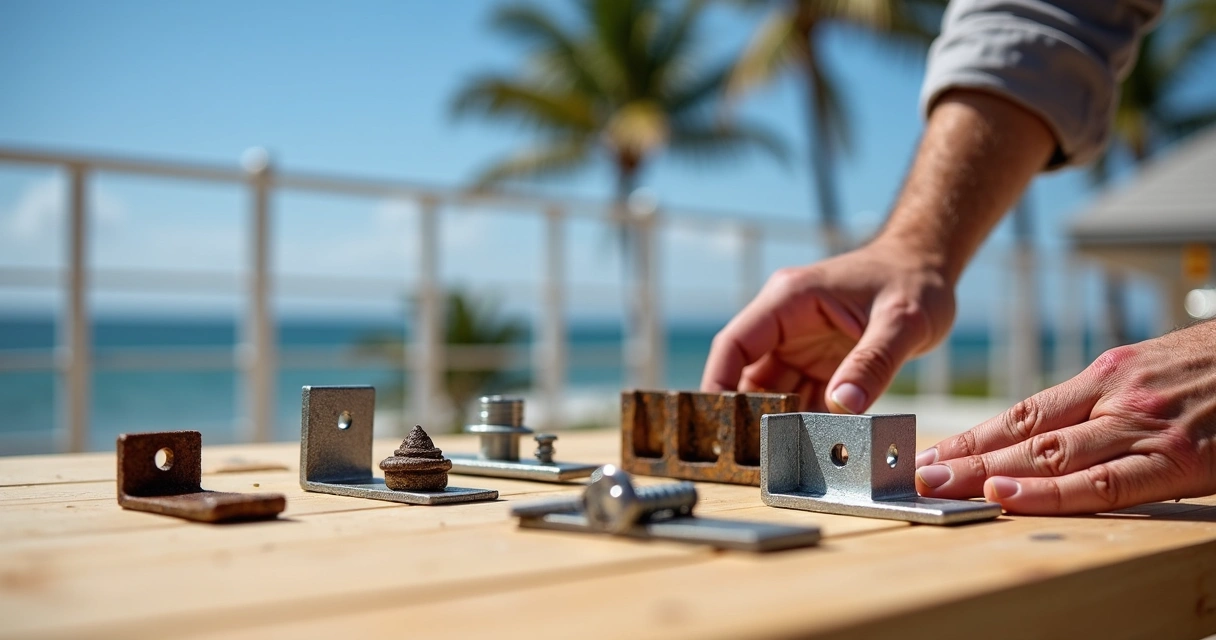
- Pitting and crevice corrosion eat away at the bottom of screws, bolts, or brackets where water and salt collect—often unseen until it’s too late.
- Run-off can leave orange streaks on concrete, pavers, and aluminum frames, driving up cleaning and maintenance costs.
- Over time, corroded hardware loses strength, can fail under load, and may void insurance or code compliance.
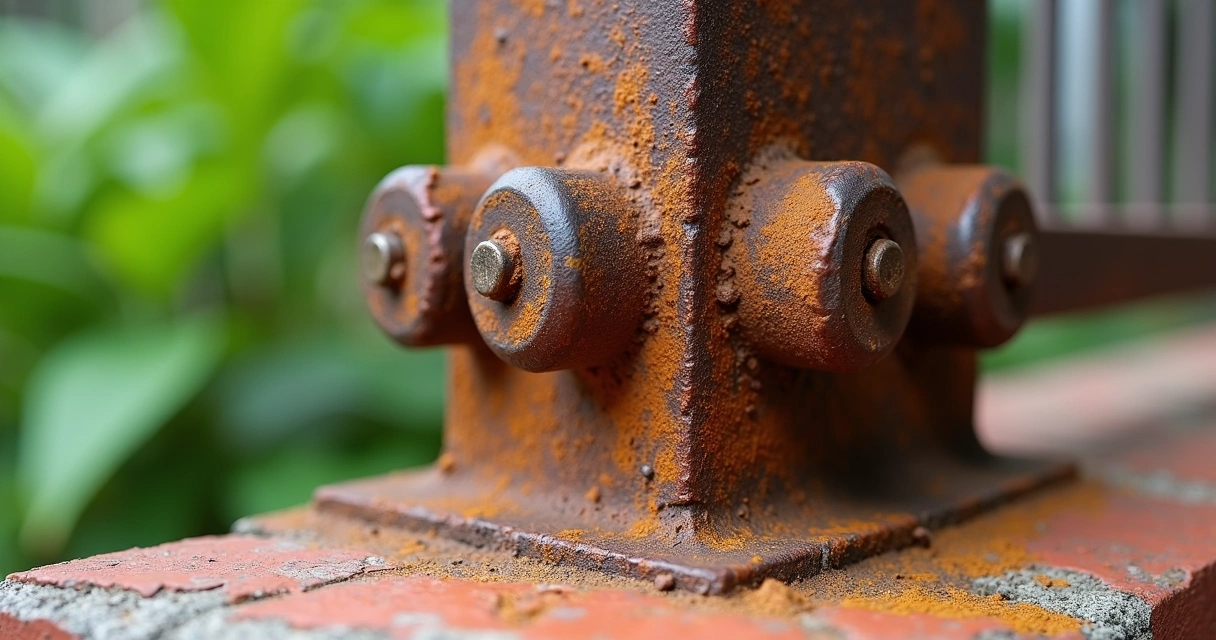
So, knowing why corrosion hits so fiercely in salt-prone areas helps us set the right standard for every bracket and fastener on your project.
The most reliable materials for brackets and fasteners
The heart of choosing the right hardware is selecting materials with proven resistance to salt corrosion. In our experience, material quality is the best long-term investment:
- Stainless Steel (Type 316, A4): The gold standard for salt air. Type 316 stainless contains added molybdenum, making it highly resistant to pitting and crevice corrosion—for true “marine” environments. Used for pool cages, screen frames, anchors, and high-value decks.
- Hot-Dip Galvanized (HDG) Steel: Steel dipped in molten zinc forms a much thicker protective layer than “electro-galvanized.” Meets ASTM A153/A123 standards. Well suited for inland Florida but not as durable as stainless right at the coast or around chlorinated pool fumes.
- Aluminum Alloys: Lightweight, corrosion-resistant, and often used for screen enclosures, but aluminum fasteners can gall or react adversely with steel. We only specify aluminum brackets and screws when allowed by code and when they’re isolated from dissimilar metals.
- Polymer, Nylon, and Composite Anchors: These sometimes serve for retaining turf edging or lightweight fixtures when UV-stable. They avoid rust but come with load and code limits.
Choosing among these calls for balancing cost, mechanical strength, code, and location. Hardware that fails in five years vs. twenty is a difference you’ll notice in repair bills—and property value.
Plating, coatings, and treatments that hold up in coastal zones
Finish treatments are the next defense. A “zinc-plated” screw or bracket from a hardware aisle may look right, but the thin coating can’t withstand Florida’s salt-driven weather.
- Hot-dip galvanized: As mentioned, these provide a thick, uneven “armor” of zinc. This self-heals small scratches, but aggressive salt spray eventually breaks down the protection. Thicker is better—look for references to “G185” or “Class C” on masonry ties or hangers.
- Polymer/polyester or epoxy coatings: Some specialty fasteners combine a thick metal plating with a colored top coat. These last longer than zinc alone, but not as long as marine-grade stainless. Watch for white “filming,” which signals under-coating corrosion.
- Stainless steel passivation: A surface treatment that removes iron and other contaminants after manufacturing, leaving a more inert layer with reduced corrosion risk. True marine hardware is always passivated.
Not all stainless or galvanized hardware is equally resistant. The right standard matters.
We always check that coatings meet strict ASTM, ISO, or manufacturers’ salt-spray testing protocols before using them in projects like screen enclosures or drainage solutions. For more insight into hardscaping and coastal durability, you can check our advice on hardscaping in Central Florida.
Choosing brackets and fasteners for different outdoor installations
Salt exposure affects nearly every outdoor system, from concrete forms to paver edges and screen enclosure joinery. Selecting the right hardware for each requires us to think across all GCM Best Services’ service areas.
For concrete: slabs, footers, and anchoring
For structural concrete (like driveways, patios, or slabs), the peace of mind comes from:
- 316 stainless or HDG anchors/bolts for all connections exposed to air, splash, or run-off.
- HDG rebar and mesh where above-ground, but rebar encased deep within cured concrete is protected from direct salt air.
- Plastic or composite spacer systems for rebar isolation, when appropriate.
We often discuss reducing patio cracks and connection issues by not only choosing the right concrete mix but also the right anchors. For more on concrete durability, we share tips in our detailed concrete guide.
For screen enclosures and pool cages
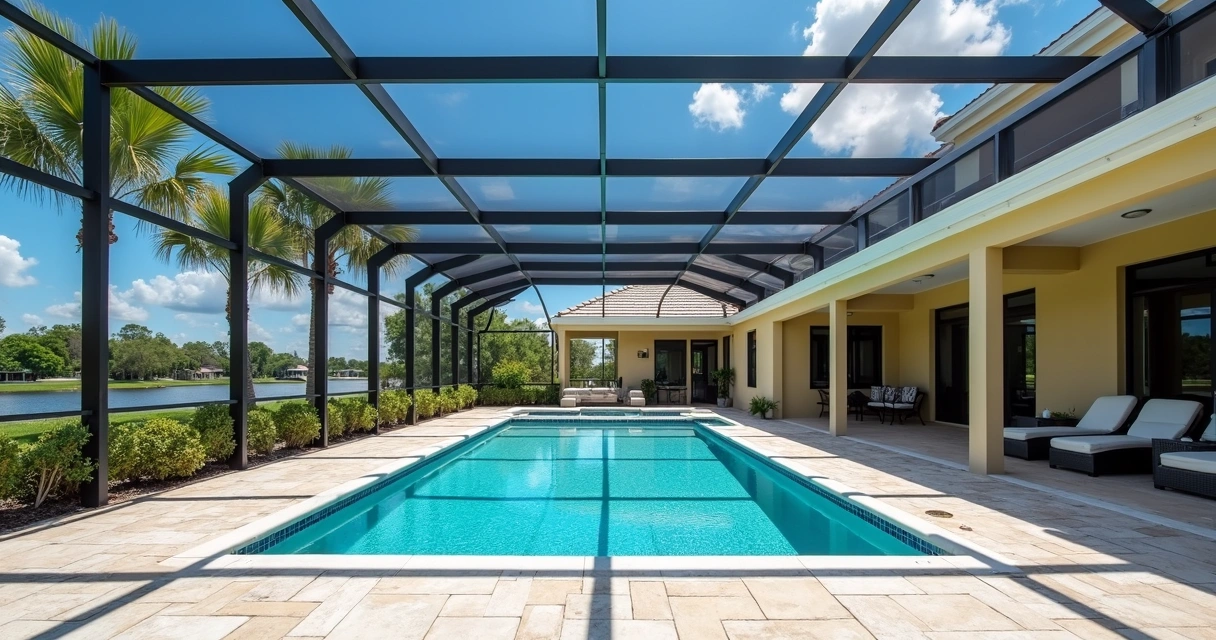
This is where the code and real-world exposure are harshest. For pool cages and lanais:
- 316 stainless screws, bolts, and brackets for all exposed connections—especially at the base plate and roof tie-downs.
- Aluminum frames require stainless or coated hardware—in aluminum-specific designs. We avoid contact between aluminum and other metals to prevent galvanic corrosion.
- Heavy-duty hurricane clips and brackets generally called for by modern wind load codes.
These upgrades not only protect safety and aesthetics but also keep you in line with local building regulations.
For paver driveways and walkways
In salt-prone regions, it’s not just the concrete or brick pavers that matter—it’s the edge restraints and the spikes or screws that hold them.
- Polymer or HDG landscape spikes for hidden restraint systems.
- Stainless screws for any lighting, fixtures, or visible brackets in paver borders.
- Polymer sand to limit weed growth and minimize water penetration—see more in our tips for paver maintenance.
Care also extends to drainage hardware, visible grates, and fasteners exposed to heavy water flow. Our advice at this drainage guide helps explain these connections.
For artificial turf and border systems
When building outdoor living spaces with artificial turf, paver joints, or raised beds, we recommend:
- Stainless or HDG spikes to secure edge restraints and keep turf stable, especially where they’re frequently watered or near pool splash zones.
- Composite or reinforced polymer fixings for low-load edging—when direct sun exposure is not severe.
For summer kitchens and utility frames
Exterior kitchens and utility walls often need gas, water, or electrical fixtures anchored securely. Stainless anchors and corrosion-resistant brackets help keep utilities safe and make any future upgrades or repairs less invasive.
Understanding building codes and warranty impacts
Code in Florida’s coastal and flood-prone areas is explicit: exposed exterior connectors (hangers, bolts, straps, and fasteners) must be rated for high-corrosion zones—sometimes called “exposure C” or “marine grade.”
- Screen enclosures must use code-approved hurricane brackets and tie-downs with certified corrosion ratings.
- Roof and deck framing hardware usually requires HDG or 316 stainless.
- HOAs often specify treatments or brands that are pre-approved for community standards and aesthetics.
Specifying the right hardware isn’t just about strength—local code and insurance depend on it.
We see many do-it-yourself installations that miss this step, only for pain to show up at the first home sale or property assessment. Using code-aligned hardware is one way GCM Best Services protects both project value and peace of mind.
Smart installation practices for salt zones
Even the right bracket or fastener will fail early if not properly installed. Our job sites and aftercare always include these best practices:
- Handle stainless hardware with clean gloves—iron particles from tools can contaminate the surface and promote rusting (“tea staining”).
- Use code-specific drivers, not rounded or mismatched tools, to avoid scraping off protective coatings.
- Tighten anchors and brackets to correct torque, never over-driving, which can crack finishes.
- Seal penetration points (concrete, stucco, siding) to keep water and salt out of the hardware pocket.
- For multiple metal types, use isolator washers or sleeves to prevent galvanic reactions.
Installation is where good hardware can be compromised—or where your project’s future is protected.
Clean-up after installation also matters. We always remove drill shavings, old fasteners, and any debris that might accelerate corrosion.
Routine care and inspection tips
High-grade hardware still needs routine inspection—especially after storm seasons or heavy use. Here’s what we recommend to clients:
- Check all exposed screws, anchors, and brackets each season for “tea staining,” roughness, or flaking finishes.
- Look for rust trails on concrete or pavers as early signs of hidden corrosion.
- Use gentle, non-acidic cleaners to remove salt film on hardware.
- Apply manufacturer-approved preservation sprays when needed, especially in direct spray or ponding zones.
- Take photos for warranty records and service planning.
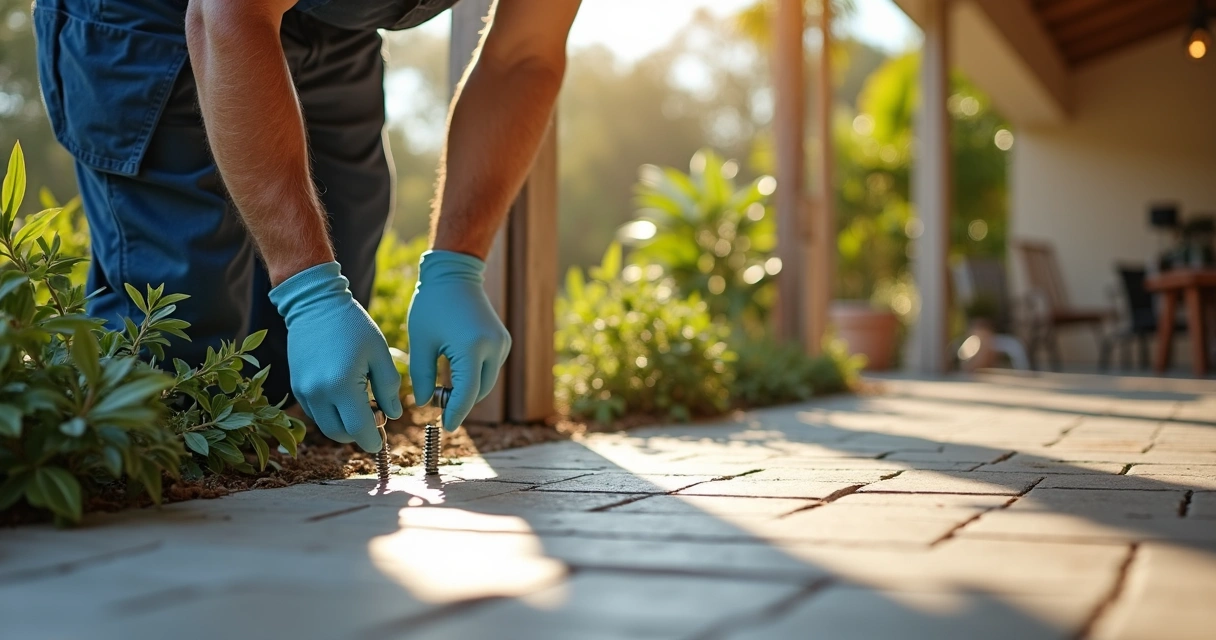
Letting hardware go unchecked can turn a quick fix into a major project, and often endangers property safety. Early signs are worth a professional look—and we’re always happy to quote repairs or upgrades.
Cost, sourcing, and avoiding false economies
Many clients ask, “Doesn’t stainless cost three times as much per screw?” And yes—at checkout, it usually does. But the real cost is what happens five years later.
- Replacing a paver edge or patio enclosure from hidden rust costs much more than original hardware savings.
- Every fastener that resists shearing or breaking in storms is a protection to your family and investment.
- Code-approved, warranty-backed fasteners are required for insurance and appraisals, not optional upgrades.
We buy hardware from suppliers who document batch testing, provide spec sheets, and back ratings with warranties. And where a hardware upgrade brings long-term savings, we show the options and let you make the call.
With GCM Best Services, our focus is always honest advice—matched to the reality of Florida’s climate and your project goals.
Conclusion: Reliable hardware choices protect your investment
Choosing brackets and fasteners in salt-prone areas is part science, part experience, and always worth a thoughtful decision. We see the difference every day: strong, clean, compliant hardware keeps properties beautiful, makes pools, patios, and screens easier to maintain, and helps avoid hidden repair costs or headaches down the road.
The best fittings are matched to their materials, properly coated, correctly installed, and aligned with local building regulations. At GCM Best Services, these details matter—because we see our work in the field, not just on paper.
Are you thinking about a driveway, screen enclosure, patio, or turf project anywhere in Central Florida? Our team is ready to help you design and specify every bracket and fastener for the future, not just the install day.
Start with hardware you can trust—enjoy lasting value and peace of mind.
Ready for a professional quote? 📞 (407) 250-1948 • 24–48h • Orlando, Tampa & area.
Frequently asked questions
What are corrosion-resistant brackets?
Corrosion-resistant brackets are fasteners and connectors designed with materials and finishes that withstand rust and pitting even when exposed to moisture and salt air, especially in coastal or humid environments. These brackets are generally made from 316 stainless steel, hot-dip galvanized steel, or powder-coated aluminum with additional corrosion-resistant treatments. They retain their strength and appearance far longer than basic zinc-plated ones.
How to prevent rust in salty areas?
The best way to prevent rust in salty areas is to select brackets and fasteners made from marine-grade stainless steel, hot-dip galvanized steel, or with approved protective coatings. Proper installation, seasonal cleaning to remove salt film, and routine inspections also go a long way to limit rust. Sealing fastener penetrations and avoiding scratches during install prevent “starter spots” for corrosion. At GCM Best Services, we always match hardware and care routines to your specific exposure.
What materials work best near the sea?
316 stainless steel is the most reliable all-around choice for hardware near the sea due to its high tolerance for chloride attacks found in salt air and water. For less exposed but still humid or salty areas, hot-dip galvanized steel is suitable. For certain applications, high-grade aluminum, composite, or polymer hardware may also be used if local code approves. Each material choice should be confirmed as “marine-grade” or rated for high-corrosion environments.
How often should I replace fasteners?
Most quality marine-grade fasteners can last ten years or more in salt-prone areas, but inspection every 1-2 years is wise—especially after major storms or heavy use. Surface rust, serious pitting, or loose hardware are signs it’s time to replace. For lower grade (non-stainless) hardware, replacement may be needed every five years or sooner.
Where to buy marine-grade fasteners?
Marine-grade fasteners can be found at specialized suppliers, contractors, or building supply stores that stock products rated for high-corrosion environments. At GCM Best Services, we source all hardware through vetted, warranty-backed suppliers whose products meet Florida building codes and manufacturer specifications. We are also always happy to help our clients source or specify fasteners to match their project needs and warranty requirements.