Thermal expansion in concrete can surprise even longtime driveway owners. Many in Central Florida first notice it as gaps, cracks, or unexpected bumps during the hottest summer months. At GCM Best Services, we see how the local climate pushes materials like concrete, pavers, and even joint fillers to their limits. Understanding thermal expansion helps homeowners make choices that keep driveways safer and looking their best—especially during Orlando’s relentless summers.
In this guide, we share what thermal expansion is, how it acts on driveway joints in heat, the risks of ignoring it, and the proven solutions our team incorporates for long-term results. We’ll use science-backed data, real examples, and our experience with projects across Central Florida.
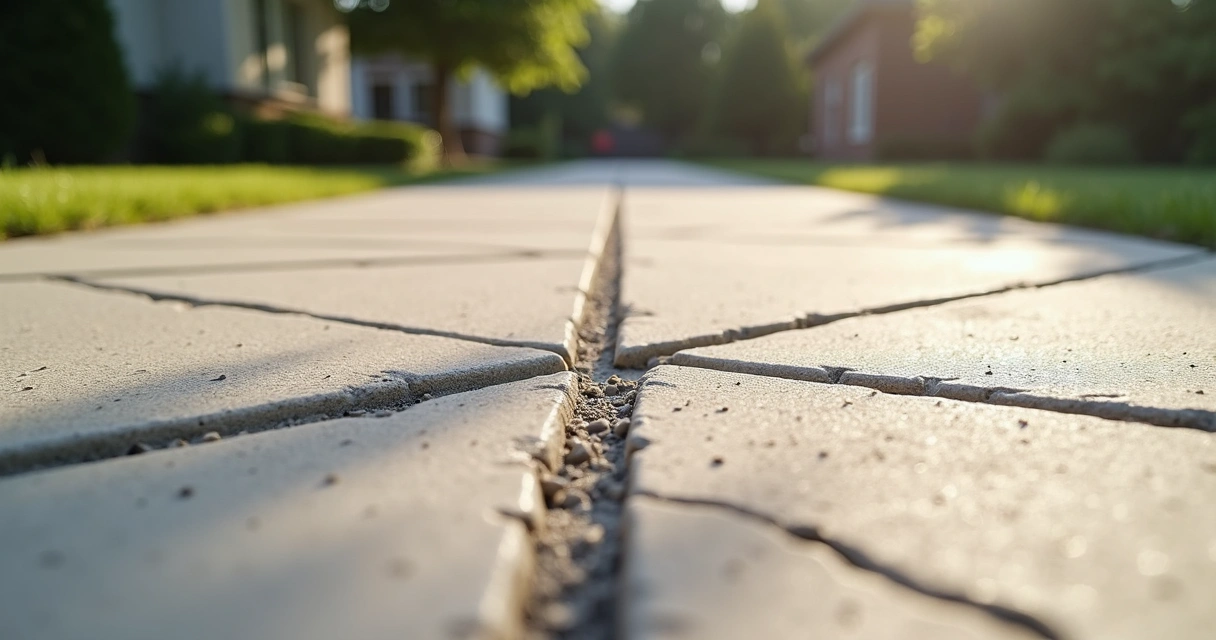
What is thermal expansion and how does it affect concrete?
Concrete is everywhere in Florida’s suburbs. It feels solid and unmoving, but in reality, it reacts to heat in predictable—sometimes dramatic—ways.
Thermal expansion means a material gets bigger as it heats up. With concrete, every degree of temperature rise causes it to lengthen—by microns at a time, but over long driveway slabs, this adds up.
When afternoons hit 95°F or more, we hear from homeowners about driveway “growth.” Concrete wants to spread. If it can’t, due to too few or clogged joints, something has to give—slabs buckle upwards, edges crack, and occasionally, concrete “explodes” with audible pops. The process reverses when temperatures drop at night, causing contraction, which can widen joints or even create new surface cracks.
Every slab, no matter the mix, must deal with this push-pull cycle throughout the year. Summer is the true stress test.
Key science: Coefficient of thermal expansion
What tells us how much a slab will grow or shrink with temperature changes? It’s called the Coefficient of Thermal Expansion (CTE). Concrete’s CTE varies based on what’s inside—gravel, sand, cement type, even how wet it was when poured. Typical CTE values for concrete range from about 7 to 12 microstrains per degree Fahrenheit. For a 20-foot driveway in Orlando, a 50°F temperature swing can move a joint by several millimeters.
According to research from the University of California, Berkeley, concrete’s CTE can go up by as much as 65% as the slab dries out. This means driveways continue to change their expansion rates season by season, even after the first year.
So, planning for thermal movement isn’t a one-time job—it’s part of the design for a durable, crack-resistant driveway.
How summer heat stresses driveway joints
In our experience, Florida summers bring unique challenges. Our Orlando and Tampa area clients feel the effects as daily highs spike and tropical storms pass through. But what’s really at play beneath the surface?
Temperature extremes: Expansion and contraction in action
At GCM Best Services, we monitor how local weather impacts driveways. Summer months mean:
Surface temperatures above 120°F by midday
Nighttime drops to the 70s, creating large daily swings
Sustained humidity, which can impact joint fillers and concrete moisture content
Sudden rains that cool slabs rapidly, speeding contraction
Concrete expands most rapidly during the hottest part of the day, then shrinks back after sunset and storms. These cycles can repeat hundreds of times each summer, which accelerates joint wear.
Why joints are necessary (and never just decoration)
We sometimes hear, “Do I really need all these lines in my new driveway?” The answer is a clear yes—each joint is a pressure valve. They give slabs “space” to move gently as temperatures shift.
There are different types:
Control joints: Placed to manage where cracks appear by only letting expansion “relief” occur at straight lines.
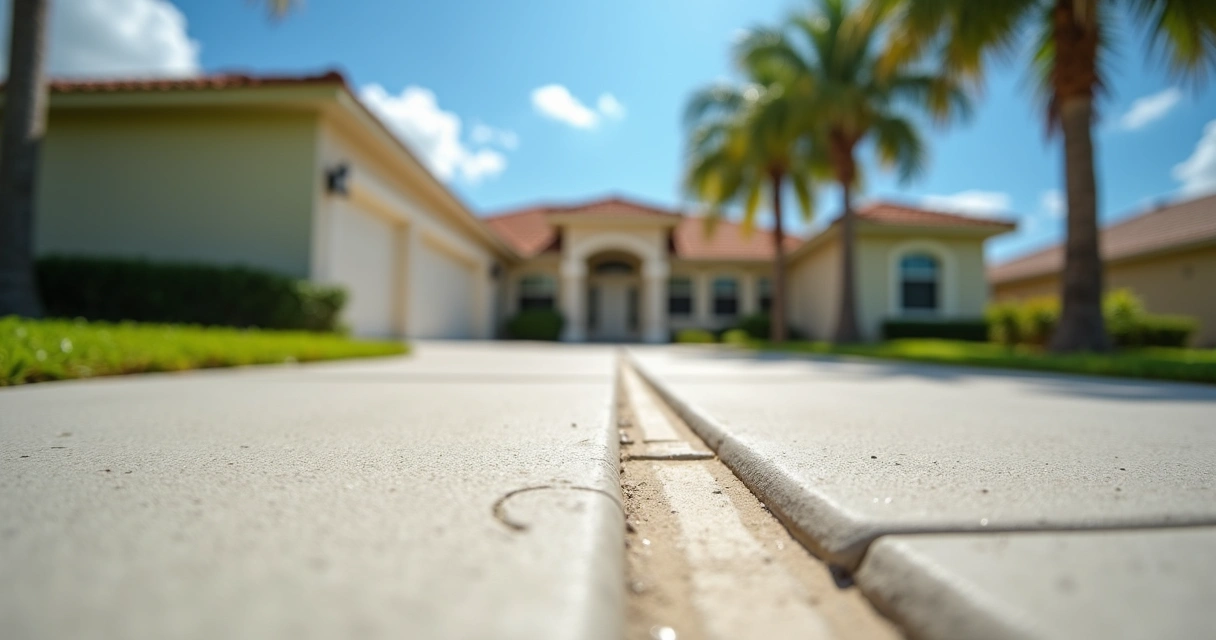
Expansion (isolation) joints: Usually wider gaps filled with flexible material, set at transitions like garage edges and sidewalks, or where concrete meets another structure.
Construction joints: Where pours stop and start, often tied together with rebar but still able to move slightly.
The placement and spacing of these joints depend on the contractor’s knowledge of the slab’s size, soil conditions, and local climate swings. In Central Florida, we go deeper with sub-base preparation and drainage to help joints do their job during torrential summer rains and highs.
Common problems with driveway joints in hot climates
When driveways aren’t built with proper joint design, or joints get blocked over time, we see familiar signs of trouble during summer.
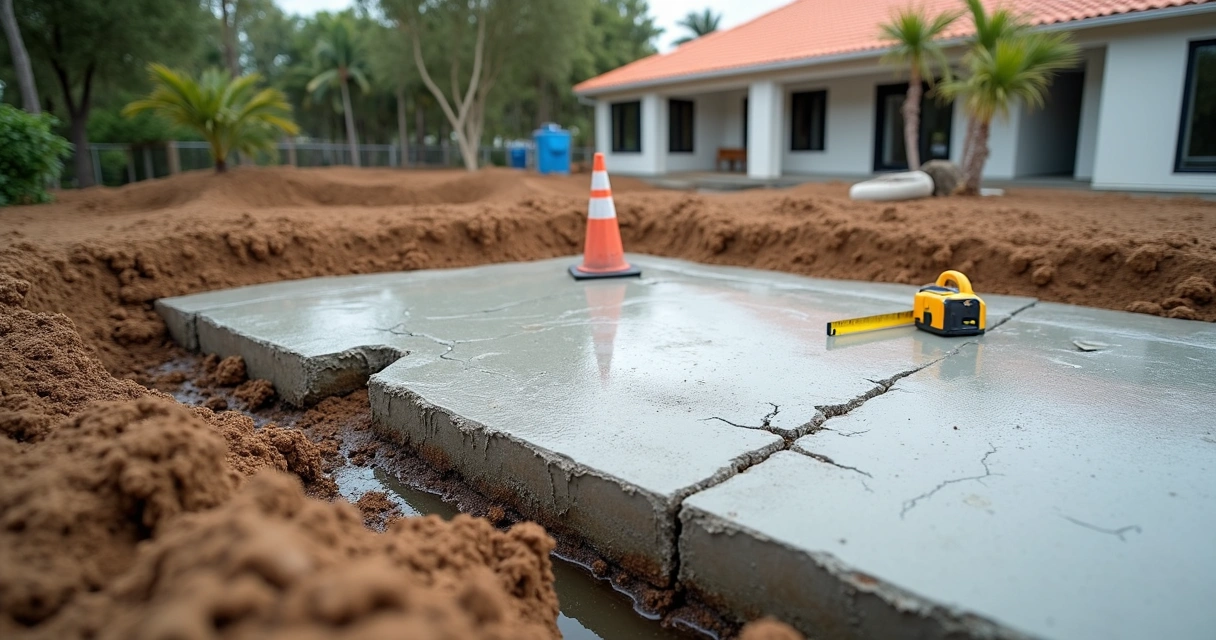
Buckling, heaving, and slab blowouts
Expansion pressure has to go somewhere. If joints are too far apart, too tight, or clogged with hard debris, the concrete will lift or push against itself.
“A little movement is allowed. Too much is destructive.”
Signs to watch for include:
Slight rises (“heaves”) where slabs meet, especially after several hot days
Sudden, jagged cracks running away from joints, often diagonal
Edges crumbling at driveways–garage or sidewalk transitions
Audible popping, sometimes mistaken for settling or roots
If expansion joints are missing or filled with hard, non-flexible material, these symptoms worsen over time.
Joint filler breakdown and intrusion
Flexible joint fillers—like asphalt-impregnated fiberboard, or modern rubberized “backer rods” and sealants—age fast in UV and heat. Florida sun can harden old fillers within two years, removing their ability to flex. We even see weed growth through gaps as fillers shrink and pull away.
When fillers fail, water and debris enter, weakening the surrounding concrete and accelerating edge breakdown. During storms, this can wash out sub-base, leaving voids for slabs to settle unevenly.
How GCM Best Services designs for summer performance
Whether building a new driveway or repairing one stressed by many hot seasons, we commit to evidence-driven choices. That means matching slab thickness, rebar layout, and especially joint design to both soil and climate data.
Driveway design details for thermal movement
We use these strategies for every new Orlando-area installation:
Sub-base: At least 6–8 inches of compacted material to reduce soil movement and support joint stability
Rebar or welded wire mesh: For strength, especially on problematic clay or fill soils
Joint spacing: Never exceeding 10–12 feet between joints on driveways, often less on wider areas
Insist on expansion joints at garage doors, sidewalk interfaces, and where concrete meets walls or columns
Broom, exposed, or stamped finishes that reduce surface stress concentrations
True moisture testing and ensuring proper curing times
We also work through permits, HOAs, and inspections, as outlined in our driveway paving guides.
Material choices matter
Following data cited by University of California, Berkeley research, we account for how concrete’s CTE changes with moisture. Often, we specify mixes designed for 3,000–4,000 PSI and control water-to-cement ratios strictly. Fiber reinforcement and carefully selected aggregates can help moderate quick expansion.
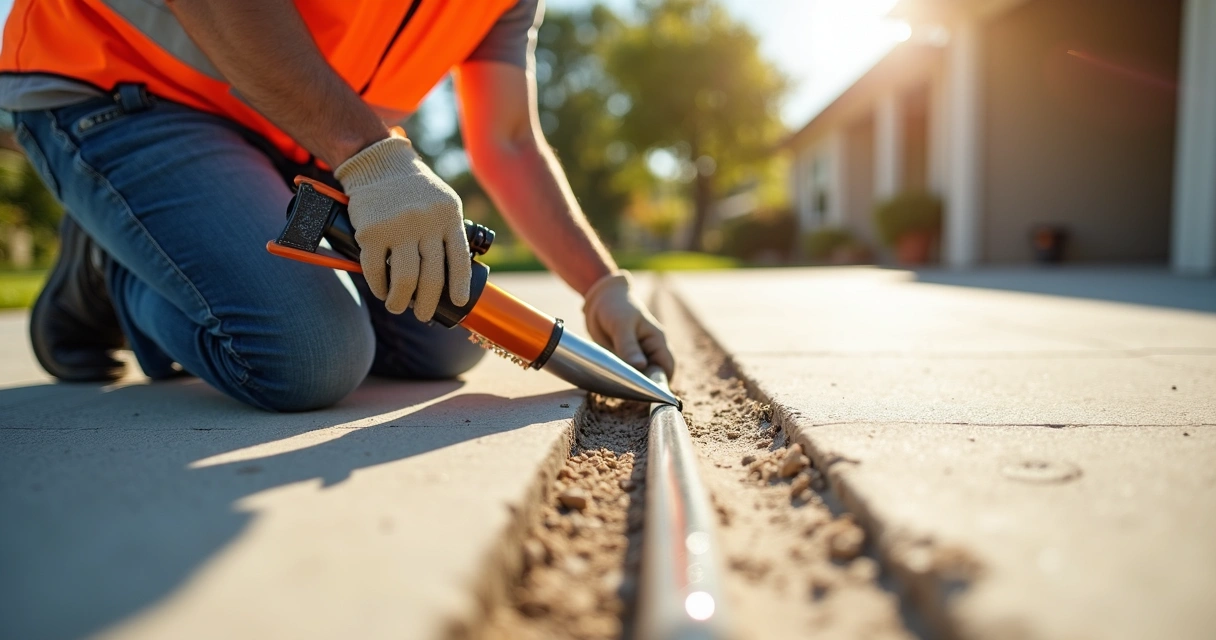
For expansion gaps, we use weather-resistant, UV-stable sealants or compressible joint fillers sized for the expected movement. Flexible sealants “breathe” with the slab, while rigid caulks trap forces.
Replacing failed joint fillers is a key part of any repair session—never skip it during summer tune-ups.
Drainage as the silent partner
When water sits at joints, expansion and contraction cycles get worse, and so does sub-base washout. Every GCM Best Services project includes positive drainage away from the home and out of joints. If a property needs additional drains or raised sections, we address this at planning—not as an afterthought.
For more details about our holistic approach, our Florida driveway crack prevention guide explains joint and drainage coordination in depth.
Repair options for heat-damaged joints and slabs
Many driveways in the Orlando area have already endured decades of expansion and contraction. When problems show up, the right repair method depends on the severity and the original joint design.
Early intervention: Joint re-cleaning and refill
We advise checking joint material every spring. If you see open gaps, crumbling filler, or plants growing between slabs, it’s time for a refill. The process:
Thorough cleaning—remove all loose debris and old filler
Dry the joint completely
Install compressible backer rod if the joint is wide/deep
Apply flexible, UV-resistant sealant sized for expansion and contraction range
Smooth for water runoff
This is both a durability and aesthetics fix. A well-sealed joint will handle years of Florida’s wild summer swings while keeping out water that damages the sub-base.
Addressing slab cracks and heaving
When a slab has moved or separated at a joint, fixing the joint alone is not enough. Depending on slab condition, we may:
Route and seal cracks with flexible compounds
Inject polymer or grout to fill voids beneath lifted slabs (“slabjacking”)
Replace severely damaged panels if movement can’t be stabilized
Improve joint layout during partial replacements to prevent future issues
Our concrete repair contractor guide has more insights on judging repair vs. replacement for driveways.
Long-term maintenance: Keeping driveway joints ready for Florida heat
Once a driveway has proper joint design and materials, what keeps it working through future summers?
Annual maintenance checklist
We recommend homeowners (or us, via service contract) do the following in spring:
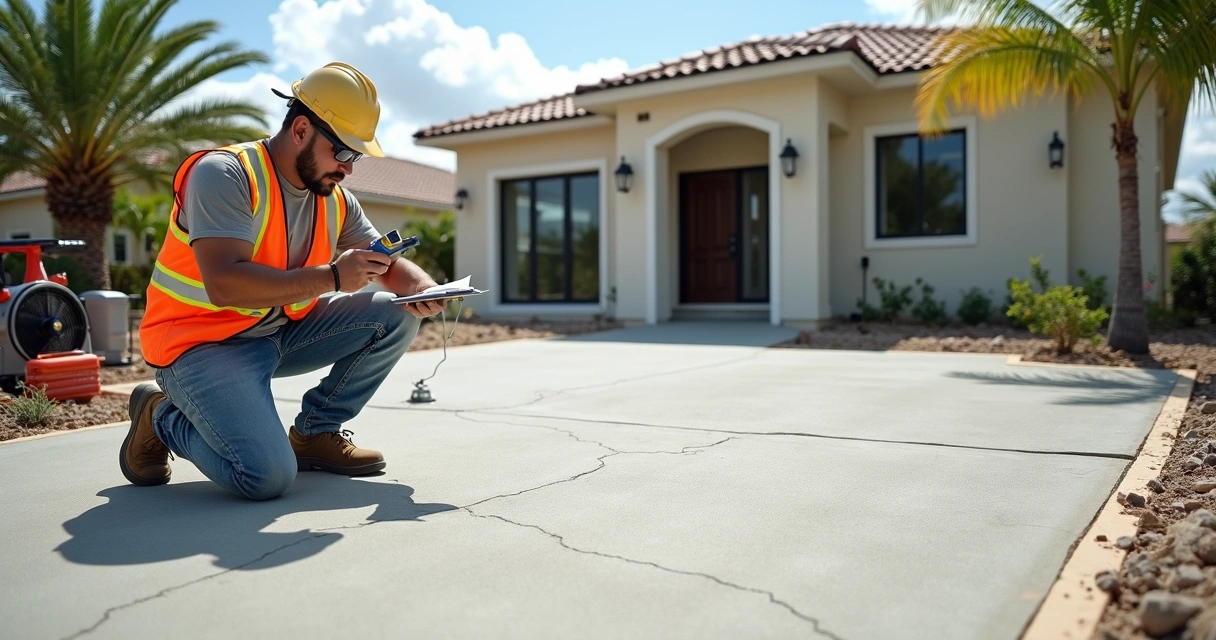
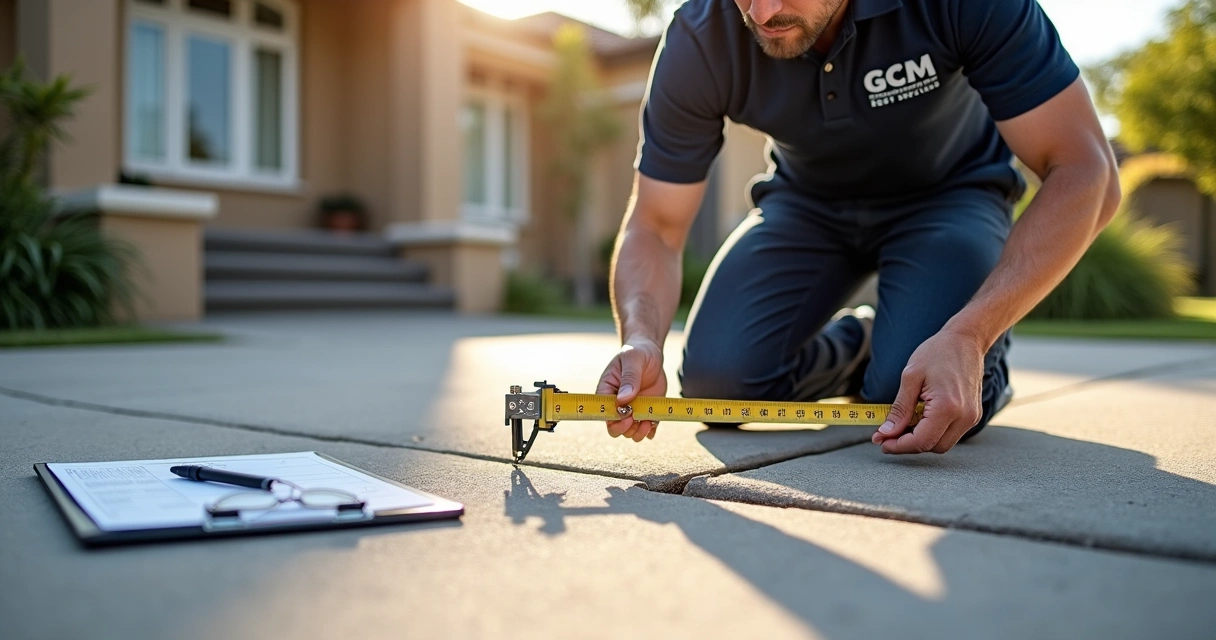
Inspect each joint for width, filler integrity, and any debris build-up
Remove weeds or sand that block joint movement
Check overall driveway slope and look for ponding, which accelerates joint wear
Schedule repairs at the first sign of filler break-up or new cracks
For those with paver driveways, joint sand condition is just as critical—a settled paver edge allows shifting from expansion. Our concrete blog section covers both slab and paver techniques with local examples.
Once in 2–3 years, consider a professional walk-through—something we offer as part of our driveway warranties and maintenance plans.
Driveway types and expansion control: Special notes
Our work in Central Florida gives us a look at how different driveway materials cope with expansion forces.
Concrete slabs
Traditional poured concrete is the most at-risk for expansion stress. Large unbroken slabs without pre-cut joints struggle the most, while smaller panels act more flexibly. Modern driveways often use decorative scoring or stamped patterns but must not skip functional joints beneath the design.
Pavers
Paver driveways “float” atop a flexible bedding, but their edges and the sand between each paver allow for subtle shifts. Still, edge restraints and periodic joint sand top-up are needed to prevent spreading or heaving during summers.
Our St. Cloud patio and driveway installation guide walks through paver options and expansion solutions in detail.
Asphalt and other surfaces
While this article focuses on concrete, we also field questions about asphalt (which is more flexible, but also more sensitive to softening in peak heat) and post-tensioned slabs for special cases. No matter the surface, stable edges and resilient joints win in Orlando’s climate.
Benefits of professional planning for driveway joints
Our clients see direct improvements when driveway structures are tailored to local expansion risks:
Longer slab life with fewer repairs
No surprise trips or “pop-ups” after a run of hot weather
Better curb appeal and neighborhood consistency
Valid HOA approvals and fewer code headaches
Written warranties and photo documentation for peace of mind
With over two decades of fieldwork in Central Florida, the GCM Best Services team knows exactly how to balance structural science and customer expectations for every climate-driven challenge.
Conclusion: Confidence for every summer
If there’s one lesson from years of Orlando-area driveway care, it’s that heat wins every summer—unless your driveway joints are ready. A driveway that flexes with the seasons protects your home investment and keeps your paths safe year-round. Our team at GCM Best Services stands by that promise with every new build, repair, or annual checkup.
Want the best solution for your driveway or patio in Central Florida? Let us provide a custom assessment and expert joint design. Contact us for a no-obligation quote and see how our science-first approach matches up to your neighborhood’s needs.
Ready for a professional quote? 📞 (407) 250-1948 • 24–48h • Orlando, Tampa & area.
Frequently asked questions
What is thermal expansion in driveways?
Thermal expansion is the process where concrete or paver materials increase in size as temperatures rise, causing driveways to lengthen and joints to widen. This is a normal physical reaction to heat, especially in climates with daily and seasonal extremes like Central Florida. Without space to expand, driveways may crack, lift, or show visible signs of stress.
How does summer heat affect driveway joints?
Summer heat can cause rapid expansion of concrete, especially during midday spikes. When daytime temperatures soar, joints must accommodate the increased movement; otherwise, pressure can build up and force slabs to shift, crack, or even heave. Humidity, UV rays, and frequent rainfall in summer also wear down joint fillers, making ongoing upkeep essential.
How can I prevent joint damage?
To prevent joint damage, make sure your driveway has properly spaced and clean expansion and control joints. Check for failed joint fillers, weed growth, or clogged gaps in spring, and refill with flexible, UV-resistant materials. Maintain drainage to avoid ponding at the joints, and consult professionals if you notice cracks or uneven slabs appearing after hot spells.
What materials handle expansion best?
Flexible joint fillers such as compressible backer rods and specialized polyurethane or silicone sealants allow for the most movement. On new drives, well-compacted sub-base, proper steel reinforcement, and mixes with controlled water content also help. Concrete pavers with maintained sand joints can also adapt well to seasonal shifts if their edges stay restrained.
Is joint repair needed every summer?
Joint repair is not required every summer if quality materials and good design were used initially. However, it’s wise to inspect driveway joints annually, especially after very hot or wet seasons, to catch and refill any failing areas before bigger problems develop. Regular checkups—either DIY or by qualified professionals—help maximize your driveway’s year-round durability.