Concrete is everywhere in Central Florida—driveways, patios, sidewalks, pool decks, and more. While its durability is a major advantage, one hidden challenge often surprises property owners: intense glare from the Florida sunshine. Why do some concrete surfaces almost blind you at midday, while others remain comfortably muted? The answer often lies in the surface texture.
At GCM Best Services, we have seen firsthand how the choice of finish can make all the difference for homes and businesses seeking not just style, but also comfort and safety outdoors. In this article, we take you step by step through the science, options, and practical solutions for controlling glare on concrete—so you can make the best decisions for your property.
The right surface texture brings beauty and comfort together under the Florida sun.
Contents
- Understanding glare on concrete in Florida
- The science: How light interacts with concrete surfaces
- Surface texture: What it means and what options exist
- Why glare matters more in the Florida climate
- What federal and research studies show about glare and texture
- Main types of concrete finishes and their glare impact
- How to pick the right texture for your needs
- Tips for managing glare: Design and maintenance advice
- Conclusion: The value of getting surface texture right
- Frequently Asked Questions
Understanding glare on concrete in Florida
We’ve all experienced it: stepping onto a light-colored concrete driveway or patio in the midday sun, only to find ourselves momentarily squinting and shielding our eyes. This isn’t just discomfort—it can present safety issues, affect the enjoyment of outdoor spaces, and even influence the energy use of neighboring buildings.
Glare happens when sunlight reflects off a surface in a highly concentrated direction, overwhelming the eye’s ability to adapt. In Florida, where the sun is intense and frequent, concrete with the wrong finish can act almost like a mirror, creating a blinding effect.
This issue often emerges with smoother, lighter-colored concrete, especially on large, unshaded areas. Yet, with careful design and the right materials, glare can be dramatically reduced without compromising appearance or quality.
The science: How light interacts with concrete surfaces
Concrete is not a flat, featureless plane at the microscopic scale. Whether poured for a sidewalk or stamped for a patio, every surface contains peaks and valleys—what we call surface texture.
When sunlight hits a surface, several things happen:
- Some light is absorbed, warming the concrete and the area around it.
- Some is scattered in multiple directions (diffuse reflection).
- Some is reflected directly outward (specular reflection), much like a mirror.
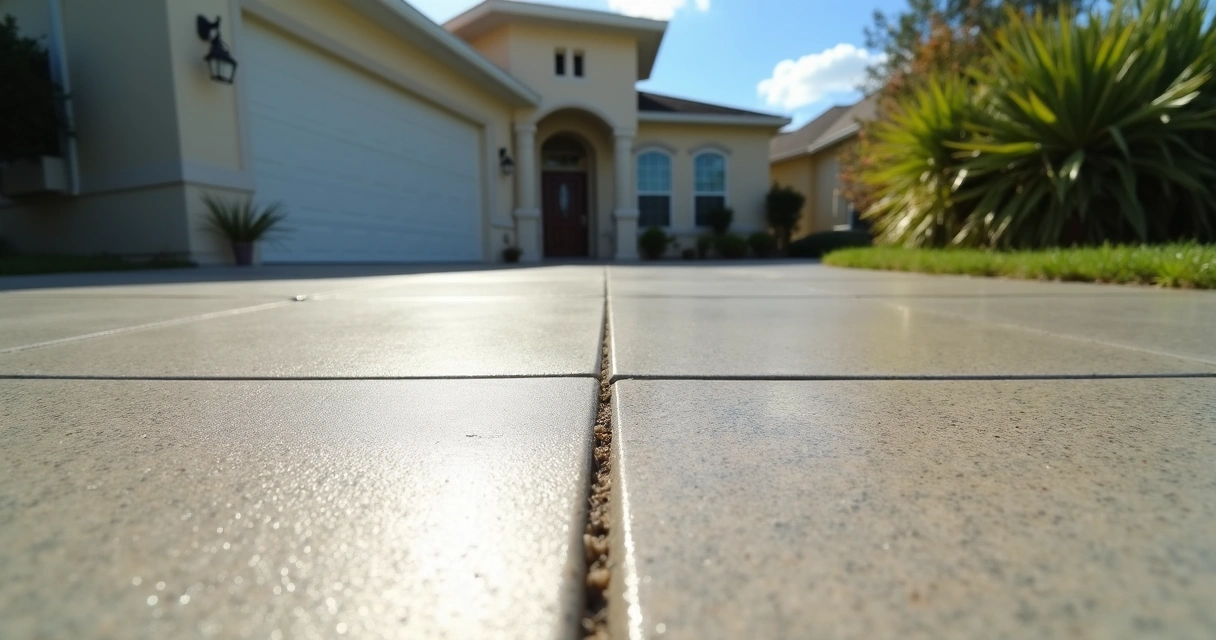
Smooth, flat, and light-colored concrete tends to reflect more sunlight straight back, which increases glare. In contrast, rougher or patterned textures cause the light to scatter, making glare less noticeable. This is true not just visually but also in measurements of light reflectance and surface glare, as highlighted in studies by the Lawrence Berkeley National Laboratory’s Heat Island Group.
Surface texture: What it means and what options exist
Surface texture is more than just how concrete feels when you touch it. The Federal Highway Administration (as explained in their pavement texture guidance) breaks it into two main types:
- Microtexture: Fine details only visible up-close, like the sand grains in a broom or trowel finish.
- Macrotexture: Larger patterns you can see or feel, such as grooves, ridges, or stamped designs.
Both levels of texture help diffuse sunlight, but macrotexture in particular is powerful for reducing strong, mirror-like reflections. Choosing the right combination lets us strike a balance between safety, visual appeal, and practical comfort.
Why glare matters more in the Florida climate
Florida is legendary for its abundant sunshine. In Central Florida, our weather serves up over 230 days of clear or partly sunny skies per year. That’s a lot of ultraviolet and visible light pouring down on outdoor surfaces. And with many homes and businesses choosing light colors to stay cooler, the risk of glare increases further.
In our experience at GCM Best Services, we’ve observed that outdoor living areas—especially pool decks, patios, and driveways—are common pain points for glare. The sun’s high angle in summer and reflective surfaces like water or light paving can combine to amplify the problem.
Choices made at installation can help make every sunny day more inviting—not just tolerable, but enjoyable.
As a result, property owners often ask us for help transforming blinding outdoor areas into comfortable spaces. This is where understanding surface texture pays off.
What federal and research studies show about glare and texture
Our recommendations are grounded not just in local know-how but also in national research. The Federal Highway Administration’s guidelines have clear advice for designers:Smooth, light-colored concrete—such as on barriers or large slabs—creates more glare and should be avoided in high-glare settings through the use of rougher textures or deeper patterns. This is highlighted in the FHWA design recommendations for concrete surfaces.
The same agency also explains that proper pavement texture, achieved by aggregate selection, finishing, and supplemental treatments (like grooving or tining), can improve traction and reduce both wet-time reflection and dry-surface glare. You’ll find details about macrotexture and microtexture in their technical pavement texture guide.
Researchers from Lawrence Berkeley National Laboratory’s Heat Island Group echo these findings, noting that while cool, light surfaces are helpful in controlling temperature, they can also create glare problems. Selecting less shiny, more matte finishes—or opting for “cool” colors that aren’t purely white—offers a way to balance comfort, safety, and energy efficiency. Their studies on glare and reflectance support this viewpoint for both roofs and pavements.
Together, this guidance gives us clear, science-backed principles for improving outdoor living in Central Florida.
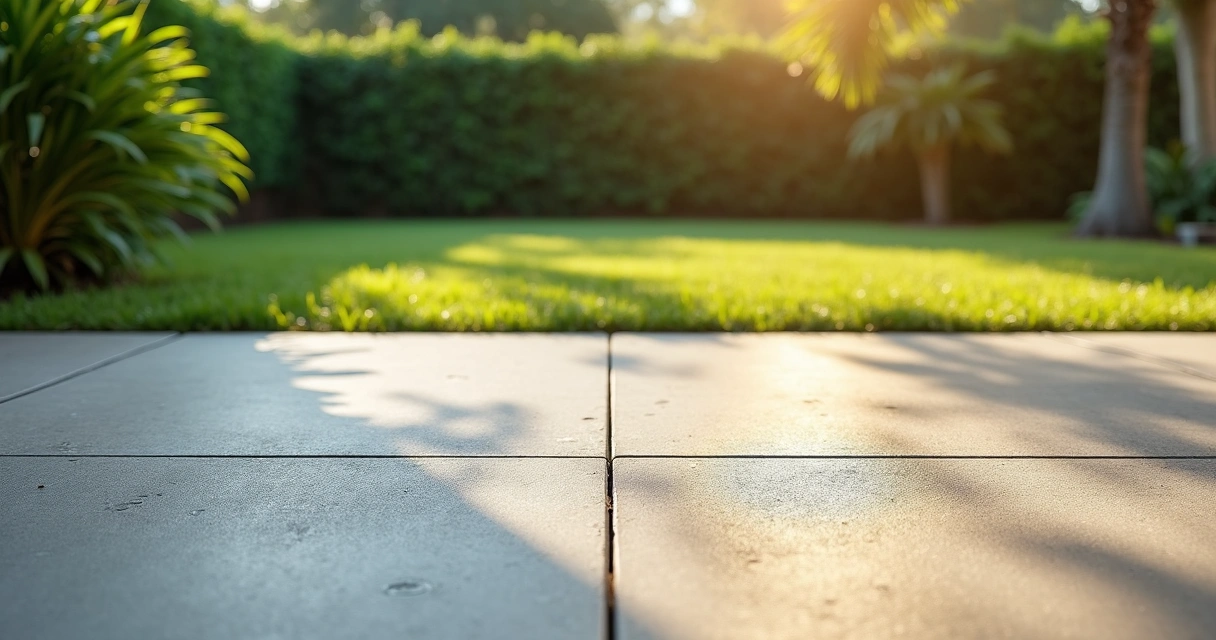
Main types of concrete finishes and their glare impact
Our clients often ask, “What finish should I choose if glare is a concern?” Here’s how the most common concrete surface types stack up in our Florida projects:
Smooth trowel finish
A smooth troweled finish, often used for interior slabs or some patios, can look sleek. However:This finish is most likely to produce uncomfortable glare, especially when poured with light or white colorants.
It’s not recommended for large outdoor areas without shade, especially here in the Orlando and Tampa regions.
Broom finish
Broom finish is the workhorse of Florida driveways and sidewalks. After the surface is floated and troweled, a broom is drawn across it to leave small lines.
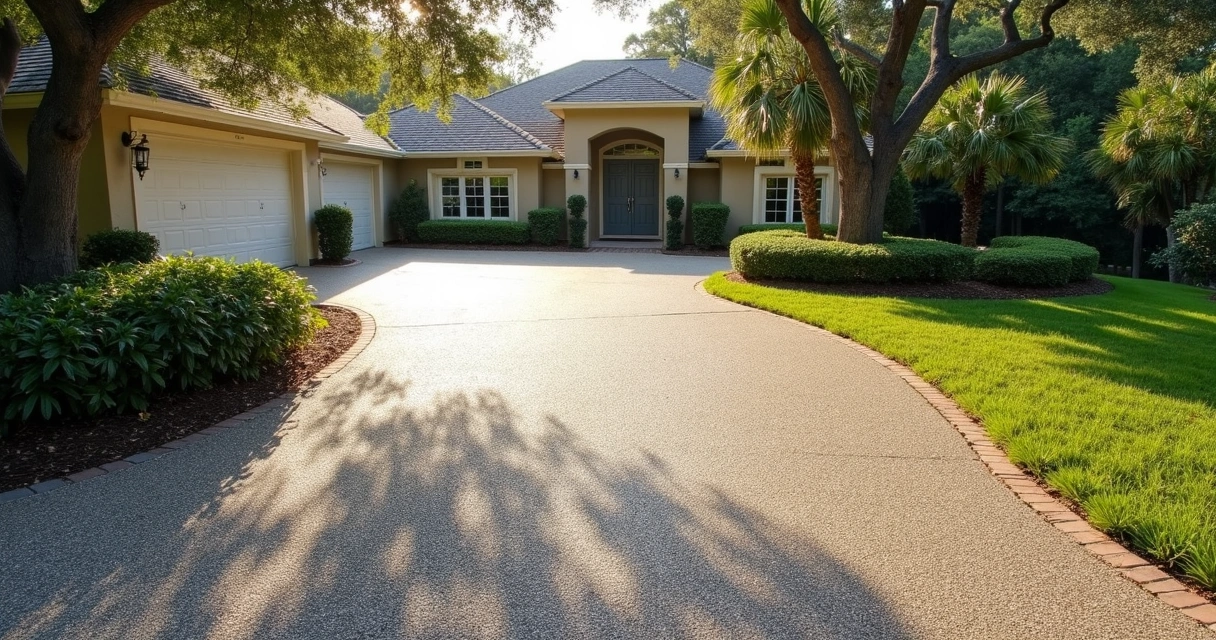
The thousands of tiny ridges break up sunlight, scattering it in many directions rather than concentrating it outward. This finish reduces both glare and slipperiness, even on lighter colors, and is the most requested option for driveways and sidewalks at GCM Best Services.
Exposed aggregate
Exposed aggregate finishes wash away the cream from the surface, revealing the stones within the concrete. Not only is this style decorative, but:The irregular, coarse surface texture diffuses sunlight even further, making glare almost a non-issue—even on large, light-colored patios or pool decks.
Stamped concrete
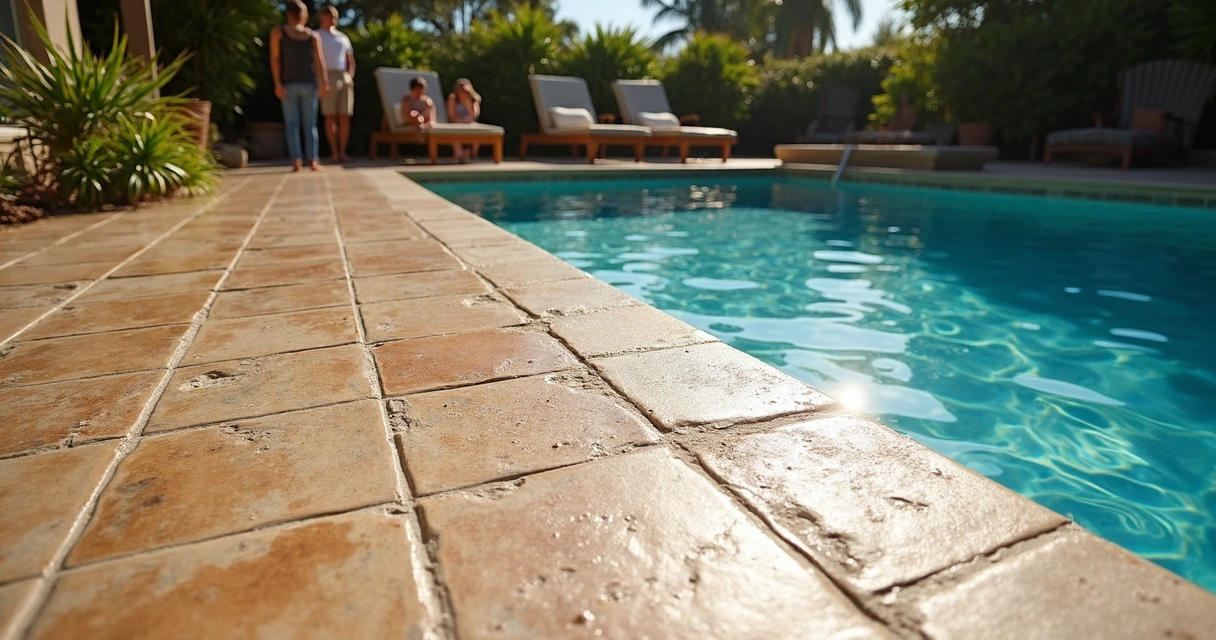
Stamped concrete mimics stone, brick, tile, or wood, using specialized stamps. The resulting surface has both macro- and micro-level relief.
Well-designed stamping, especially with non-glossy sealers, can control glare while offering a wide range of looks.
Polished or sealed finishes
Highly polished concrete or glossy sealers can intensify reflection and glare. This is less common outdoors, but when applied to patios or pool decks, they can make surfaces uncomfortable—and at times even hazardous if wet.
Color and glare
Light colors, especially white and off-white, reflect more visible light. While this property is beneficial for heat reduction, it raises the risk of glare.
Medium grays, soft tans, or muted earth tones remain reflective enough to stay cooler, but don't produce the harsh glare of brighter choices. The key is pairing smart color selection with the right texture.
How to pick the right texture for your needs
Selecting the right surface for your project isn’t just about taste. At GCM Best Services, our process always starts with a conversation about how you will use your space, where the sun falls during the day, and what practical challenges you face.
Questions we ask when recommending textures:
- Is the area in direct sun much of the day, or shaded by trees or buildings?
- Will it be used as a pool deck, patio, driveway, or path?
- Is slip resistance (such as for accessibility or pools) a top priority?
- Does the desired color match the theme of your property?
- Are there nearby glass, water, or glossy surfaces that could amplify glare?
This thoughtful approach lets us recommend finishes that balance safety, comfort, and aesthetics. For most driveways, patios, and pool decks in Florida’s climate, broom, exposed aggregate, or stamped textures deliver the best results.
If you’re curious about cost, durability, or how to compare different installation methods, our concrete company selection guide for Orlando and St. Cloud installation guide are packed with useful tips.
Tips for managing glare: Design and maintenance advice
Even if a property already has a high-glare concrete area, all hope isn’t lost. We frequently help Central Florida clients troubleshoot and improve existing spaces. Here are a few tips and solutions:
- Add texture overlays: Resurfacing with a texture like spray knockdown, broom overlay, or stamped overlays can transform a surface visually and functionally, without complete removal.
- Choose the right sealer: Whenever possible, opt for matte or low-gloss sealers to avoid amplifying reflections. High-gloss finishes look great indoors but often fail outdoors.
- Incorporate shading: Strategic use of landscaping, pergolas, or screen enclosures can break up direct sunlight, reducing both heat and glare naturally—services we also offer to Orlando-area homes.
- Recolor with tints: If your concrete is too light and bright, concrete stains or tints in cooler mid-tones can help dial back reflectivity without major construction. Maintenance is simple, requiring periodic touch-ups.
- Maintain surface integrity: Regular cleaning and avoiding power-polishing will keep texture working as intended. Heavy traffic or prolonged wear sometimes polishes down the roughness and leads to more reflection; timely maintenance avoids this issue.
Not sure if your surface is in good shape, or if you need a full upgrade? Our licensed concrete repair guide explains what to look for and when it’s time to call in the pros.
Most importantly, consider glare from the start when planning new projects. Our free on-site design and estimate process always includes an assessment of sunlight, drainage, and how you’ll use the space—so you get a surface that’s easy on the eyes and stands up to Florida’s unique climate.
Conclusion: The value of getting surface texture right
Surface texture is the single most powerful tool for managing glare on outdoor concrete in Florida’s harsh sun. Choosing broom, exposed aggregate, or properly designed stamped finishes helps make patios, driveways, walkways, and pool decks safer and more enjoyable. This is not only about visual comfort—it directly improves how people use and feel about their outdoor spaces.
At GCM Best Services, we take pride in every step: from free consultation to meticulous design, code-star construction, and photo-documented delivery. Our proven process means you’ll get a surface that endures Florida’s weather and brings daily value—without blinding you or your guests.
If you’re ready to reimagine your outdoor concrete with a finish matched for Florida’s sun and your personal style, we’re here to help. Your comfort is always our foundation.
Ready for a professional quote? 📞 (407) 250-1948 • 24–48h • Orlando, Tampa & area.
Frequently Asked Questions
What is surface texture on concrete?
Surface texture on concrete refers to the small-scale patterns, ridges, and roughness left by finishing tools, stamps, or exposure of the aggregate after the initial pour. It includes both the fine details you can feel with your hand (microtexture) and the deeper patterns, grooves, or relief that you can see and feel underfoot (macrotexture), as described by FHWA pavement guidance. These features shape both how the surface looks and how it interacts with sunlight.
How does texture reduce concrete glare?
Texture scatters incoming sunlight, breaking up the direct beam that causes harsh glare on smooth, flat, and light-colored concrete surfaces. Microtexture diffuses light at a small scale, while macrotexture interrupts the creation of mirror-like reflections, making the surface appear softer and less shiny. This principle is widely used in highway design to protect drivers and pedestrians from blinding reflections (Federal Highway Administration recommendations).
Which textures work best in Florida sun?
The best concrete textures for Florida’s sun are broom finish, exposed aggregate, and stamped concrete with matte sealers or no sealer at all. These finishes disrupt light reflection effectively, stay comfortable to walk on, and provide extra safety from slipping—an added bonus in areas around pools and patios. Our projects at GCM Best Services frequently feature these solutions for residential and commercial sites throughout Central Florida.
Is textured concrete more expensive?
Textured finishes like broom and exposed aggregate are only slightly more costly than basic smooth pours, and often less expensive than highly decorative options. Stamped designs or overlays add a bit more to the investment but return significant long-term comfort and visual value, especially where glare would otherwise be an issue. In most cases, these choices pay off with fewer complaints, safer surfaces, and better outdoor experiences for years.
How can I fix glare on concrete?
If your concrete is already installed and suffers from glare, you have several options: add texture overlays, use matte or anti-glare sealers, adjust coloring with tints, or incorporate new shade elements. Simple treatments like a broom overlay or recoloring can often make a dramatic difference. For larger or more complex glare issues, professional assessment and targeted upgrades—like those offered by GCM Best Services—provide lasting solutions tailored for Florida’s climate and codes.
For more in-depth reading, check out our educational resources on concrete finishes and upgrades as well as problem-solving tips for preventing cracks and other outdoor risks.