Primary keyword: stamped concrete vs colored concrete
Variants: stamped concrete cost, colored concrete durability, compare stamped and colored concrete
Audience: Homeowners, businesses, and property managers in Central Florida seeking durable, attractive concrete solutions for driveways, patios, or walkways.
Pain/Benefit: Confusion over which concrete finish balances cost, curb appeal, and long-term performance, especially in Florida’s climate.
If you’re planning a driveway, patio, or walkway in the Orlando area, the finish you pick sets the tone. We often help clients through the choices between stamped concrete and colored concrete. In our experience at GCM Best Services, each method comes with unique pros and long-term considerations. Understanding their differences on cost, look, and durability leads to lasting results—especially in Central Florida’s tough weather. Here, we break down everything you need to know: benefits, maintenance, warranties, and how your choice will play out over the years under sun and storms.
Outline
- Introduction: Why finish matters on Florida concrete
- What is stamped concrete?
- What is colored concrete?
- How does stamped concrete differ from colored concrete?
- Design options and curb appeal: How they transform your property
- Installation process: What sets them apart?
- Cost breakdown: Upfront price vs. long-term value
- Durability and performance in Central Florida
- Maintenance, repairs, and warranties
- Environmental considerations
- Curb appeal, property value, and resale
- How we ensure the right fit at GCM Best Services
- Conclusion: Choosing what lasts for your Florida property
- FAQ
Throughout, we’ll reference our process, local code, and how our team at GCM Best Services delivers high-performing results so you are confident in your investment.
Introduction: Why finish matters on Florida concrete
Concrete is fundamental in Florida—driveways, patios, and walkways face sun, rain, and shifting soils. Standard concrete is strong, but finishes like stamping and coloring shape the entire experience for homeowners and business managers. We see it in both the first impression and in how surfaces age over time.
Choosing between stamped concrete and colored concrete isn't simply about color or pattern. It’s about creating a space that fits your vision, stands up to the elements, and works within your budget. Our Orlando team often guides clients through this decision, focusing on lasting value over a surface that might only look good for a summer or two.
What is stamped concrete?
Stamped concrete is poured concrete that’s patterned and textured during installation to mimic the look of stone, brick, wood, tile, or other custom surfaces. Color is usually added to further replicate natural materials. The pattern is pressed into the wet concrete using specialized mats or molds, creating high-end visuals at a more accessible price point.
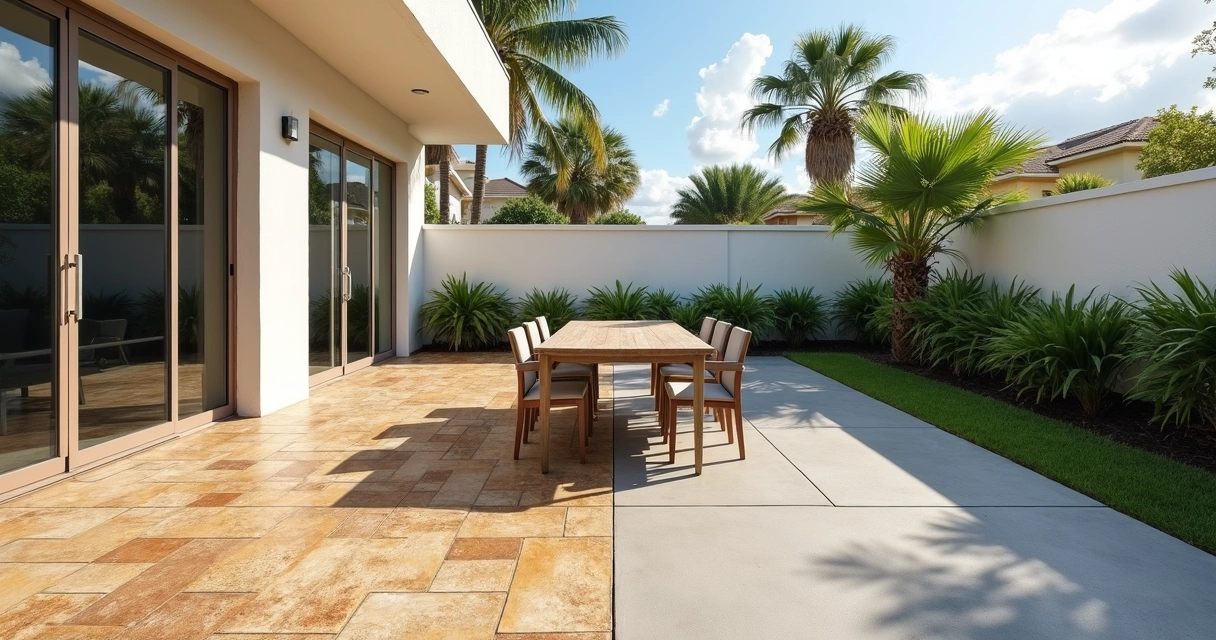
Stamped concrete transforms plain slabs into something dramatic and custom.
We use stamp forms and color releases to ensure your selected style is vivid and consistent. At GCM Best Services, we have delivered stamped patios and driveways aligned with homeowner associations and drainage needs across Central Florida.
What is colored concrete?
Colored concrete is standard concrete mixed with mineral or synthetic pigments before it’s poured. These pigments can be subtle earthy hues or bold tones, giving the concrete a uniform color throughout the slab. Unlike stamped concrete, which is mostly about imitation texture, colored concrete focuses on tint and finish.
Using high-quality pigments and planning for the Florida sun, we help clients choose colors that stay rich over time. Color can be added integrally (mixed into the full batch) or applied as a dry shake or stain, depending on the goals and location.
Colored concrete brings vibrant life to driveways, patios, and walkways with a single pour.
How does stamped concrete differ from colored concrete?
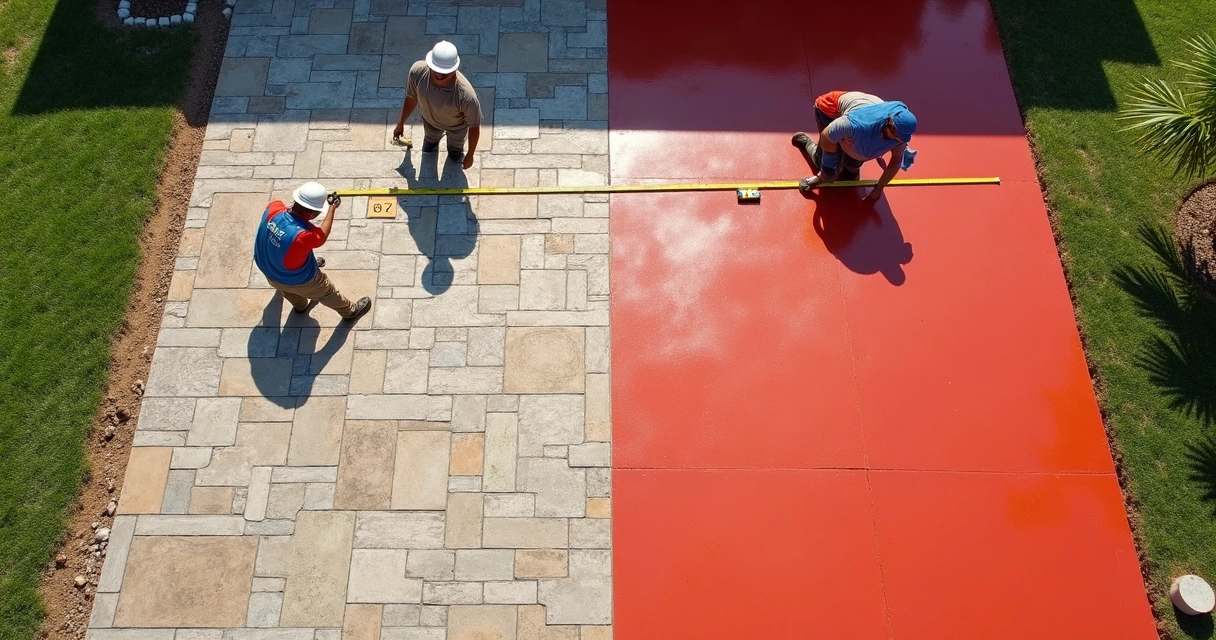
It’s easy to mix up these two enhancement methods. They’re both about adding visual punch, but their approach is very different. Stamped concrete introduces both a pattern (like cobblestone or slate) and color, while colored concrete changes only the color of the surface.
If you want your slab to look like wood planks or natural flagstone, stamped concrete is the fit. If you love the traditional broom finish but just want a shade other than gray—think terracotta, sand, charcoal—colored concrete is your solution. Sometimes, clients combine both for a look that’s truly unique.
We help guide homeowners toward what suits their lifestyle. For driveways in busy neighborhoods or commercial patios, the difference is often in both appearance and slip resistance. You can read about various finish options and what’s popular in Central Florida at our concrete services blog.
Design options and curb appeal: How they transform your property
One of the biggest reasons Floridians lean toward these concrete enhancements is curb appeal. The design possibilities go far beyond the basic gray.
Stamped concrete
- Mimics stone, brick, wood, tile, or even custom logos
- Dozens of patterns: cobblestone, running bond brick, ashlar slate, herringbone
- Color options include multi-color blends or antiquing agents for depth
- Perfect for themed patios, luxury driveways, pool decks, and walkways
Patterns are pressed with large stamping mats after the pour, but before the surface fully sets. That means a highly customizable look that impresses from the street.
Colored concrete
- Uniform tint or subtle color variation
- Wide palette—earth tones, bold hues, or municipality-approved shades
- Popular for modern designs or to blend with Florida landscaping
- Clean, understated look that works for homes or commercial storefronts
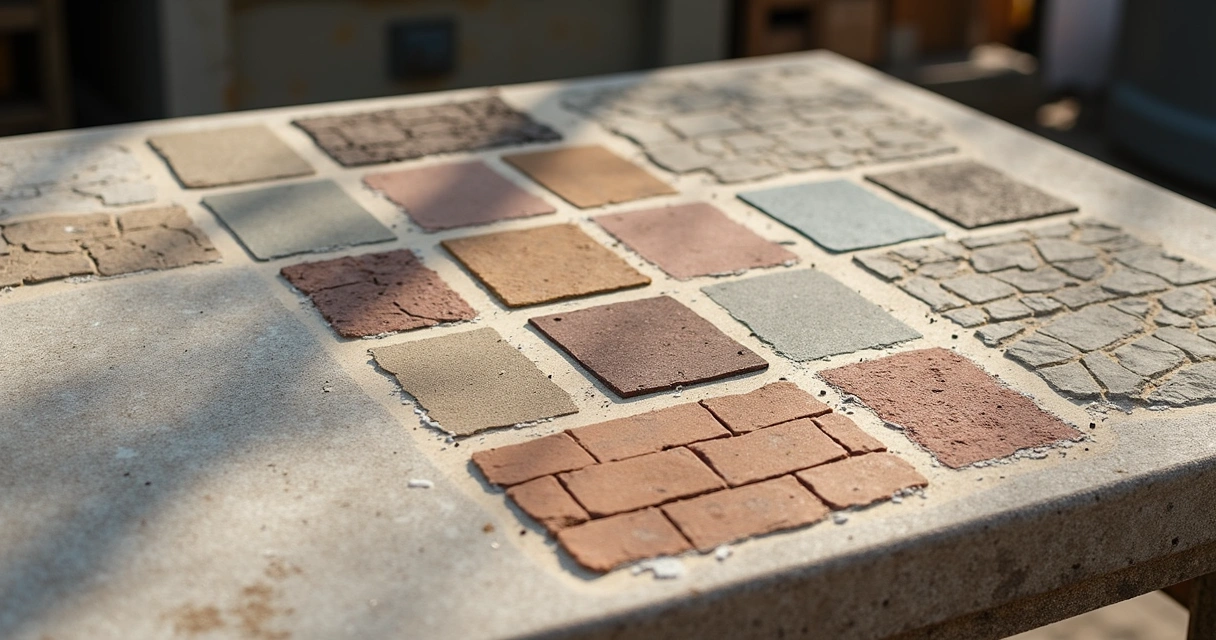
At GCM Best Services, we walk clients through color charts and can mock up sample swatches, so what you see is what you get.
Installation process: What sets them apart?
While both start with site prep, compaction, and forms, from there the paths split:
Stamped concrete installation
- Pigment is typically added to the mix, or sometimes spread atop wet concrete (color hardener).
- Poured and leveled as usual, then a release agent (powder or liquid) is applied for color variation and to keep stamps from sticking.
- While the slab is still plastic, stamping mats are pressed to imprint texture and pattern.
- The surface is usually washed, detailed, control joints cut, and then the concrete is sealed for sheen and protection.
The process is timing-sensitive and requires skilled installers—especially in Central Florida, where temperatures and humidity affect set times.
Colored concrete installation
- Pigment is blended into the concrete batch before pouring (integral color).
- Concrete is poured, finished, and typically broomed or edged just like a standard slab.
- Sealer is applied after the slab is fully cured to intensify color and resist stains.
A colored concrete pour can be faster and less complex than stamped—but both need careful curing in Florida heat.
We monitor moisture and shade to avoid color mottling and surface drying issues, common concerns in our local projects.
Cost breakdown: Upfront price vs. long-term value
Cost is often the deciding factor for many homeowners and business owners. Let’s break down what you actually pay now and what you might spend later.
According to California Department of Transportation guidance, patterned (stamped) concrete typically runs between $100–$125 per square yard, as of their last report. Colored concrete usually costs less, since it omits the custom stamping step—expect roughly a 25–35% savings per square yard compared to stamped, depending on the color system and slab prep.
- Stamped concrete: More expensive due to labor and materials for stamping, color release, and additional sealing.
- Colored concrete: Lower cost, faster install—main premium is for pigment and sometimes upgraded sealers.
We see project costs also shift depending on:
- Patterns complexity and number of colors used
- Surface prep (grading, base, extra reinforcement for Florida soils)
- Access (tight locations may drive up labor)
- Decorative saw cuts or custom borders
When we estimate at GCM Best Services, we specify thickness (usually 4–6 inches), sub-base compaction, mix strength, and reinforcement so costs are predictable and surprises are rare.
Oregon State University’s review of concrete costs also highlights that upfront cost is only part of the story. Factoring in repair, resealing, or replacement—a well-installed surface offers decades of value, but cutting corners leads to far higher life-cycle costs.
Durability and performance in Central Florida
This is where the real-world differences kick in. Concrete is tested every day by our extreme sun, pounding rain, and frequent temperature swings.
What makes stamped concrete last?
- Concrete mix quality (3,000–4,000 PSI) and proper steel reinforcement help control cracks and support surface pattern longevity.
- Close attention to expansion/contraction joints limits random cracks—something we prioritize at every pour.
- The color release and high-quality sealers help protect color fading but do require reapplication every few years under Florida UV.
We always recommend maintenance schedules to protect your investment. A worn sealer or neglected crack can let in water and Florida weeds, shortening the lifespan.
How colored concrete stands up
- Color throughout the slab—so even if abraded, it tends to wear more evenly.
- Research such as peer‑reviewed durability studies shows colored cement mixes, when properly formulated, retain excellent compressive strength after 28 days—ranging up to 36.8 MPa (almost 5,340 PSI).
- Quality control in mixing pigment is critical; too much or too little can cause streaking or weaken the concrete.
A colored slab, in our observation, hides minor Florida dust, mildew, and leaves better than plain gray, making it popular for busy properties.
Problems to consider in Florida settings
Extreme heat and moisture swings can trigger surface issues. We often repair:
- Cracking—almost always traceable to poor substrate prep or skipped reinforcement
- Scaling or spalling—sometimes from using the wrong concrete mix or exposure to pool chemicals/salt
- Fading or ghosting in patterns—usually on stamped concrete with low‑quality sealers
Using the right installation method, like the 6–8” compacted sub-base and specified rebar/mesh, as we do at GCM Best Services, prevents most early failures. If you want more on how to avoid these pitfalls, see our deep dive on preventing cracks in Florida patios and driveways.
Maintenance, repairs, and warranties
Both surfaces require upkeep to look their best, but their needs differ.
Stamped concrete
- Must be resealed every 2–4 years (frequency depends on sun and foot/vehicle traffic)
- Sealer brings back depth and gloss; neglecting this step leads to color fading and pattern wear
- Crack repairs can be more visible on patterned surfaces, but we offer custom patching and color blending solutions to help hide repairs
Colored concrete
- Routine cleaning and resealing every few years
- If the color was applied only to the surface (not integrally mixed), traffic may expose plain gray below
- Simple cracks and spalls can usually be stained or patched to match
We provide written warranties and maintenance guides to every client. Everything is backed by before-and-after photos, jobsite cleanliness, and follow-up tips. Learn about what we repair and how we handle aftercare at our concrete repair guide.
Environmental considerations
Concrete isn’t just about the visuals—it impacts the environment too. Modern concrete can even absorb carbon dioxide. Studies from Temple University describe how newer carbonatable concrete blends can absorb up to 100% more CO2, improving performance and environmental impact.
Integral color pigments are mineral-based and do not leach, meaning that they are safe for landscaping and water features when installed correctly. The use of proper drainage, another GCM Best Services hallmark, helps manage runoff and protect Florida waterways.
Concrete can now be tough and climate-friendly—good news for our environment.
Curb appeal, property value, and resale
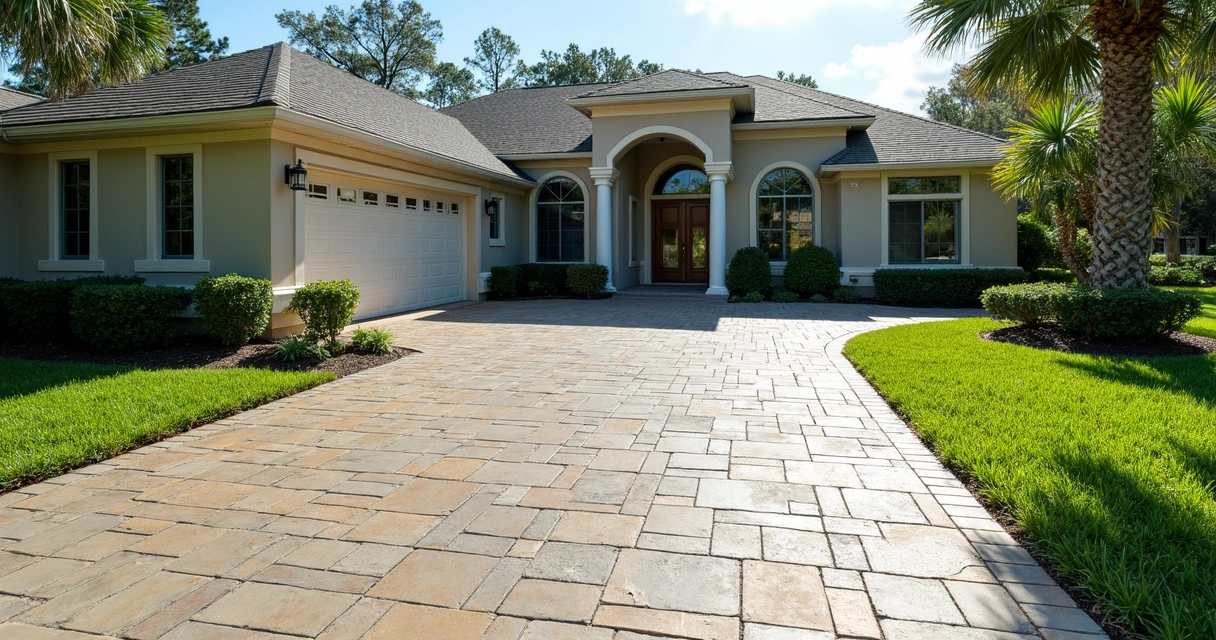
A beautiful driveway or patio catches the eye and can improve property value. Real estate agents report that striking exterior features attract buyers and boost resale potential. We have seen homes with freshly installed stamped or colored concrete driveways quickly catch attention and command higher price offers than those with cracked or stained plain slabs.
Business owners also benefit, as retail or hospitality properties with high-impact entries or inviting patios attract customers. If property value and first impressions are part of your investment goals, either finish can play a key role.
We often recommend that clients planning to sell in the next 5–10 years choose timeless pattern and color schemes that fit local trends, as seen in our installation advice for driveways and patios in St. Cloud and Orlando.
How we ensure the right fit at GCM Best Services
Our experience in Orlando and Central Florida has taught us that one size rarely fits all. We begin each project with a site visit, handle all coordination with HOAs, and follow every step from drainage and sub-base compaction to finishing and sealing.
We provide color samples, mock-ups, and detailed cost breakdowns—complete with permitting, warranty, and a post-installation maintenance guide. Photos and honest communication are part of our process, as detailed in our guide to selecting a concrete company.
Our goal: Beautiful results, zero headaches—now and years from now.
Conclusion: Choosing what lasts for your Florida property
Stamped concrete and colored concrete each bring their own strengths. Stamped concrete is all about pattern and texture, while colored concrete provides clean uniform color at a lower cost. Both, when installed and maintained properly, can stand up to Florida weather while keeping your property welcoming and valuable.
If you care about intricate design and custom curb appeal, stamped concrete is likely the best fit. If you prefer simplicity, color variety, or tighter budgets, colored concrete impresses without the added cost or complexity.
At GCM Best Services, we believe your driveway, patio, or walkway should match your style and last for years. If you’re thinking about your next project—or want an expert opinion about what’s right for your home or business—reach out for a free, no-obligation site assessment. Ready for a professional quote? 📞 (407) 250-1948 • 24–48h • Orlando, Tampa & area.
Frequently asked questions
What is stamped concrete?
Stamped concrete is a poured concrete surface that’s imprinted with textured patterns and often colored to mimic natural materials like stone, brick, wood, or tile. Installers use stamping mats while the concrete is still wet to create detailed patterns and textures that look almost indistinguishable from the real thing but at lower cost and with fewer maintenance needs. We find it’s popular for driveways, patios, pool decks, and walkways, offering both beauty and strength for Florida properties.
What is colored concrete?
Colored concrete is standard concrete that has colored pigment added into the mix before pouring, giving the whole slab a uniform tint. This can range from subtle earth tones to brighter shades. The color is distributed throughout the concrete, so even if the surface wears, the tint remains. It’s a popular choice for those seeking a custom look that’s simple, modern, and blends well with landscaping.
How much does stamped concrete cost?
According to California Department of Transportation guidance, stamped concrete generally costs between $100 and $125 per square yard, depending on pattern complexity and number of colors. Costs may shift based on site preparation, access, drainage solutions, or specific finishes. In our experience, Central Florida projects usually fall within this range—sometimes a bit more for intricate patios or driveways.
Is colored concrete more durable?
Colored concrete can be very durable if installed correctly and maintained, especially when using high-strength mixes and proper pigment ratios. Durability studies such as those reported by peer-reviewed research indicate that colored mixes retain excellent compressive strength and surface integrity over time. However, both colored and stamped surfaces require occasional cleaning and sealing to preserve their appearance in Florida’s challenging climate.
Which is better for my driveway?
Choosing between stamped or colored concrete for a driveway depends on your style preferences, budget, and maintenance expectations. Stamped concrete is ideal for those wanting detailed patterns and a custom look that mimics premium materials, while colored concrete suits homeowners preferring a clean, uniform appearance and more affordable project costs. In our consultation, we often recommend considering both aesthetics and how the driveway will handle local traffic, sun, and rain. At GCM Best Services, we can show you samples and discuss what would serve your location and goals best.