Planning split-level driveways is a focus for homeowners contending with sloped lots, raised garages, or multi-level landscapes in Orlando and throughout Central Florida. These driveways are both a necessity and an opportunity; they regulate access on uneven grades and create visual impact. But the challenges—from drainage and safety to permitting and construction—mean each project demands careful preparation.
At GCM Best Services, we have spent years helping property owners bring their split-level driveway visions to life. In this comprehensive guide, we unpack the obstacles and offer clear solutions, grounded in the needs of Florida soils and local code.
“Great split-level driveway design isn’t just about driving up and down. It’s about longevity, safety, and the comfort of every arrival home.”
We’ll take you through layout options, grading rules, surface choices, and the best practices for integrating concrete, pavers, drainage, and curb features. You’ll also see where our process—transparent, schedule-driven, and warranty-backed—fits into the picture.
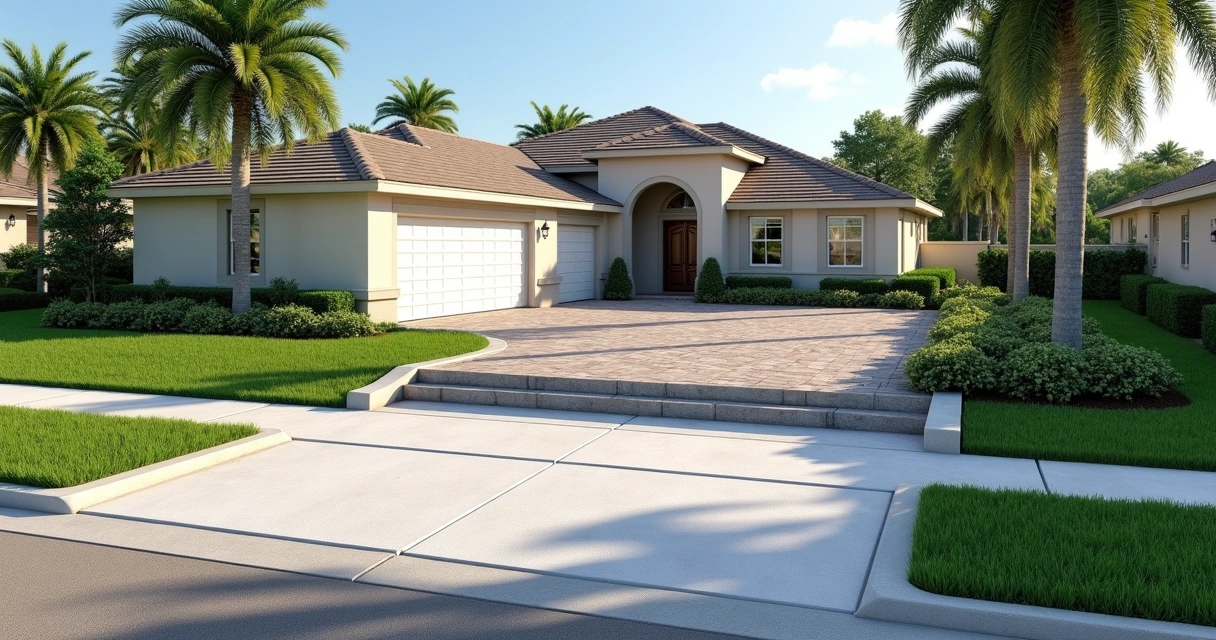
Why choose a split-level driveway?
Split-level driveways are a smart answer for properties where the elevation between street and home entry varies too much for a single, straight slope. Central Florida’s rolling terrain, variable building pads, and flood mitigation rules mean flat, direct driveway runs are not always practical—or allowed.
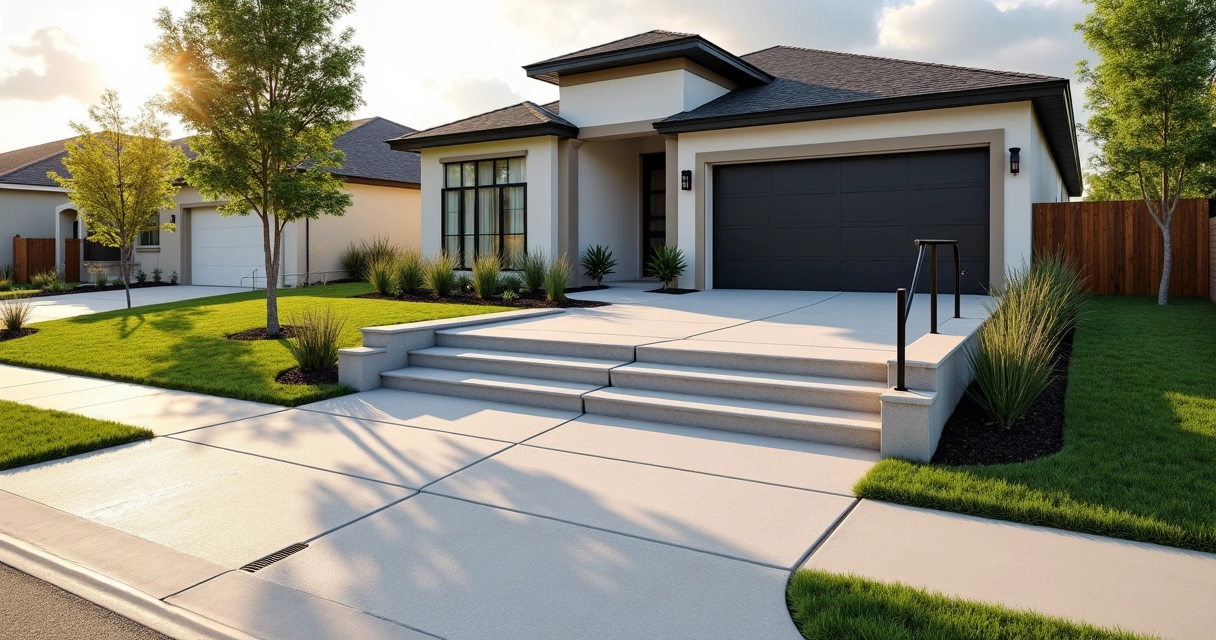
A split-level driveway is any vehicular access that uses two or more distinct slope sections, often separated by a landing or change in direction, to manage grades between a road and a destination like a garage or carport.
- Houses built on raised lots or hills
- Homes with daylight basements or garages on a lowered floor
- Lots where stormwater must be controlled away from structures
- Neighborhoods with steep road-to-curb transitions
In these situations, standard single-plane driveways could be dangerous or non-compliant. But a split-level approach allows for:
- Gentler drive slopes for safer vehicle movement
- Landings that break up runs, preventing bottom-outs and scrapes
- Opportunities to add style with retaining walls, landscaping, and multiple finishes
When planned with the right partners, split-level driveways combine utility with eye-catching curb appeal.
Main challenges in split-level driveway planning
We see several recurring hurdles in these projects. Getting them right is what separates a smooth, lasting driveway from a future headache. The main concerns include grading, drainage, turning clearance, concrete/paver detail, and code compliance.
Grading and slope breaks
Proper driveway slope is central to split-level success. If the slope is too steep, vehicles scrape or lose traction in wet weather. Too flat, and water pools or drainage stalls.
According to TxDOT recommendations on driveway profile changes, the best change rate between slopes—or “grade break”—should ideally not exceed 3%, with at least 11 feet between grade changes. This accommodates most cars without the risk of the undercarriage hitting the transition.
In our experience, Florida code usually limits maximum driveway slopes to between 10% and 15%, with split levels offering flexibility to stay well under that in sensitive spots. A typical two-level driveway might include:
- First segment: A moderate slope from street to a midway landing
- Landing: Short, flat rest area for safety and smooth turns
- Second segment: A gentle grade up to garage or parking pad
A well-placed landing breaks up long slopes, making both driving and drainage easier on every level.
Drainage and surface water control
Poor drainage is the biggest concern for split-level driveways. On a steep or multi-tiered access, stormwater can:
- Rush toward the home or garage, threatening flood damage
- Erode the surface, leading to cracks and edge failures
- Create slick or icy patches after a rain or cold snap
We always include drainage in our planning. Key elements are:
- Trench or channel drains at level transitions
- Permeable pavers or turf sections to soak up runoff
- Sloped subgrades to direct water away from the structure
Our page on effective drainage for brick paver installations in Florida’s climate outlines options, from French drains to surface grates. Getting this step right increases both life span and safety.
Turning radius and driveway width
Vehicle movement is more complex on a split-level driveway, especially when it includes bends or switchbacks. Per TxDOT general driveway design guidelines, a residential driveway should offer:
- Throat width between 14 and 24 feet—room enough for cars and delivery trucks
- Corner radii of 15 feet to help vehicles enter or exit smoothly
If the transition from one level to the next is tight, visibility and pedestrian safety must also be considered. This is why split-level designs often incorporate walkways, retaining walls, and deliberate sightlines.
Permits and code compliance
Different cities and HOAs in Central Florida enforce grade, width, finish, and curb cut codes. Our project experience at GCM Best Services shows that managing permits and HOA reviews is just as important as perfect grading or finish work.
Common requirements include:
- Drainage plans stamped by an engineer
- Max slope percentages and landing specifications
- Specific intersection angles with roads (see next section)
- Broom or exposed finishes and crack joints
If you want more detail on this process, our driveway and patio paving service page describes how we guide property owners through every step, with photo updates for transparency.
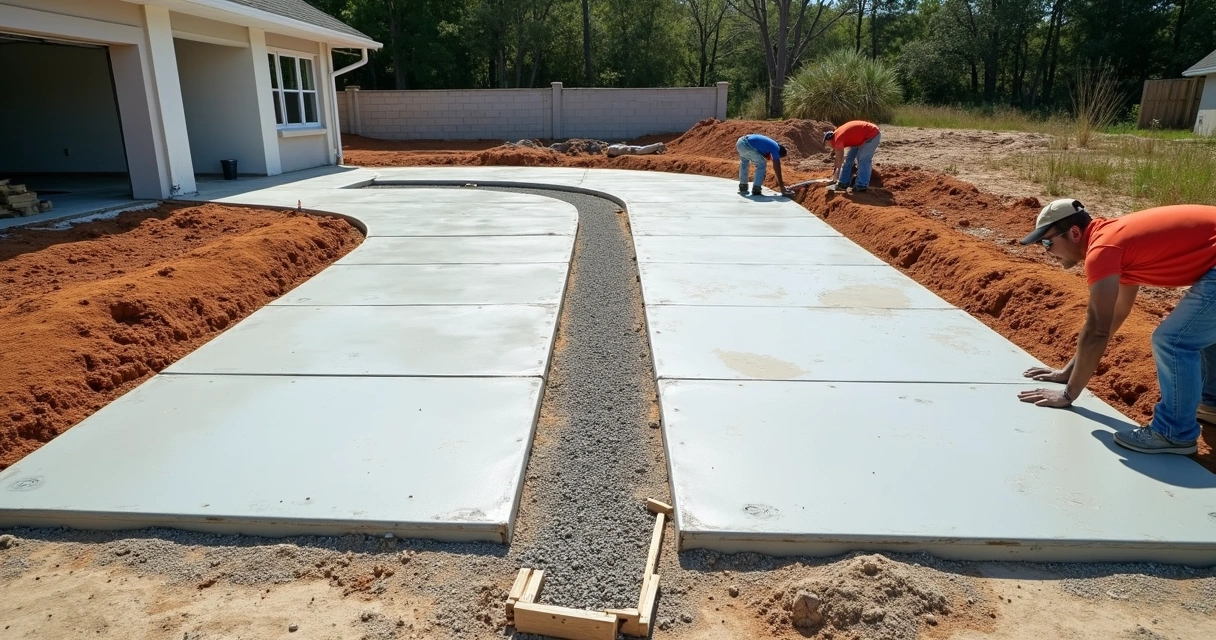
Best practices for split-level driveway design
Now let’s focus on the solutions. These are the techniques we see working for Central Florida homes. They combine guidance from respected authorities, lived experience, and quality materials.
Get the angle of intersection right
Every driveway is different, but the angle where it meets the road is key. The TxDOT guidance for two-way driveways shows that private driveways should “ideally” intersect the street at 90°, and never less than 75°. This gives drivers time to slow and sight lines to see pedestrians. Split-level layouts can make this trickier but planning the lower segment with a near-90° approach is smart.
“A gentle approach to the street means safer comings and goings for everyone.”
Use the right materials for surface and edge
Split-level driveways work well with a mix of materials:
- Concrete (3,000–4,000 PSI): For the main driving surface, lasting strength, and broom, exposed, or stamped finishes
- Interlocking pavers: For landings, top pads, or borders—allow easy access for repairs and better water movement
- Retaining blocks or poured concrete: For side walls at grade changes
- Aluminum or steel edging: For neat transitions to turf or planters
- Epoxy or polyaspartic coatings: In garages or carports fed by the driveway, to control moisture and dust
Our detailed specs are outlined on the St. Cloud concrete driveways installation guide.
Mind expansion and control joints
Control joints are shallow cuts or grooves in concrete that manage where cracks happen. They’re especially necessary at grade breaks and at landing transitions, where tension is highest.
In split-level driveways, we use a mix of saw-cut and tooled joints, sometimes adding mesh or rebar for reinforcement. This detail helps the surface look better and last longer—especially through Florida’s heat, rain, and soil movement. Details can be found in our article on crack prevention for Florida concrete driveways.
Build robust drainage—above and below ground
Here’s what works for us:
- French and trench drains at level transitions and near garage entries
- Curb inlets or catch basins at the bottom of slopes
- Permeable paver bands in landing areas to intercept extra water
- Sloped grading to carry surface water to storm drains—not the street or neighbor’s yard
- Deep compacted sub-bases to limit soil shifting and rutting
“If you can’t get water away, you get slab cracks and trip hazards.”
Proper planning at this stage means fewer worries and calls for expensive repairs later.
Keep pedestrians and vehicles visible and safe
Today’s driveways must serve people and cars. According to TxDOT pedestrian-focused driveway design guidance, driveways need:
- Clear sight lines at all grade breaks
- Flat "waiting areas" for pedestrian crossing at the top or bottom of slopes
- Lighting and high-contrast edging if the driveway crosses walkways
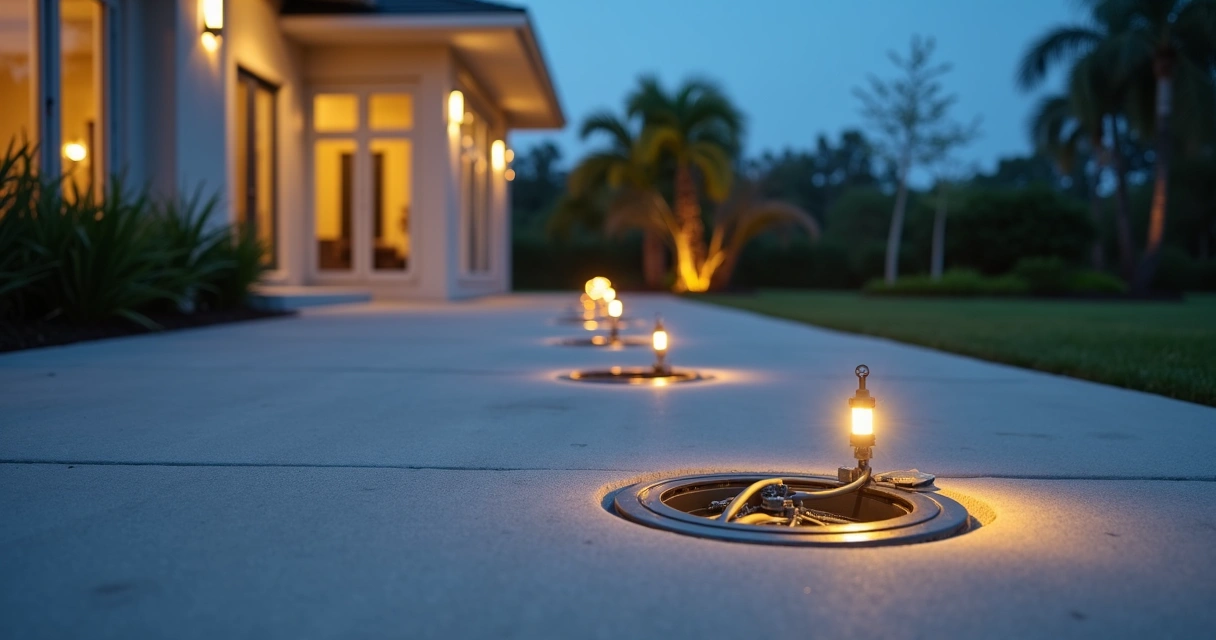
On our jobs, we often add LED lights in paver borders, reflective tape on wall caps, or coach lights above level changes.
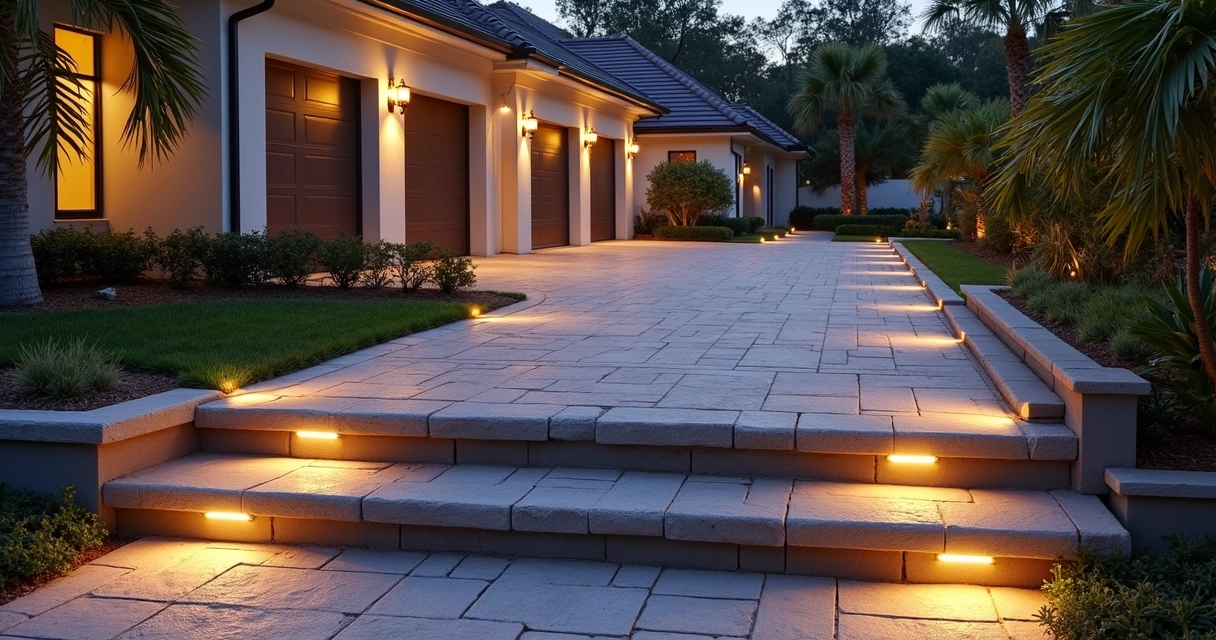
Integrating landscaping and curb appeal
Split-level driveways give more creative options than flat runs. By separating levels, homeowners can add:
- Short, tiered retaining walls for beds or groundcover
- Integrated lighting for night safety and drama
- Paver aprons, bands, or accents to set off the entrance
- Artificial turf at landings or between paver bands for easy care
We often build these details into our designs to help the driveway look like a natural extension of the home and yard.
Step-by-step process for a split-level driveway project
Wondering how our process unfolds at GCM Best Services? Here’s a straightforward breakdown:
- Site assessment: Free visit, photos, and grade checks to plan access and slope.
- Detailed estimate: Itemized pricing for all preparation, materials, and finishes.
- Design and permitting: Plan sets for HOA and city permits, drainage review, notify neighbors as needed.
- Scheduled execution: Sub-base installation, grading, forms, and pours coordinated for minimal downtime, OSHA-safe site.
- Inspection and walkthrough: Final sign-off with photos, issue written warranty and care guide.
We encourage our clients to take an active role at each stage.
Costs, timelines, and maintenance
Budgets for split-level driveways are higher than single-slope driveways due to added steps—landings, drainage, retaining walls, and permits. But the results—a safe, curb-boosting entry—justify the investment for many.
- Concrete split-level driveway (two levels, 800–1200 sq ft): Usually 15%–25% more than flat driveways, due to more grading, formwork, and finishing labor.
- Paver bands, custom finishes, or lighting: Price adds up with details, but also extends life and style.
- Retaining walls (24–36" tall): May add $3,000–$8,000 depending on length and material.
Maintenance for a well-built split-level driveway mostly focuses on:
- Sealing surfaces every 2–3 years
- Inspecting and cleaning drains annually
- Repairing expansion joints as needed
- Checking for movement at wall transitions
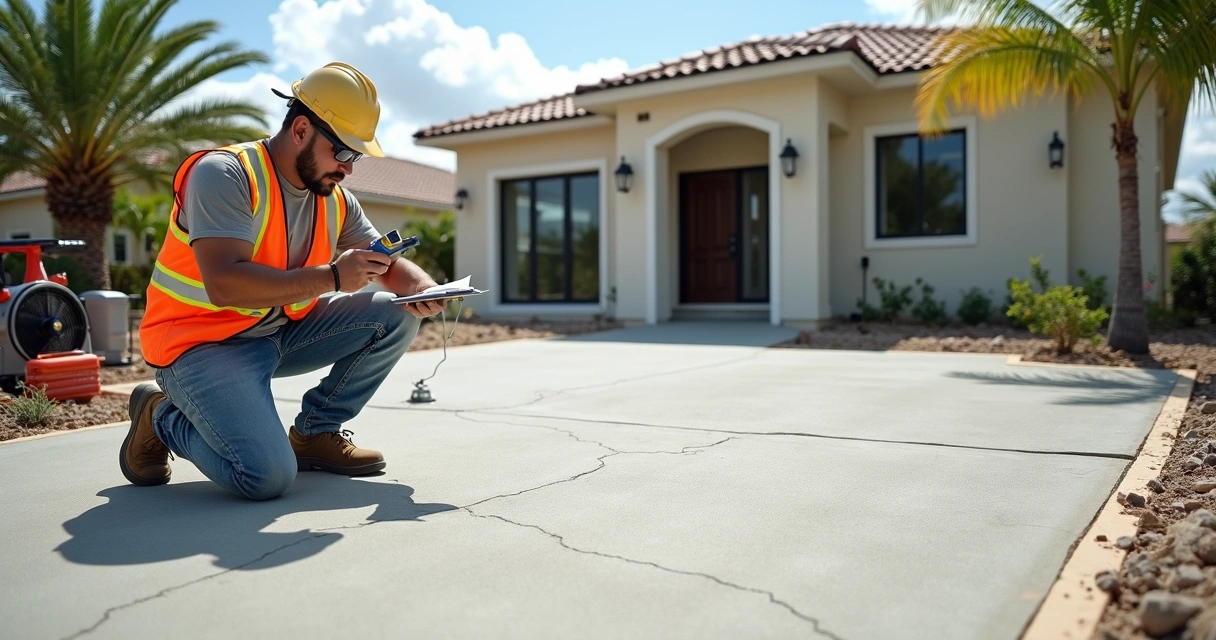
If cracks or drainage trouble appear, our concrete repair guide can help you decide when it is time to call for a repair or professional assessment.
Conclusion: Thoughtful planning leads to beautiful, long-lasting access
In our experience at GCM Best Services, the most successful split-level driveways in Central Florida share a few common things: careful grading, robust drainage, materials chosen for weather and soil, and a thorough process from survey through warranty.
Split-level driveways solve access on tough lots and also appreciate property value, provided every detail is planned and executed with skill.
If you are ready for a tailored, transparent quote on a split-level driveway—or you want to discuss options for upgrading your current setup—we are ready to help. We bring local knowledge, a full-service process, and a photo-supported warranty to every job.
Start with a no-obligation site assessment. The driveway solution for your space is just a call away.
Ready for a professional quote? 📞 (407) 250-1948 • 24–48h • Orlando, Tampa & area.
Frequently asked questions
What is a split-level driveway?
A split-level driveway is a driveway that uses two or more distinct level changes or slopes, often separated by flats or landings, to connect a property at a different elevation to the roadway. This design helps manage steep grade changes, improve water drainage, and create easier, safer vehicle movement where a single slope would be too steep or impractical.
How to handle steep driveway slopes?
The best way to handle steep driveway slopes is to break them up into smaller segments using landings or switchbacks, and to keep individual slopes gentle—ideally under 10% in most Florida cities. Adding mid-driveway landings, using materials with good traction, and installing surface drains or permeable pavers help make the surface safer and more manageable for both vehicles and foot traffic.
Is a split-level driveway worth it?
If a property has significant changes in elevation between the street and parking area, then split-level driveways are often worth the extra investment. They protect against scraping or bottoming out, reduce long-term drainage risks, and allow for customized finishes that boost curb appeal. While there’s added cost over a flat driveway, many homeowners find the safety, convenience, and style make it a strong investment.
What are common split-level driveway problems?
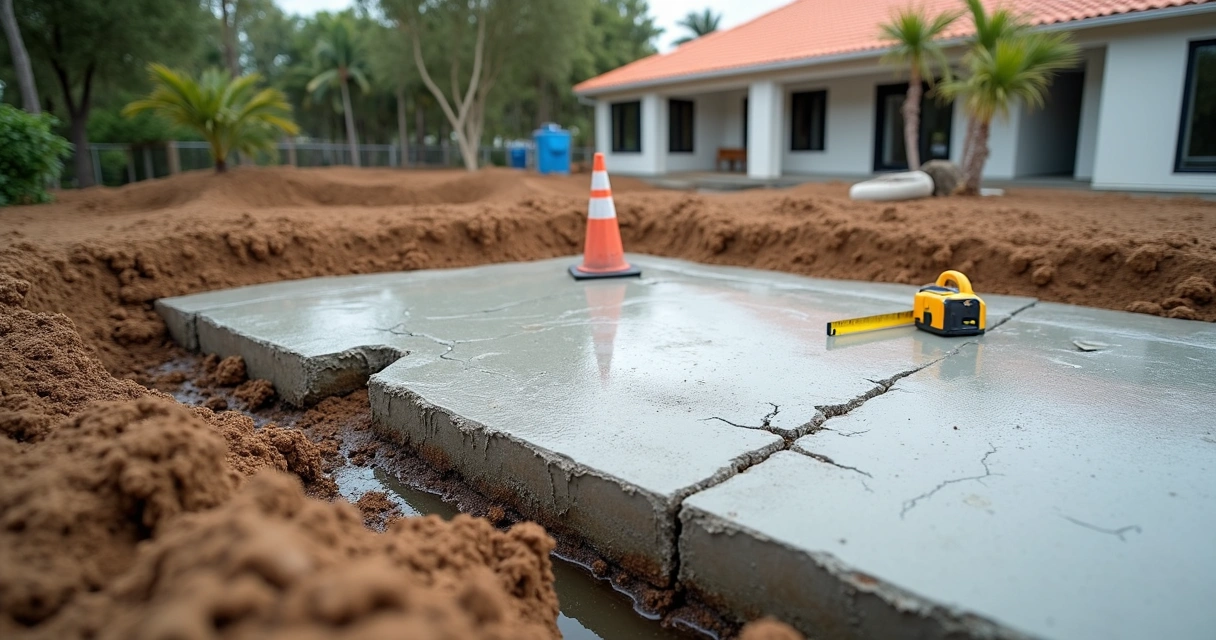
Common issues in split-level driveways include poor drainage at landings, heaving or cracking near grade breaks, trouble with tight turns, and issues with wall or edge separation over time. Most problems can be addressed by careful construction, with proper expansion joints, regular maintenance, and engineered drainage solutions tailored to the local climate and soil.
How much do split-level driveways cost?
Costs depend on size, materials, and site complexity, but split-level driveways are usually 15%–30% higher than standard driveways because of extra grading, forms, drainage, and wall work. For a typical Central Florida home, this often comes to $8,000–$20,000 for medium to large installs, plus add-ons for pavers, walls, or lighting features.