Patio strength and lifespan depend heavily on the right reinforcement. In Central Florida, our concrete patios face unique challenges: tropical weather, shifting soils, and heavy rain. Choosing the correct reinforcement—mesh or rebar—determines whether a patio lasts for decades or cracks in the first few seasons.
As a local, licensed contractor, we at GCM Best Services see daily how reinforcement decisions affect patio durability and customer satisfaction. This article breaks down exactly how mesh and rebar each work, when to use them, and what to expect for your next patio project.
Making a smart reinforcement choice now prevents repairs later.
Understanding the basics: What is patio reinforcement?
Before deciding between mesh and rebar for patios, it helps to know why reinforcement matters at all. When concrete dries, it’s strong in compression but weak in tension. This means that ground shifts, temperature changes, and even everyday use can cause small cracks that eventually widen.
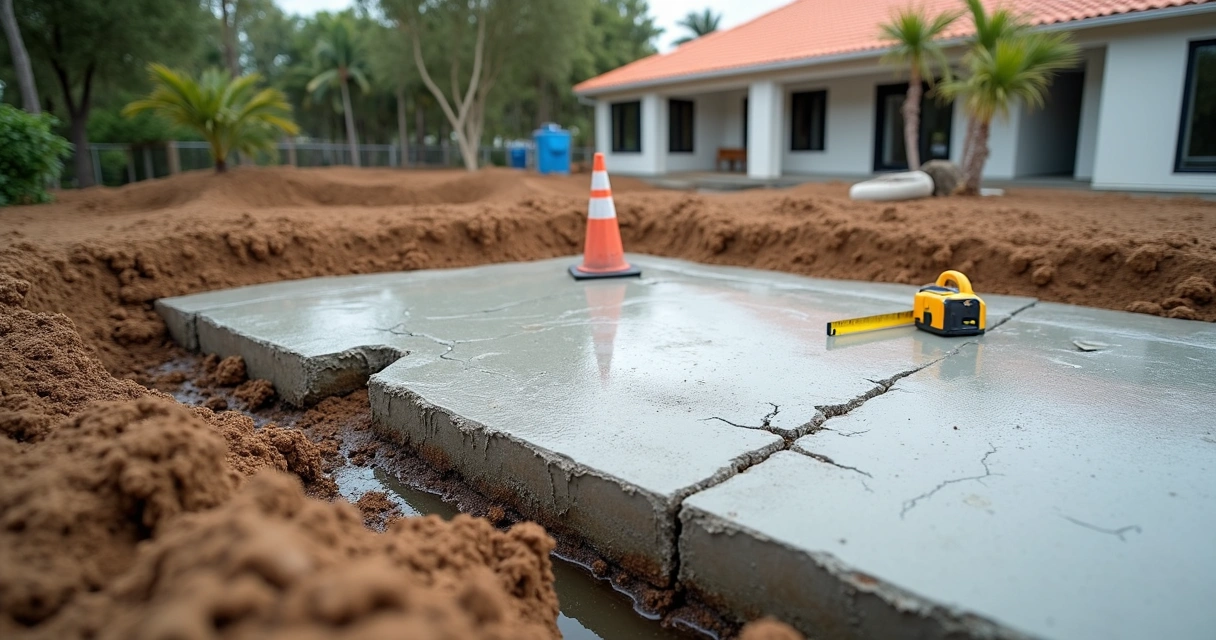
Reinforcement—whether mesh or rebar—holds those cracks together, slowing their growth and supporting your patio under stress or weight. Without reinforcement, patios have a much higher risk of settling, heaving, and cracking—especially in Florida’s clay-based soils and sudden rain events.
- Mesh (welded wire fabric) is a grid of thin, closely spaced wires set within the concrete slab.
- Rebar (reinforcing bar) consists of thicker, solid steel rods placed in a grid or single lines.
We follow industry research, including the Federal Highway Administration’s review of reinforcing steel, which states that good reinforcement prevents internal cracking and even structural failure over time.
How mesh reinforcement works
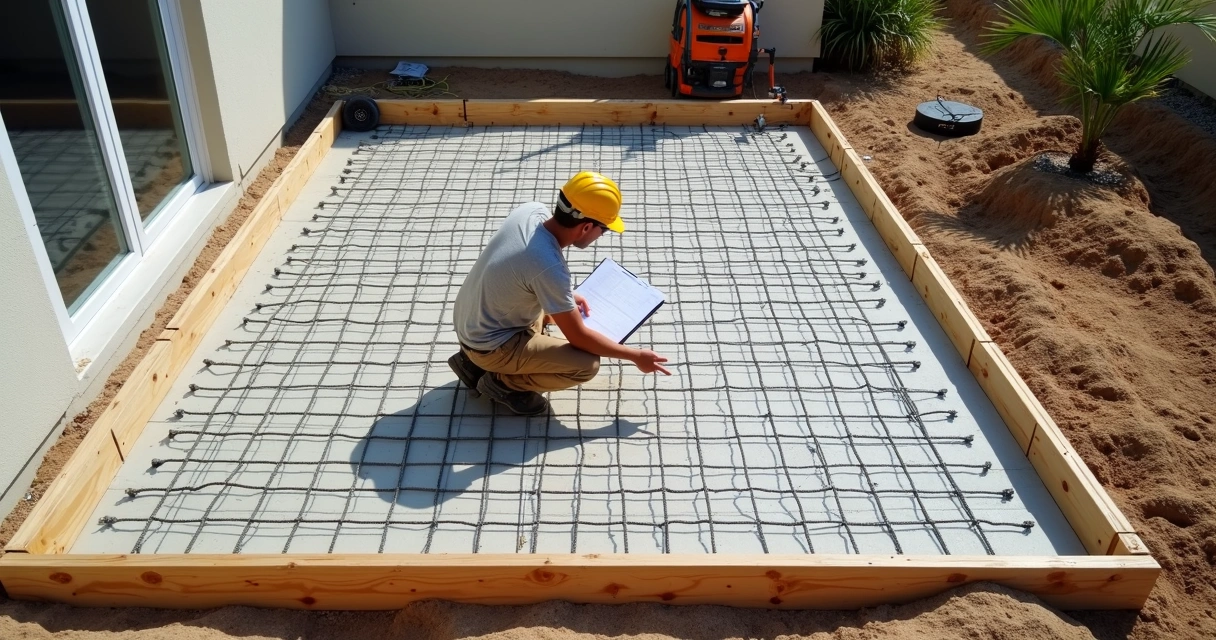
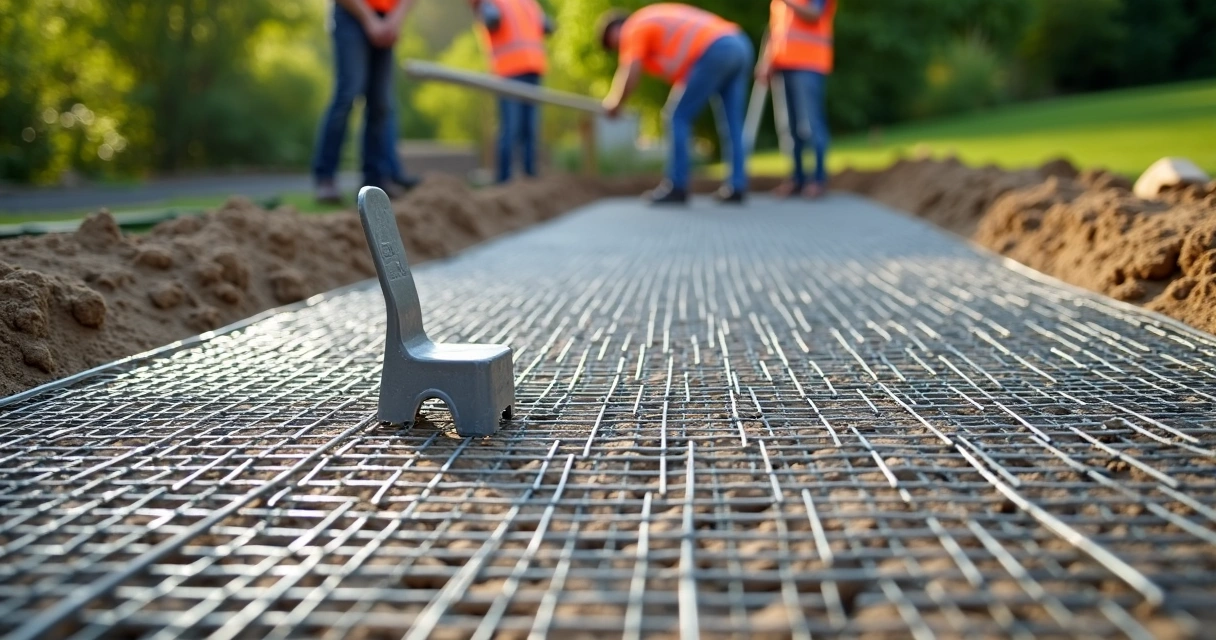
Mesh reinforcement is typically known as welded wire mesh or wire fabric. You’ve probably seen it: thin metal wires cross each other at ninety degrees, welded wherever they intersect, creating a wide sheet.
When we embed mesh in a patio slab, it acts as a net that catches micro-cracks and distributes loads evenly, stopping single cracks from growing unchecked. Mesh comes in rolls or large panels, making it easy to lay out over the sub-base before the concrete pour.
- Mesh wires vary in thickness, usually from 4mm to 10mm.
- Sheets or rolls are overlapped by a minimum amount to maintain strength at the edges.
- Mesh is held above the sub-base by small spacers or “chairs” to keep it at the slab’s tension zone—typically one-third the depth from the bottom.
For most residential patios not subject to very heavy vehicles, mesh offers a good balance of cost, labor, and basic structural support.
How rebar reinforcement is different
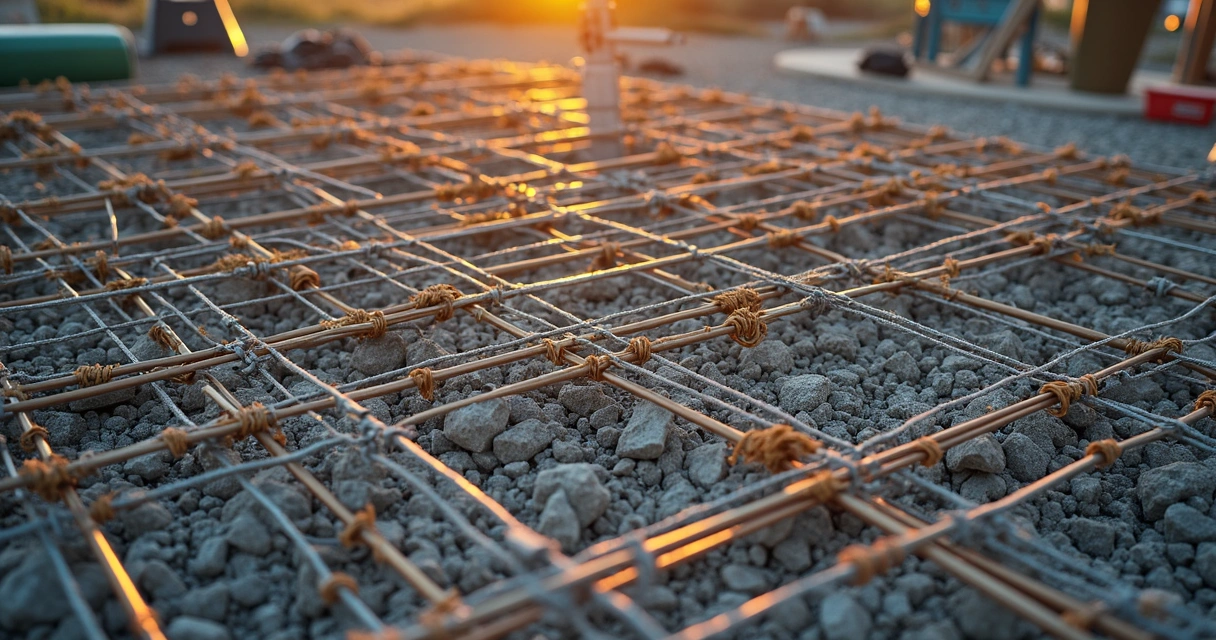
Rebar, on the other hand, is a system of thick steel rods, usually ranging from 3/8" to 5/8" in diameter for patio projects. Rebar can be laid in both directions to form a grid (like mesh, but with fewer, thicker bars), or—as with smaller patios—simply set in one direction along key points.
Rebar has a higher tensile strength than mesh, making it the ideal choice for patios with heavier expected loads, expansive soils, or where soil movement is a risk. Each bar is tied together at intersections, and positioned within the slab using chairs, so it sits within the concrete’s tension zone.
- Rebar resists both flexing and cracking, especially over large spans or where heavy weight may be present.
- It’s required by code in some localities for slabs exceeding a certain size or thickness.
- While more labor-intensive, rebar offers superior performance for demanding conditions.
In our experience at GCM Best Services, patios exposed to vehicles, outdoor kitchens, hot tubs, or heavy planters benefit significantly from rebar reinforcement.
Understanding the differences: Mesh vs rebar side by side
Now, let’s compare mesh and rebar on criteria that matter most for Florida patios—cost, strength, installation, and longevity.
- Strength: Rebar provides more tensile strength by volume. Mesh is lighter and better at controlling drying shrinkage cracks.
- Cost: Mesh (material and labor) typically costs less for smaller jobs. Rebar, while pricier, may avoid future repairs.
- Installation: Mesh is faster to lay for simple patios. Rebar takes more time to cut, bend, and tie, requiring skilled labor.
- Performance: Rebar shines where surface movement, heavy loading, or poor sub-grade conditions exist.
- Crack Control: Mesh controls “map cracking” (surface hairline), but rebar performs better against wide, structural cracks.
Independent studies, like those summarized in fatigue behavior research on reinforced concrete, show that either type of reinforcement greatly improves fatigue resistance and extends life. The choice comes down to your patio’s expected use and site conditions.
When should I choose mesh reinforcement for my patio?
Mesh is an ideal reinforcement for many patio projects—especially for residential backyards or decorative areas without constant heavy loads. In Central Florida, here’s when mesh is usually our first recommendation:
- You’re building a small-to-medium size patio, such as an outdoor seating area or grilling platform.
- The sub-base is stable: soil is well-compacted, with minimal evidence of repeated flooding or settlement.
- You don’t plan to drive or park vehicles, or place extremely heavy planters or hot tubs.
- Budget is an important factor, and you want reliable crack control for a moderate price.
Mesh is not meant to “keep the slab together” after major cracking, but to limit the width and spread of small cracks caused by shrinkage or minor ground movement.
In our own projects across Orlando and nearby areas, we see great results when mesh is combined with:
- A 6–8" compacted base, such as crushed concrete or road base gravel.
- 3000–4000 PSI concrete.
- Proper joint placement, spaced per industry standards.
For more on preparing patios to last in Florida’s wet, shifty soils, our article on preventing cracks in local concrete patios walks through best practices.
When rebar makes sense for your patio
Certain situations demand the power and depth of rebar:
- Your patio will see heavier loads: vehicles, heavy furniture, outdoor appliances, or big gatherings.
- The slab is unusually large, or thickness exceeds the norm (4" is standard, 6" or more is common for driveways).
- The site has expansive clays, visible settlement, or high water table—meaning lots of future movement.
- The patio will support masonry features like fire pits, summer kitchens, or retaining walls.
- Local code or HOA rules require rebar for slabs above a given thickness or area.
Rebar absorbs more force from up-and-down movement—protecting patios from deep cracks and “slab heave” as our soils expand and contract with rain cycles.
For those considering driveway/patio projects where vehicles may eventually travel or park, our driveway and patio paving advice provides deeper detail on reinforcement options.
How we decide: Our process at GCM Best Services
With every patio project, we consider the following:
- Site Assessment: Soil type, slope, and drainage are crucial. We look for sand or clay content, areas prone to flooding, and locations near trees with big roots.
- Anticipated Loads: Will you entertain groups, store heavy grills, or park on the slab?
- Slab Size & Thickness: Larger, thicker slabs often need rebar, while smaller patios may do fine with mesh.
- Budget & Schedule: Mesh is quicker and more affordable for straightforward patios.
- HOA/Permit Requirements: Some neighborhoods specify reinforcement types for patios.
After the site visit, we recommend the right system—sometimes blending both mesh and rebar for large projects or where high performance is needed.
Our team always explains our reasoning, provides photos, and offers a written warranty. For more detail on our approach and how we coordinate with local building codes, see our guide to picking concrete companies in Orlando.
What about using both mesh and rebar?
It comes up often: Is it overkill to use mesh and rebar together? Not always. On larger, complex patios, or where site risks are high, we may recommend both:
- Rebar laid at edges, control joints, or high-stress locations.
- Mesh added throughout to limit surface cracking.
This hybrid approach often gives the best of both worlds: the surface crack control of mesh, and the deep strength of rebar.
For multi-use spaces, patios on poor fill, or designs integrating steps, masonry, or piers, a combination can give peace of mind without excessive cost. Our installation guide for concrete in St. Cloud covers more about where hybrid reinforcement fits.
Installation practices that matter
Whether using mesh, rebar, or both, a few best practices are always required for great outcomes:
- Support in the right zone: Mesh and rebar must sit high enough in the slab to control tension cracks, not just rest on the ground.
- Proper overlap: Mesh sheets are overlapped at least one full square. Rebar is overlapped and tied where bars meet.
- Control joints: Scored or cut every 8–12 feet (or per ASTM/ACI guidelines) to direct cracks where they’re least visible.
- Quality concrete: 3000–4000 PSI, with added fiber for shrinkage control where specified.
- Drainage design: Slope the patio at least 1/4" per foot away from structures.
We photograph every step and document each detail for our homeowners, so you know your patio is built right from the ground up.
What happens if you skip proper reinforcement?
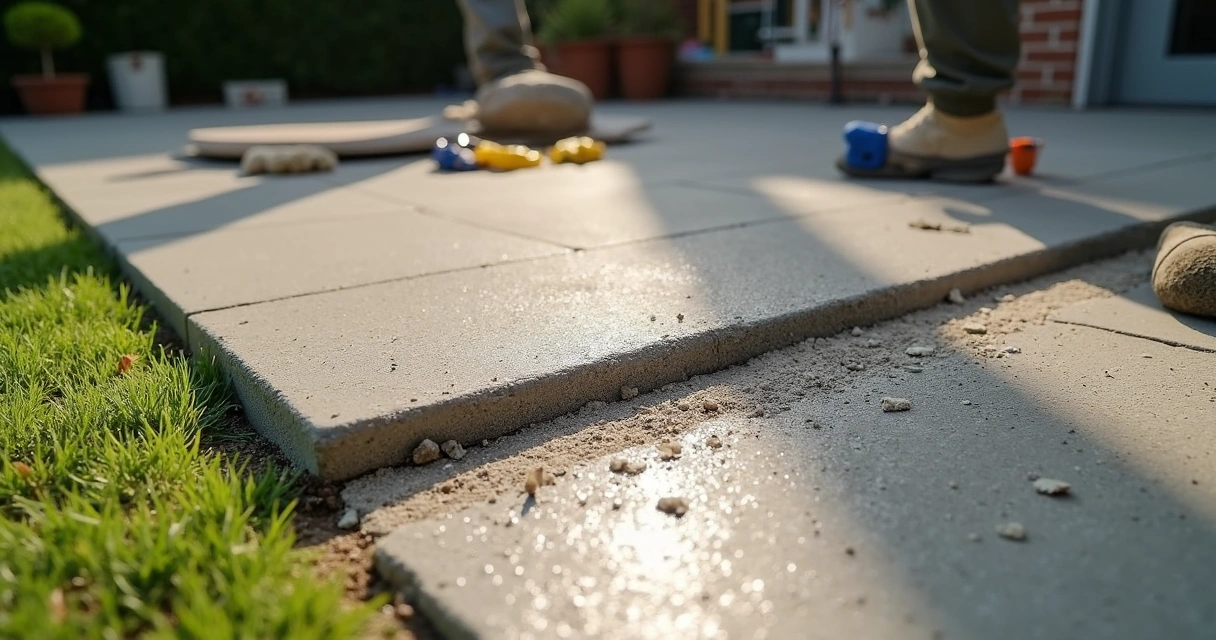
It’s tempting to save money by skipping reinforcement, especially for small patios. However, in humid, storm-prone Central Florida, this often leads to:
- Cracks forming within the first one to three years, especially at joints or edges.
- “Heaving” as roots grow below or soil swells with heavy rains.
- Trip hazards, pooling water, and shrinking property value.
- Costlier repairs, or even complete slab replacement.
We’ve repaired patios poured without reinforcement that required full demolition after less than five years. The upfront investment in mesh or rebar always saves money and worry over the life of the patio.
For a library of Florida patio issues and solutions, view our concrete resource center for case studies and tips.
Budget & value: Cost comparison of mesh and rebar
Material prices vary, but here’s a general overview for residential patios:
- Mesh: $0.25–$0.60 per square foot (material only).
- Rebar: $0.50–$1.20 per square foot, plus added labor for tying and placement.
Mesh is more affordable for basic patios, but on larger jobs, rebar’s extra up-front cost is often offset by longer lifespan and lower risk of major repairs. Using the right type for your needs—not simply the cheapest—produces the best results.
How GCM Best Services guarantees success
Our team doesn’t just pour and run. For every patio or slab, we:
- Assess soil, water, and usage conditions.
- Plan the right reinforcement based on proven research, like the Federal Highway Administration’s review of best practices.
- Document everything: from sub-base to post-pour.
- Finish each project with a detailed inspection and written warranty.
That’s how we create patios that look great, feel safe, and remain trouble-free for many years in Central Florida’s challenging climate.
Conclusion: Your best patio starts with the right reinforcement
Choosing between mesh and rebar isn’t just a technical detail—it’s a decision that directly shapes the life of your patio, the safety of your family, and the return on your investment. In most cases, mesh suits smaller patios with stable soils, while rebar is best for high-load, larger, or risky areas. Sometimes, a combination is perfect.
In our experience at GCM Best Services, the only shortcut is knowledge—never in the material itself. When in doubt, prioritize lasting value and local expertise for your patio’s unique needs.
Ready for clarity on your next patio? See how our experts plan and reinforce patios for Central Florida—or schedule a free site visit today to get a tailored recommendation that fits your goals and budget.
We’re not just building patios. We’re building trust—and standing behind every slab with a warranty and maintenance plan that makes ownership simple. If you want to know more about our process, or need help planning your dream patio anywhere in Orlando, Tampa, and nearby areas, contact our team for a no-obligation quote or site assessment.
Ready for a professional quote? 📞 (407) 250-1948 • 24–48h • Orlando, Tampa & area.
Frequently asked questions
What is mesh reinforcement for patios?
Mesh reinforcement is a grid of welded steel wires set within a concrete slab, designed to control small surface cracks and evenly spread loads across the patio. It is especially suitable for smaller patios or where basic crack control is needed. The mesh is suspended off the ground within the slab, ensuring it works in the concrete’s tension zone rather than at the very bottom.
When should I use rebar instead?
Rebar should be used when the patio will bear heavy loads, is unusually large, rests on unstable or expansive soils, or when local code requires added structural strength. If you plan to drive or park on the slab, add major structures, or face flood-prone ground, rebar is often the safer, longer-lasting choice.
Is mesh or rebar stronger for patios?
Rebar is stronger than mesh for patios, as it has greater tensile strength and resists wide cracks much more effectively over time. Mesh works well for basic surface crack control but cannot match rebar’s ability to absorb stress from heavy loads or significant soil movement.
How much does mesh reinforcement cost?
The average cost of mesh for patios in Central Florida is between $0.25 and $0.60 per square foot, plus labor for installation. It is generally more affordable than rebar for smaller, straightforward patios, making it a good choice for many backyard projects.
Is it worth it to use both?
Using both mesh and rebar can be very worthwhile for large, multi-use patios, or where soil movement and load demands are higher than average. By combining mesh for surface crack control with rebar for core strength, homeowners gain longer durability and peace of mind—especially if the patio anchors grills, masonry, or retaining walls.