When we invest in a patio, we picture it as a lasting outdoor retreat—a place for fresh air, gatherings, and relaxation. In places with changing seasons, like Central Florida or anywhere with surprise cold snaps, patios face a real test: the freeze–thaw cycle. Here at GCM Best Services, we are often called to inspect cracked surfaces or woes about pavers shifting after cold weather. These aren’t just cosmetic concerns. Left unchecked, freeze–thaw damage shortens your patio’s life, sending maintenance costs up and curb appeal down.
Without a protection plan, a single winter can do years of damage to your outdoor space.
We know that planning ahead protects your investment and keeps your outdoor living area beautiful. So, why exactly is freeze–thaw protection so relevant for patios—even in states where snow is rare? Let’s look at the science, local climate realities, warning signs of trouble, and the steps every patio owner can take for peace of mind.
Understanding freeze–thaw cycles: what really happens?
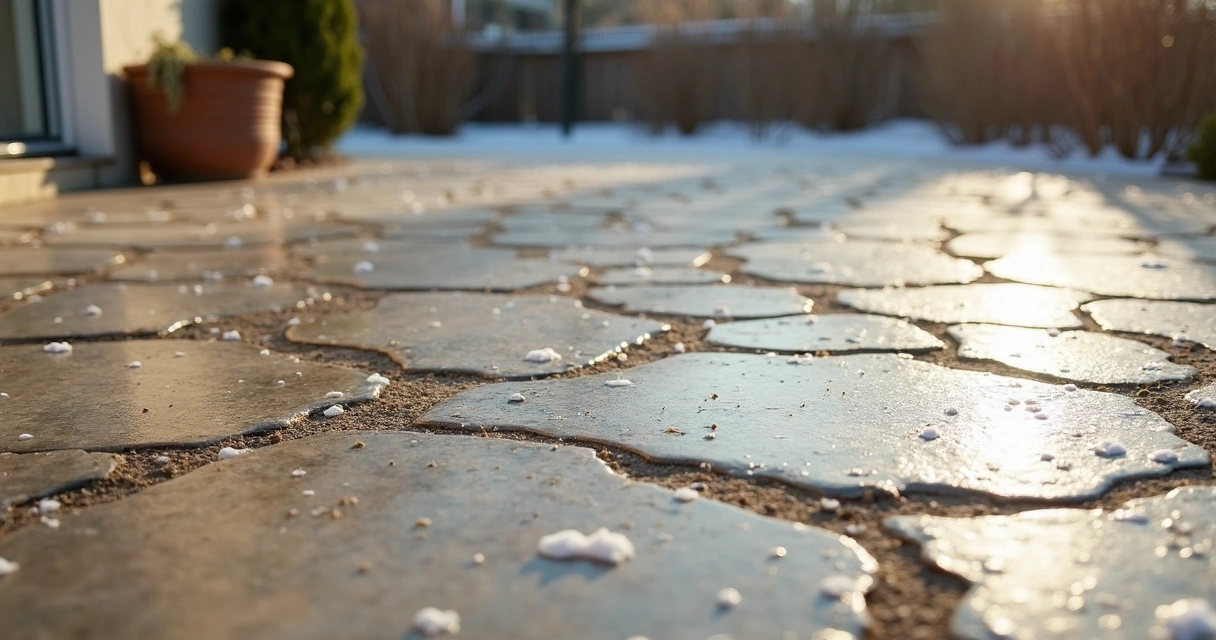
Every material expands when heated and contracts when cooled. Concrete, pavers, and stone are no exception. But freeze–thaw cycles add an extra challenge. When water seeps into tiny pores or cracks in a patio surface and then the temperature drops below 32°F (0°C), that water turns to ice and expands.
Repeated freezing and thawing cause microscopic damage, making cracks grow and surfaces break down over time. The outcome is often spalling (flaking or chipping), scaling, or even larger fractures that let in more water the next cycle.
The 2022 review on concrete pavement performance highlights that, in cold regions, freeze–thaw cycles remain among the main threats to patio durability due to persistent effects like hydrostatic pressure, salt crystallization, and trapped moisture.
Why even “mild” climates aren’t immune
Freezing weather isn’t as common in Orlando or Tampa as, say, Chicago or Boston. But Central Florida still experiences the occasional frost, and many areas have microclimates or dips in temperature that surprise homeowners.
Recent regional climate analysis from the University of Michigan found that the number of freeze–thaw cycles has shifted but not disappeared; isolated cold events can be more intense following warm periods, creating the perfect storm for damage. Even a handful of hard freezes each year is enough to trigger lasting issues in unprotected patios.
What freeze–thaw damage looks like
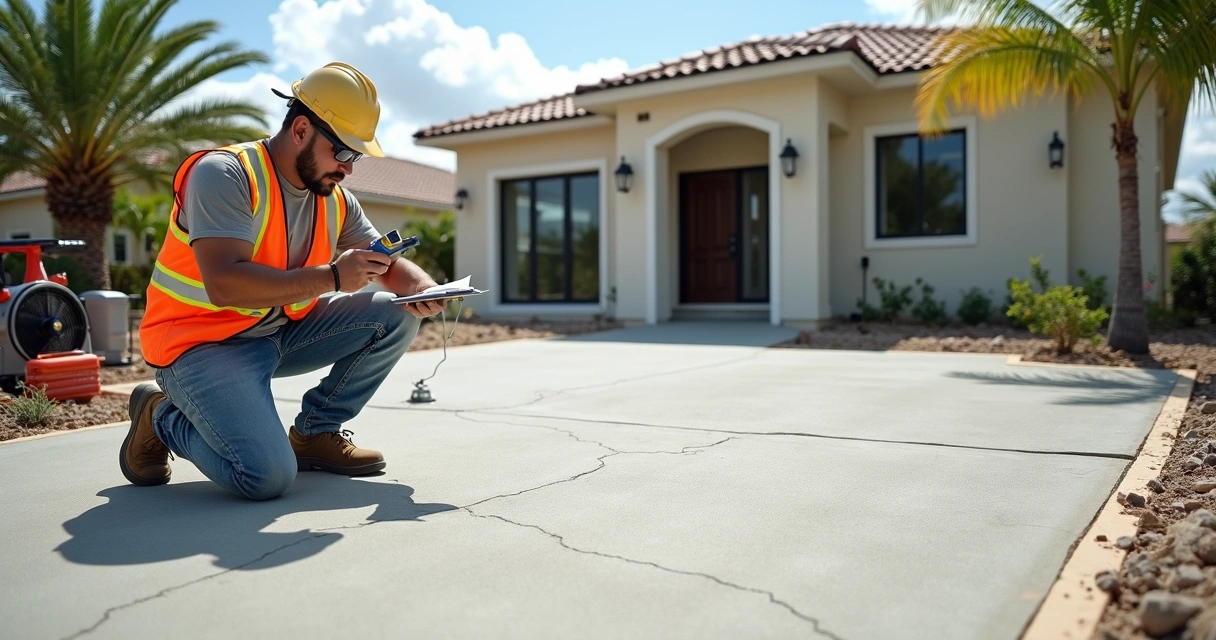
We’re often asked: “How can I tell if my patio is at risk?” Here are the warning signs our team at GCM Best Services checks for on every assessment:
- Hairline cracks, which later widen
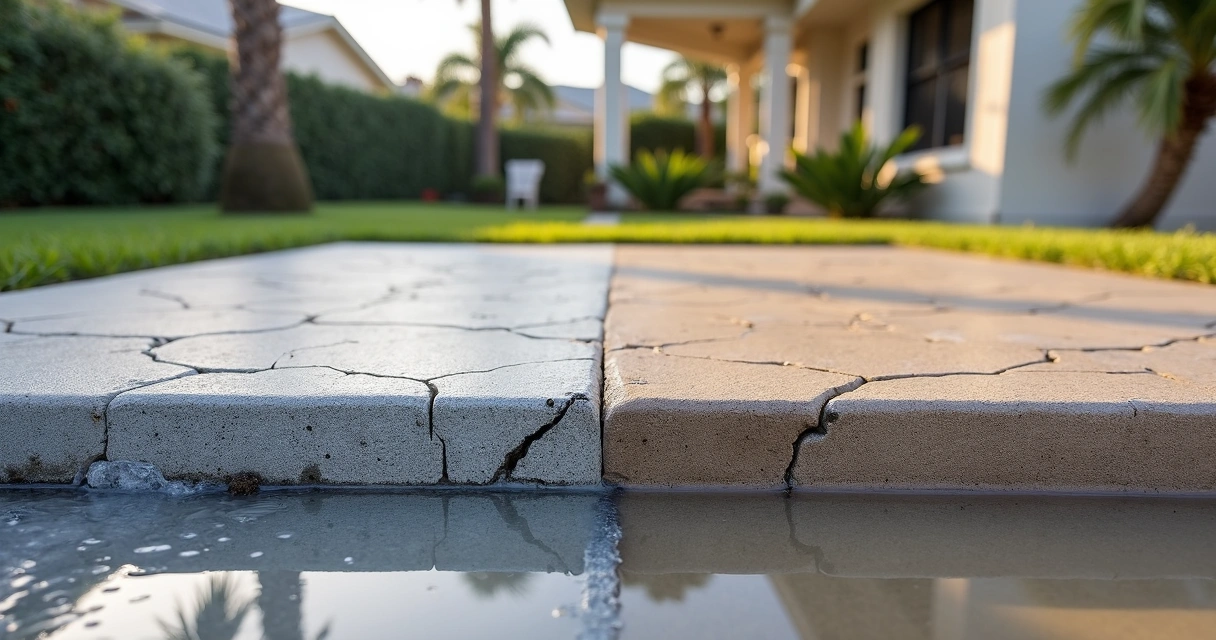
- Surface scaling (patches where the top layer flakes off)
- Popped-up edges or uneven pavers
- Debonding or chunks of material breaking away
- Staining or white powdery residue (efflorescence)
- Water pooling in low spots (drainage failure)
If you see several of these signs together after a cold snap, your patio may be suffering from freeze–thaw distress. These issues often start small but accelerate without intervention. For details about how improper drainage or weak surface prep worsen these problems, see our overview of patio crack prevention in Florida.
Why concrete, brick, and paver patios need special care
All outdoor surfaces face risks, but concrete, stone, and pavers are especially vulnerable to sudden shifts in temperature and moisture.
Concrete: porous by nature
Concrete contains capillaries—tiny pathways that let water and air flow in and out. Modern mixes, like those we use at GCM Best Services (rated at 3,000–4,000 PSI), are much denser than older concrete, but no mix is 100% waterproof.
Freeze–thaw cycles exploit these pathways, turning small pores into larger cracks and leading to surface breakdown.
Pavers and bricks: joint weakness
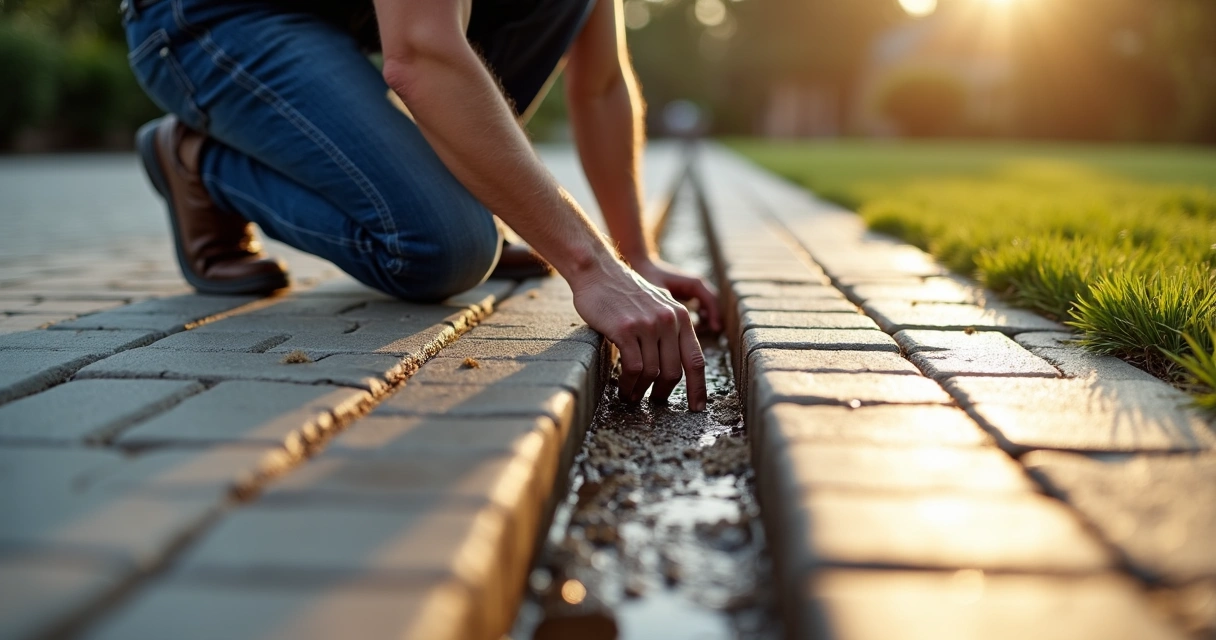
Pavers offer stylish looks and flexible designs but need tight installation standards. Sand-filled joints can wash away or become loose after rain and cold. Freeze–thaw cycles can lift or shift individual pavers if joints don’t drain quickly.
Professional edge restraints and polymeric joint sand dramatically improve resistance to weather-driven failures in patios made with pavers.
How freeze–thaw cycles cause patio problems
Most damage occurs below the surface first, making early detection tough. Based on field experience and peer-reviewed studies (see 2022 review), these are the top mechanisms:
- Hydrostatic pressure: Freezing water expands, pushing outward in the concrete matrix or between pavers.
- Salt crystallization: De-icing salts draw moisture in, then the salt crystals grow as water evaporates, creating stress in pores and joints (demonstrated in research on chloride exposure).
- Repeated cycles: Every freeze–thaw cycle slowly increases the size of cracks and weakens surface bonds.
- Poor drainage: Standing water is the enemy—once trapped, it finds its way into every opening, causing bigger problems over time.
It’s not just the cold that hurts—it’s the combination of moisture, temperature shifts, and material science. That’s why, when planning patio installations in places like Central Florida or the Midwest, we recommend a full protection plan, not just “hoping it holds up.”
Freeze–thaw protection: what does a “plan” look like?
We tell homeowners a protection plan isn’t just about one feature or product—it’s a layered approach from design to maintenance. Here’s our checklist for freeze–thaw resistance in patios:
- Soil and base prep: Start with 6–8" of compacted granular base beneath the patio. This reduces frost heave and improves drainage.
- Concrete mix selection: Use only high-strength, air-entrained concrete (3,000+ PSI) for new patios. Air-entraining agents create tiny bubbles that buffer freezing expansion (see mechanisms discussed in scientific reviews).
- Steel reinforcement: Install rebar or mesh as specified for slab type to keep cracks from growing wider.
- Proper joints: Expansion and control joints help the patio “move” without cracking; these must follow set patterns for each project.
- Paver installation: Edge restraints and polymeric sand in the joints reduce movement and block water intrusion.
- Surface sealers: Penetrating sealers guard against water absorption and chloride (salt) entry. This is especially relevant near driveways or walkways where road salts can reach patios.
- Positive drainage: Patios must slope away from the house. Adding drains, catch basins, or French drains can eliminate standing water.
- Routine inspection: Check for cracks, settling, or gaps each spring and fall. Spot repairs take minutes and save years of heartache.
When all these elements work together, the risk of major freeze–thaw damage drops sharply.
Don’t forget the role of sealers and coatings
Surface protection is often overlooked. The right sealer forms an invisible barrier, stopping water and de-icing salts from reaching concrete or joints. We recommend penetrating sealers for patios with natural stone or exposed aggregate, while high-build coatings (such as epoxy or polyaspartic) suit garage finishes and some slabs.
A point highlighted in recent research on de-icing salt interactions with concrete is that chloride-based salts, when they reach interior pores, speed up scaling and break surfaces faster than plain water freeze–thaw cycles alone. So a sealer that blocks both moisture and salt has double the value against winter-related distress. At GCM Best Services, we use only products proven in actual field conditions for Florida weather and the occasional cold snap.
Maintenance timeline for long-lasting patios
So, you’ve got a patio built or restored with all the right specs. What now? Protection is not a one-time affair. Our maintenance schedule for top performance is:
- Inspect pre-winter and post-winter for cracks, scaling, or loose paver joints.
- Reapply penetrating sealer every 2–4 years; high-traffic or salt-exposed patios may need more frequent treatments.
- Sweep sand or joint filler into paver patio joints annually, topping off where material has washed out.
- Clear drains and keep all edges unobstructed so runoff doesn’t linger on surfaces.
- Promptly repair hairline cracks and small spalls with compatible patch materials.
Seasonal touch-ups prevent minor wear from becoming major repairs down the road.
Design tips for new patios: freeze–thaw protection at the blueprint stage
Most freeze–thaw disappointments start during construction. We see it every year: patios with a beautiful finish but poor base compaction or drainage under the surface. These are only as strong as what lies beneath.
For homeowners or HOAs planning a new outdoor living space, here’s what we include in our designs at GCM Best Services:
- Layered base that matches soil condition (for Florida, this means stable sub-base to combat soft, damp soils)
- Correct thickness and slope in the slab (minimum 4” for walkways, 6”+ for driveways or outdoor kitchens)
- Integrated drainage channels where patio meets lawn, pool, or landscaping features
- Expansion joints spaced per industry standards—never “eyeballed” or left out for appearance sake
- Detailed permit management, as local code and HOA rules often specify how drainage and structure affect freeze risk
We summarize these best practices and local guidelines in our patio installation guide for the St. Cloud and wider Orlando area.
Addressing existing patios: is it ever too late?
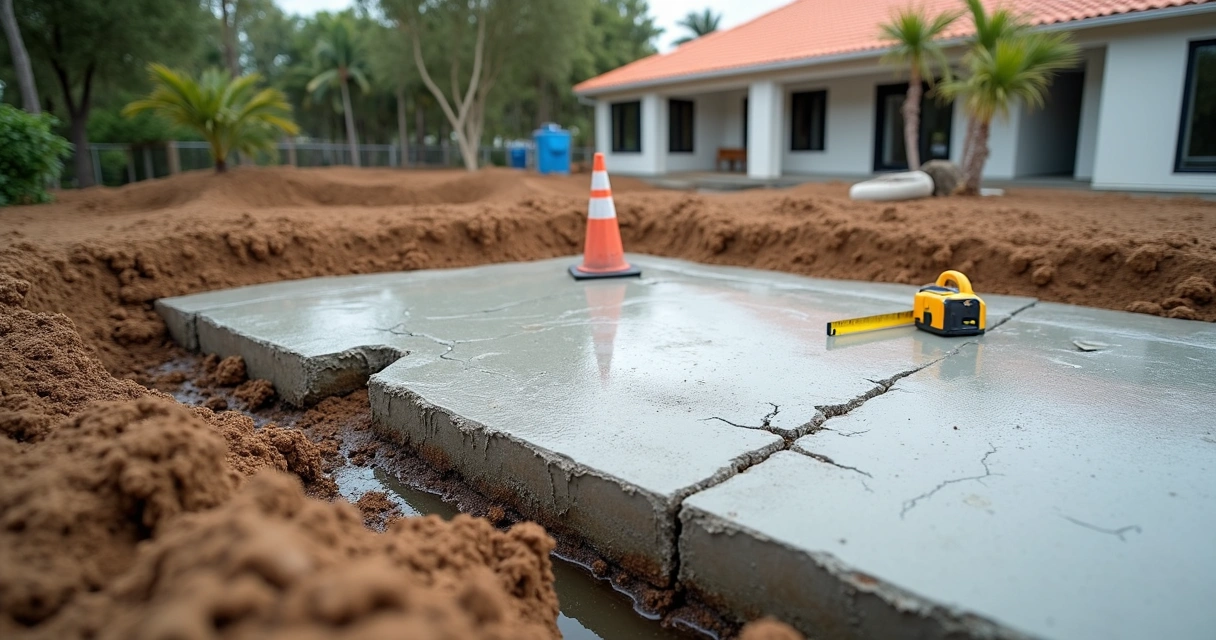
Plenty of homeowners come to us after noticing cracking or shifting on patios less than a decade old. The good news? Restoration is usually possible if caught early.
After diagnosing the type and cause of damage, we may recommend:
- Concrete patching products for hairline or surface cracks
- New sealer applications to block future moisture entry
- Regrading or resloping patios that let water pond in key areas
- Lifting and resetting pavers where joints have failed
- Installing drainage corrections, like French drains or surface channels
A freeze–thaw protection plan is often just as valuable for restoration as for new builds. We help homeowners document the problems with photos and a written warranty on repairs, so they can track improvements over time. For an overview of our restoration options, you can browse our driveway and patio paving services.
Is freeze–thaw protection relevant in Florida’s changing climate?
We’re sometimes asked if freeze–thaw strategies are “overkill” in Central Florida. After all, major snowfalls are rare, and temperatures stay above freezing most of the winter. Here’s our take—backed by local data and field results:
Recent regional studies show that while the overall number of freeze–thaw days has dropped, the cycles that do occur tend to be more dramatic (like sudden cold after a warm spell). These surprise events cause concrete and paver surfaces—originally designed for “mild winters”—to fail if not ready.
Planning for cold events, even rare ones, helps patios survive not just this season but for years to come.
With climate patterns growing less predictable, resilient design now pays off for every patio, whether at a single-family home, HOA, or business. Our dedication is to give Central Florida residents and property managers peace that their outdoor spaces can withstand whatever the weather throws next.
Key benefits of a freeze–thaw protection plan
When patios are built or refreshed with weather defense in mind, homeowners enjoy:
- Longer patio lifespan (10–30+ years with proper upkeep)
- Lower yearly maintenance and fewer repairs
- Reduced risk of water intrusion near foundations or pools
- Better curb appeal and home value
- Peace of mind after storms or cold snaps
We’re proud to apply these benefits in every outdoor project at GCM Best Services—with transparent communication, permits handled, and warranties in writing. To discover how you can boost your patio’s strength and beauty, consider browsing our concrete resources and hardscape installation ideas.
Taking action: how to get your patio ready
If you’ve spotted early warning signs, or you want to ensure your patio is protected before the next weather event, here’s what we recommend:
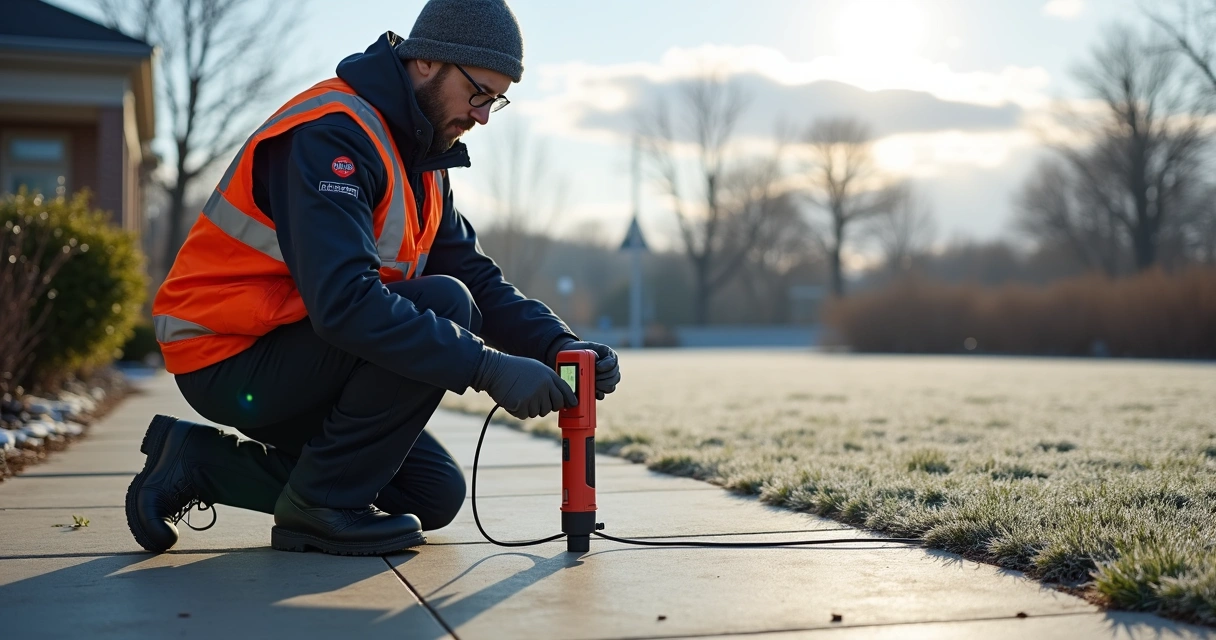
- Schedule a professional assessment—We look for both visible issues and hidden risks.
- Request an estimate—Our team develops project-specific improvement or protection plans tailored to your location and patio type.
- Follow maintenance best practices—Proper care goes a long way, whether your surface is concrete, paver, or stone.
- Invest in quality products and installation—From the right base to sealers and drainage, quality performs best.
- Keep documentation—Inspection records and warranty papers are your best insurance against unexpected problems or resale questions.
We believe every patio deserves to last as long as your memories. That’s why GCM Best Services is dedicated to freeze–thaw protection for families, businesses, and communities across Central Florida.
Conclusion: plan for resilience, enjoy your patio longer
The beauty of a well-designed patio should last through every season. Freeze–thaw cycles are a challenge, yes, but they don’t have to be a source of stress. With the right plan—solid construction, drainage, and annual checkups—patios endure. Our team at GCM Best Services is always ready with tailored solutions, written warranties, and clear communication at every step. Ready to give your outdoor space an upgrade against nature’s surprises? Invest in a freeze–thaw protection plan now, and you’ll enjoy a worry-free patio for years beyond the next cold snap.
If you want your patio to be truly resilient and beautiful, reach out to us for an assessment or quote. We’re here to help you enjoy the outdoors—no matter the weather.
Frequently asked questions
What is freeze–thaw damage on patios?
Freeze–thaw damage occurs when water penetrates the surface or joints of your patio, freezes, and expands, causing cracks, surface flaking, and shifting of materials. Over time, repeated cycles of freezing and thawing weaken the structure, leading to visible scaling, uneven surfaces, and sometimes costly repairs.
How can I protect my patio?
You can protect your patio by choosing quality materials (like air-entrained concrete or polymeric joint sand), installing a compacted base and drainage, sealing the surface to block water and salts, and performing seasonal inspections. Regularly reapplying sealer and fixing cracks right away also make a big difference. GCM Best Services includes all these steps in every protection plan.
Is freeze–thaw protection worth it?
Yes, freeze–thaw protection greatly increases your patio’s durability and can save you from expensive repairs in the future. Even a handful of damaging freeze–thaw cycles can shorten your patio’s lifespan unless you address the risk with a complete plan.
What are the best freeze–thaw products?
Look for penetrating concrete sealers, air-entrained concrete mixes, quality polymeric sand for pavers, and proper edge restraints. These solutions, installed and maintained correctly, are the most effective against freeze–thaw cycles. GCM Best Services uses only proven products that balance durability with local code and climate needs.
How much does freeze–thaw protection cost?
Costs vary by patio size, type, and needed repairs. For new patios, including freeze–thaw protection may add a few percent to the project, but it reduces future maintenance costs significantly. For existing surfaces, sealing or drainage upgrades are typically affordable and deliver peace of mind far beyond their initial price. We provide detailed estimates after a no-obligation inspection.
Ready for a professional quote? 📞 (407) 250-1948 • 24–48h • Orlando, Tampa & area.