Primary keyword: Fiber mesh crack preventionVariants: Fiber mesh in Florida concrete, Concrete slab reinforcement, Crack control concrete Orlando
Audience: Florida homeowners, property managers, builders, and anyone considering new concrete slabs or repairs.Pain/benefit: Worried about concrete cracks, costly repairs, and having a long-lasting, great-looking slab? Then understanding if fiber mesh really prevents cracks in Florida’s climate is key.
When it comes to building or repairing slabs in Central Florida, crack prevention is at the top of most minds. Will fiber mesh alone keep your concrete from cracking in our challenging soil and weather conditions, or are other reinforcements necessary? At GCM Best Services, we see this question often—so we’ve brought together experience, science, and local knowledge to break down the facts, so you can plan your project with confidence.
Table of contents
- Why do concrete slabs crack in Florida?
- What is fiber mesh and how does it work?
- Types of fiber mesh and their effects on cracking
- Fiber mesh research and real-world performance
- Fiber mesh alone vs. combined reinforcement methods
- Special challenges for Florida concrete slabs
- Best practices for crack prevention in Florida concrete slabs
- Common myths and misconceptions
- Case studies and experience from GCM Best Services
- Conclusion: Is fiber mesh enough?
- Frequently asked questions
Why do concrete slabs crack in Florida?
Concrete cracks may seem inevitable, but the reasons behind them are not always the same. Florida soils, humidity, and climate patterns are unique, which means slabs here face distinct challenges.
- Shrinkage: When water leaves the slab during curing, it shrinks. If this happens too quickly, cracks appear.
- Sub-base problems: Sandy or clay-heavy soils in Central Florida may settle or expand, stressing the concrete above.
- Temperature swings: Hot days, cool nights, and unexpected downpours create cycles of expansion and contraction.
- Poor drainage: Water sitting under or on top of the slab can wash out the sub-base or penetrate the concrete, leading to cracks.
In our work at GCM Best Services, we’ve found that proper preparation and quality materials are essential for resisting cracks from these specific causes. To learn more about how these Florida-specific issues happen, check out our full guide on preventing cracks in Florida concrete patios and driveways.
What is fiber mesh and how does it work?
Fiber mesh is a reinforcement system that consists of thousands of small fibers—either synthetic (like polypropylene) or steel—mixed evenly throughout the concrete before pouring.
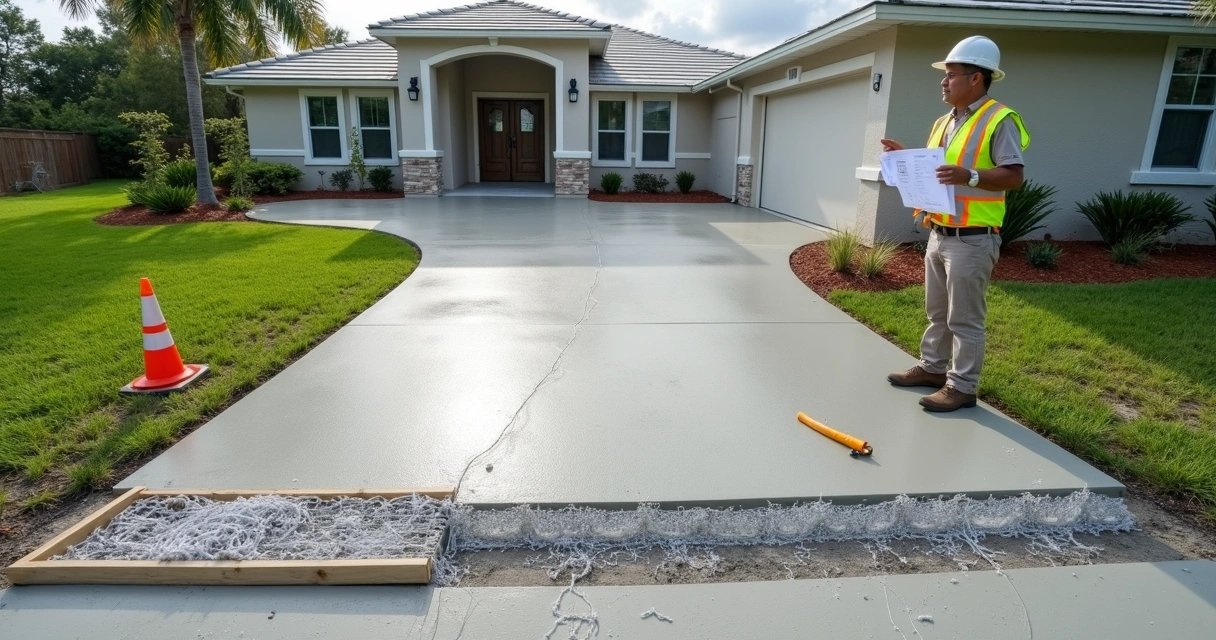
Small fibers, big impact: distributed through the whole slab.
Fiber mesh works by spreading tiny reinforcements everywhere in the slab, holding the concrete together and making it tougher to crack in the first place. It doesn’t keep cracks from starting, but it does limit how wide or long those cracks get, which is vital in Florida’s shifting soils.
There are two main ways fiber mesh helps with cracks:
- Minimizing plastic shrinkage: It reduces the size and spread of cracks that show up in the first hours after pouring, especially before the slab is strong enough to resist movement on its own.
- Keeping cracks tight: If cracks do occur (such as from drying, movement, or thermal changes), the fibers keep the edges from separating as much, which reduces long-term damage and helps keep water out.
Types of fiber mesh and their effects on cracking
Not all fiber mesh is the same. The two most popular kinds used in Florida are:
- Microfibers: These are very fine (often polypropylene) fibers that mainly address plastic shrinkage—cracks that form before the slab is fully cured. They do not replace traditional reinforcement but improve surface toughness. Usually between 0.5" and 1.0" long, they create a sort of “net” within the concrete paste.
- Macrofibers: These are longer and stronger fibers (sometimes synthetic or steel) designed to control larger cracks or replace welded wire mesh in certain light-duty slabs. They add significant post-crack strength, but their use depends on slab thickness and design.
Steel fibers are also used, especially where high impact or heavy loads are expected, but are less common in standard residential slabs.
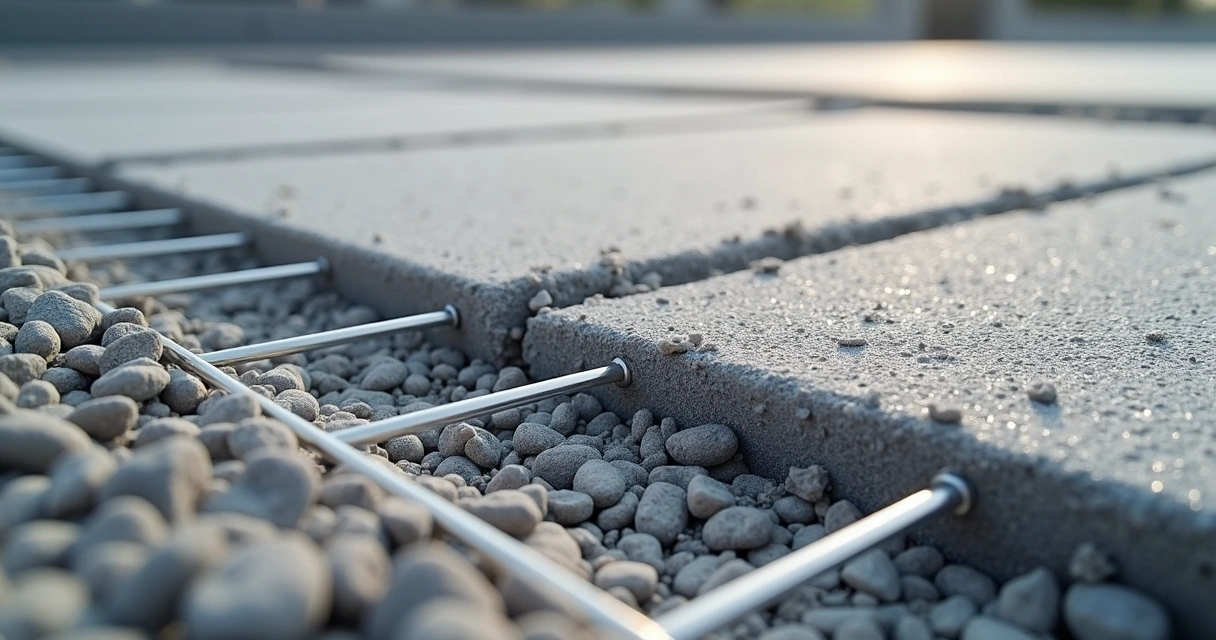
The type and amount of fiber mesh must be matched to the needs and performance expectations of the slab; otherwise, its benefits may be limited.
Fiber mesh research and real-world performance
Concrete is as much science as it is craft. Recent studies have given us valuable insights on fiber mesh and crack control:
- Stevens Institute of Technology’s research found that adding steel fibers, lightweight sand, and shrinkage-reducing agents to ultra-high-performance concrete lowered restrained shrinkage drastically, from 809 µε to 245 µε, and reduced maximum crack width from 1.605 mm to just 0.065 mm. This kind of width control means less water can get into the crack, lowering the risk of damage.
- Virginia Transportation Research Council studied high-performance fiber-reinforced composites and showed that crack widths could be limited to extremely narrow gaps—helping concrete stay tough against water, salt, and traffic impacts for longer.
Field reports echo these lab results. In Central Florida, slabs with fiber mesh generally have fewer and narrower cracks compared to those without, especially when installed by teams that prepare the sub-base, reinforce correctly, and protect the new slab during curing.
Fiber mesh alone vs. combined reinforcement methods
The big question for Florida property owners is this:
Can you use only fiber mesh and skip rebar or welded wire mesh?
In light-duty situations—like residential walkways or patios that will not bear heavy vehicles—fiber mesh may be enough to limit typical cracks from shrinkage or temperature.
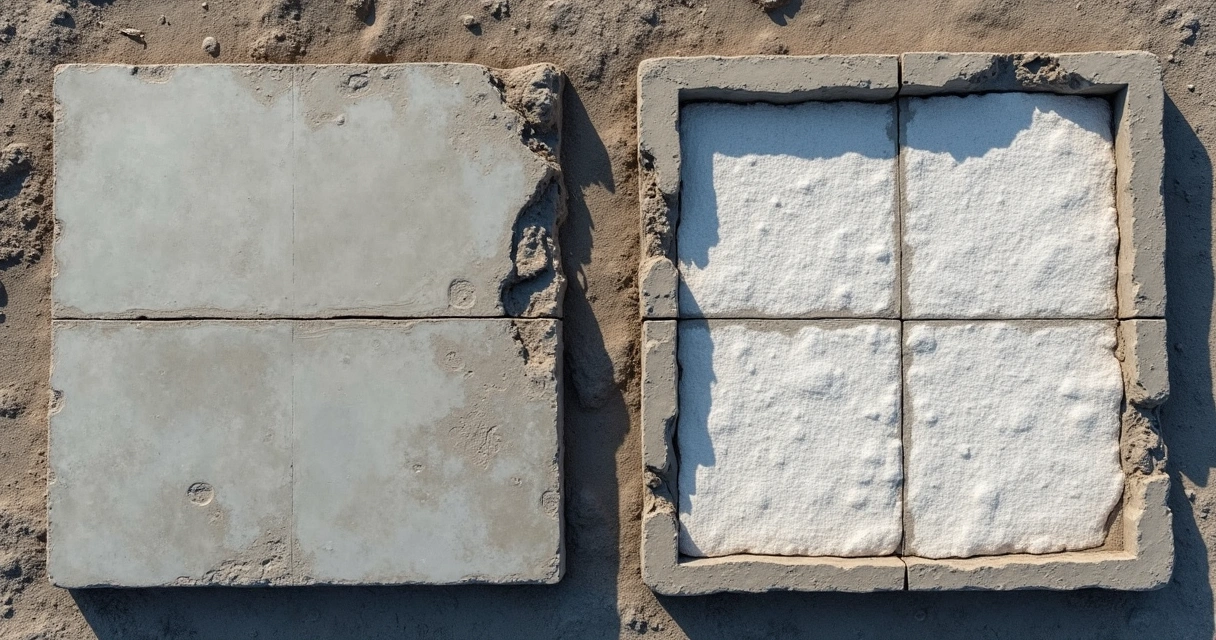
However, for driveways, garages, pool decks, or any slab subject to vehicle loads or complex movement, fiber mesh alone is usually not enough.
At GCM Best Services, when we install slabs in Orlando and nearby, we often use several layers of protection:
- Compacted sub-base of 6–8 inches for steady support
- Fiber mesh for initial crack control and extra toughness
- Rebar or welded wire mesh for long-term strength and resistance to slab separation if ground shifts
- Correct joint placement so the concrete can move in “safe” places
The decision always comes down to both load requirements and soil conditions—something we discuss with every homeowner during our site visit.
Special challenges for Florida concrete slabs
Florida’s sun, rain, and soil types test every slab. Here’s why the right approach to reinforcement is so important here:
- Soil instability: From sand to clay, the ground can sink or shift unexpectedly.
- High moisture: Frequent downpours mean water is often present under and around slabs, amplifying expansion, contraction, and, over time, erosion.
- Tree roots: Strong palm, oak, or ficus roots can crack concrete even if it’s well-reinforced.
- Permitting and code: Many Central Florida cities, including Orlando and St. Cloud, set reinforcement standards for specific slab types, making it necessary to combine fiber mesh with traditional steel in most installation guides such as our St Cloud concrete driveways and patios installation guide.
When we handle slab jobs at GCM Best Services, we always assess sub-base compaction, moisture drainage, and expected slab use, then recommend the mix and reinforcement that fits the site—not just the theory.
Best practices for crack prevention in Florida concrete slabs
Preventing cracks takes a well-organized approach. Here’s what we focus on at GCM Best Services:
- Sub-base compaction: Always compact the soil and add a base layer to minimize settlement.
- Proper reinforcement: Use the correct type and amount of fiber mesh, and, when needed, add rebar or mesh per code.
- Mix design: Opt for 3,000–4,000 PSI concrete mixes for residential jobs for additional toughness and longevity.
- Moisture control: Drainage mats, gravel layers, and proper grading help keep water moving away from concrete.
- Correct curing: Keeping the surface damp during curing slows drying, reducing shrinkage cracks.
- Joint placement: Saw-cut or tooled joints direct cracks to safe zones rather than at random spots.
- Maintenance: Sealing and monitoring slabs help prevent minor cracks from spreading.
It’s not just about adding more materials—everything works together.
Some homeowners dig deeper by reading our advice for choosing a concrete contractor in the region via our concrete company selection guide.
Common myths and misconceptions
There’s lots of confusion about fiber mesh and crack control. Let’s clear up a few misunderstandings:
- Myth 1: “Fiber mesh stops all cracks.”
This one comes up often. No reinforcement can guarantee a crack-free slab, especially if soil or moisture problems exist.
- Myth 2: “Fiber mesh can replace rebar in every case.”
This isn’t true for driveways or areas with heavy loads. Residential walkways? Maybe. Driveways and pool decks? Probably not.
- Myth 3: “You don’t need joints with fiber mesh.”
Even with fiber mesh, control joints are essential. These allow concrete to “crack” in planned, less visible lines, instead of at random.
- Myth 4: “Fiber mesh is visible on the finished surface.”
When installed and finished properly, fiber mesh stays inside the concrete. What you see is a smooth, clean finish—unless surface troweling is rushed or overly aggressive.
At GCM Best Services, we believe the right information leads to better projects, fewer repairs, and happier property owners.
Case studies and experience from GCM Best Services
In our years serving Central Florida, we’ve worked with every type of reinforcement. Here’s what we’ve learned:
- Concrete sidewalk replacements: For small, lightly loaded sidewalks, we often use only fiber mesh (with the right sub-base). Over several years, these walkways have shown only minor hairline cracks, with no significant slab movement.
- Driveway slab repairs: When re-doing driveways that cracked due to soil washout, adding both fiber mesh and rebar (plus proper drainage) gave a significant improvement—fewer cracks, better surface quality, and longer service life.
- Warehouse floors: In high-impact areas, steel macrofibers and rebar in combination help control cracks from heavy loads and equipment.
- Pool decks and patios: Using microfibers for surface durability and rebar for flexural strength prevents unsightly cracks and surface dusting, even after multiple wet seasons.
Our experience matches published research and expert guidelines: fiber mesh improves crack resistance, but for best results in Florida, it is one part of a system, not the whole answer. More details on licensed repair methods are available in our contractor’s repair guide.
Conclusion: Is fiber mesh enough?
Based on experience, research, and Florida’s demanding environment:
Fiber mesh alone improves resistance to cracking, but it is rarely enough for most Florida slabs where settlement, heavy loads, or moisture play a role.
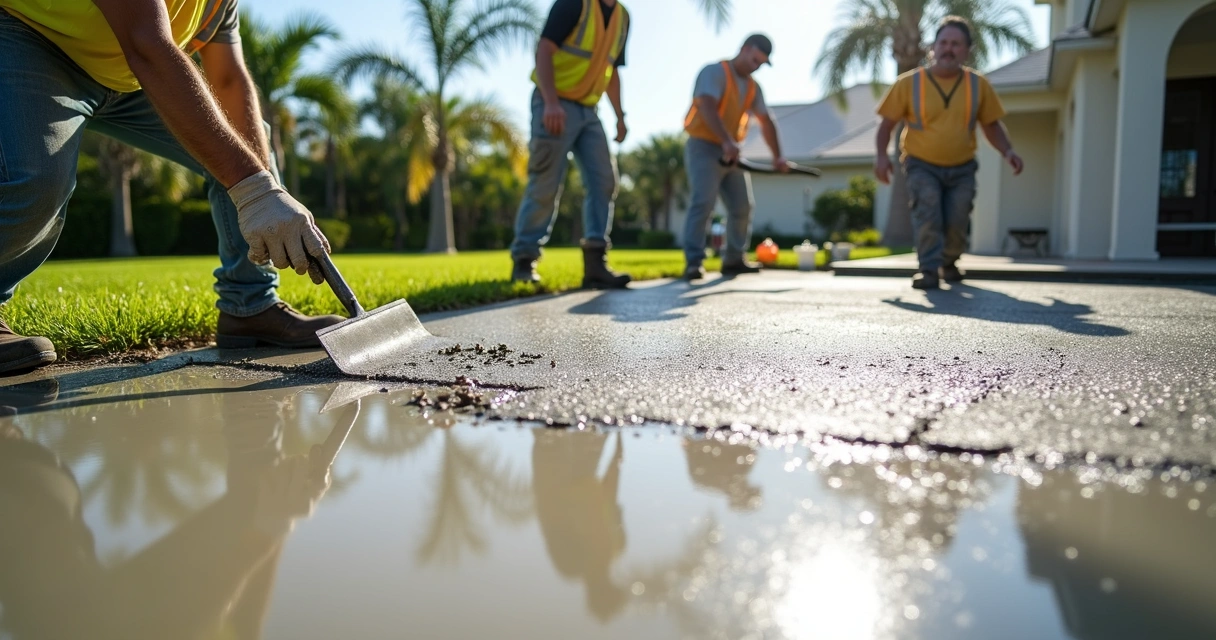
A well-designed slab in Orlando or Central Florida generally requires a layered approach: a strong sub-base, appropriate reinforcement (often fiber mesh plus rebar), correct curing, and careful joint layout. Fiber mesh is valuable—lowering crack size, increasing service life, and making slabs more durable—but for reliable, long-lasting results, it should work with other methods. Properties that count on only fiber mesh are at greater risk of larger cracks and service issues over time.
GCM Best Services is here to help you make the right choices for your new or replacement slab, so your driveway, patio, or sidewalk stays strong through Florida’s weather and soil challenges. If you want further reading, you can visit our main concrete articles library and see how the right reinforcement plan—customized for each project—can save you time and money over the life of your concrete.
Ready for a professional quote? 📞 (407) 250-1948 • 24–48h • Orlando, Tampa & area.
Frequently asked questions
What is fiber mesh in concrete slabs?
Fiber mesh is a type of concrete reinforcement made by blending small fibers—synthetic or steel—into the concrete mix before pouring. These fibers work throughout the slab, helping to control shrinkage cracks and improving the toughness of the finished concrete. They are especially useful for limiting small cracks during curing, and for holding cracks tightly closed if they do appear.
Does fiber mesh prevent all cracks?
Fiber mesh reduces the size and spread of most small cracks, but does not eliminate all cracking. Major cracks caused by soil movement, heavy loads, or poor sub-base conditions may still occur. Instead, fiber mesh is best seen as one part of a balanced reinforcement system; it helps keep cracks narrow and less visible, but isn’t a guarantee against every crack.
Is fiber mesh alone enough in Florida?
In light-duty flatwork like residential walkways, fiber mesh alone may be enough when the slab is built on a properly compacted base and won’t see heavy loads. For driveways, garages, pool decks, and most Florida slabs, we recommend and often require using both fiber mesh and rebar or wire mesh. Florida’s soils, moisture, and temperature cycles make full reinforcement a smarter choice.
How much does fiber mesh cost?
Fiber mesh typically adds $0.10–$0.25 per square foot to a standard concrete project, depending on the fiber type and dosage. This is more affordable than steel rebar or wire mesh for light-duty slabs, but does not replace them when heavy duty is needed. For exact pricing in Florida, we suggest a custom quote based on your project details.
Should I use rebar with fiber mesh?
Yes: for most slabs in Florida, using both rebar (or welded wire mesh) and fiber mesh is recommended. Rebar gives flexural strength and helps control cracks from slab movement or settlement. Fiber mesh adds surface durability and improves resistance to shrinkage cracks. Together, they make for a stronger, longer-lasting slab—especially in environments like Central Florida.