Multi-car households have become almost the norm in Central Florida. As families grow and routines get busier, more people are parking, coming, and going at all hours. The challenge? Ensuring everyone can come and go without stress, no blocked-in cars, and never scraping a bumper. At GCM Best Services, we’ve spent years perfecting the art of practical driveway design, blending robust concrete builds, smart layout, and attractive finishes for real-world traffic flow.
Our focus is on driveways that look great, last for years in Florida’s climate, and most of all, actually fit the way families use them every day. Whether you’re considering a new pour, adding pavers, or improving drainage, getting the traffic flow right pays off in saved time and headaches. In this guide, we’ll share our step-by-step approach: from assessing your needs and obstacles, to planning entry points and layout types, through to small touches that create comfort and safety.
“A driveway is more than just concrete—it’s your home’s welcome mat and the front line of daily life.”
Why traffic flow matters for multi-car driveways
It’s more than just “putting down some concrete.” The layout, width, turn radii, and entry points all affect daily convenience, safety, and property curb appeal. Well-designed traffic flow means:
- No one gets boxed in by another car.
- Easy access for each driver—without four-point turns or reversing into the road.
- Smoother trash pickup, deliveries, and guests too.
- Better drainage and fewer cracks, because of fewer tight or repeated maneuvers over the same spot.
- Higher property value and neighborhood appearance.
One survey showed that driveway design considerations impact everything from pedestrian safety to queuing space. Floridians, with their frequent storms and sandy soils, know how small details make or break outdoor projects. At GCM Best Services, we believe that a driveway should never become another source of daily stress.
How to assess your household and site for traffic flow
Thinking through who uses the driveway
Start with a simple exercise: count all vehicles currently parked at home, and don’t forget guest cars, work trucks, or trailers that may come now and then. Then, map out your family’s schedules. Who leaves first? Who comes home late? Are any cars parked long-term, rarely moved?
- How many licensed drivers share the space?
- Are there new or teen drivers (who may need easier access and more visibility)?
- Does the house face a busy street, or a quiet cul-de-sac?
- Are your guests likely to need overnight parking?
We always ask homeowners to “walk” the lot and observe issues: tight turns, street view obstructions, mailbox placement, HOA rules, trees, and possible trip hazards. A family’s habits change, but traffic flow issues will persist unless the design supports the users.
Measuring and mapping the site
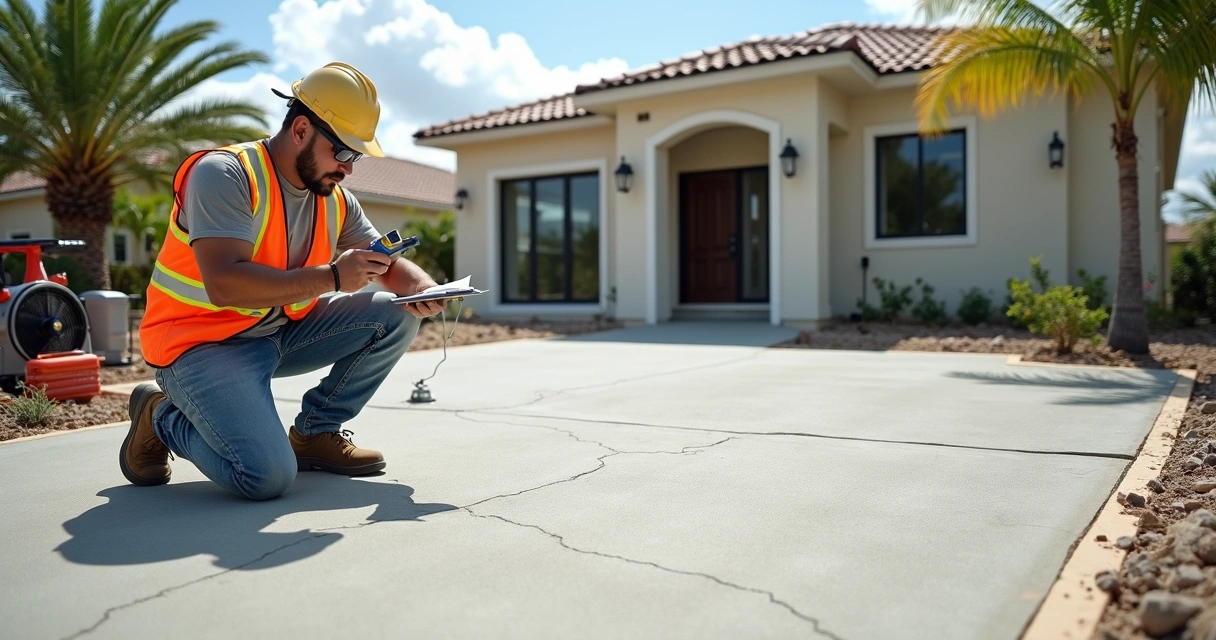
Measurement is more than just length and width. Account for slopes, drainage needs, existing sidewalks, yard irrigation, and the house’s entry point. We recommend using a tape for length and width, and taking notes on:
- Property lines, easements, and set-backs.
- Location of garage doors—single, double, or offset.
- Proximity to the street and traffic speed (especially if reversing out).
- Trees, plantings, or irrigation boxes to be protected or moved.
At GCM Best Services, our on-site assessments always include slope checking for both water drainage and safe parking angles. This also affects material selection—for example, poured concrete, pavers, or even artificial turf bands.
Main driveway layout types for multi-car flow
The right driveway shape is the heart of good traffic flow. There’s a world of mixes and matches, but in our experience, these five layouts answer most Orlando family needs:
Standard single or double-driveway pad
A simple pad suits two cars, parked side-by-side, with direct entry to a double garage. This is best if there’s little room to widen the lot, or if only two drivers park daily. Downsides? Someone may have to move another car to get out in the morning.
L-shape and hammerhead layouts
These layouts use an offshoot or side pad where an extra car can park—usually at a right angle to the main drive. Ideal for a third car, a teen’s first vehicle, or frequent guests. The “hammerhead” is especially useful in narrow or deep lots: you add a T-shaped turnaround at the end, so cars can reverse, park, or exit forward safely.
Circular and horseshoe driveways
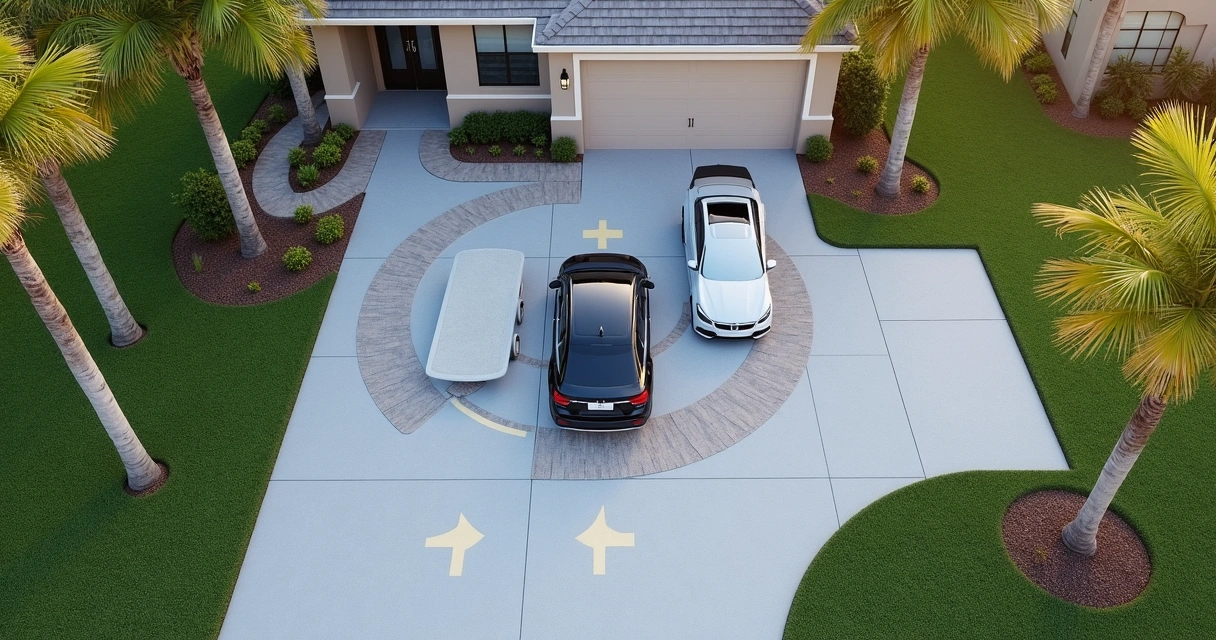
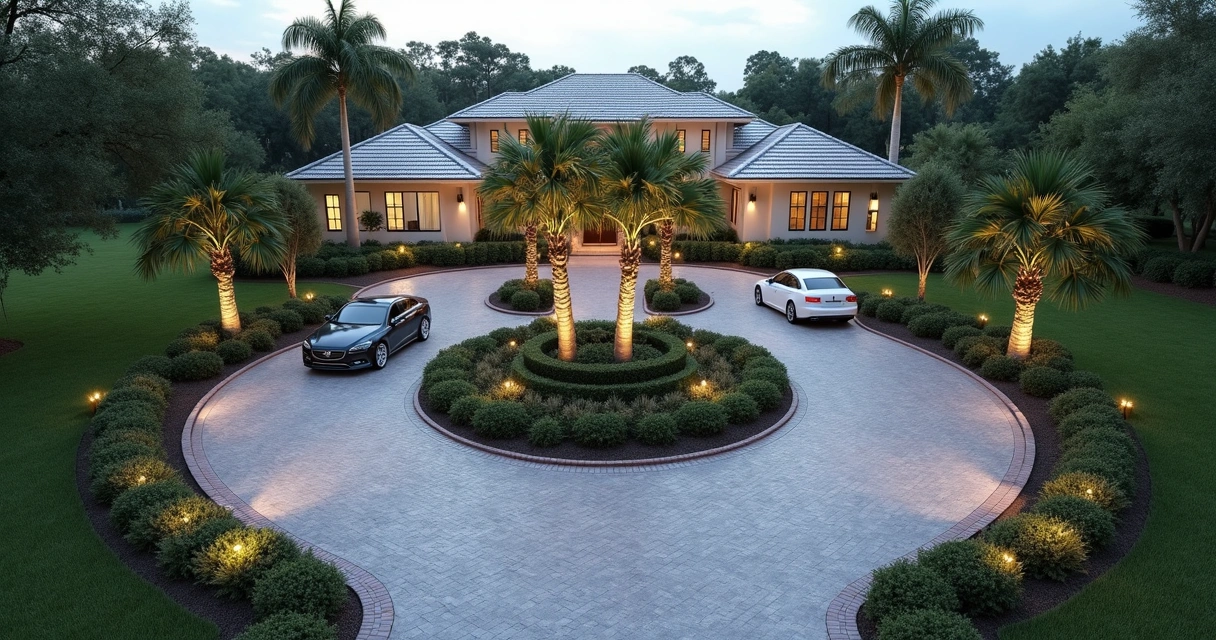
Circular driveways allow continuous entry and exit, avoiding the need to reverse onto the street. They’re practical for busy roads or entertaining guests, since everyone can leave without others moving their cars. However, they need more yard width and greater investment, including careful grading to avoid ponding and water runoff.
Side load and offset parking bays
Where garage doors aren’t on the front façade, or where long lots allow, a side load design places the driveway beside the home, reducing cars crowding the curb. Offset parking bays—either parallel or perpendicular—help each vehicle park or exit independently. Useful if your household needs minimal back-and-forth.
Expanded pads with integrated pavers or turf
In many Central Florida neighborhoods, HOAs and local codes encourage blending hardscape with greenspace. Modular pads (two tracks with a center strip of pavers, grass, or turf) look attractive and support the environment. These hybrid approaches are great for small lots but still solve traffic flow headaches.
For a closer look at hardscape and paving combinations, we suggest exploringdriveway and patio paving solutionsand how blended materials can define parking, walking, and play areas.
Driveway width, turn radius, and access point tips
It’s tempting to “just go big”—but in reality, every driveway must balance use, cost, and how it sits in the landscape.
- Width: For side-by-side parking (two cars), 18–20 feet lets both vehicles park comfortably, with doors swinging open. Three-wide (27–30 feet) is a luxury, but may require a larger lot.
- Parking bays: Single-car bays can be as narrow as 8 feet, but 9–10 feet feels more forgiving, especially for SUVs or novice drivers.
- Turn radius: Standard passenger vehicles can make a 20–24 foot inside radius, so curves should never be too sharp—or daily navigation becomes a nuisance.
- Entry/exit placement: If your street is busy, or near a curve, offsetting the drive for better sight lines pays dividends in safety, as highlighted by Texas DOT design guidance.
As we design, we always check with local zoning and ordinance guidelines for Orlando and neighboring cities, since minimum and maximum widths vary and may affect your permit plans.
Solving real-world bottlenecks and daily headaches
Dealing with cars blocking each other
If you have three or more drivers with different schedules, stacked parking becomes a real pain. Here’s where hammerhead or off-street bays add value: someone can be tucked into a separate slab or in the “arm” of an L, swinging out without moving every other vehicle. “No car should become a daily roadblock.”
Managing trash, deliveries, and guest cars
Place trash bins close to the street, but out of the main traffic path. If there’s not enough room, consider creating a paver pad or extending the drive with brick accents. This keeps waste out of visitor sight lines and driveway use uninterrupted.
Maneuvering for safety (especially with kids or pets)
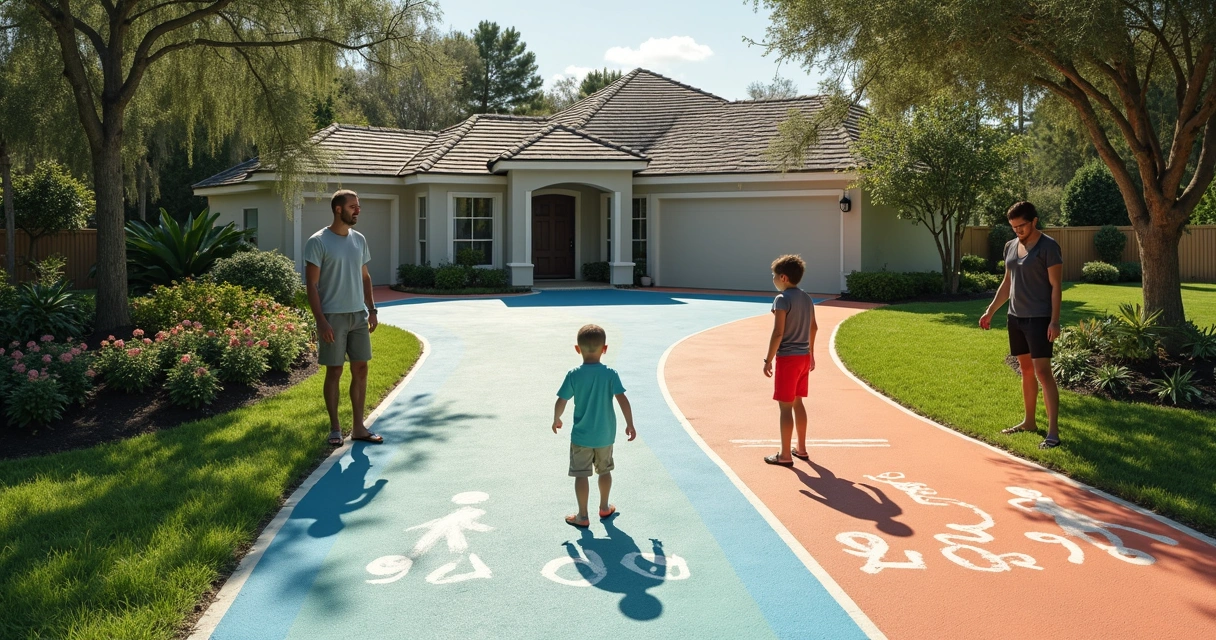
Kids’ toys, scooters, or bikes often fill driveways. Shared-use lanes—wide enough to accommodate a vehicle and a person walking—or a clear separation using color, texture, or edging, can reduce risk. Visibility at entryways should not be blocked by shrubs, mailboxes, or parked cars.
Integrating smart drainage and durable materials
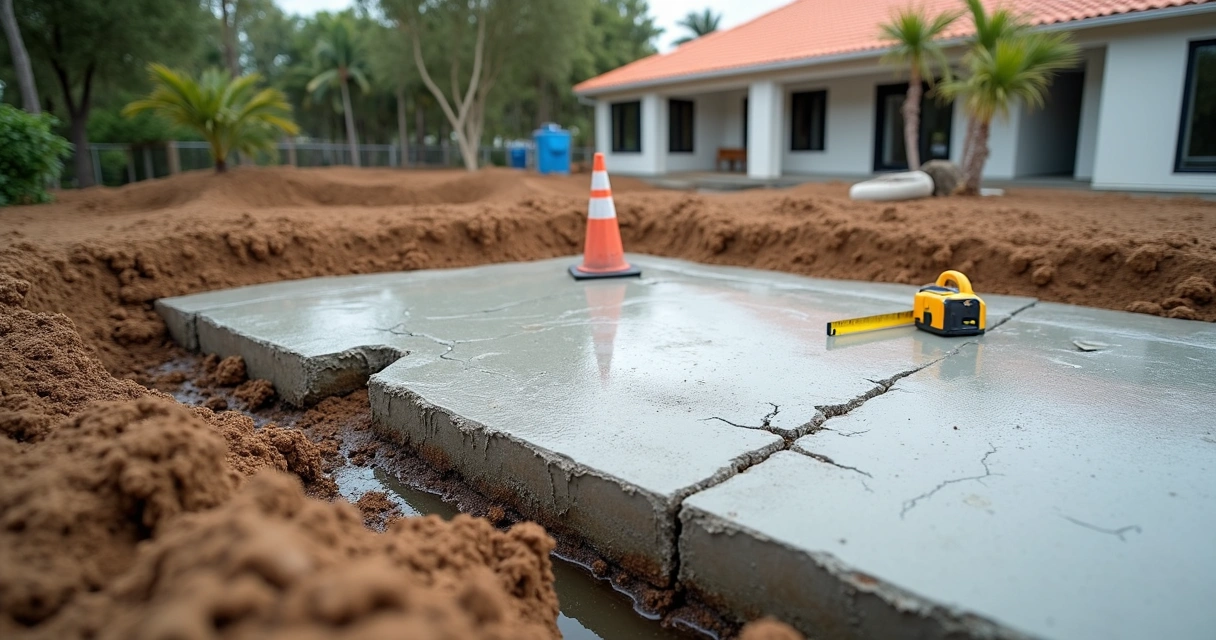
In Florida, afternoon storms and sandy soils can undermine driveways, especially if poor layout causes ponding or rutting. We always integrate smart grading, with gentle side-to-side slopes, to push water away from the house.
- Curb ramps and transitions: Textured surfaces, paver accents or scored lines help guide tires and reduce surface cracking.
- Drainage swales and strip drains: Critical for multi-car pads and extended bays to move runoff efficiently. If you’re interested in drainage solutions for paver areas, see more about paver drainage in Florida’s climate.
- Material blends: Concrete, pavers, turf bands, and even permeable pavers are options to add durability, clarity, and even help with weed control (see tips at weed prevention between pavers in Orlando).
Our signature approach at GCM Best Services uses compacted sub-base of 6–8 inches, 3,000–4,000 PSI mixes, and appropriate reinforcement to combat Florida’s shifting soils. By combining the right slope and base, we prevent ponding and cracks—issues addressed in detail at how to prevent cracks in Florida driveways.
Entry, lighting and accessibility
Designing for all users
A driveway is for everyone—not just cars. We always recommend a clear, well-marked pedestrian path from the street or sidewalk to the front door. This can be a contrasting band of pavers, a brushed finish stripe, or even solar-powered path lights.
- Lighting increases safety for nighttime arrivals or teenagers coming home late.
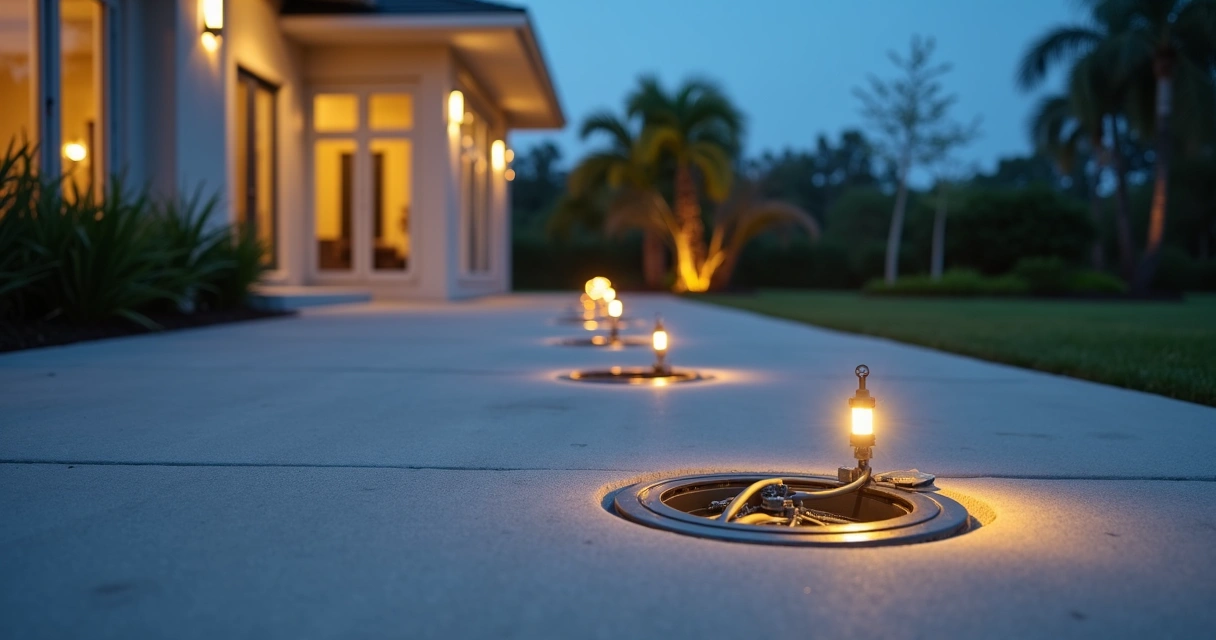
- Consider sensor lighting at drive entries to guide cars or show walking paths.
- Keep mailbox and package delivery areas clear and dry, integrated into borders.
Improving accessibility for reduced-mobility residents
If anyone in the household uses a wheelchair, walker, or stroller, gentle curb ramps, non-slip concrete, and a flush transition between drive and walkways may make daily life smoother. Our approach adjusts the height and texture to local ADA guidelines when needed.
Finishing touches: style, HOA, and future-proofing
Visual appeal and neighborhood standards
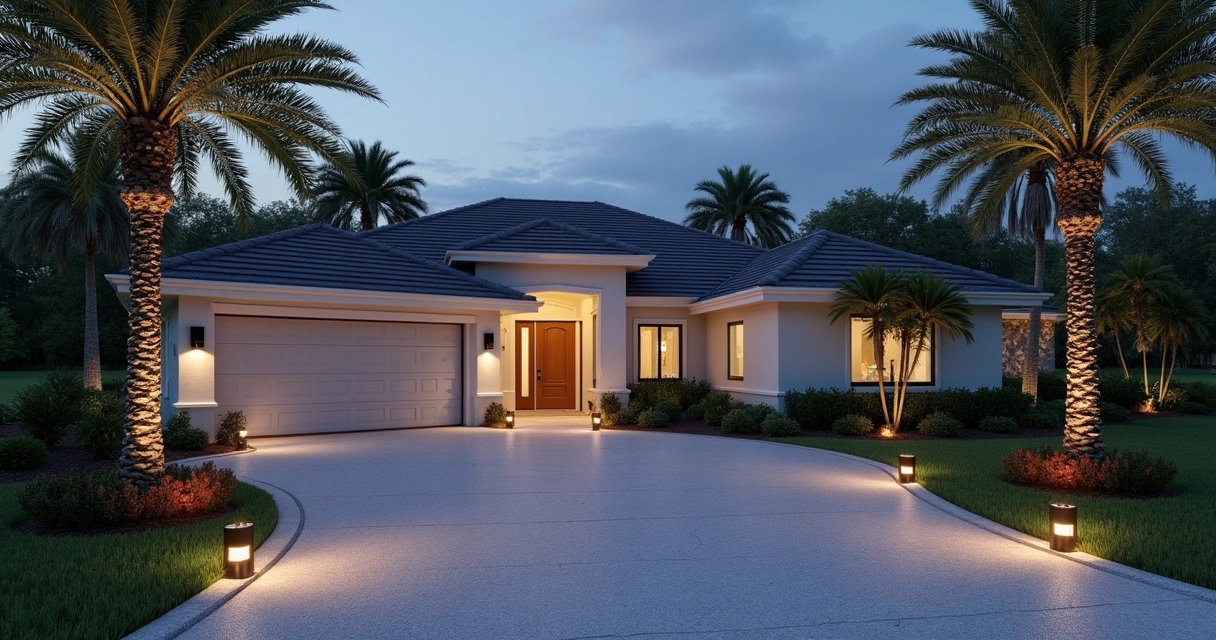
For resale and pride of place, your driveway should feel deliberate and attractive. Concrete colors, exposed aggregate, stamped borders, and matching mailbox pads all add style. At GCM Best Services, we recommend coordinating with house paint or brick, and using professional sealing for long life.
Many communities have strict HOA rules governing driveway width, color, materials, and even the use of turf or pavers. Our team manages HOA communication and permits in every job, so homeowners enjoy a smooth process from plan to sign-off.
Leaving room for future changes
As family needs shift, the best driveway layouts consider where a pad could be widened or a parking bay could become a play zone. Removable pavers or turf bands provide flexibility, without committing to permanent hardscape that may need to change as children grow up or household vehicles change.
If your vision includes integrated summer kitchen zones, sport courts, or shaded carports, we consider those in early layout plans. Our process includes a detailed walk-through, clear schedule, photo updates, and a warranty—so you know every detail was addressed the right way.
Our step-by-step process at GCM Best Services
Every successful project starts with a no-obligation site visit. Here’s how we approach multi-car traffic flow in Orlando:
- Walk the site and talk through habits. Who parks where, what’s the daily routine, and any current headaches.
- Map all obstacles. Trees, lines, slopes, HOA guidelines, irrigation, utilities—nothing is missed.
- Recommend layout types. Pads, bays, circular or hybrid, with sketches and explained pros/cons.
- Show materials and finishes. Concrete, pavers, turf bands, exposed finishes, drainage options.
- Handle all permits, HOA paperwork, and code checks.
- Schedule work for the lowest disruption—often in stages, with safety walkways open at all times.
- Deliver photo documentation, final walkthrough, and a written warranty with a maintenance guide to keep your new driveway looking sharp.
In our experience, this approach satisfies not just the planners, but the drivers, the walkers, and those who enjoy a welcoming front yard all year long.
Key things every Orlando homeowner should consider
- Number your permanent vehicles, not just today’s, but what may arrive as your family grows.
- Analyze schedules—don’t rely on old “musical cars” habits. Good design means no more shuffling at 6 a.m.
- Look for ways to blend hardscape with landscaping. It improves drainage, curb appeal, and often HOA approval.
- Prioritize low-maintenance finishes—sealed concrete or pavers that resist cracking and stains in Florida sun and rain.
- Let professionals (like GCM Best Services) manage grades, sub-base, and permit paperwork for peace of mind.
“Driveways are the unsung hero of a peaceful morning routine. Design them right, and you’ll feel the difference for years.”
Conclusion: Invest in a driveway that supports your lifestyle
A driveway is a living part of your home, not a static slab. We at GCM Best Services believe that great design makes every departure and arrival easier—no blocked-in cars or dangerous reversals, just a smooth start to each day. Our commitment to durable, stylish, and code-aligned driveways in Central Florida has helped hundreds of families reclaim precious minutes and pride in their property.
If you’re ready to talk about a traffic-friendly, good-looking driveway that truly fits your household, reach out and discover how GCM Best Services can help. You’ll never think about “just a driveway” the same way again.
Ready for a professional quote? 📞 (407) 250-1948 • 24–48h • Orlando, Tampa & area.
Frequently asked questions
What is traffic flow design for driveways?
Traffic flow design for driveways means planning the layout, width, and access points so cars and people can move in and out safely without unnecessary reversing, blocking, or tight maneuvers. It includes considering the number of vehicles, drivers’ schedules, sight lines, drainage, and how people walk through the space. Good traffic flow makes daily life easier and boosts both safety and curb appeal.
How to park multiple cars efficiently?
To park multiple cars efficiently, use layouts like double-wide pads, hammerhead or L-shapes for extra parking, or circular driveways for independent entry and exit. Mark dedicated spaces or bays if possible, and stagger parking so each vehicle can leave without moving others. Proper width (9–10 feet per car), well-planned turn radii, and avoiding obstacles or bottlenecks are all key steps.
What are the best driveway layouts?
The best driveway layouts for multi-car homes include double-wide or triple-wide pads, L-shape with side parking bays, hammerhead turnaround pads, and circular or horseshoe configurations. The right layout depends on your lot size, number of vehicles, and local city or HOA guidelines. Sometimes, blending concrete with pavers or turf allows for both durable parking and attractive green zones.
How can I prevent cars getting blocked in?
Prevent cars from getting blocked in by designing the driveway so each car has an independent parking bay or access lane, using layouts like hammerhead turnarounds, L-shapes, or side parking pads. This way, nobody has to move another vehicle to get out. Clear painted lines or decorative borders can also guide where to park, and maximize independence for all drivers.
Is angled parking better for multi-car homes?
Angled parking can be helpful in multi-car homes when there is enough width and the entry allows easy turning. Angled spaces require less reversing and create better sight lines for entry or exit, but they do need more overall depth. This approach often suits wide lots or circular/half-circle driveways and is popular for improving flow in busy households.