Primary keyword: Concrete slab insulation
Related variants: Insulating concrete slab in Florida, Florida slab insulation benefits, Should you insulate concrete slab Florida
Audience: Florida homeowners and property managers considering new slabs or upgrades who want lasting comfort and performance.
Pain/Benefit: Many wonder if insulating their slab is necessary in Florida’s warm, humid climate—or if it adds comfort, saves energy, and prevents long-term issues.
Summary: Concrete slab insulation in Florida is a debated topic among homeowners and builders. While colder regions demand slab insulation, Florida’s climate poses unique questions: Does insulation provide noticeable comfort or savings? Does it help with humidity or prevent cracks? As a trusted local contractor, we break down the science, code, options, and our own field experience to guide you. Let’s find out if insulating your Florida slab is the best investment for your home’s future.
- Florida slab construction and climate facts
- What is concrete slab insulation?
- Thermal performance: Heating, cooling, and comfort
- Local building codes and insulation requirements
- Moisture, cracking, and other concerns
- Types of slab insulation and how they’re used
- Real-world pros and cons in Central Florida
- Cost, value, and payback in our market
- Our advice and recommendations for Florida customers
- Conclusion: Deciding what works for your project
- Frequently asked questions
Ready for a professional quote? 📞 (407) 250-1948 • 24–48h • Orlando, Tampa & area.
Florida slab construction and climate facts
In Central Florida, nearly every home, patio, and addition starts with a concrete slab. This type of foundation is common for good reason:
- Soils in the region are sandy and drain quickly, but can shift or settle
- Flooding risk and high water tables make basements rare
- Mild winters and hot, humid summers create unique comfort issues
At GCM Best Services, we install slabs for driveways, patios, garages, and additions using the best practices for Florida conditions. We focus on:
- Compacted sub-bases (6–8 inches) to prevent settling
- High-strength, properly mixed concrete (3,000–4,000 PSI)
- Steel rebar or mesh for structural reinforcement
- Engineered joints and finishes to control cracking
- Drainage design for stormwater and humidity
Most Florida slabs are poured directly on sand or gravel sub-bases, with little to no insulation. This is partly due to local codes, but also to long-standing beliefs about the climate. So, what exactly is concrete slab insulation, and why consider it?
What is concrete slab insulation?
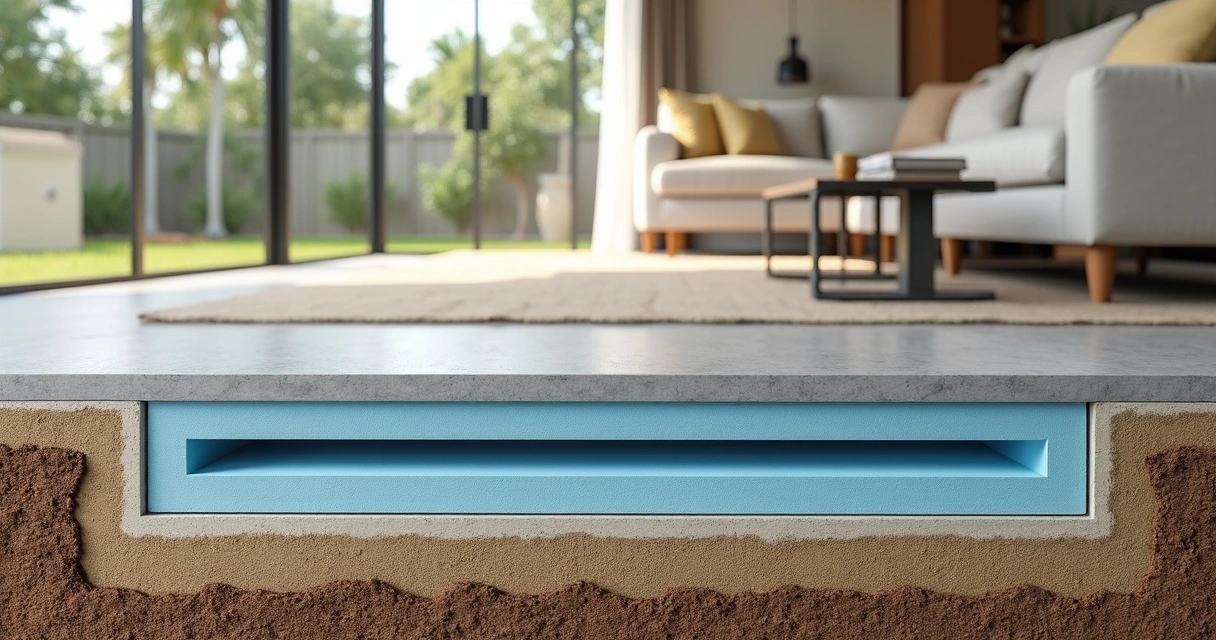
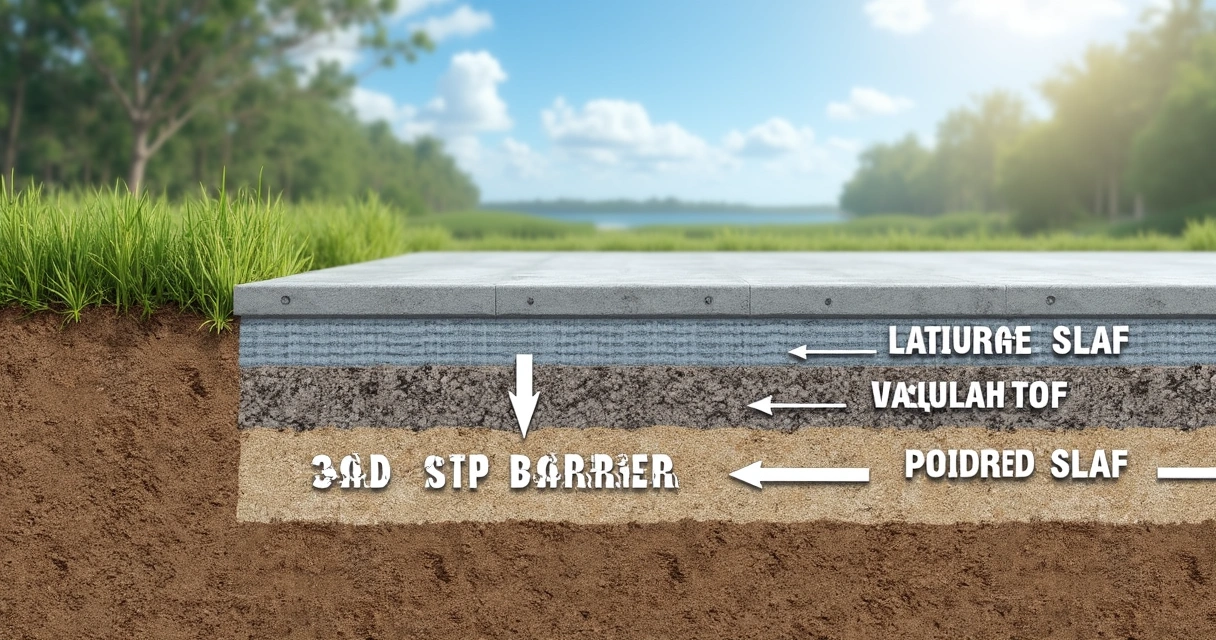
Concrete slab insulation creates a thermal barrier between your slab and the ground or outside air, slowing the transfer of heat or cold. Typically, this comes in one of two forms:
- Edge insulation: Foam board applied around the outer perimeter of the slab, usually from grade level down to the footing. This focuses protection where the concrete meets exterior air or landscaping.
- Under-slab insulation: Rigid foam or sometimes spray foam placed directly beneath the concrete before pouring. This covers the full floor area or key spaces, such as below living spaces or conditioned rooms.
Insulation is most common in regions with freezing winters because it blocks cold from entering the home through the ground (and in some climates, it also helps with summer heat). In Florida’s subtropical climate, the question is not just “how” but “should” you insulate your slab?
Thermal performance: Heating, cooling, and comfort
Does slab insulation really pay off in warm, humid Florida? Let’s break down how insulation affects your comfort and energy bills here.
How heat flows in Florida slabs
Concrete is an excellent conductor of heat and cold. During summer, a slab can absorb heat from the ground or sun and transmit it upward into your living space. In winter (though milder), your home can lose warming energy into cooler ground. However, unlike northern climates, Florida’s soil often stays above 70°F—even in January.
According to U.S. Department of Energy guidance on where to insulate a home, insulating the slab edge can help reduce heating energy in some U.S. climates by 10–20%. Yet their research also shows that in areas like Florida, the savings are much smaller. That’s because
Florida’s ground temperature is never far from your home’s ideal indoor temperature.
We’ve found that, for most of our customers, adding slab insulation has a minor effect on cooling costs. The bigger gains may relate to comfort at the floor surface—and to managing moisture, which we’ll cover next.
Comfort: Warm feet or cool retreats?
Many of us have walked barefoot on tile or concrete in January and wondered if insulation would make that floor less chilly in the morning. It’s true: Insulating the edge of the slab, especially under bedrooms or bathrooms, can make floors feel more comfortable in winter months. In Central Florida, though, “cold floors” are typically a brief seasonal complaint.
In summer, slab temperature is usually less than the air temperature, often creating a cooling effect. For garages, patios, or sunrooms, insulation can keep extreme surface temps in check if those rooms are fully enclosed and conditioned.
For most homeowners, the energy cost benefit is relatively minor compared to insulating ceilings, attics, and walls. The U.S. Department of Energy prioritizes those areas for Florida homes over slab insulation.
Local building codes and insulation requirements
Unlike cold-climate states, Florida’s building codes do not normally require slab insulation for standard residential construction. Instead, the Florida Building Code (FBC) emphasizes:
- Protection against moisture and termite intrusion
- Structural slab thickness and reinforcement
- Proper control joints and vapor barriers
Some commercial or specialty buildings (like medical or food-service facilities) may specify slab insulation for strict temperature or hygiene control. For homes, it’s optional—meaning it comes down to comfort and longevity, not code.
We always recommend reviewing local code updates, especially when adding conditioned additions, converting garages, or building high-performance homes. GCM Best Services manages all required permits and can advise on best practices for your plans.
Moisture, cracking, and other concerns
If heating and cooling savings are small, what about other benefits? Moisture movement and cracking are major issues for Florida slabs—and insulation might play a role in controlling them.
Moisture migration through slabs
Florida’s sandy soils drain well, but high humidity, rain, and ground moisture can still find their way through unprotected concrete. A common solution is a vapor barrier (plastics sheeting) below the slab. Insulation does add a secondary layer of defense:
- Foam board below the slab slows water vapor rising from damp soil
- Perimeter insulation can block moisture from landscaping, mulch, or heavy rain
- Some insulation products are specially rated for ground contact and resist mold or termites
Even so, foam board only slows vapor—it doesn’t stop bulk water or flooding. Good drainage, a well-compacted sub-base, and sloped landscaping are still your first and best defense. For more on this, our guide to preventing cracks in Florida concrete covers drainage and cracking in detail.
Cracking, settling, and structural issues
Insulation does not directly prevent cracks from forming in concrete—those are more related to soil movement, drying shrinkage, or improper installation. However, by controlling temperature extremes (especially right at the slab edge), insulation may reduce seasonal expansion and contraction that leads to minor cracks.
For larger structural work, our team always follows best practices laid out in our licensed contractor’s guide to concrete repair in Central Florida.
Types of slab insulation and how they’re used
Should you choose to add insulation, there are practical options designed for Florida’s needs. We use:
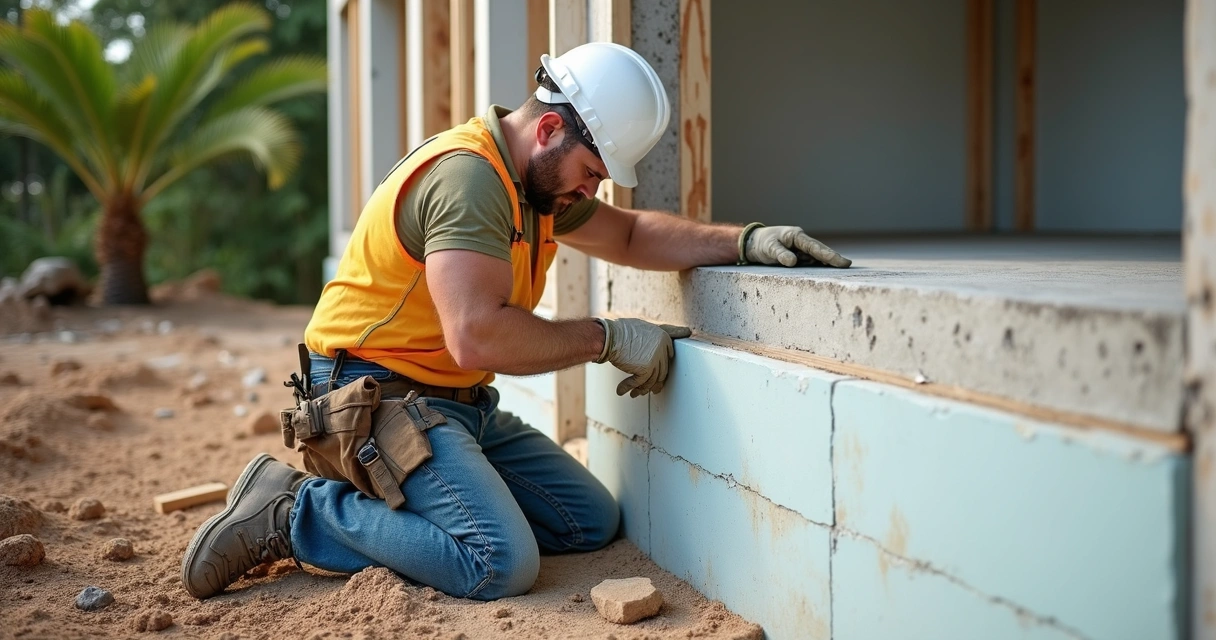
- Rigid foam boards: Expanded or extruded polystyrene (EPS/XPS). Installed under the slab (full or partial coverage) or vertically at the perimeter. Chosen for high compressive strength.
- Spray foam: Occasionally used for complex shapes or retrofits, but less common under slabs due to cost and compatibility needs.
Most Florida installations use 1–2 inches of foam, providing an effective R-value in the R-5 to R-10 range per inch. Boards must be rated for ground contact, and edges sealed against termites or ants. The insulation is sandwiched between the vapor barrier and the concrete, or attached to the exterior perimeter before final grading.
Real-world pros and cons in Central Florida
- Pros:
- Minor improvement in floor comfort during brief cool seasons
- Added vapor resistance in damp, shaded, or low-lying lots
- Helps maintain stable temperatures in fully enclosed sunrooms, additions, or offices
- May reduce thermal expansion at slab edges that can cause hairline cracks
- Edge insulation can sometimes block outdoor pests or weeds near slab lines
- Cons:
- Higher upfront cost; can add 5–10% to a basic slab project
- Savings on energy bills in Florida are often small or difficult to measure
- Poorly installed insulation may attract termites or trap moisture if not protected and sealed
- Not needed for most patios, sidewalks, or unconditioned garages
- May complicate future repairs or additions if not documented
Cost, value, and payback in our market
Every homeowner wants to know: What will this cost, and is it worth it? Based on our years of experience at GCM Best Services, here’s what we see:
- Adding edge or under-slab insulation during new slab construction runs from $2 to $4 per square foot, depending on thickness, coverage, and soil prep
- For a 500-square-foot room addition or garage, this means an added $1,000–$2,000 on average
- Energy savings are typically less than $50–$100 per year—so payback extends well over a decade (Department of Energy insulation priorities)
- For patios, walkways, or open carports, cost usually outweighs any benefit
The best value appears in special cases—such as luxury homes with radiant heating, high-performance home builds, or additions facing budget-friendly comfort upgrades. For everyone else: consider your climate, needs, and budget carefully.
Our advice and recommendations for Florida customers
After building thousands of slabs across the region, our advice is clear:
For standard driveways, patios, and most room additions on-grade, concrete slab insulation is not required in Central Florida—and does little for most households.
- If you are building a high-performance home, room, or office with full-time air conditioning and want maximum floor comfort, edge insulation is a reasonable option.
- Homes on shaded or low-lying lots may see small gains in moisture control with sub-slab insulation—but drainage and vapor barriers are more effective and cost-efficient.
- See our concrete project gallery and insights for real examples in Orlando and surrounding areas.
- If you have a specific concern—cold floors, musty odors, pest barriers—ask us for a tailored assessment before deciding. Our free, on-site assessment includes a review of every option and a clear, detailed estimate.
We proudly back up every slab with photos, written warranties, and a maintenance guide suited for Florida soils and weather. To learn more, check out our St. Cloud installation guide and see why so many homeowners in Central Florida trust our work from start to finish.
Conclusion: Deciding what works for your project
Choosing slab insulation in Florida is a choice best weighed against your space, comfort goals, and budget—not a universal requirement. For most homeowners, it’s not a top priority, but it may suit special cases, conditioned additions, or projects where every small comfort gain matters. As always, our advice is unbiased: we recommend what fits your needs, never what’s trendiest or most expensive.
Whether you’re planning a new slab, repairing an existing one, or want expert advice about insulation, moisture control, or warranties, GCM Best Services is your committed partner. Your comfort and your property’s future are always our top concerns.
Get started today—request your free on-site estimate, and discover the solutions our local team can provide. We’re ready when you are.
Frequently asked questions
What is concrete slab insulation?
Concrete slab insulation is a layer of material, usually rigid foam board, installed under or around the edge of a concrete slab to slow the transfer of heat and cold between your building’s foundation and the ground or outside air. The goal is to keep interiors more comfortable and, in some climates, to cut energy use for heating and cooling. In Florida, most installations use foam board placed vertically along the outer slab edge or directly under conditioned slabs in living spaces.
Is slab insulation needed in Florida?
For most homes, driveways, or patios in Florida, slab insulation is not required by code and provides limited benefit compared to offers in colder climates. Most Florida builders, including our team at GCM Best Services, find it’s optional for nearly all typical work. It may help with floor comfort in conditioned rooms, reduce vapor in certain soils, or suit high-performance homes, but good drainage and a vapor barrier are generally more effective and cost-efficient.
How much does slab insulation cost?
Adding slab insulation to a new construction project in Florida typically costs $2 to $4 per square foot, depending on coverage and thickness. For a 500-square-foot addition, that means $1,000–$2,000 in extra expense. Retrofit insulation is even more costly. The energy savings in Florida are minor, so financial payback is slow—often 15 years or longer.
Does insulation help with Florida humidity?
Insulation slows water vapor from rising through the slab but is not a stand-alone solution for Florida humidity. Vapor barriers, drainage, and landscaping that diverts water away from the foundation are far more effective. In some shaded or low-lying lots, insulation adds an extra layer of defense, but it’s rarely enough on its own to control musty odors or moisture migration.
What are alternatives to slab insulation?
The best alternatives to slab insulation for Florida slabs are high-quality vapor barriers, proper drainage, and compacted sub-bases under the concrete. These solutions prevent most common problems, including cracking, shifting, or excessive ground moisture. For maximum comfort, focus first on attic, ceiling, and wall insulation, then consider slab edge insulation only for special cases. For trusted local advice, see our guide to choosing a concrete contractor in Orlando.