Primary keyword: concrete crack filler typesVariants: best concrete crack filler, crack repair materials, concrete crack sealant, driveway crack filler
Audience: Homeowners and property managers seeking lasting solutions for cracked concrete.Pain/Benefit: Cracks bring water damage, weeds, decreased property value. The right filler reduces risks, restores appearance, and saves money long-term.
Concrete cracks are more than just a cosmetic annoyance. In Florida’s humid, high-rainfall climate, those thin lines in your driveway, patio, or slab often mean future trouble. Left alone, they welcome water, erode the base, and lead to bigger, costlier repairs. In 2026, there are far more choices for concrete crack fillers than even a few years ago. But which ones actually work best, and how do you choose for our Central Florida soils and weather?
Based on our years managing concrete surfaces at GCM Best Services—from driveways in Orlando to patios on the Gulf coast—we know the best answer depends on several factors: crack type and size, environment, service expectations, and even your willingness to do a little prep work. Let’s get practical and compare today’s main crack filler types, their advantages, and who they fit best.
Understanding cracks: Why they form and what’s at risk
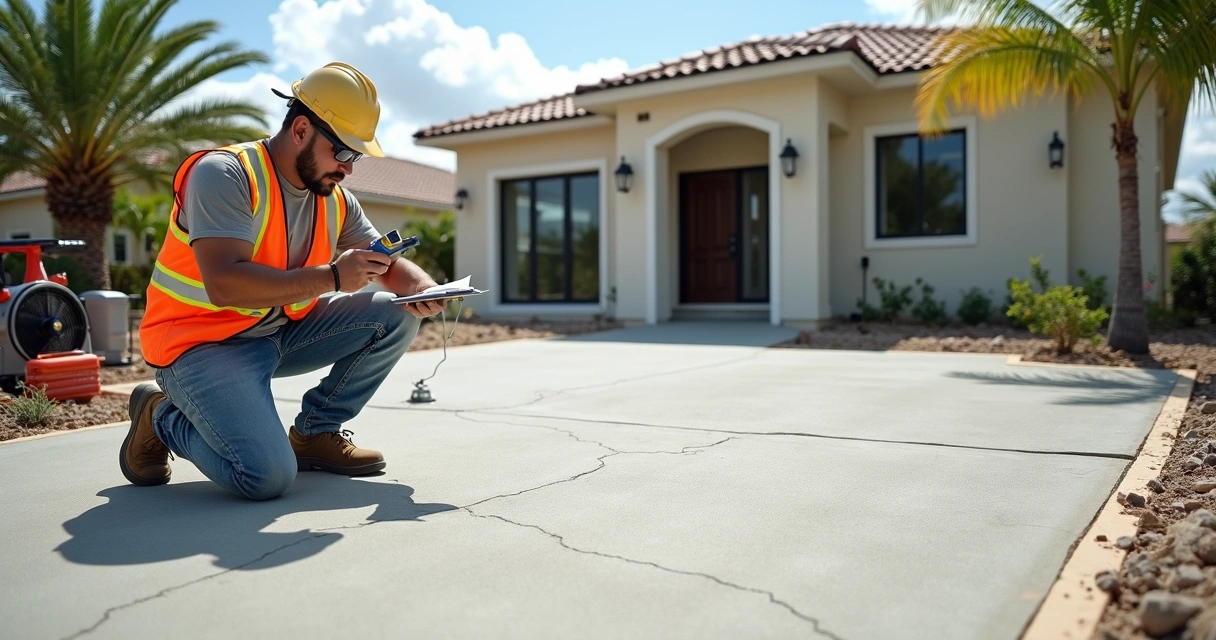
Before choosing any crack filler, it helps to know what you’re fixing. Concrete cracks fall into two broad categories: structural and non-structural. We see both when inspecting properties, and misjudging the type can cost you.
Non-structural cracks
These are hairline or narrow fissures that don’t affect the structure’s load-bearing strength. Non-structural cracks are usually due to normal shrinkage as concrete cures, minor ground movement, temperature swings, or surface stress. They run along driveways, walkways, patios, and basement floors, widening over time but seldom causing collapse.
Structural cracks
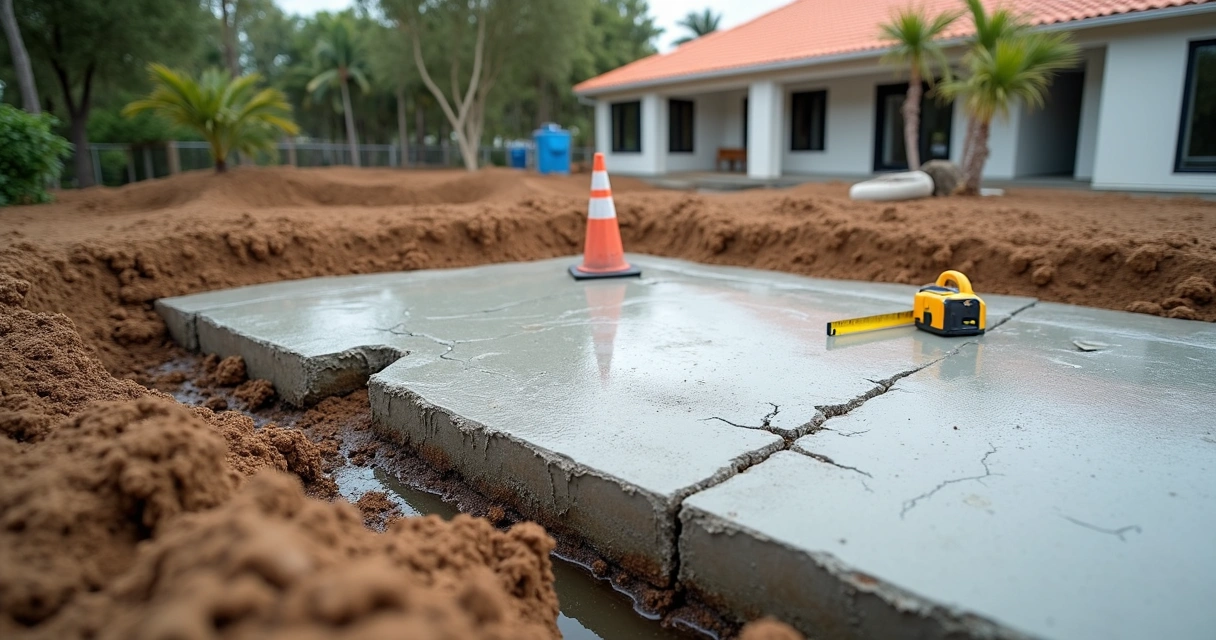
Usually wider than 1/4 inch, these result from soil settling, poor base prep, heavy loads, or issues such as tree root growth and water intrusion. They can signal slab movement, rebar corrosion, or, in rare cases, stress from severe weather. For large structural cracks, we always recommend a professional evaluation. Sometimes more than just a surface fill is needed.
Every crack lets in water, and in Florida, water finds every weak spot.
Studies like those published in NIST simulation studies confirm what we already see in the field: choosing the right crack filler extends service life, but the “right” choice means matching filler chemistry to environment and crack width.
Main types of concrete crack fillers in 2026
The market continues to expand, but most fillers fall into five main categories. These are the products we see on jobsites in 2026, each with their own use case:
Latex and acrylic caulks
Polyurethane sealants
Epoxy injections
Cement-based fillers
Hybrid/specialty formulas
Each has its own best use, longevity, prep level, and cost. Let’s review how they compare.
Latex and acrylic caulks: Convenience for small jobs
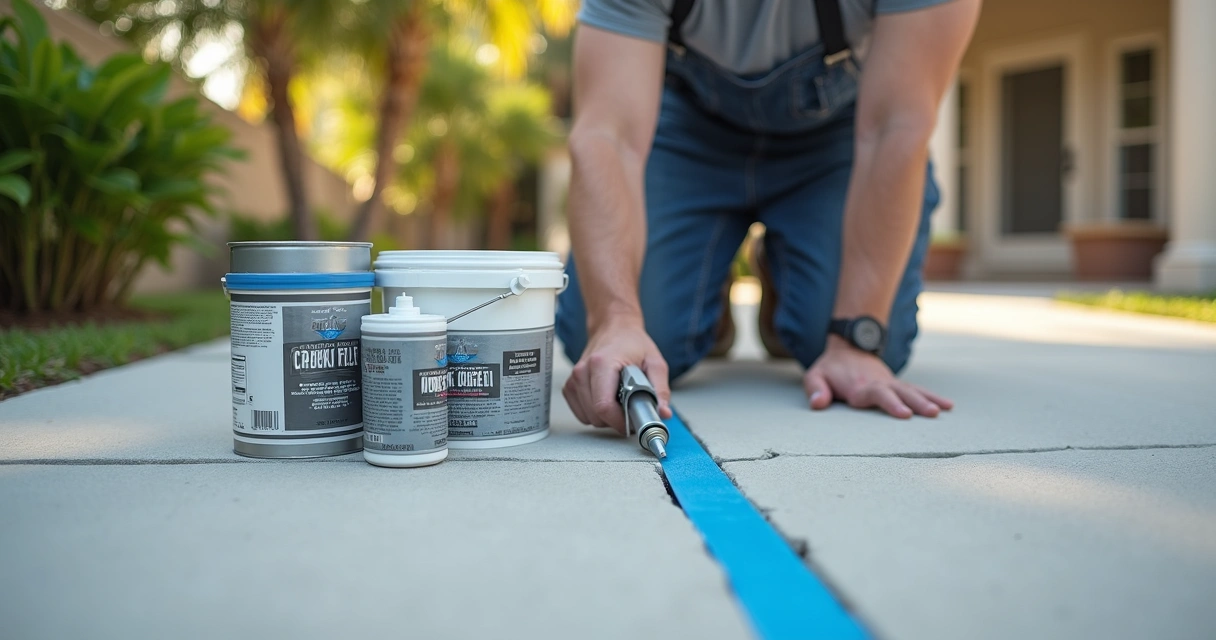
Latex and acrylic-based fillers come in self-leveling tubes or squeeze bottles. These are a familiar sight at the hardware store, chosen for minor repairs across driveways, sidewalks, and garage floors. Typically, they are recommended for cracks up to 1/4 inch wide. Their quick-drying formulas and easy clean-up make them a go-to for weekend projects.
Pros:
Easy to apply (no special tools for most cracks)
Flexible enough to handle some movement
Cleans up with water
Great for small, non-structural cracks
Cons:
Shorter lifespan compared to polyurethane or epoxies
Prone to shrinkage and eventual separation
Limited UV and weather resistance
We see these products as a temporary fix for narrow surface cracks. On sidewalks and driveways, especially if you plan a full resurface in a few years, they’re a simple choice. However, in wet or high-traffic areas, expect touch-ups after a few rainy seasons. When you want to reduce recurring repairs or restore structural integrity, other options serve better.
Polyurethane sealants: Flexibility and longevity
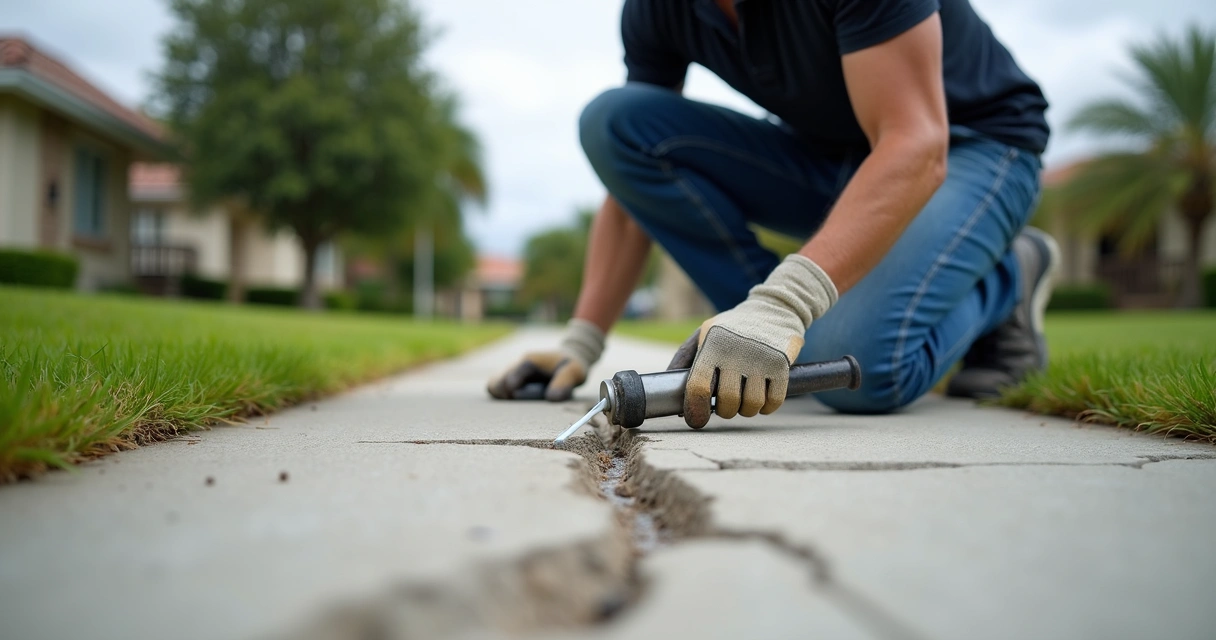
Polyurethanes have become a standard for professionals repairing driveways, commercial floors, and pool decks. These fillers expand as they cure, bonding tightly to concrete and moving with seasonal temperature and soil changes.
Best features:
Highly flexible—ideal for moving cracks up to 1/2 inch wide
Longer service life in outdoor, trafficked settings
Water and UV resistance
Withstands freeze/thaw cycles (useful even in rare Florida cold snaps)
Considerations:
Slower curing (may require 24 hours before driving or walking)
Slightly more prep—crack should be clean and dry
More expensive per linear foot than latex
Recent data such as the NIST simulation studies demonstrate that flexible fillers with low chloride-ion diffusion help keep slabs from corroding underneath the repair, prolonging slab life in humid climates. For large driveways and commercial parking lots where traffic and rain are daily factors, polyurethane remains our top recommendation in most cases.
Epoxy injections: For structural repairs
Epoxy resins are known for their strength and ability to restore structural integrity to cracked slabs or vertical walls. We see their use most often in load-bearing surfaces or where cracks are wide or deep, spanning basement floors, retaining walls, and major driveway sections.
Advantages:
Strong, durable bond—can even restore original slab strength
Low shrinkage after curing
Excellent for larger cracks and for structural applications
Some formulas cure underwater or on damp concrete
Limitations:
Requires professional application for best results (precise mixing and injection equipment needed)
Rigid—doesn’t accommodate movement as well as polyurethanes, so not the best for cracks that open and close seasonally
Higher cost than caulks and sealants
These are specialty products we typically reserve for structural repairs. As always, licensed contractor oversight is key for long-term results when using epoxy injection systems. For homeowners trying a DIY repair, simpler fillers often provide more flexibility—literally and figuratively.
Cement-based fillers: Tradition and surface patching
Cement-based crack repair mortars remain an industry classic, trusted for generations. These are powder mixes you add water to before troweling or pressing into wide cracks, holes, or shallow spalls.
Benefits:
Cost-effective, with a familiar look once cured (matches concrete color well)
Handles wider cracks—good for edge and corner patching
Some new formulas resist shrinkage, but check the label
Cons:
Not as flexible as polyurethanes or latex
Can shrink or crack again if the patch is too thin
Requires careful curing and sometimes more than one application
For DIYers on tighter budgets, these fillers are a solid choice for patios and garden walkways—especially as a base under artificial turf or pavers. Just keep in mind, if ground movement is ongoing, re-cracking may occur.
Hybrid and specialty fillers: Where chemistry meets performance
The biggest breakthroughs we’ve seen in concrete crack repair over the last few years are in specialty hybrid compounds. These might blend silane/siloxane for deep penetration, add fibers for reinforcement, or combine elements of polyurethane, acrylic, and even nano-silica technologies. Hybrid fillers aim to address the weak spots of any one system by leveraging the strengths of multiple ingredients.

What we see in 2026:
Improved adhesion to damp or less-than-perfectly-prepped cracks
Reduced shrinkage and color-fade, even under direct sun
Rapid-curing options for fast return-to-service
“Eco” formulations with lower VOCs and greater environmental safety
Of course, higher performance often comes with a higher price tag. We recommend hybrid fillers for customers who want long service life, are filling odd-shaped cracks, or need fast turnaround (like in commercial or retail applications where downtime matters). For driveways and patios where you want to avoid early touch-ups, hybrids can be a wise investment.
How to select the right filler for your crack
With so many choices, how do you pick? We always begin with a site assessment, either with our team or by guiding property owners through a checklist. From our experience at GCM Best Services, here are some practical steps:
Measure the crack width and depth. Hairline cracks (<1/8"): caulk or hybrid. Up to 1/4" or more: polyurethane or cement-based. Wider/deeper: epoxy or specialty.
Check for movement. Is the crack static, or does it widen/close with the season? Use flexible fillers for moving cracks, rigid (epoxy) for stable structural repairs.
Surface type and exposure. Driveways and pool decks demand UV and water resistance. Indoors, focus on ease of cleaning and finish matching.
Desired longevity. Are you making a temporary repair before a full resurface? Go for latex. Want years of peace of mind? Invest in polyurethane or hybrid.
Proper prep—like cleaning and routing—is just as critical as choosing the right filler.
Referencing the Purdue University survey, we see that “65% of professionals routed cracks before repairs, significantly boosting repair performance.” We usually recommend removing dust, debris, and loose concrete, and if the crack is large, slightly widening it to help the new filler bond securely.
Quality matters: What research says in 2026
One of the hidden truths about crack fillers is that even within the same brand or batch, performance can vary. This has been reported in various studies, like the University of Illinois study on sealant lot-to-lot variations. The takeaway? Use fillers from reputable suppliers, and always check manufacturer specs for your project’s needs. At GCM Best Services, we personally test new products for every project, and our written warranties reflect the confidence built from field trials, not just lab tests.
New trends in crack filler technology
The last five years brought big changes to the world of concrete repair products. In 2026, a few key trends stand out:
Environmental safety: Modern fillers are developed with ultra-low VOCs and fewer hazardous chemicals. This means safer air both during and after cure, a priority for families, pets, and workers.
Integration with coatings: New crack repairs can be directly coated with epoxy or polyaspartic products, speeding the process for garage and warehouse floors. That’s made a difference for our retail and industrial clients.
Rapid-cure options: Especially important for businesses or homeowners in a hurry, 2026’s leading fillers can cure within an hour in the right temperatures, shortening downtime and shrinking labor costs.
Smart fillers: With nano and fiber additives, new compounds self-heal minor movements or shift color to indicate when repairs are under stress or need review. We see these more in commercial settings, but expect growing popularity as costs come down.
Concrete crack filler myths we wish everyone knew
Every year, we get calls from people frustrated that their fix “didn’t last.” In our experience, several myths keep coming back:
“All crack fillers are the same.” Not true. Concrete chemistry is precise. The right filler for a sidewalk won’t necessarily work on a driveway or around a pool.
“Just add a sealer after.” While sealers can boost surface protection, they cannot fix base issues or compensate for an incompatible or poorly installed filler.
“Big cracks need more filler only.” Wide, structural cracks often need backer rod, routing, or even professional stabilization—not just more material.
“Any crack can be DIYed.” Many minor cracks can, but wider, deeper, or moving cracks benefit greatly from professional assessment, especially where warranties or resale value matter.
We’ve outlined more about this topic and what to expect from professional repairs in our guide: Prevent future cracks in your Florida driveway and patio for homeowners who want to break the cycle of patching and re-cracking.
Practical tips for crack repair success
Many successful repairs come down to small details. Over two decades, the GCM Best Services team has built a checklist that works whether you’re patching a single sidewalk or rehabbing a full driveway:
Clean cracks thoroughly—vacuum out dust and wash away oils first.
Use backer rod in deeper cracks (over 1/2 inch), so you don’t waste expensive filler and get a stable bond.
Choose the right application tool: caulk gun for sealants; trowel for mortars; injection kit for epoxies.
Avoid overfilling—filler should be slightly concave or level for drainage, not mounded up (unless using a self-leveling product).
Protect fresh repairs from water and traffic until fully cured. Even fast-cure fillers perform better when given uninterrupted drying time.
Want to know more on proper process, timelines, and what to expect? Our guide on choosing a concrete company in Orlando covers the essentials for hiring professionals or planning larger upgrades.
Comparing cost, effort, and service life
At the end of the day, we all want a repair that sticks, matches your concrete, and fits your budget. Here’s a quick summary we use in our consultations:
Basic latex/acrylic: Low cost, easy DIY, 1–2 years average before touch-up
Polyurethane sealants: Moderate cost, 5+ years in most Florida applications
Epoxy: High cost; up to 10 years or more especially on load-bearing repairs
Cement-based: Low cost, but lifespan depends on application method and underlying soil movement
Hybrids/specialty: Higher cost, but combines longevity and durability; often warranted 7+ years on driveways and patios
If you’re looking at a specific project in Central Florida—from a new paver driveway in St. Cloud to a pool patio resurface—we recommend a professional site evaluation and written warranty. See more on installations in our step-by-step installation guide for St. Cloud driveways and patios, or visit our collection of concrete repair articles for even more insight.
Conclusion: The best crack filler is the one matched to your project
Choosing the best concrete crack filler in 2026 is less about chasing “the ultimate product” and more about knowing your site, understanding the science, and working with people who can guarantee results. At GCM Best Services, we stake our reputation on lasting solutions, not quick fixes. We inspect, prep, and use proven materials designed for Florida’s heat, rain, and unique soils. Then, we back every job with photos and a written maintenance guide.
There’s no single best filler for every crack—only the best choice for your exact needs, budget, and environment.
If you’d like a personalized plan for tackling concrete cracks—whether it’s a quick fill, a warranty-backed fix, or a full resurface—reach out to GCM Best Services. Our commitment is clear communication, on-time schedules, and durable results for every property across Central Florida.
Ready for a professional quote? 📞 (407) 250-1948 • 24–48h • Orlando, Tampa & area.
Frequently asked questions about concrete crack fillers
What is concrete crack filler?
Concrete crack filler is a repair material designed to fill gaps and seal cracks that form on concrete surfaces, stopping water, weeds, and debris from causing further damage. These fillers can be based on latex, polyurethane, epoxy, cement, or hybrid compounds and each is suited to different crack sizes and types.
How to choose the best crack filler?
We recommend matching the filler to your specific crack and environment. Hairline or non-structural cracks do best with flexible caulks or latex; moderate cracks in outdoor, high-traffic areas benefit from polyurethane; and structural or deep cracks often require epoxy or a specialty filler. Always assess the movement, width, and conditions before choosing. Consider professional assessment for cracks over 1/4 inch wide or appearing often.
Which crack filler lasts the longest?
Epoxy and hybrid polyurethane-based fillers typically last the longest, especially when properly installed with good prep work. Many professional polyurethane fillers last 5+ years, and epoxies can go a decade or more—especially on load-bearing repairs. Hybrid formulas in 2026 aim to blend longevity and flexibility for both new and existing concrete.
How much does crack filler cost?
Costs depend on the material and amount needed. Latex/acrylic caulks run a few dollars per tube, best for minor DIY repairs. Polyurethanes range higher, especially for larger areas, and may require professional tools. Epoxy and hybrid fillers cost more upfront, but the investment often pays for itself in reduced repeat repairs. Professional installation adds labor, but comes with warranties and longer-lasting results.
Where to buy quality crack filler?
We suggest shopping with reputable hardware stores or through suppliers with a track record for consistent product quality. As studies like the University of Illinois research on composition variations show, product lots can differ. At GCM Best Services, we use only materials we’ve personally tested and can warrant for Florida’s challenging climate.